New York City has always experienced economic fluctuations. Life went up and down with the stock market. However, even in the best of times, there were those who suffered poverty and privation. New Yorkers were ready at any time to speak on behalf of the impoverished and to work toward social amelioration. For most of the 20th Century, postcards were always part of the discussion because they were able to show a side of life from which people just could not turn away.
Postcards were able to expose the problems and define its ugliest features – being homeless and forced to sleep in the streets. Being down and out meant depending upon personal charity and public “soup kitchens” as a source for meals and nutrition.
Postcards were also a resource where those who stood for reform could speak. There were several types of organizations striving to overcome the deficiencies of poverty: religious and civic and private and public.
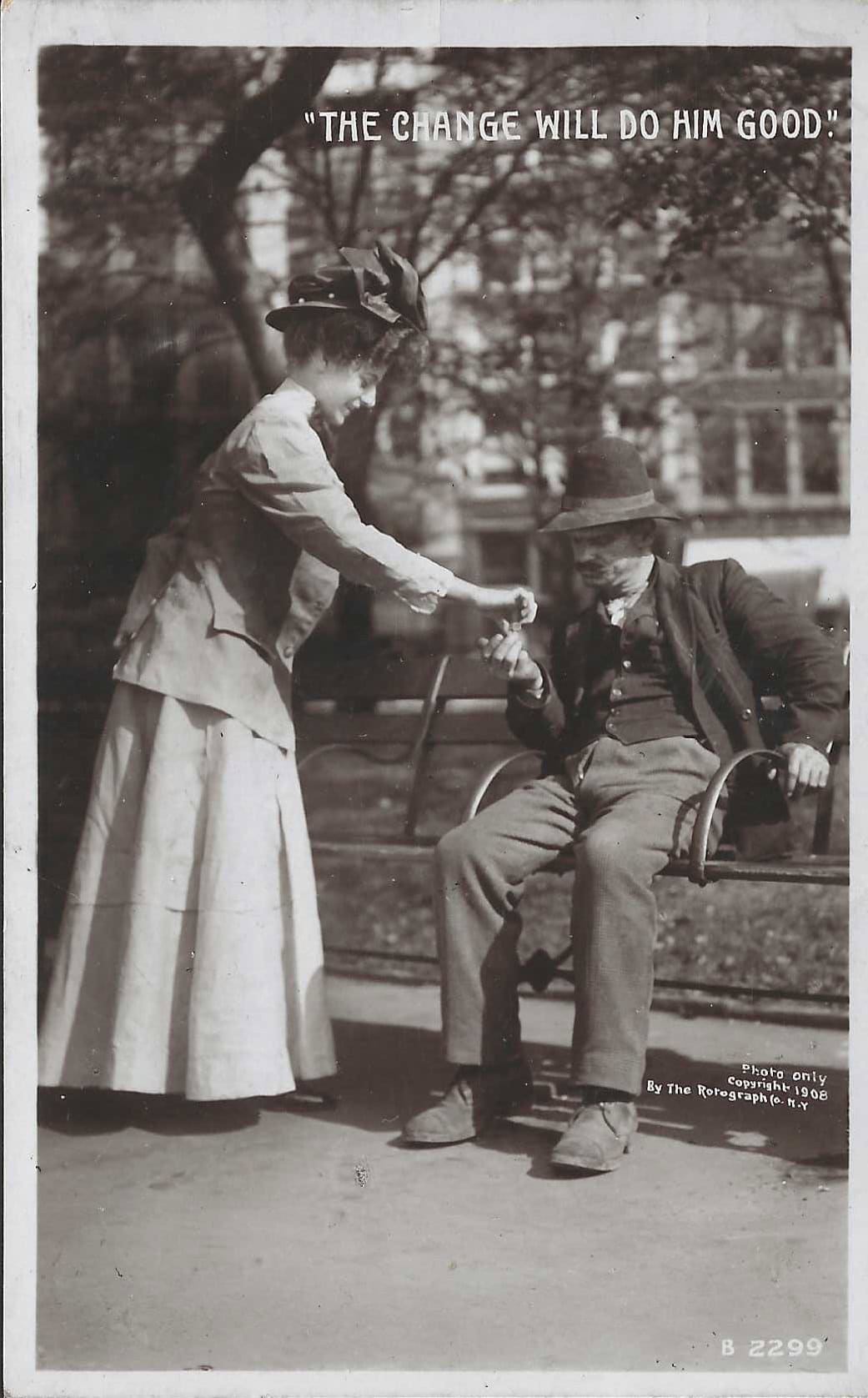
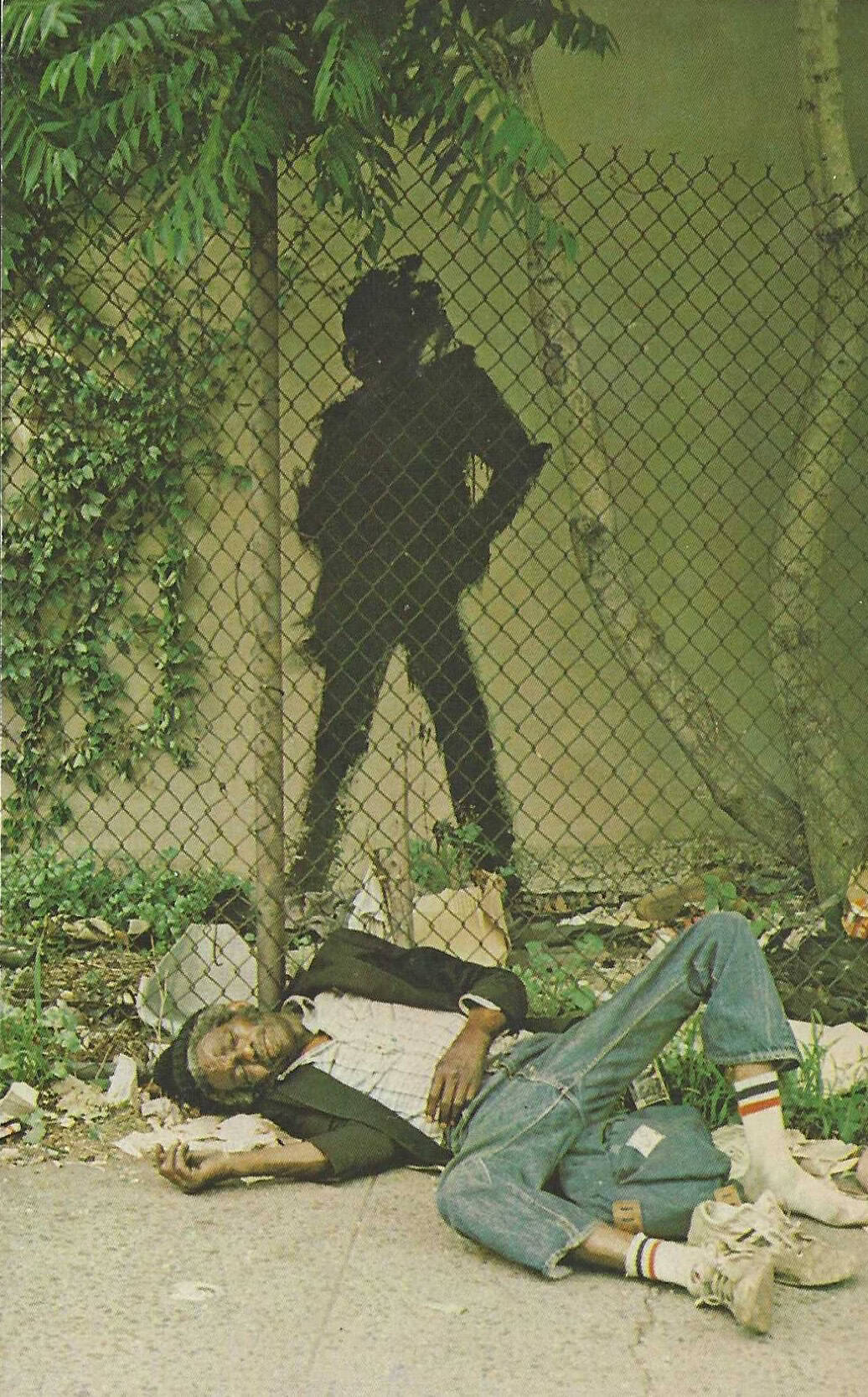
Poverty had an address in New York City – the Bowery, a street with a long pedigree going back to a time when it was rural and exclusive.
The Bowery served as the Eastern edge of the Five Points Neighborhood, New York’s original slum, which came complete with all the social maladies we associate with the struggles of the lower classes: gangs, intercommunal warfare, property crimes, prostitution, addiction to alcohol and drugs, disease as well as efforts at social amelioration. The Five Points slum largely replaced the Collect Pond, New York’s original source for fresh drinking water, healthy fish and country estates until it became overused and subjected to pollution from tanneries, slaughterhouses and breweries. The blistering heart of the slum was the former Coulthard Brewery which by the 1830s had been turned into overcrowded, squalid residences.
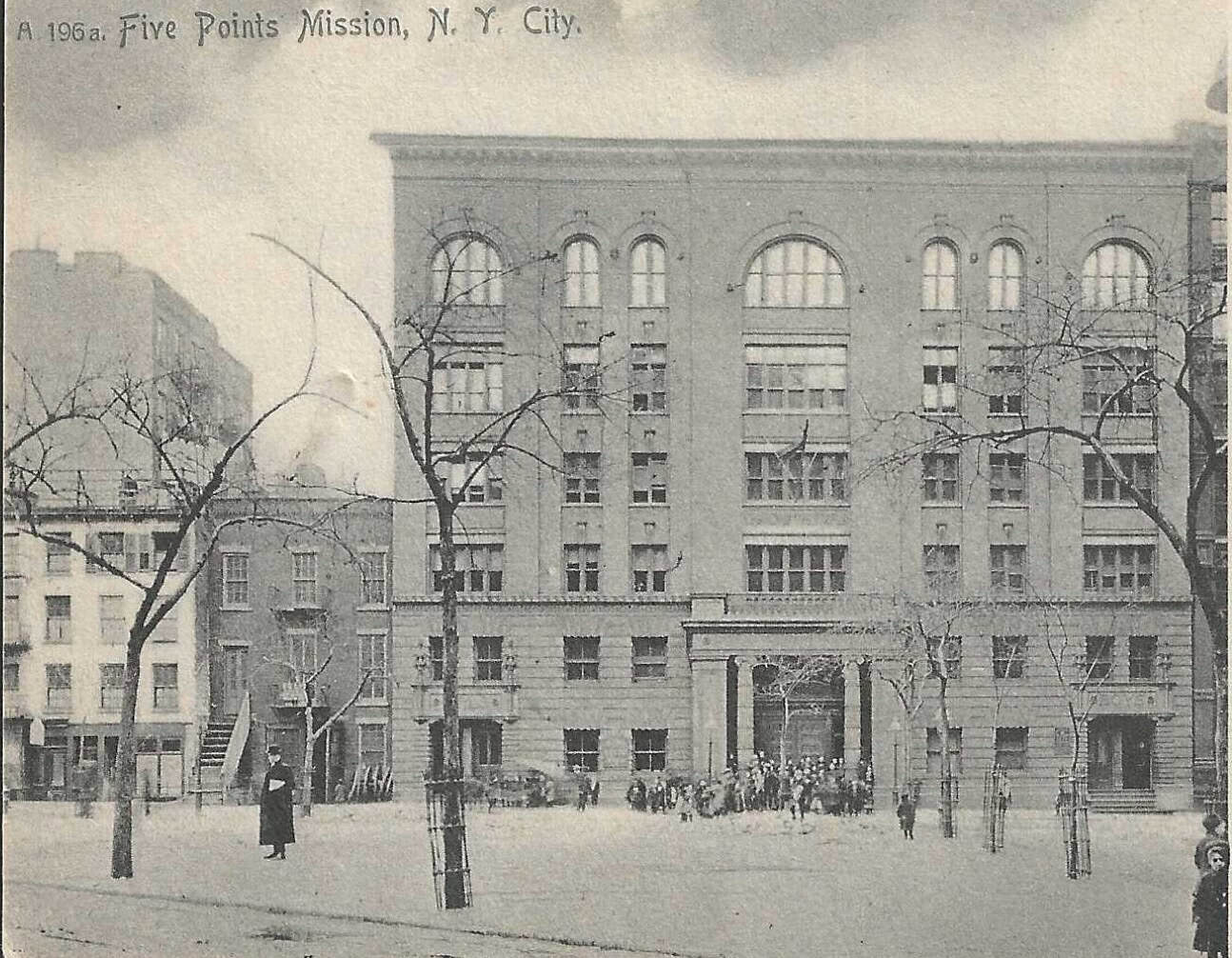
The Ladies Home Missionary Society replaced the Coulthard Brewery with the Five Points Mission in 1852. It provided educational and religious services and offered a limited number of clean and efficient apartments. The Mission kept expanding its footprint and outreach until the municipal government, seeking to expand its own size, eliminated the Mission and most of its zone. The image in this undivided-back Rotograph dating to about 1905-1906 was one of the Mission’s final incarnations.
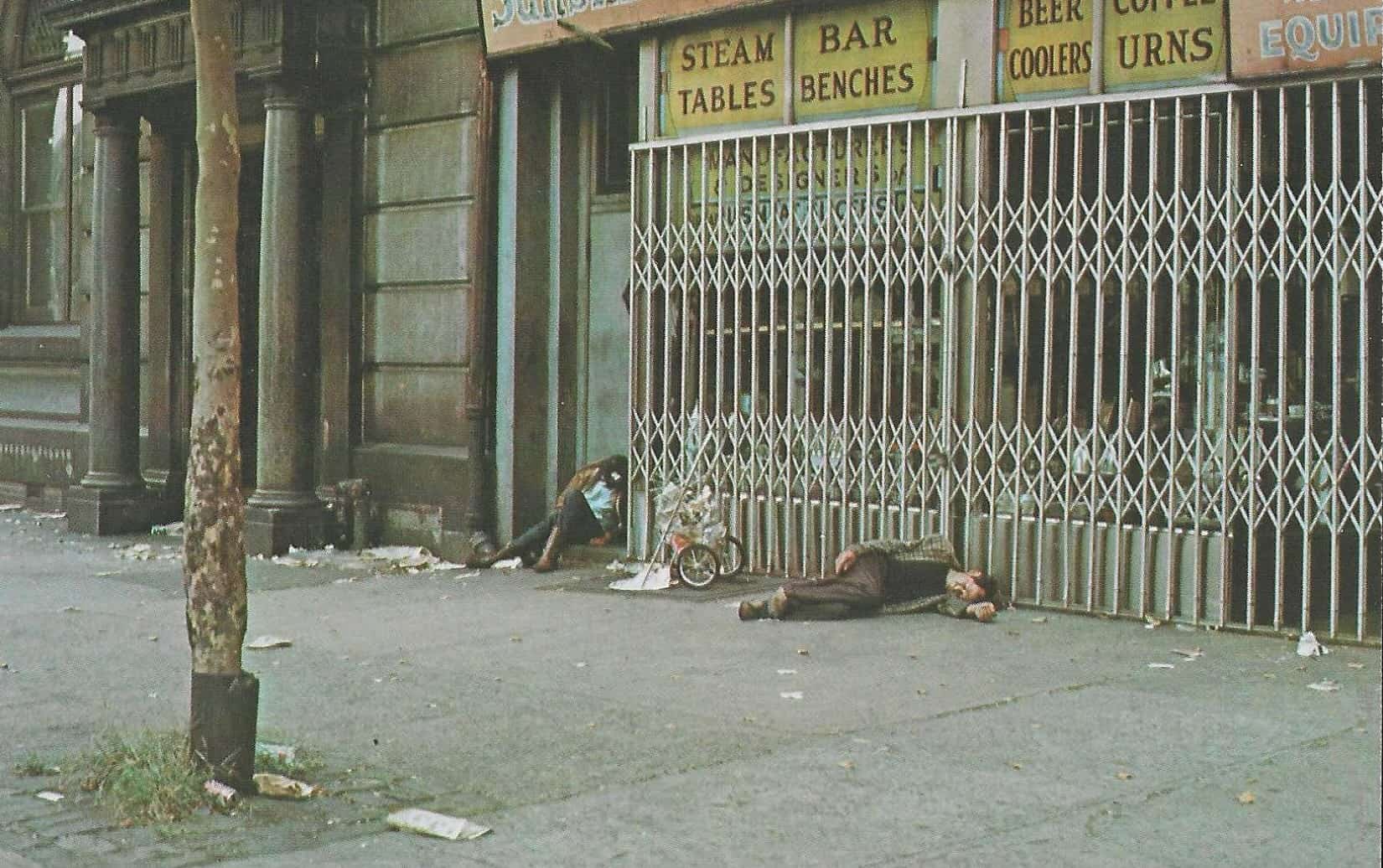
In the meantime, the Bowery grew exponentially as it became the nexus of the immigration boom which impacted New York in the closing decades of the 19th century through the opening decades of the 20th century. Although the Bowery had been a somewhat raucous entertainment district during the start of massive immigration, it began to suffer from two deficiencies that continued to aggravate its status as a slum, the bridge and the trains. The Bowery at Canal Street became the terminus of the Manhattan Bridge, bringing hordes of people into those streets, and the Third Avenue El, a major component of New York’s transportation system, coursed along its noisy and dirty above-ground tracks. The El was closed in Manhattan in 1955.
The Bowery and its adjacent streets became known for overcrowding and pollution. It was the home of many new immigrants who experienced challenges of adjustment to a new country. They brought many benefits to the city – an endless source of cheap labor and a revolution in creativity and new ideas. The Lower East Side, for which the Bowery provided a western edge, became symbolic of the changes that were occurring throughout American society in connection with the labor movement, social reform and human rights.
Luc Sante’s description of the Bowery during this era is very colorful: (Low Life, 1991, p. 64) “Everything on the Bowery was loaded and short-counted. Even the pushcarts sold bad fruit, cutlery made of scrap that broke at first use, used ink bottles filled with water.”
The Bowery developed a reputation for cheap restaurants, barber schools offering a cheap clean-up, employment agencies for day labor and other pick-up work, cheap hotels and scores of bars that sold watered-down booze to feed the local alcoholics. The Bowery maintained this reputation as New York’s “skid row” until the 1980s when it was subjected to investment, building renovation and a new face, what has become known as “gentrification.”
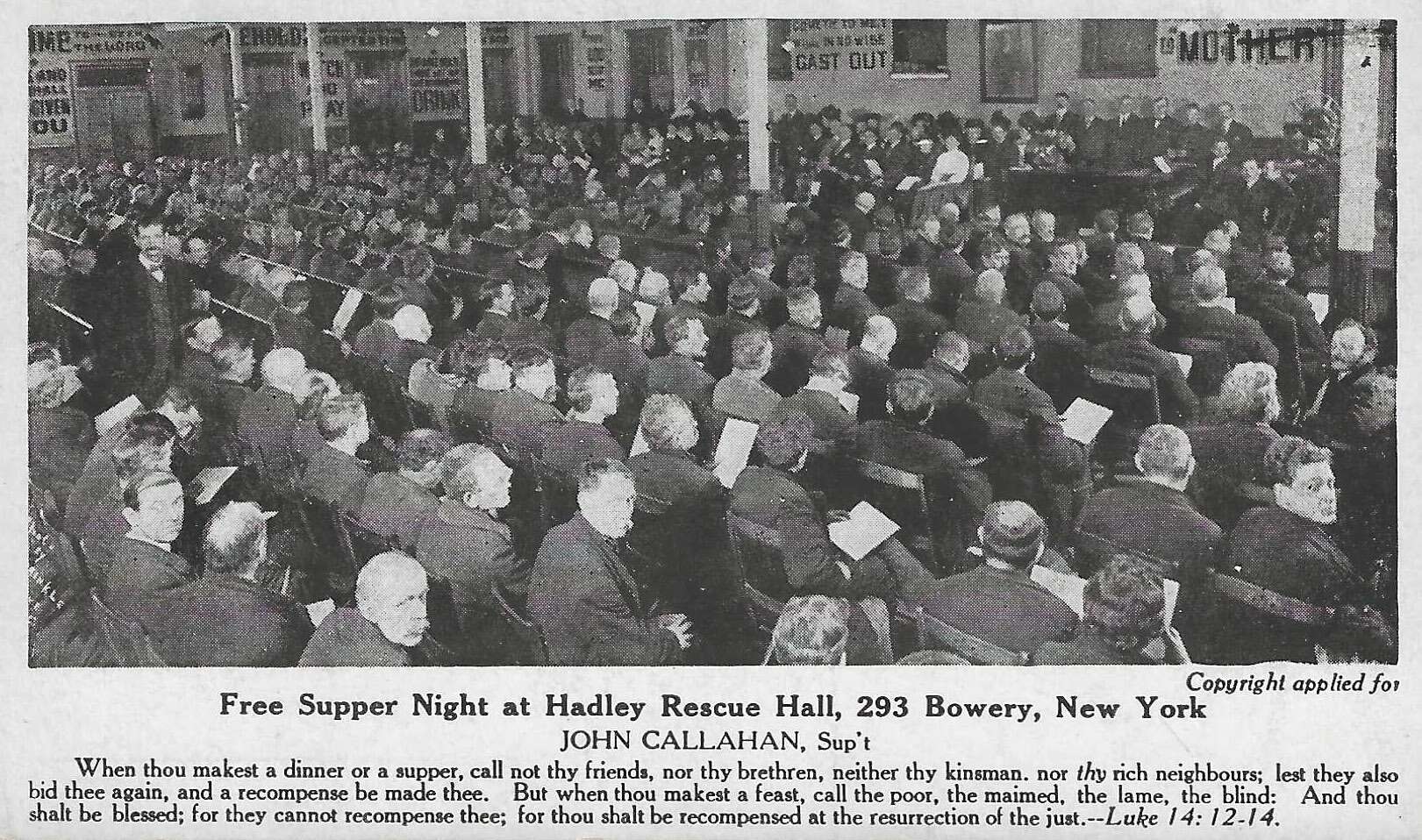
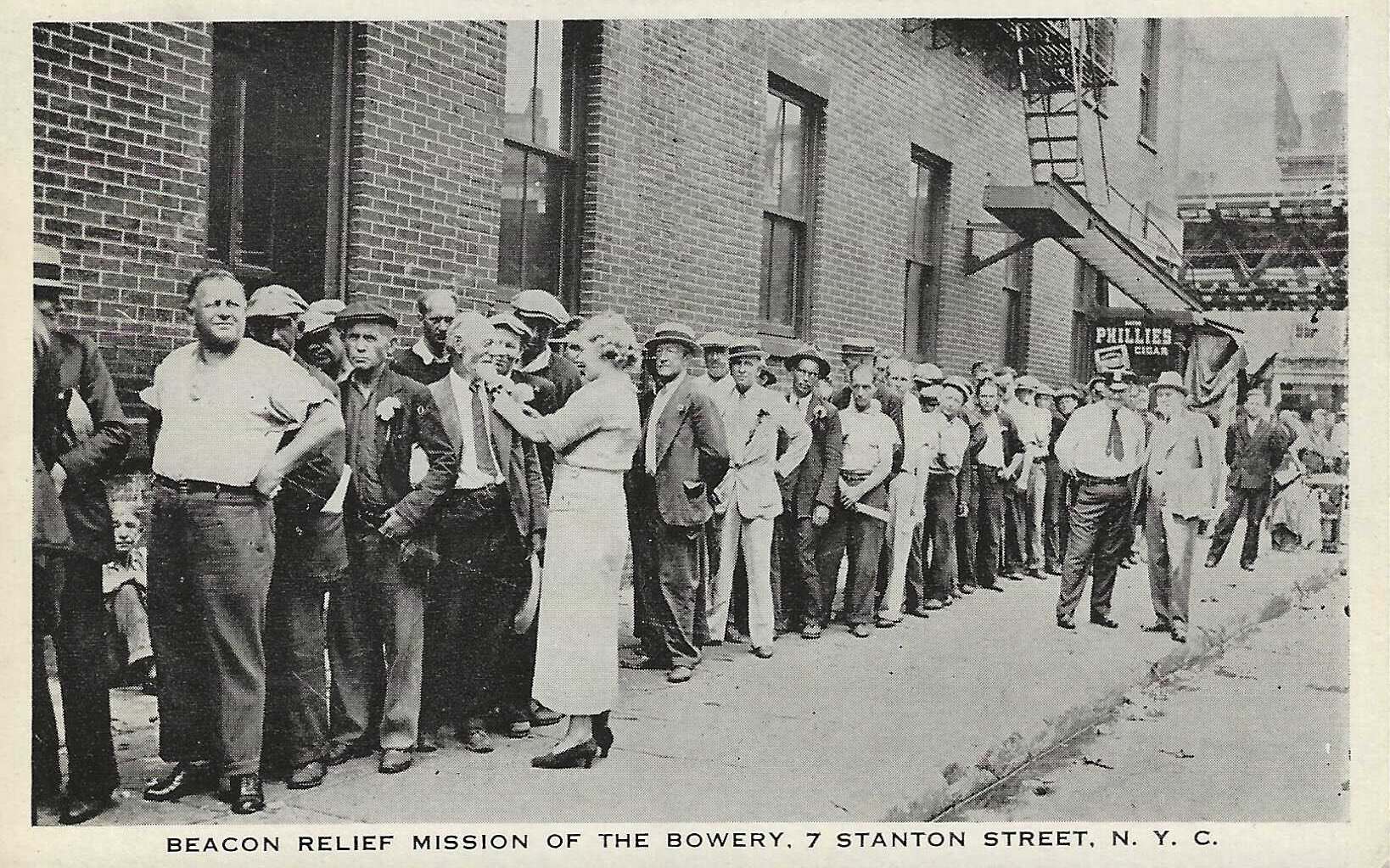
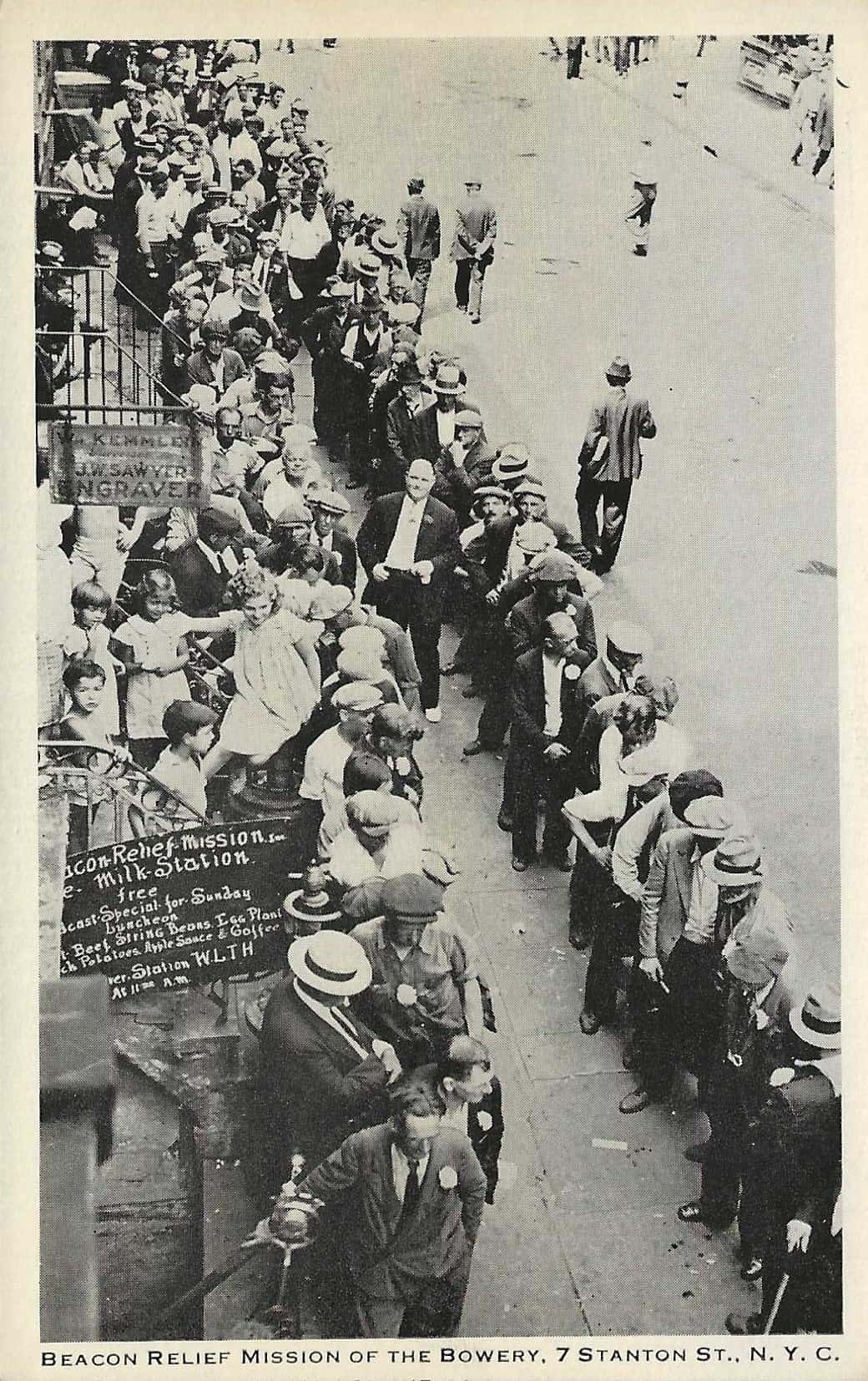
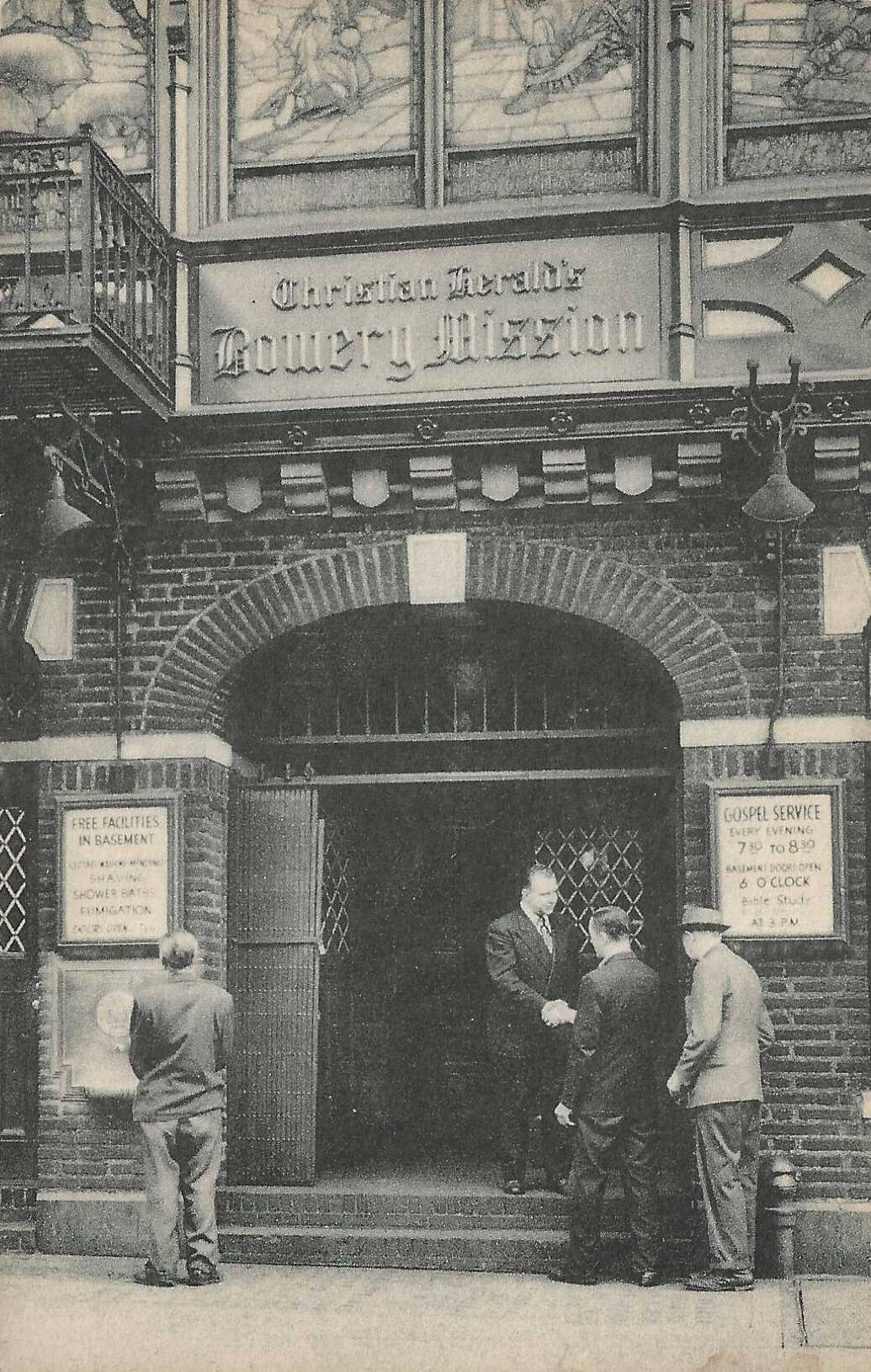
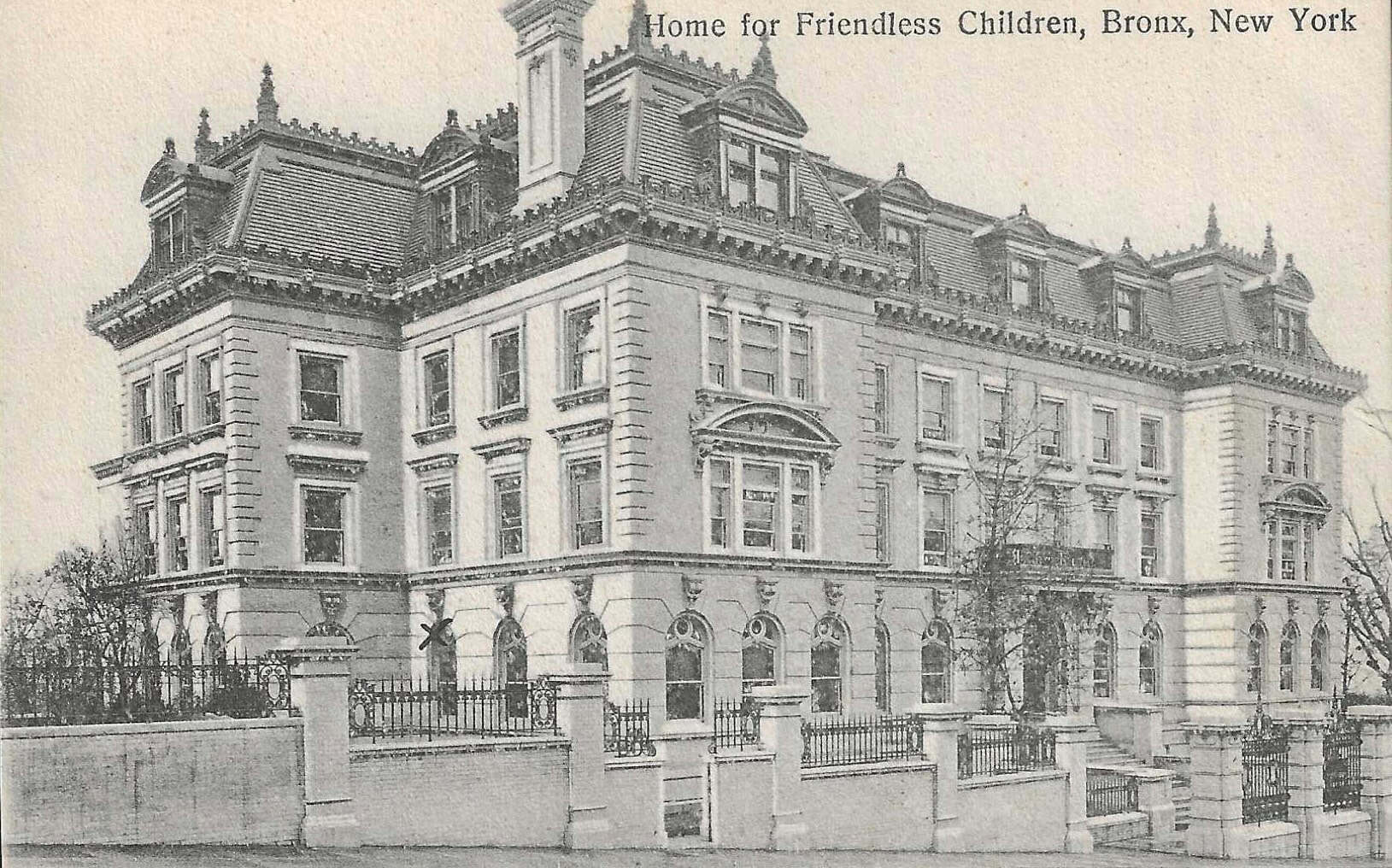
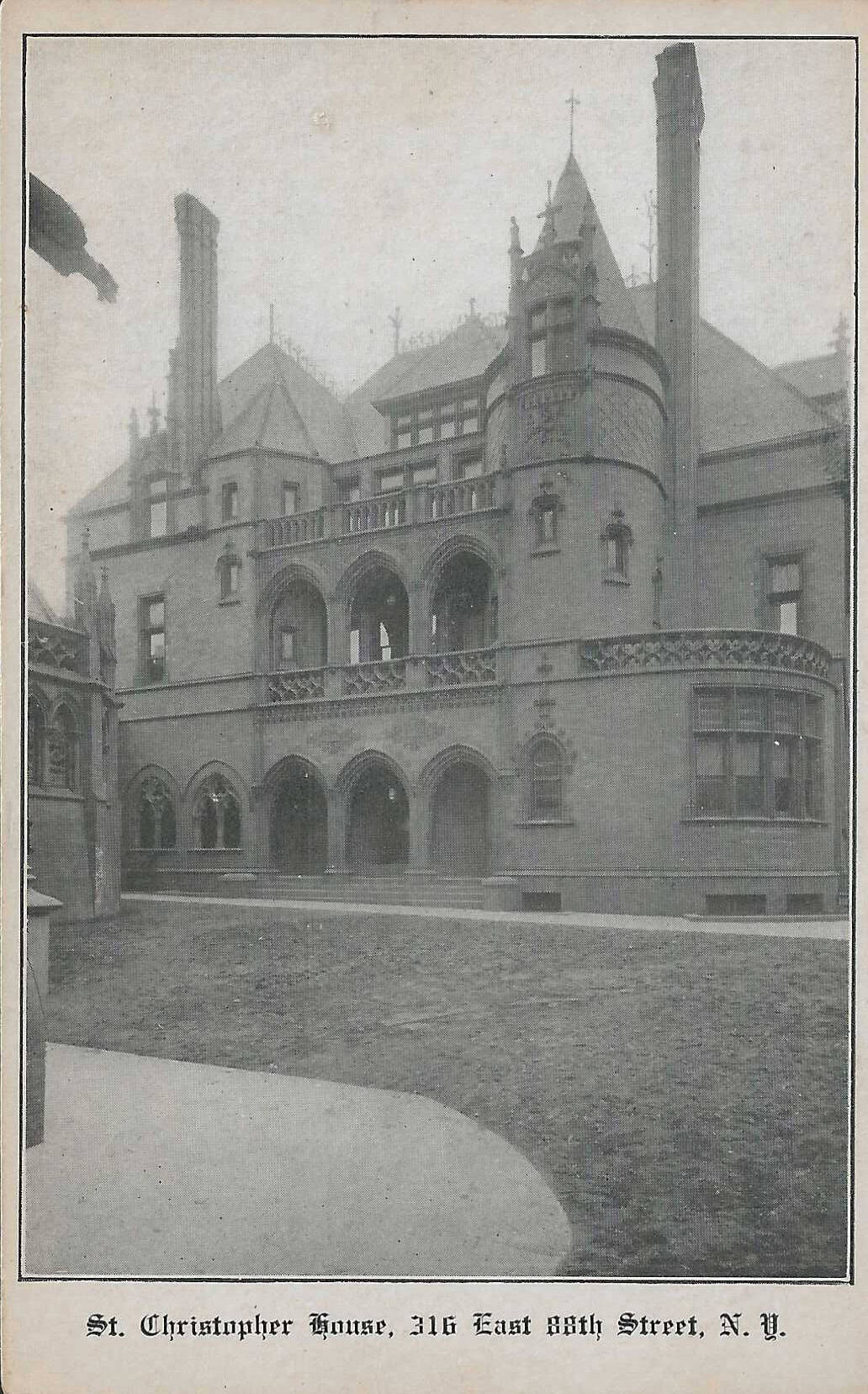
Slippage of the social order, from the very start, brought with it efforts at reform and amelioration, particularly after the nation’s economy fell into recession and the great Depression after the 1920s. Religious authorities stepped in first and provided orphanages for abandoned children and organized programs with educational and job training services at “uptown” locations like St. Christopher House.
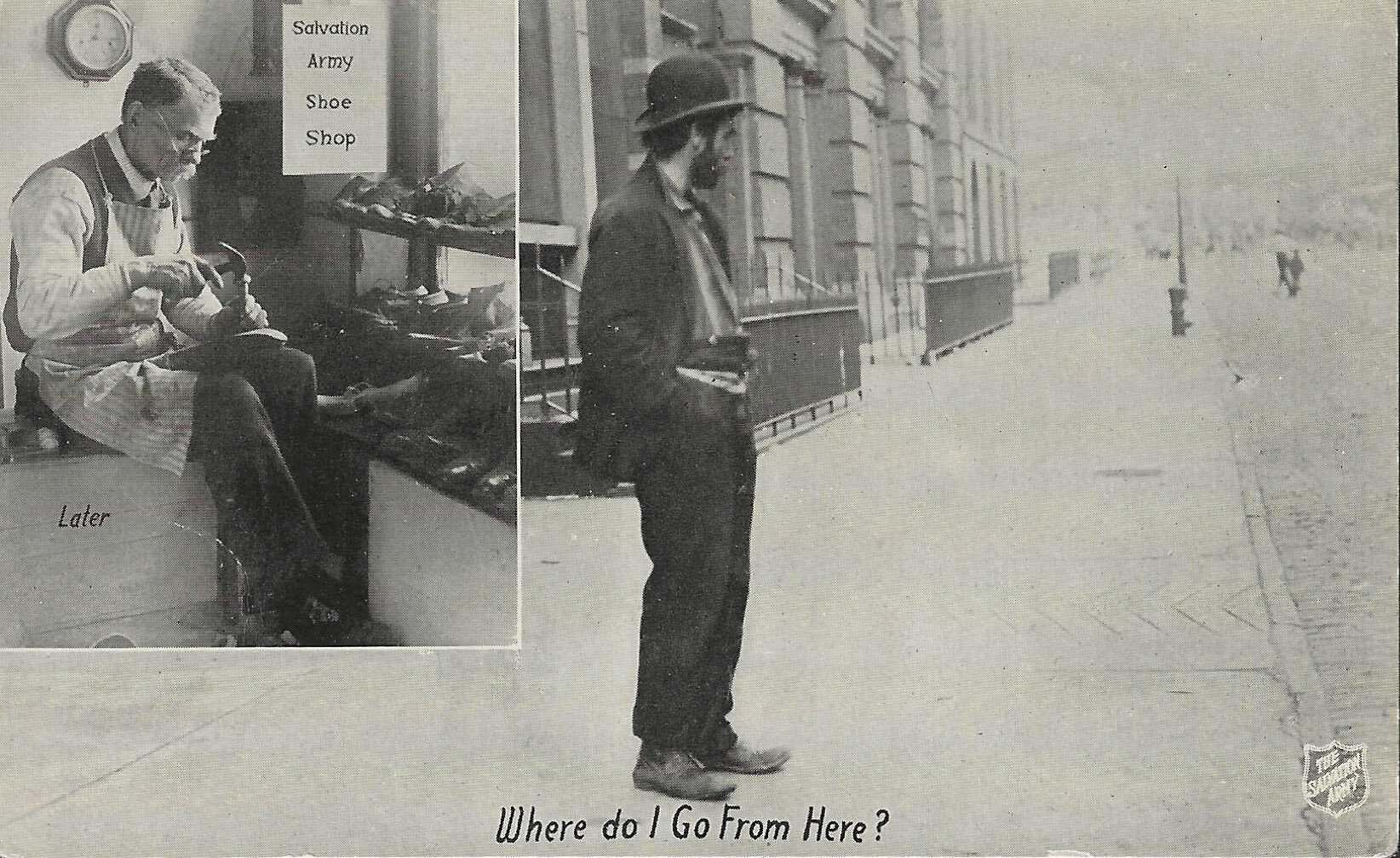
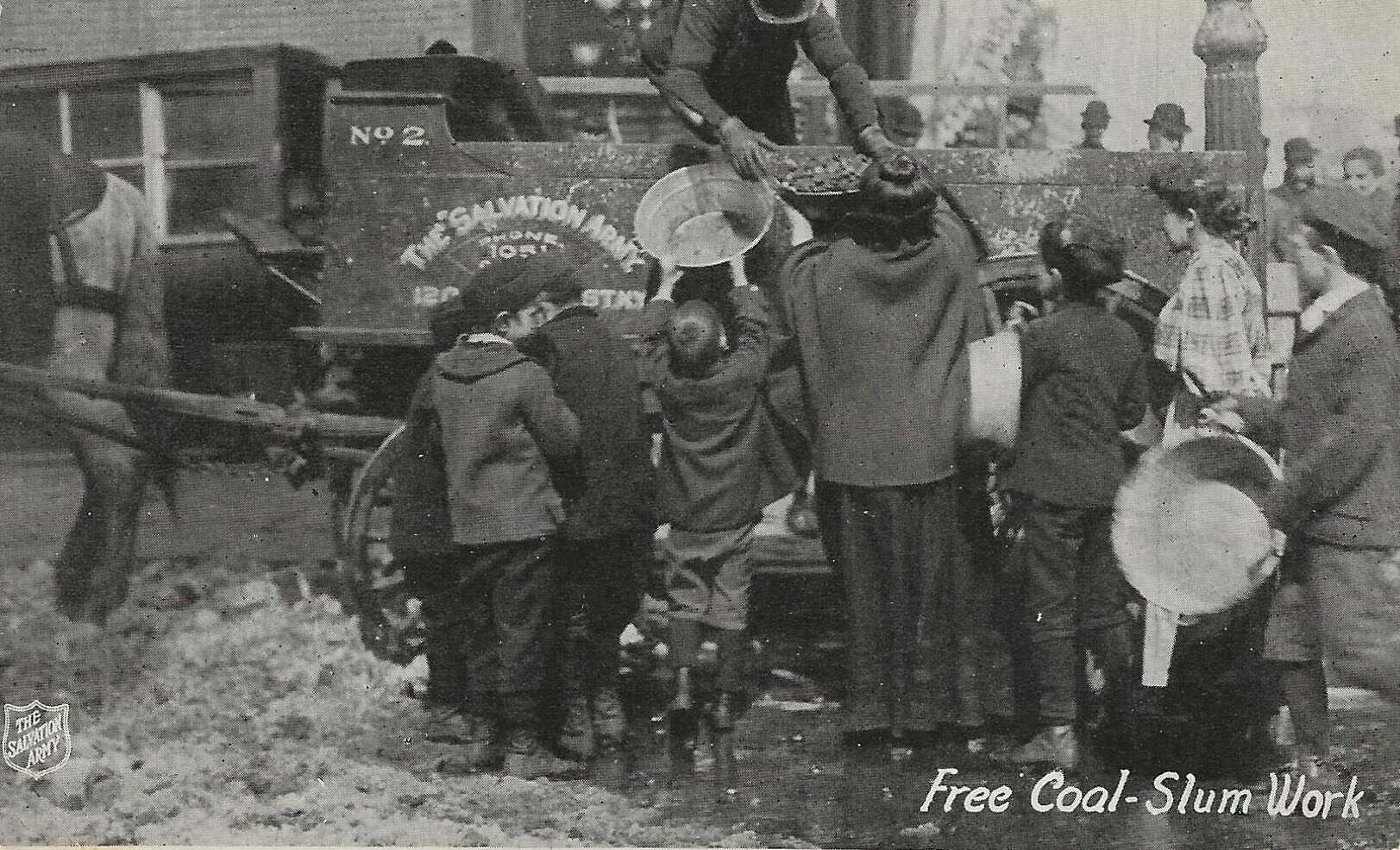
Originating in London, the Salvation Army was grounded in the Methodist Holiness Movement. It was founded by William Booth and his wife Catherine in 1865. This pseudo-military organization was an innovation authored by Booth and it has grown to become the largest non-governmental provider of social services in the United States. It has assisted more than 32 million people, in the U.S. with a budget of US$3.6 billion.
The Salvation Army came to New York in 1880 eager to offer religious and other needed social services: soup kitchens, childcare, showers and dormitories. As the postcards below illustrate, they offered free coal in the slums and job training programs to help alleviate poverty.
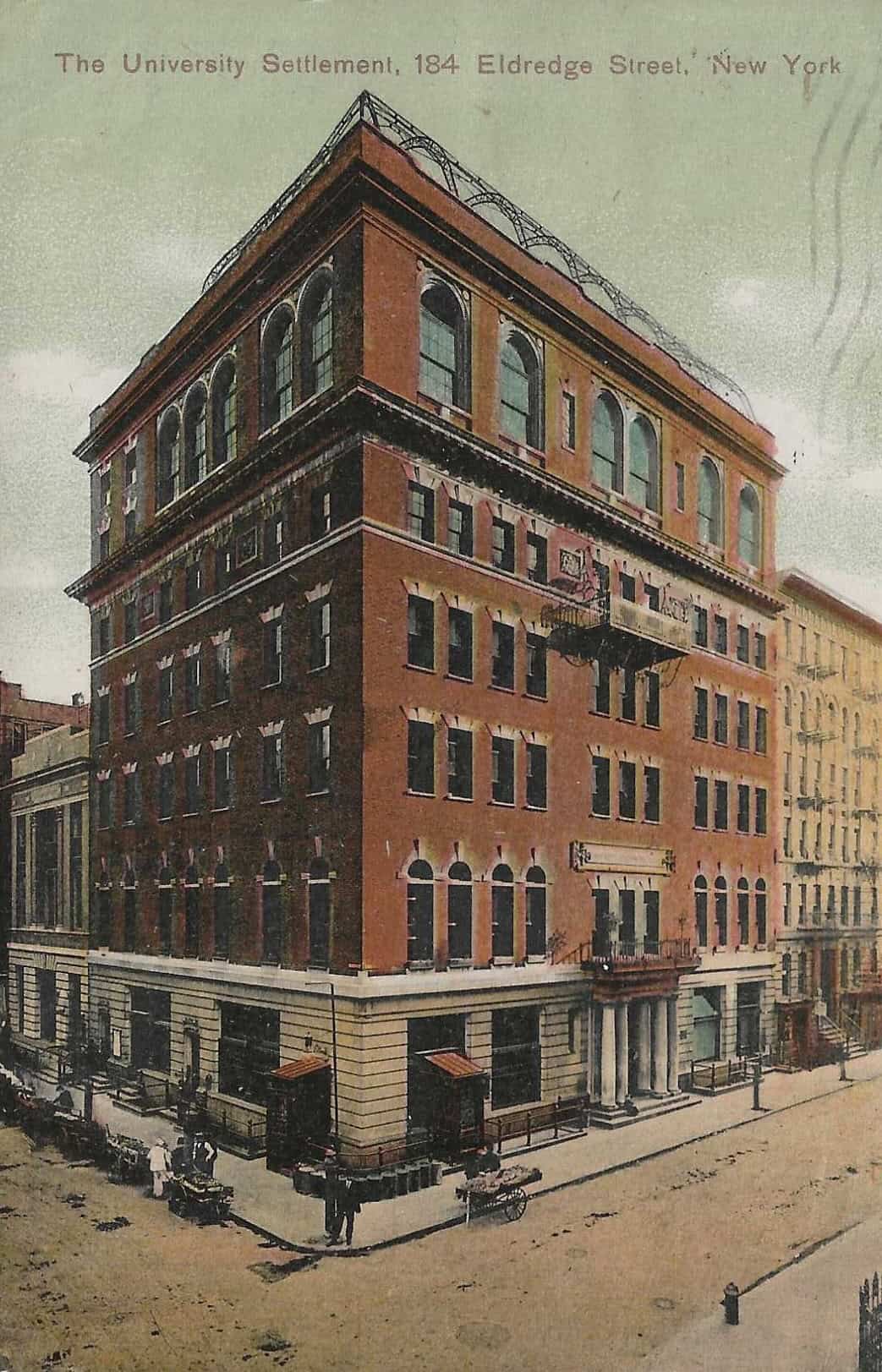
The Christian involvement in poverty reduction was matched by secular and Jewish efforts. Notably, the Settlement Movement came to New York in 1886 with the establishment of the University Settlement on Eldridge Street (see right), just a few blocks away from the Bowery. Inspired by the work and ideas of Jane Addams, founder of Hull House in Chicago, the movement provided services to the poor based on secular and democratic ideals. These agencies put an emphasis on healthcare services, childcare, arts education and English language instruction. Other settlements founded on the Lower East Side of Manhattan during the same time frame included The Educational Alliance (1889), Henry Street Settlement (1893), and the Grand Street Settlement (1916). All these organizations are still functioning. However, their purview in most cases has expanded well beyond the Lower East Side.
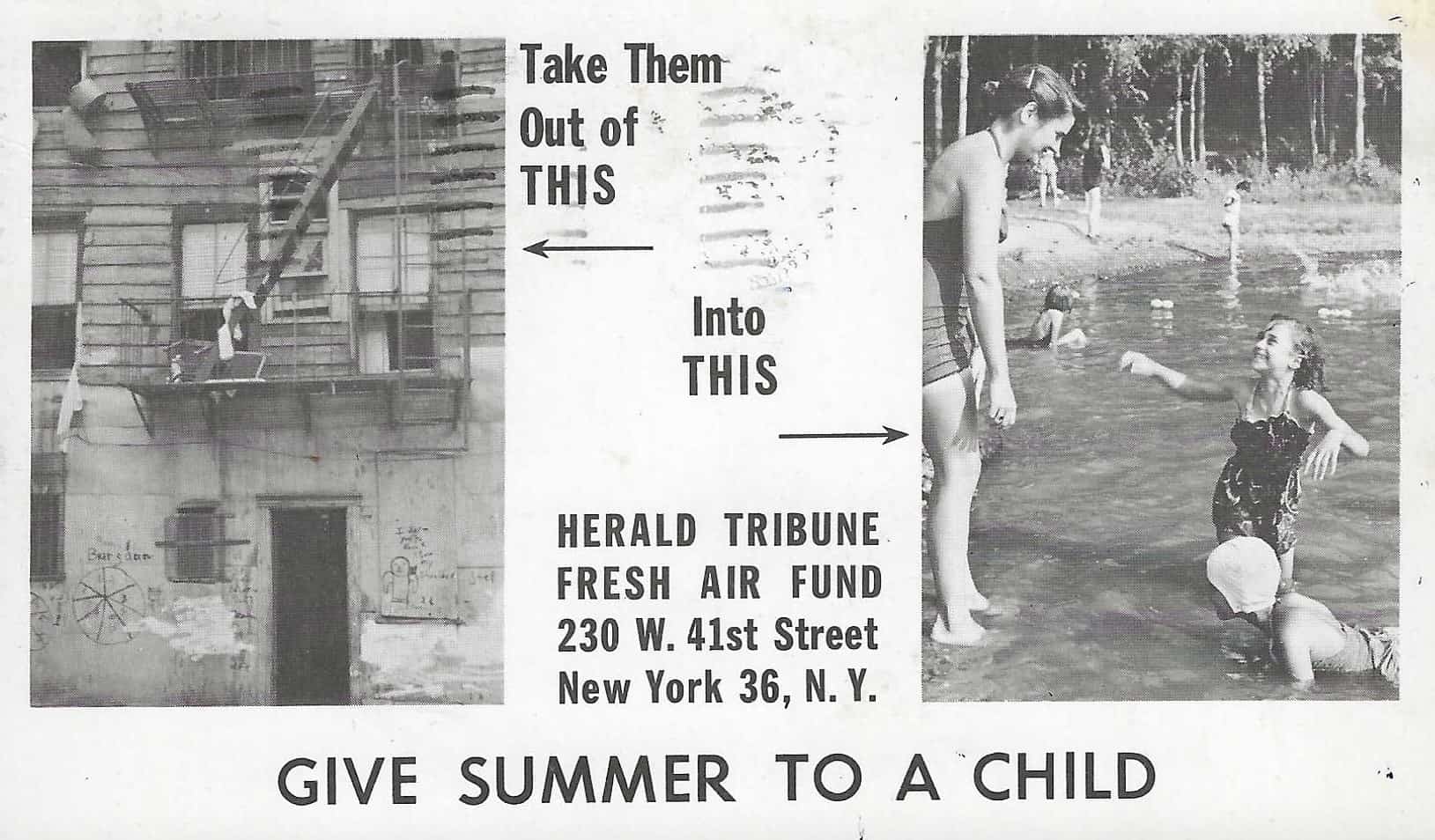
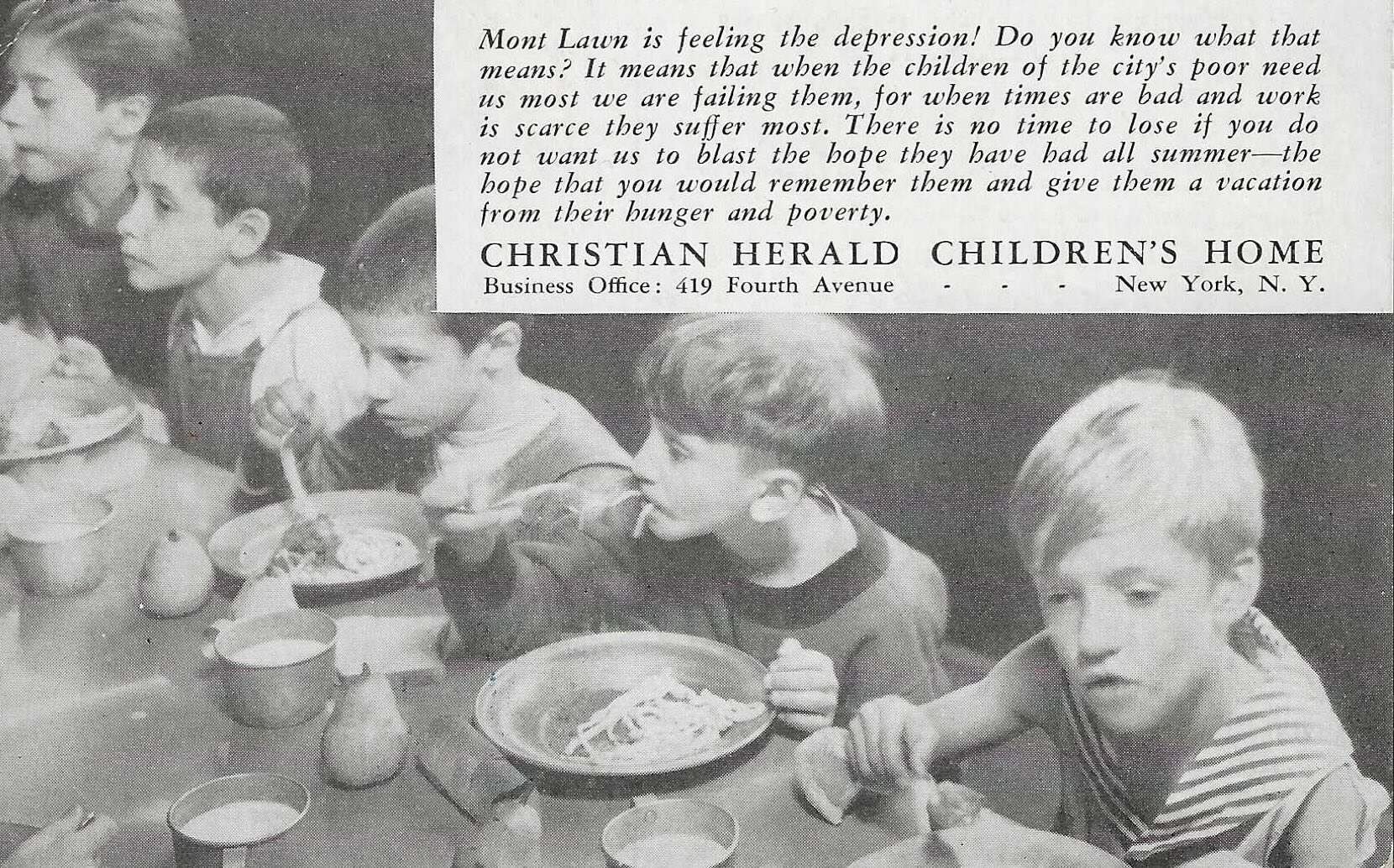
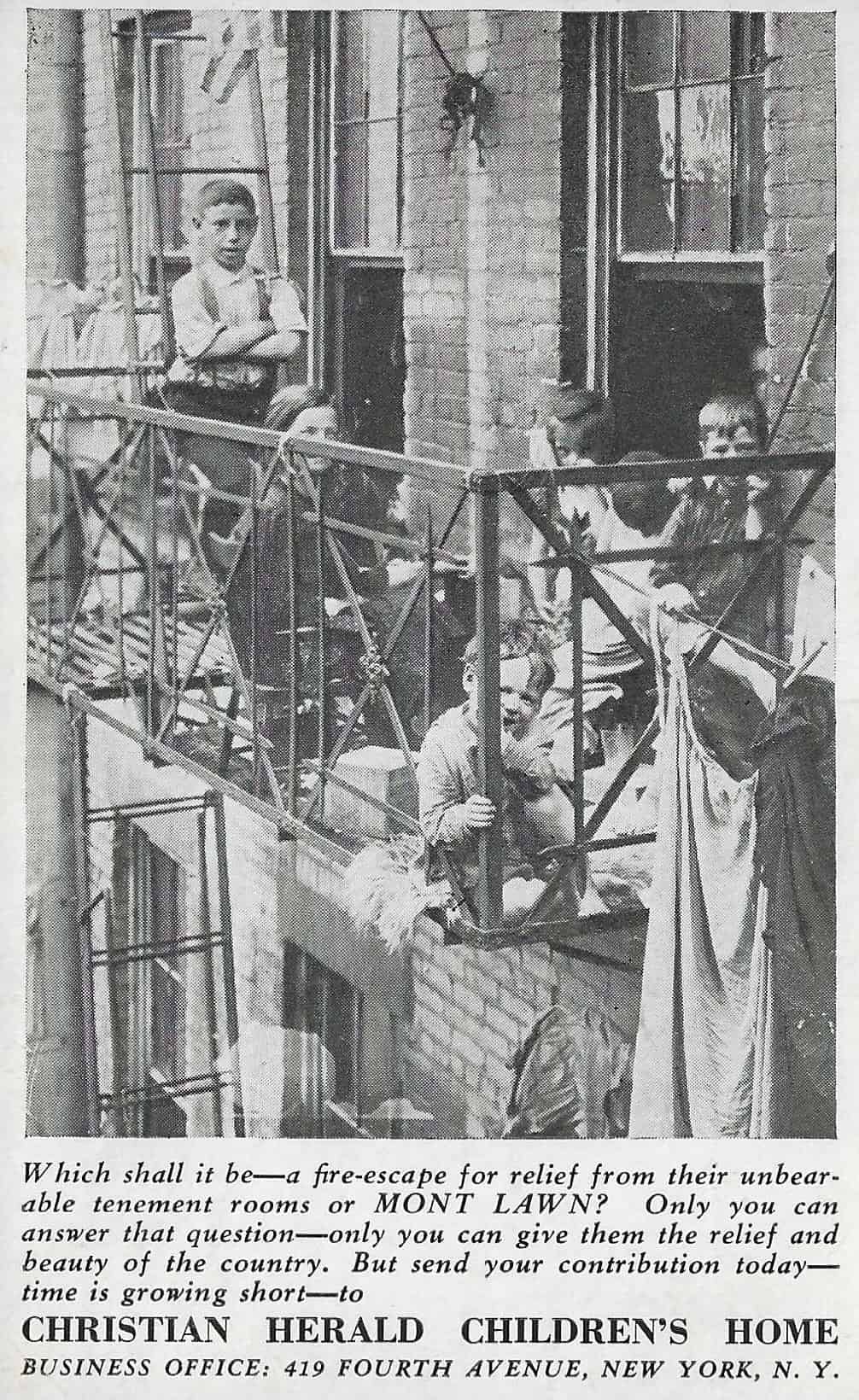
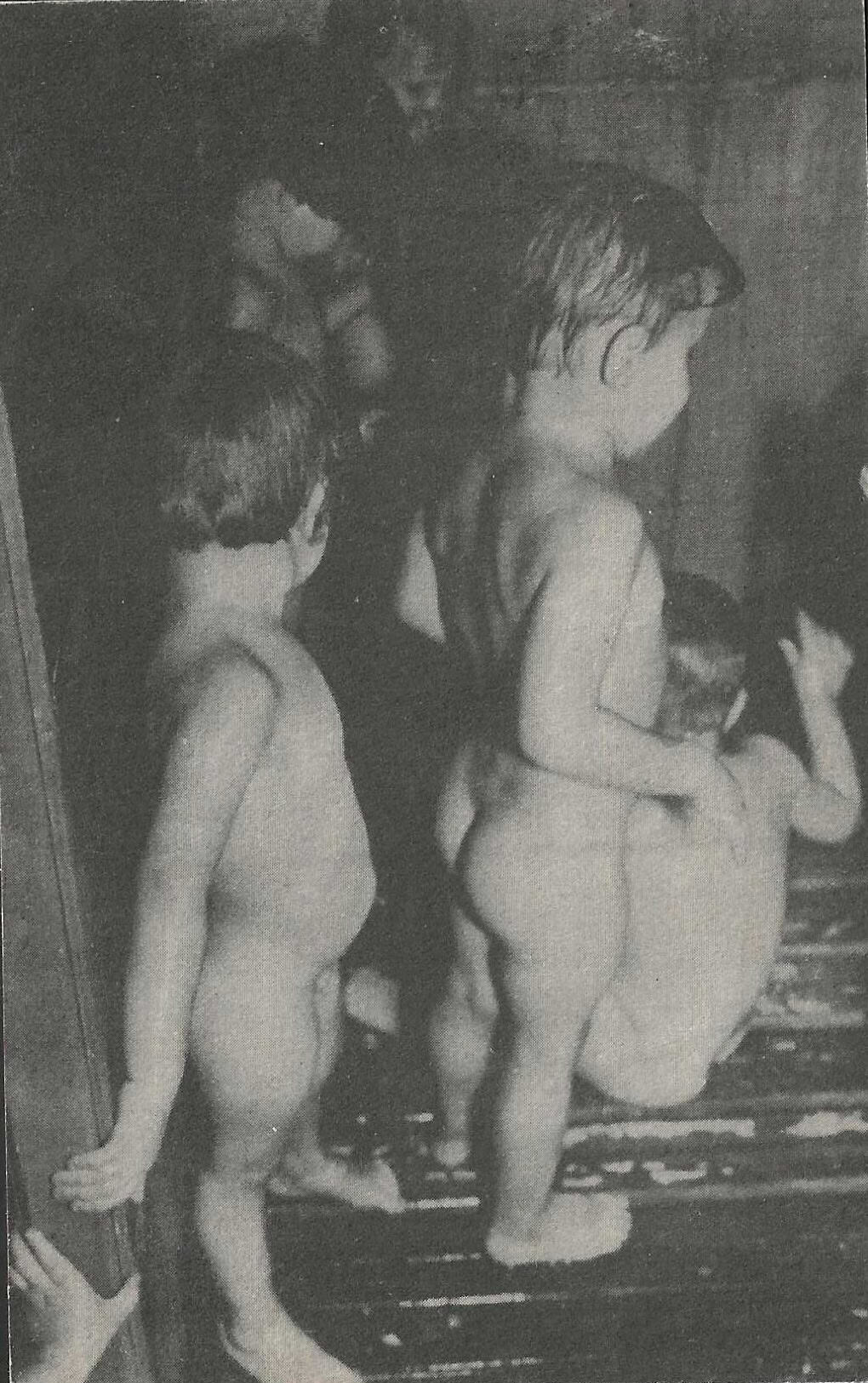
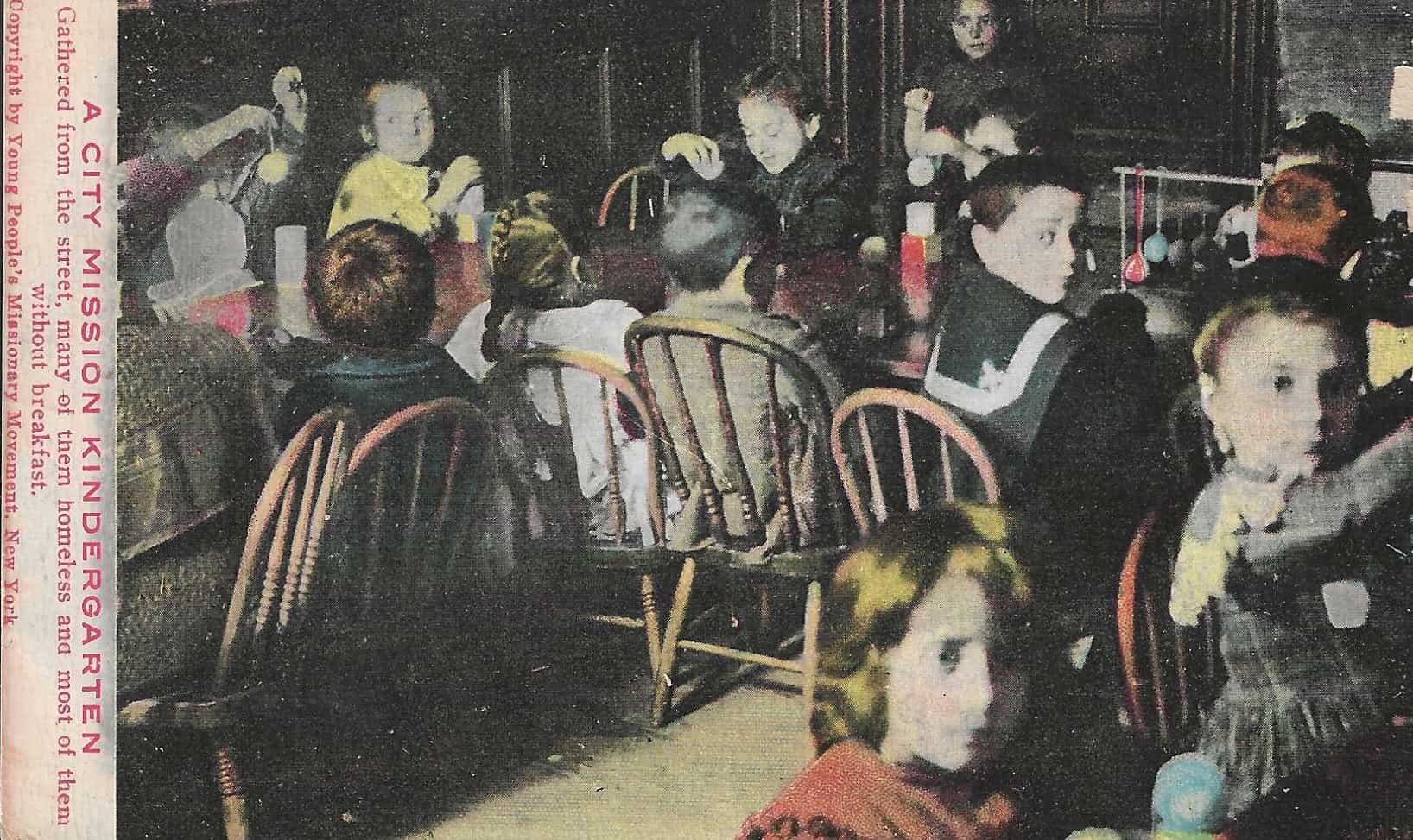
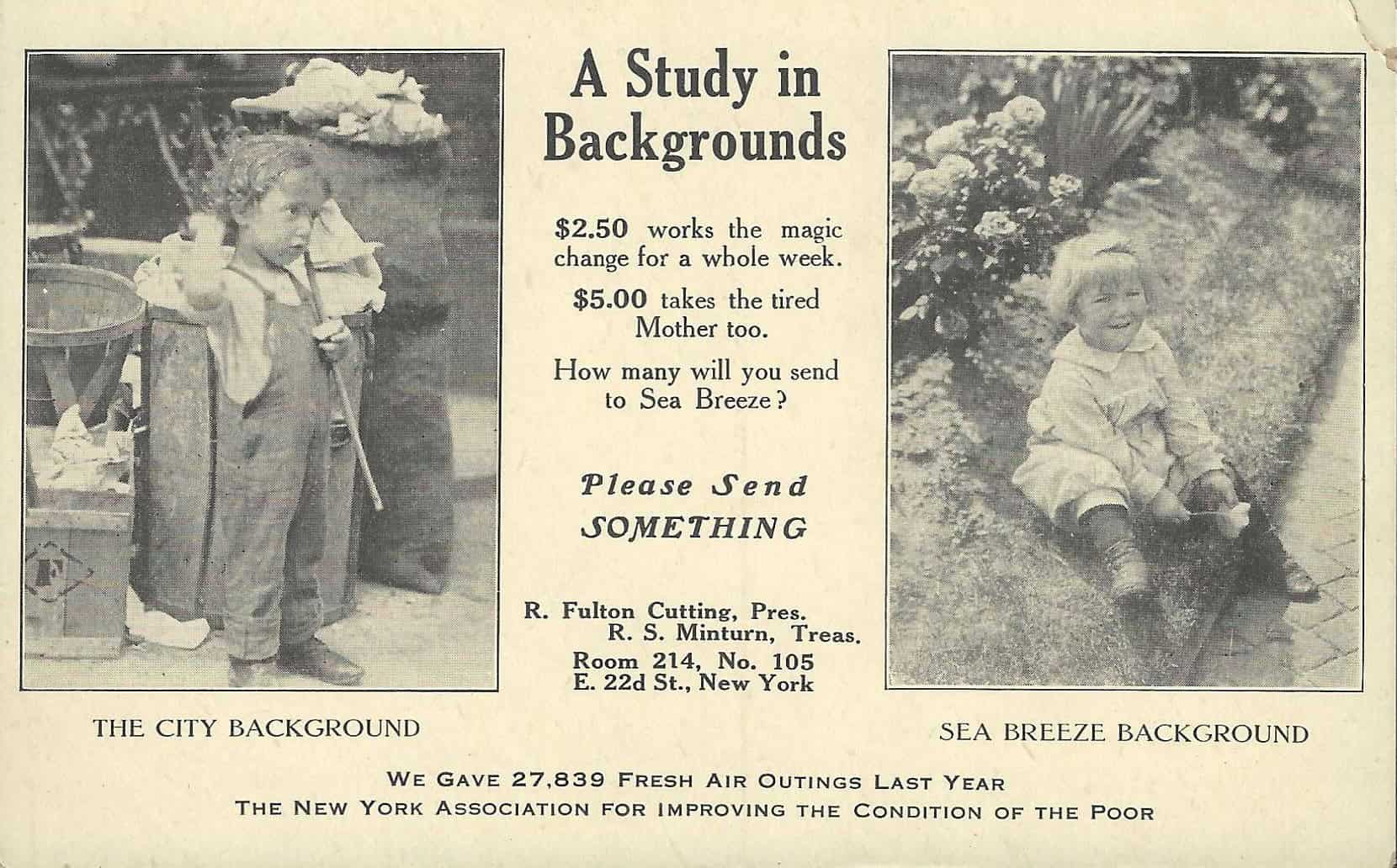
Postcards continued to influence the definition of poverty and were used to solicit funds by social service organizations. Increasingly, images of suffering children were used to tear at the heartstrings of potential donors. The other type of appeal that was frequently used was “take these children out of the slums and help them flourish in rural settings.”
In most cases, these postcards were connected to efforts at raising funds for summer camp programs. The expectation was that following the experience of skills and leadership training in the country, the children would cultivate a knowledge base to lead them out of the slums and into middle class respectability.
Probably the best-known institution of this type is today known as the Fresh Air Fund, though it had a deep connection in the past to the newspaper The New York Herald Tribune (published 1924-1966) and was known as the Herald Tribune Fresh Air Fund.
This organization has relied on a network of summer camps and “friendly towns,” namely, communities in suburban and rural New York, New Jersey, and Pennsylvania, that welcomed children from impoverished New York City neighborhoods for a period of supervised play and education. The Fresh Air Fund was founded in 1877 by Rev. Willard Parsons and has served 1.8 million children since it was established. It operates six summer camps and offers a level of year-round services to its clientele.
In 1890, Jacob Riis published the photographic essay, How the Other Half Lives, documenting poor housing and homelessness on the Bowery and the Lower East Side.
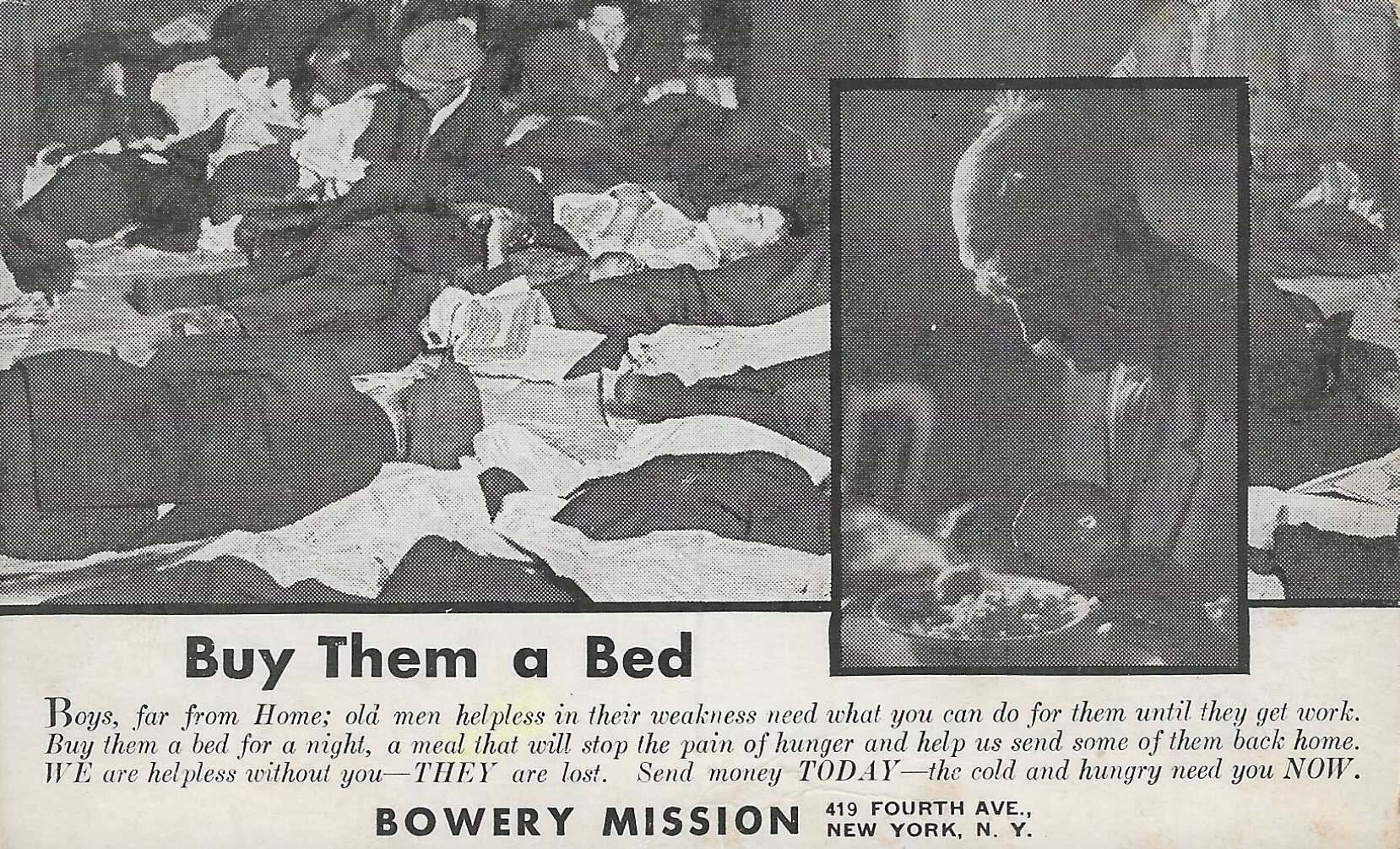
Shortly afterwards in 1904, the Christian Herald publishing company founded the Mount Lawn Camp in Nyack, New York, to give children living in New York’s slums a chance to experience life in the country. In 1905 the Christian Herald purchased the Bowery Mission, which has provided services to impoverished adults since then.
Increasingly, the focus of this organization’s services has moved beyond the Bowery to other New York neighborhoods and into the suburbs. It has ceased to be a publishing company and now targets services to only New York’s homeless population. In 2020, The Bowery Mission provided more than 429,500 meals, 104,000 nights of shelter, 67,500 emergency showers, and 27,600 articles of clothing.
The Hudson Guild was created in 1897 following the merger of several smaller organizations by Dr. John Lovejoy Elliot. It continues to serve as a settlement house for Manhattan’s Chelsea neighborhood at 436 West 27th Street offering sports, crafts and leadership programs for youth.
The Young People’s Missionary Movement, founded in 1901, was absorbed into the Missionary Education Movement which has, in turn, been merged into the National Council of the Churches of Christ in the U.S.A. The New York Association for Improving the Conditions of the Poor, founded in 1843, has been absorbed into the Community Service Society since 1939. Operating out of a landmarked building at 105 East 22nd Street, it is still very active in direct service and advocacy for such issues as housing, healthcare and poverty.
New York has always been subjected to the vicissitudes of time. The history of the Bowery best exemplifies this; it has gone from exclusive rural redoubt to a raucous entertainment enclave to impoverished skid row and today to investment grade real estate, tony restaurants and chic boutiques. However, as this overview of postcards dealing with New York’s down and outs shows, New York City has always maintained a high level of concern for reducing the impact of poverty.