The Blue Comet Wreck of 1939
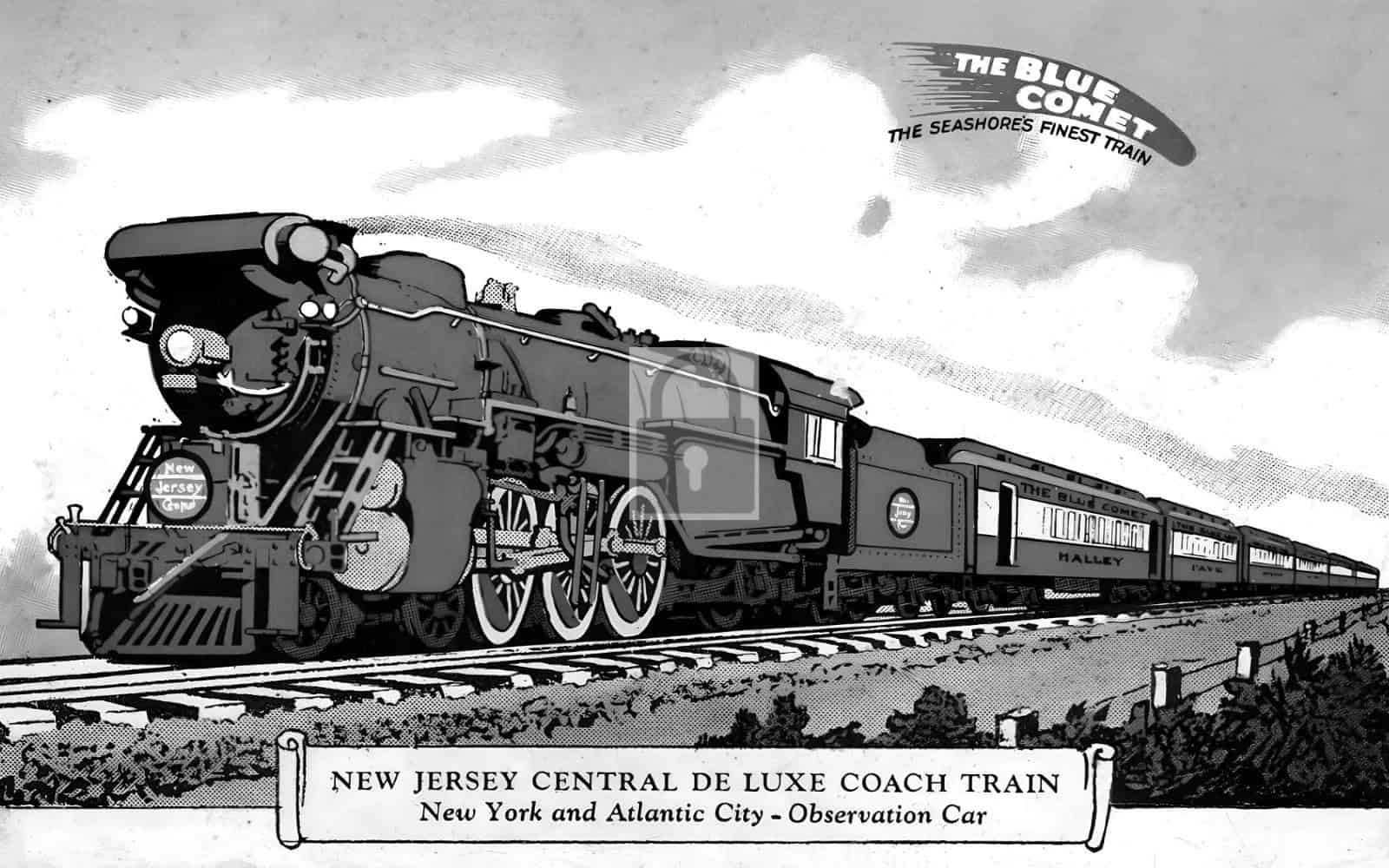
The Blue Comet wreck of 1939 is fascinating because it combines a famous train, a Pine Barrens setting, and a near disaster that could have been much worse.
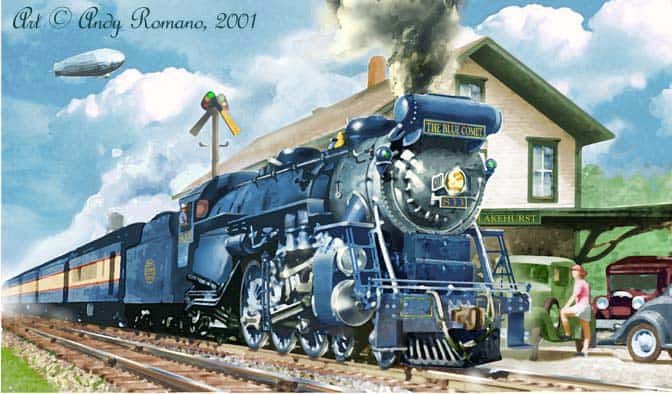
The Blue Comet was the premier passenger train of the Central Railroad of New Jersey, operating between Jersey City and Atlantic City from 1929 to 1941. Painted in striking shades of blue and cream, it was one of America’s most elegant trains and remains legendary among railroad historians.
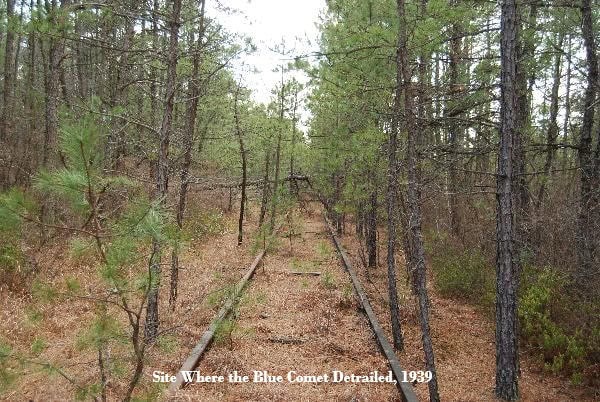
On the night of August 19, 1939, torrential rain drenched the Pine Barrens around Chatsworth in Burlington County, New Jersey. Contemporary reports indicate that approximately 19 inches of rain fell (probably an exaggeration), with much of it arriving in just a few hours. The flooding caused a wash out of the southbound tracks just ahead of the train’s arrival. Residents became concerned about the condition of the line and warnings reached the train crew in time for them to reduced speed before reaching the damaged section.
Even at the reduced speed, the locomotive and five cars derailed when they reached the washout. Thirty-seven passengers were injured, but no fatalities were reported. The slower speed almost certainly prevented a much greater disaster. In the end, at least 500 feet of track had to be replaced.
For many railroad fans, the image of a blue luxury train derailing in a rain-soaked Pine Barrens wilderness has become one of the most enduring legends of New Jersey railroading.
What makes the story especially poignant is that the Blue Comet itself would not survive much longer. Declining ridership and economic pressures led to the train’s discontinuance in 1941.
There is a historical marker that commemorates the wreck site near Chatsworth, N. J.
***
Kate Shelley

The story of Kate Shelley has been told and retold for nearly 150 years and despite continued research that includes a thorough examination of contemporary records, all we can say is that the story is essentially true, although some details have always been in question.
On the night of July 6, 1881, a violent thunderstorm in Boone County, Iowa, washed out the railroad trestle over Honey Creek. The immediate reaction was both fool hearty and foolish; a locomotive was sent to inspect the tracks and in haste the engineer caused the locomotive to plunge into the flooded creek.
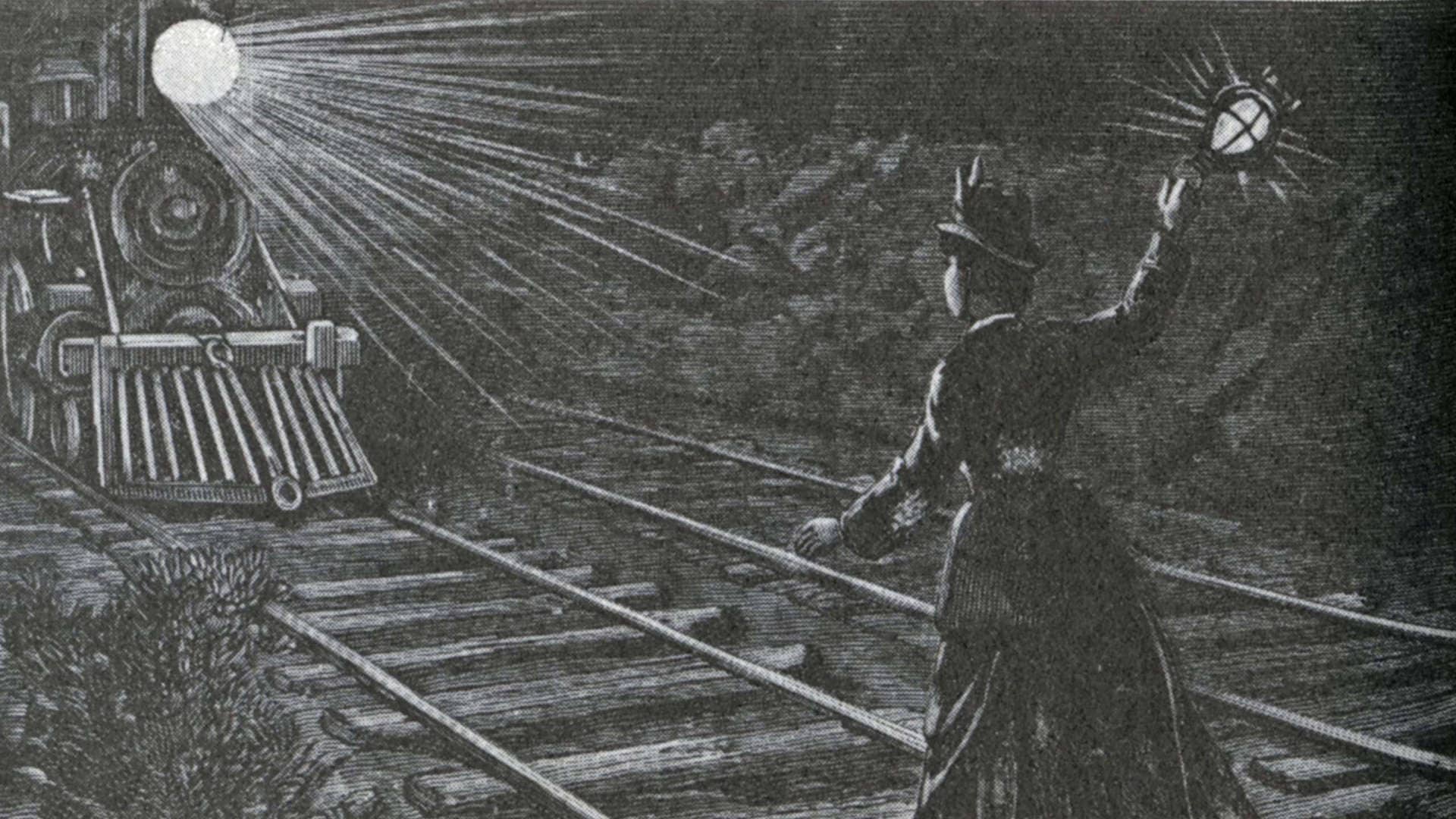
Fifteen- some say, seventeen-year-old Kate Shelley heard the crash from her family’s nearby farm and realized that an eastbound passenger train was due to pass over the same route within minutes.
Knowing the danger, Kate left her home during the storm and made her way to the railroad station at Moingona, a tiny village about 45 miles northwest of Des Moine, situated very near the Des Moine River.
To reach Moingona, she had to cross a railroad bridge over the Des Moines River in darkness and driving rain. Most accounts say she crossed on her hands and knees, feeling her way across the ties. She managed to successfully alert railroad personnel, and the approaching passenger train was stopped before it could reach the washed-out bridge.
What historians sometimes disagree about is her exact age. Her gravestone suggests she was 15, while other records indicate she was 17. There has also been debate about whether the passenger train had already arrived at Moingona before she raised the alarm. However, there is no serious dispute that Kate performed a courageous act that helped prevent a much greater disaster.
Her heroism made her nationally famous. She received medals and awards, and in 1901 a massive railroad viaduct near Boone became known as the Kate Shelley High Bridge, making her one of the first American women to be awarded such an honor.
It is one of the great railroad legends of the Midwest, and unlike many legends, the core event is well documented.
***
The Wrecks of the Montreal Express
The wrecks (yes, there was more than one) of the “Montreal Express” are lesser-known events in railroad history, but both are stunning railroad stories and there is considerable confusion surrounding the unfortunate coincidence that there were two very serious accidents of the Montreal Express: the first in 1887 and the second in 1938.
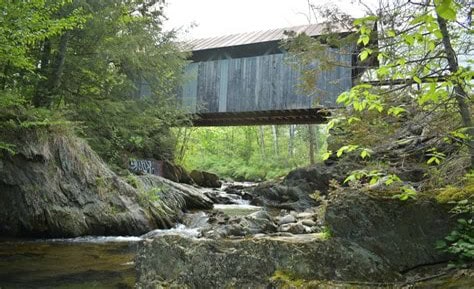
The 1887 accident happened near White River Junction/West Hartford, Vermont. It was one of New England’s worst railroad accidents but for unknown reasons it has always been considered a bridge (that crossed the White River) disaster rather than a train accident.
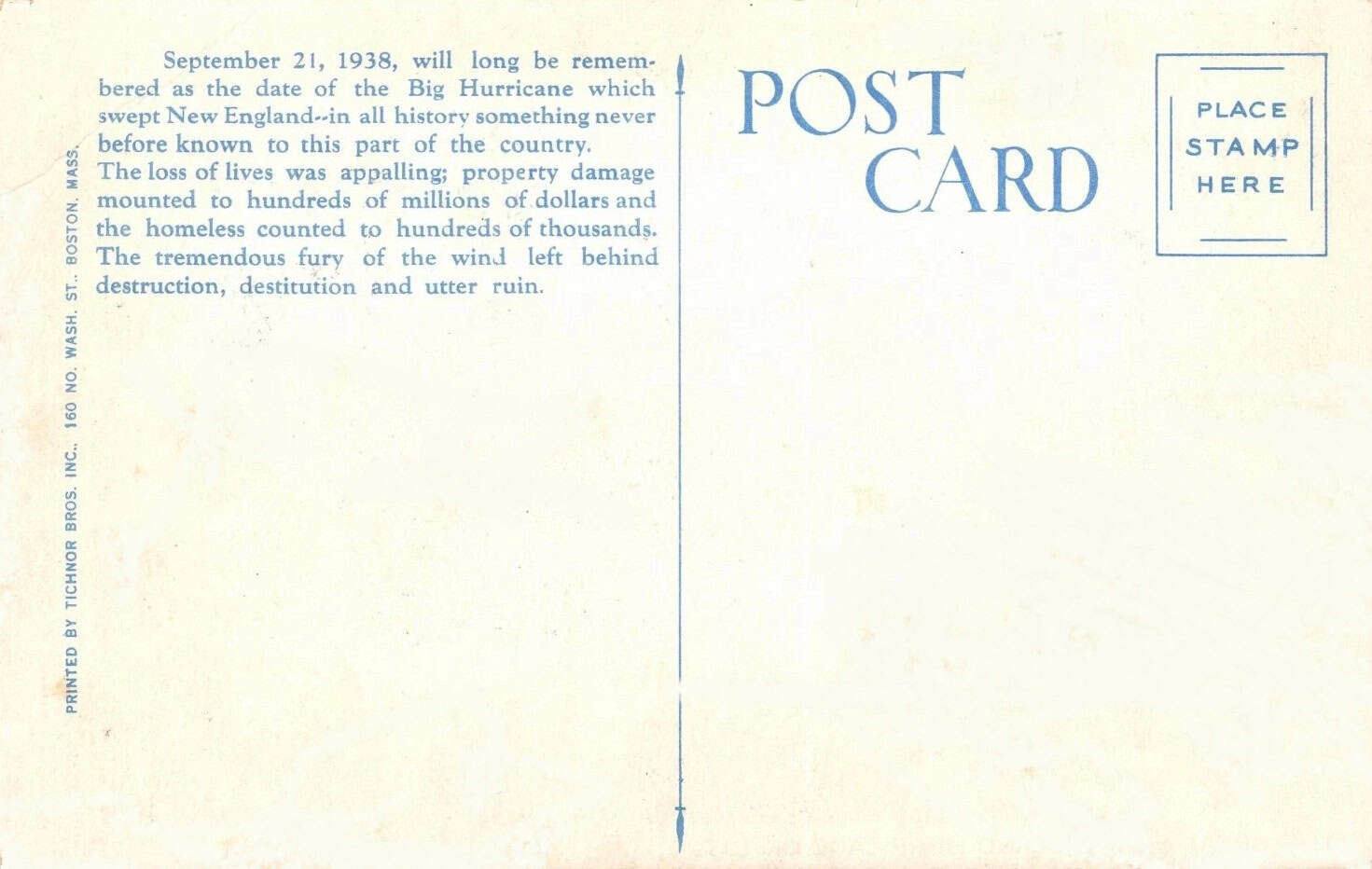
The second mishap was the wreck caused by the great New England hurricane of September 21, 1938, the storm dubbed as the “Long Island Express,” is on record as the most destructive hurricane in New England history.
The 1938 Hurricane
The Hurricane of 1938 was responsible for the deaths of more than 600 people. It hit with extraordinary speed most of Long Island and southern New England with little warning. It was an era before weather satellites and modern forecasting. Consequently, people had no idea a major hurricane was approaching.
The storm caused enormous destruction across Rhode Island, Connecticut, Vermont, Massachusetts, and New Hampshire. Entire forests were flattened, towns flooded, bridges washed away, and railroads torn apart.
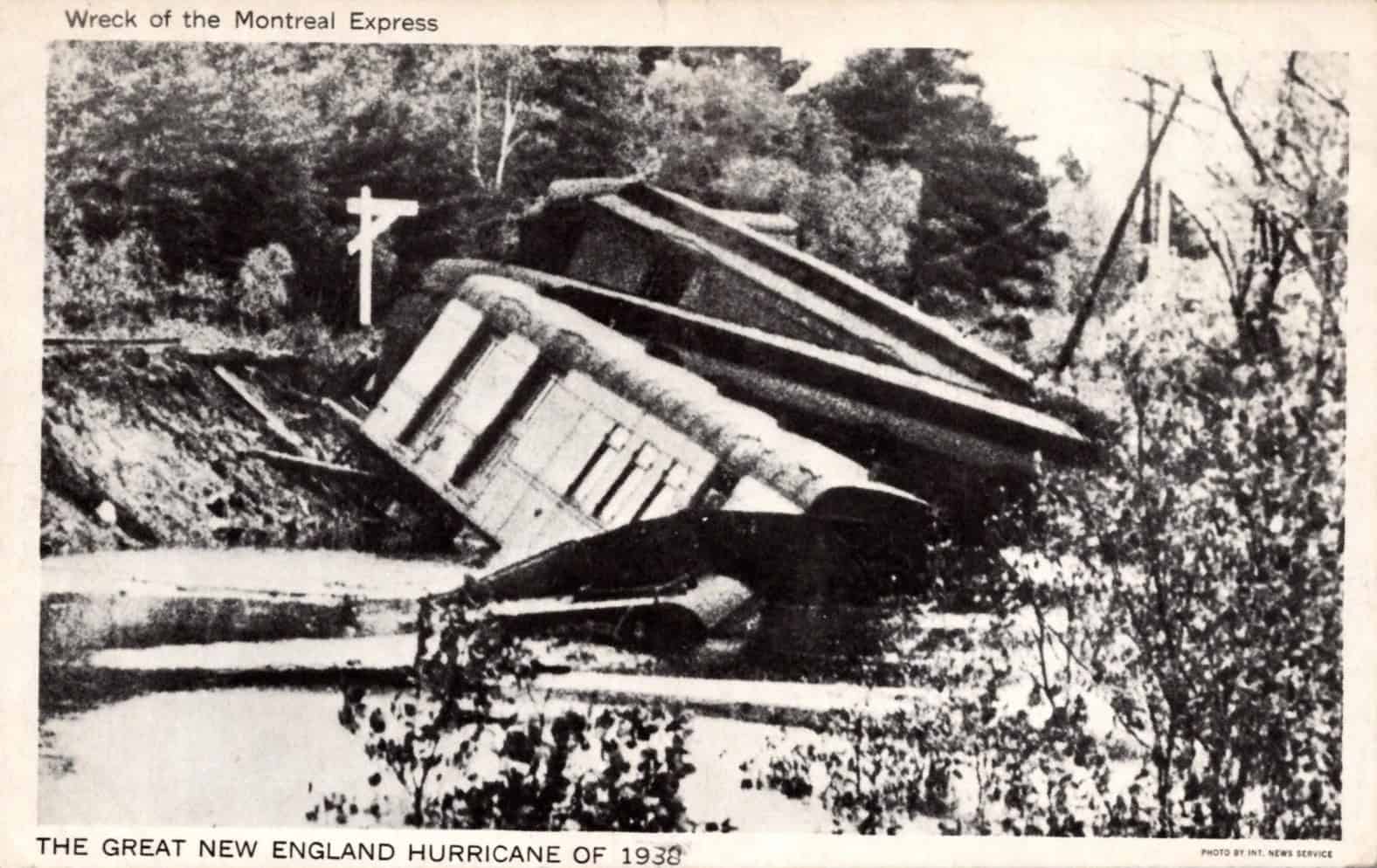
The Montreal Express
The Montreal Express was a well-known passenger train that ran between New England and Montreal. During the hurricane, torrential rains and flooding undercut railroad embankments and washed-out sections of track. One of these washouts was directly in the storm’s path.
The exact wreck site of the storm appears to have been on a line that was most frequently affected by hurricane flooding, but even contemporary sources do not give precise coordinates for the wreck.
Postcards seem to agree. The wreck site postcard above has been verified as being the location of the 1938 wreck. Verification was accomplished by power line identification and records concerning power pole installation.
The site of the now named, “The 1938 Wreck of the Boston-to-Montreal “Mount Royal” Express,” commonly referred to on postcards as the Montreal Express, is about two miles outside Winchendon, Massachusetts.
If you are a railroad-history enthusiast, a Postcard History reader, and are interested in exact orientation, search for Winchendon, Massachusetts, at 42.686° N, 72.045° W. The village is hard against the southern border of New Hampshire at a point in Massachusetts where Routes 12 and 202 intersect.
What makes the story particularly fascinating is that the train was not destroyed by a collision or mechanical failure, but by the overwhelming force of nature.