New York has always been viewed through the entertainment lens such as Broadway, Tin Pan Alley, celebrity chefs, but the City’s most enduring form of entertainment has always been shopping. As the place where the department store was perfected for Americans, New York has long held the bragging rights and control of this institution’s image. Classic postcards tell the story best.
How did New York become the world capital of shopping? It was the largest city at the crossroads of the world’s ships and trains as the 19th turned into the 20th century. It had the labor force to produce what fickle customers wanted instantly. Fortunately, as this evolution was occurring, publishers also were competing to produce the finest and most entertaining postcards.
New York’s first major department store was just around the corner from City Hall and the Main Post Office at Broadway and Chambers Street, as shown in this early Koehler (1518) hold-to-light.
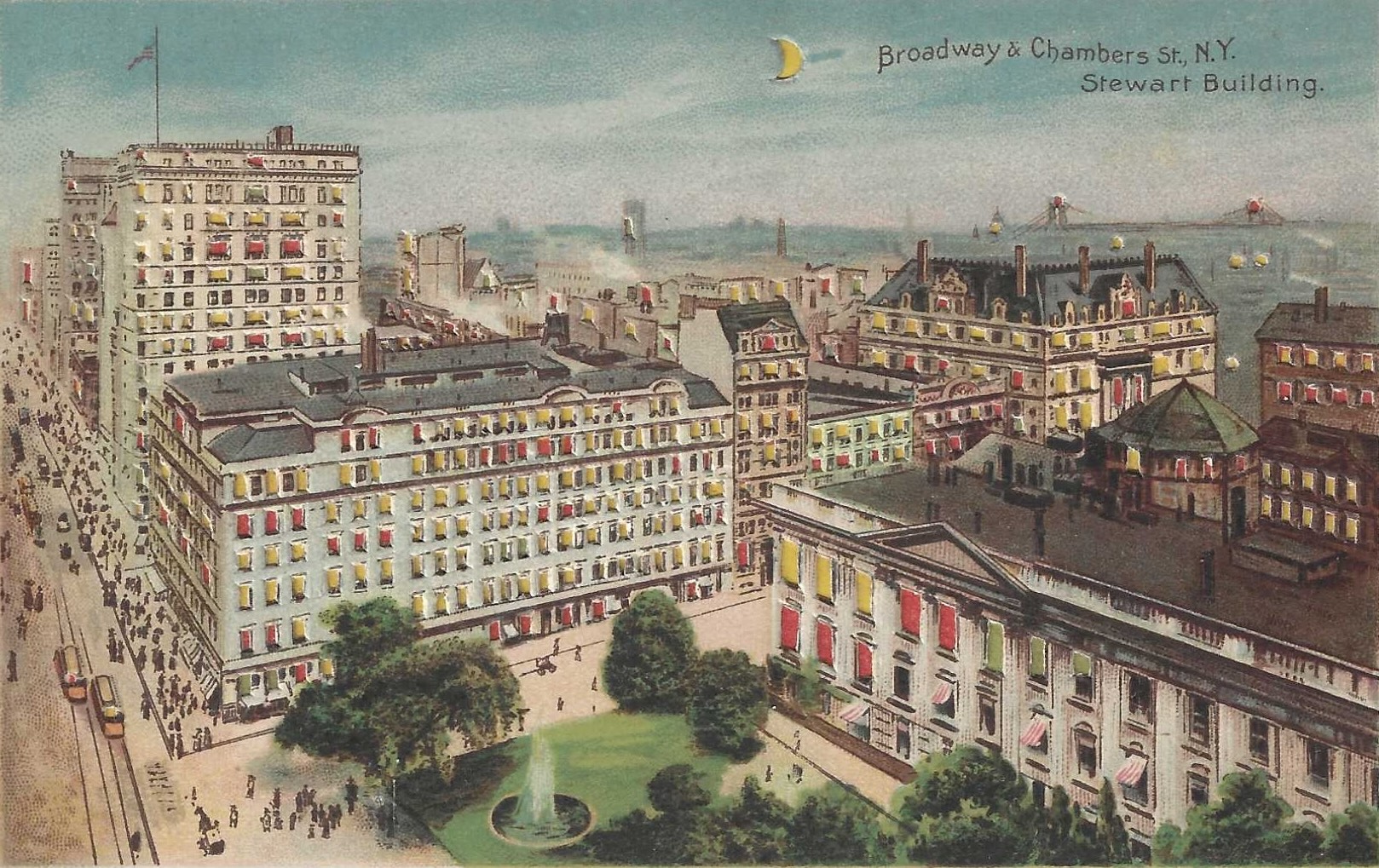
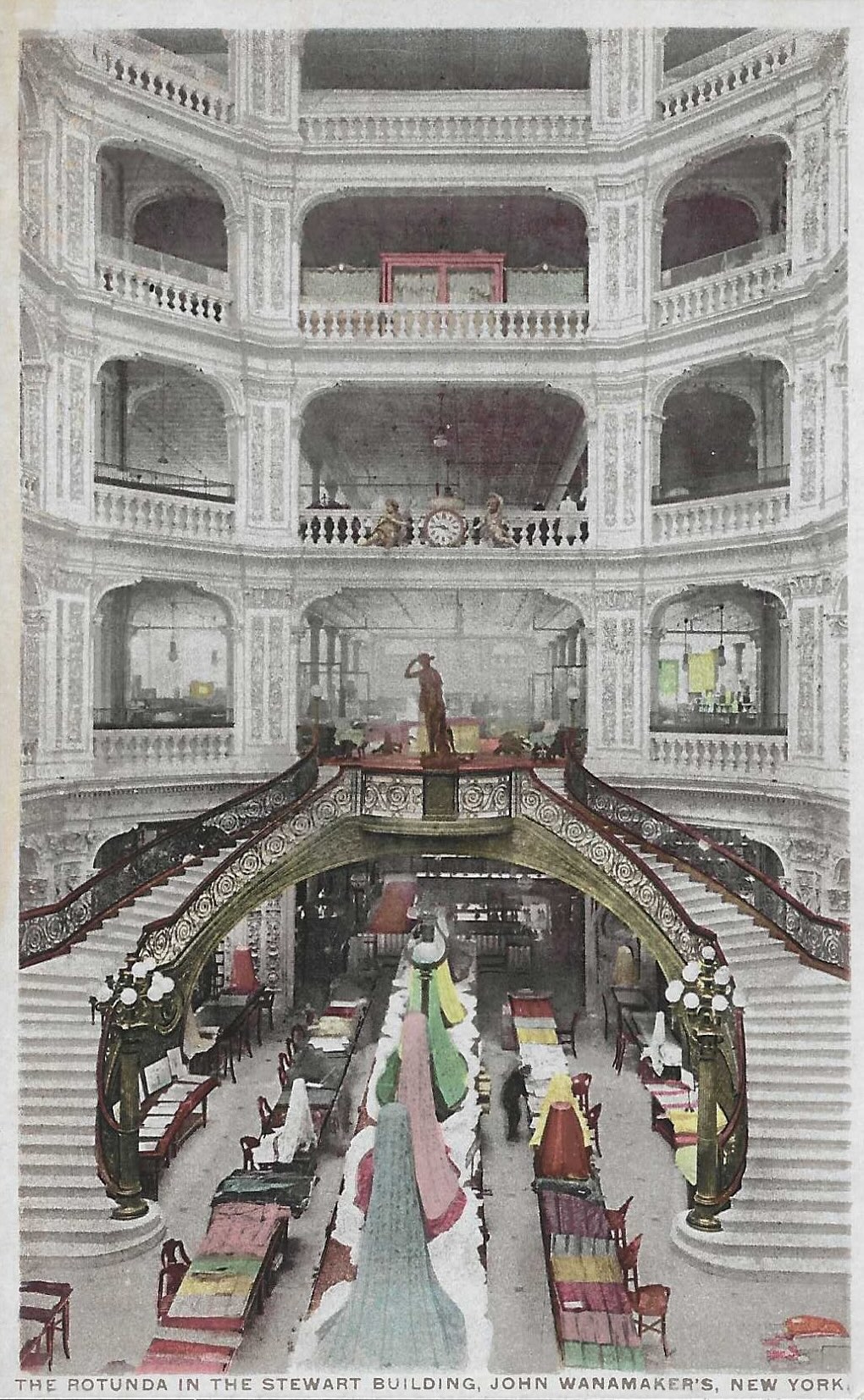
A.T. Stewart’s store was eventually purchased and integrated into Philadelphia’s John Wanamaker and the emporium they created at Broadway and 9th Street became the standard-bearer for the category. The enticements were endless for New York City’s female shoppers.
Julie Satow describes the compulsion to provide consumer satisfaction while producing an environment safe and secure for women, in her study about the Golden Age of American department stores, When Women Ran Fifth Avenue:
“In the early twentieth century, department stores were a land of glamour and possibility. In a single afternoon, you could have the details of a wedding (or funeral) planned; find out the dates for the civil service examinations; send a telegram at a Western Union outpost; drop your baby at a nursery to have a leisurely lunch at the tearoom, followed by an appointment at the hair salon; arrange for the express delivery of an ermine fur wrap to your home; buy refrigerated steaks; or order a pair of rare green parakeets from the Seychelles Islands.”
The success model of department stores depended upon appealing to shoppers’ aspirations and fantasies, understanding that many customers were recent immigrants and people newly made affluent by the economic successes of the Post-Civil War industrial revolution. Customers’ aspirations were reinforced by the interior architecture of soaring ceilings, grand staircases and light-filled atriums.
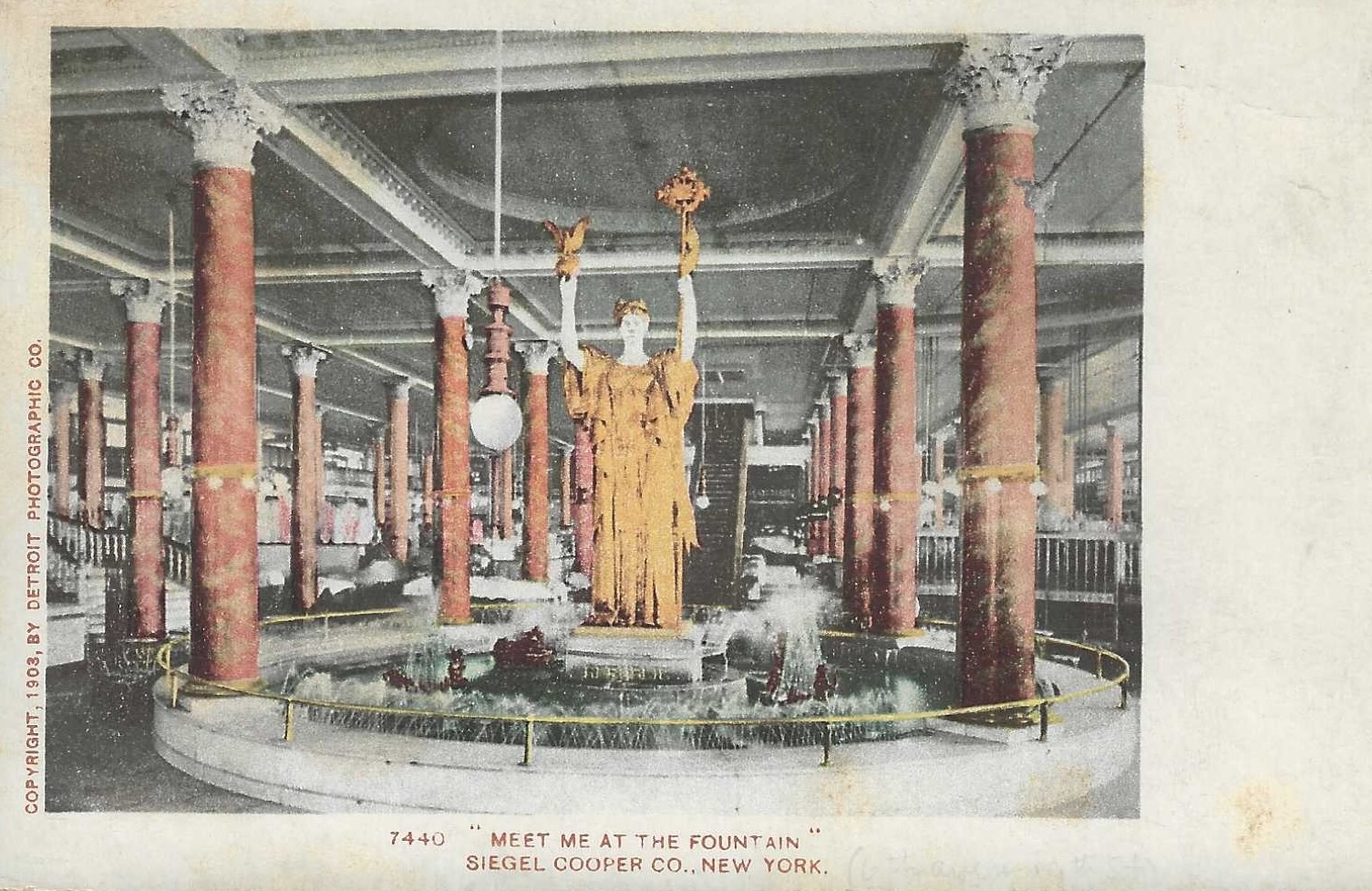
Fantasy encompassed the illusion of ownership, stimulated by long counters and rotating seats where customers could try any number of baubles: candies and confections, laces and ribbons, cosmetics or leather gloves.
The shopping experience emphasized service and not just goods. The tearoom and efficient delivery allowed Greenhut and Company to say that they cared about women’s comfort, safety and convenience.
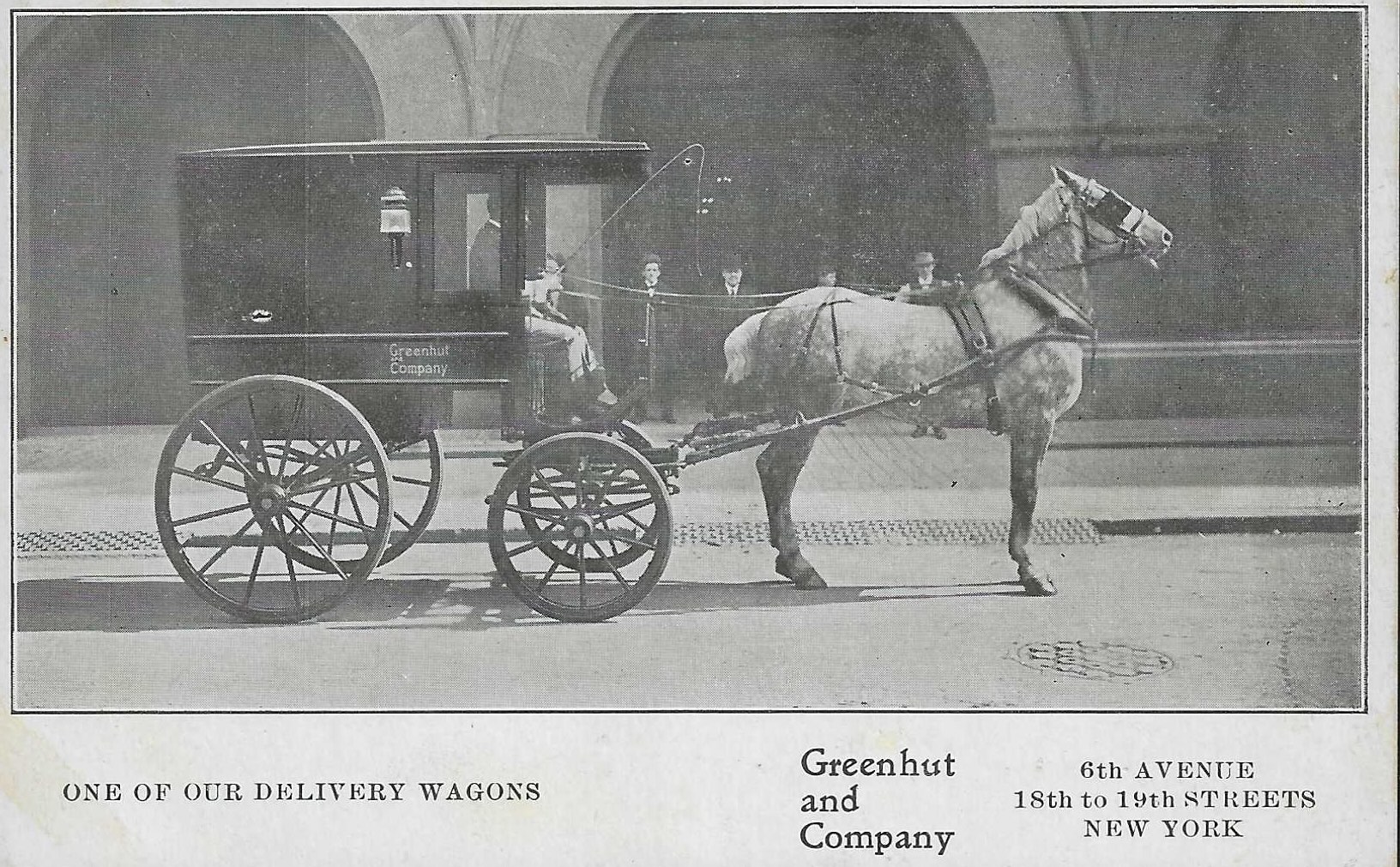
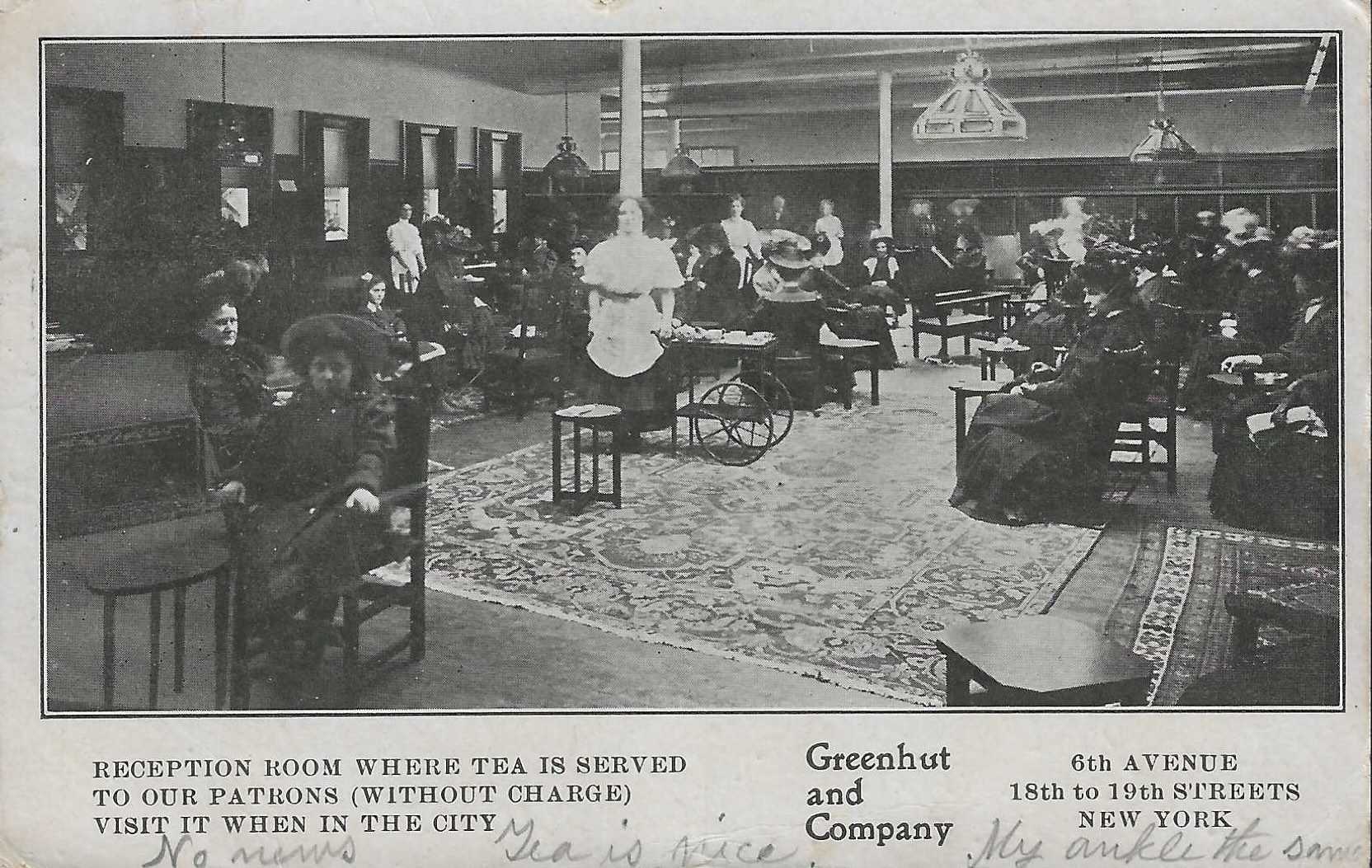
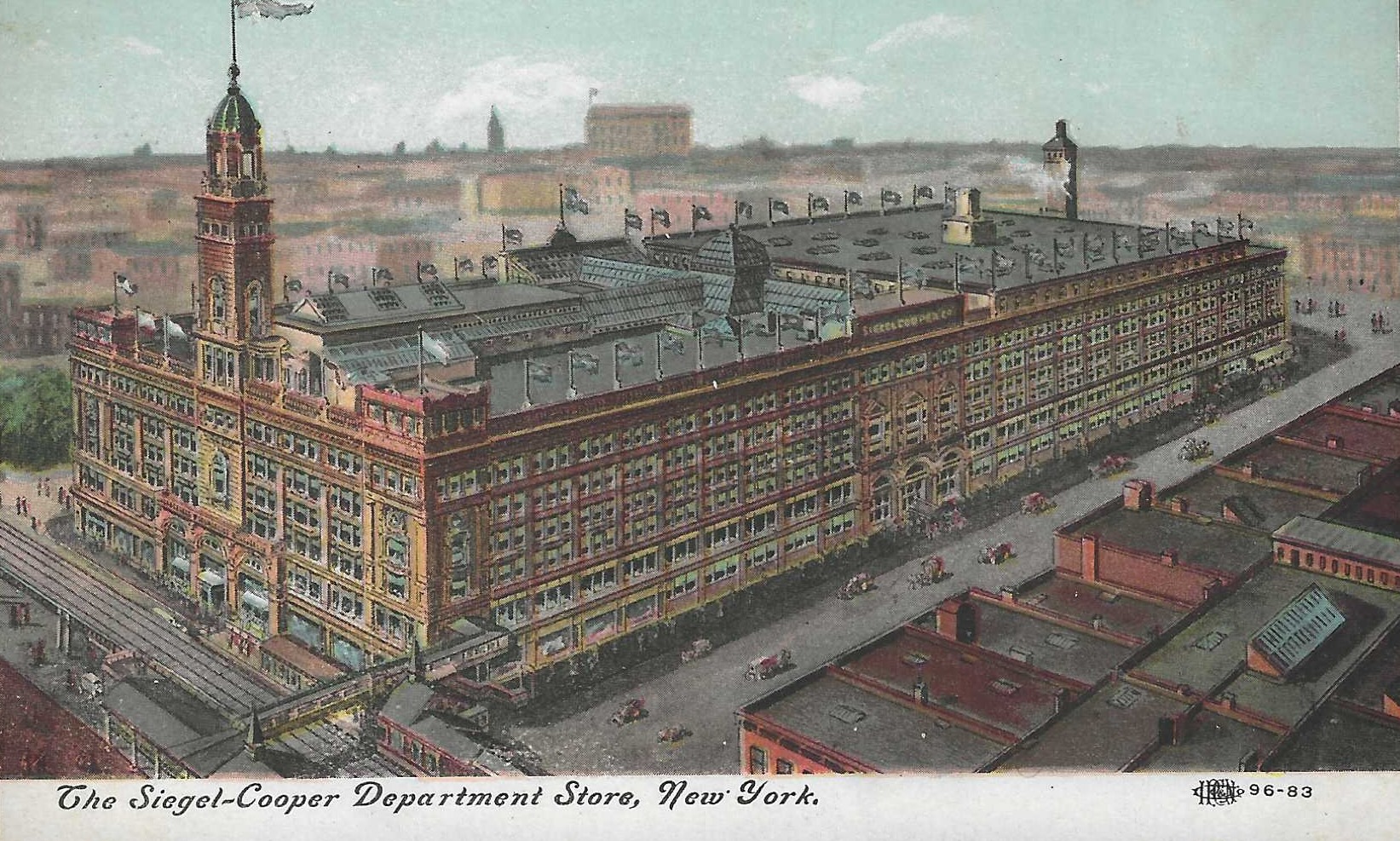
In 1896, more than 150,000 women attended the grand opening of the Siegel-Cooper Store with its display of grand pianos, the largest photo gallery in the world – Georgia O’Keefe and Salvador Dali became superstars in the shopping aisles. Siegel-Cooper’s pet department went way beyond selling dogs and cats to include monkeys, panther cubs and even lions. Macy’s offered the world’s largest rug collection.
Transportation was part of the deal. The 6th Avenue El, which operated from 1877 to 1938, ran through the Ladies’ Mile, in many cases providing direct access to the stores from the train platform. Not just convenience was at stake here; the train provided access to a much larger and socially diverse cohort of female shoppers. Actresses, the wealthy and the politically well connected like the Roosevelts, Lillian Russell and Anna Held arrived by carriages. Owing to the crowds and the elevated railway’s noise and dirt – customers and store owners suddenly found the neighborhood less desirable and moved farther north in Manhattan for their residences and shopping.
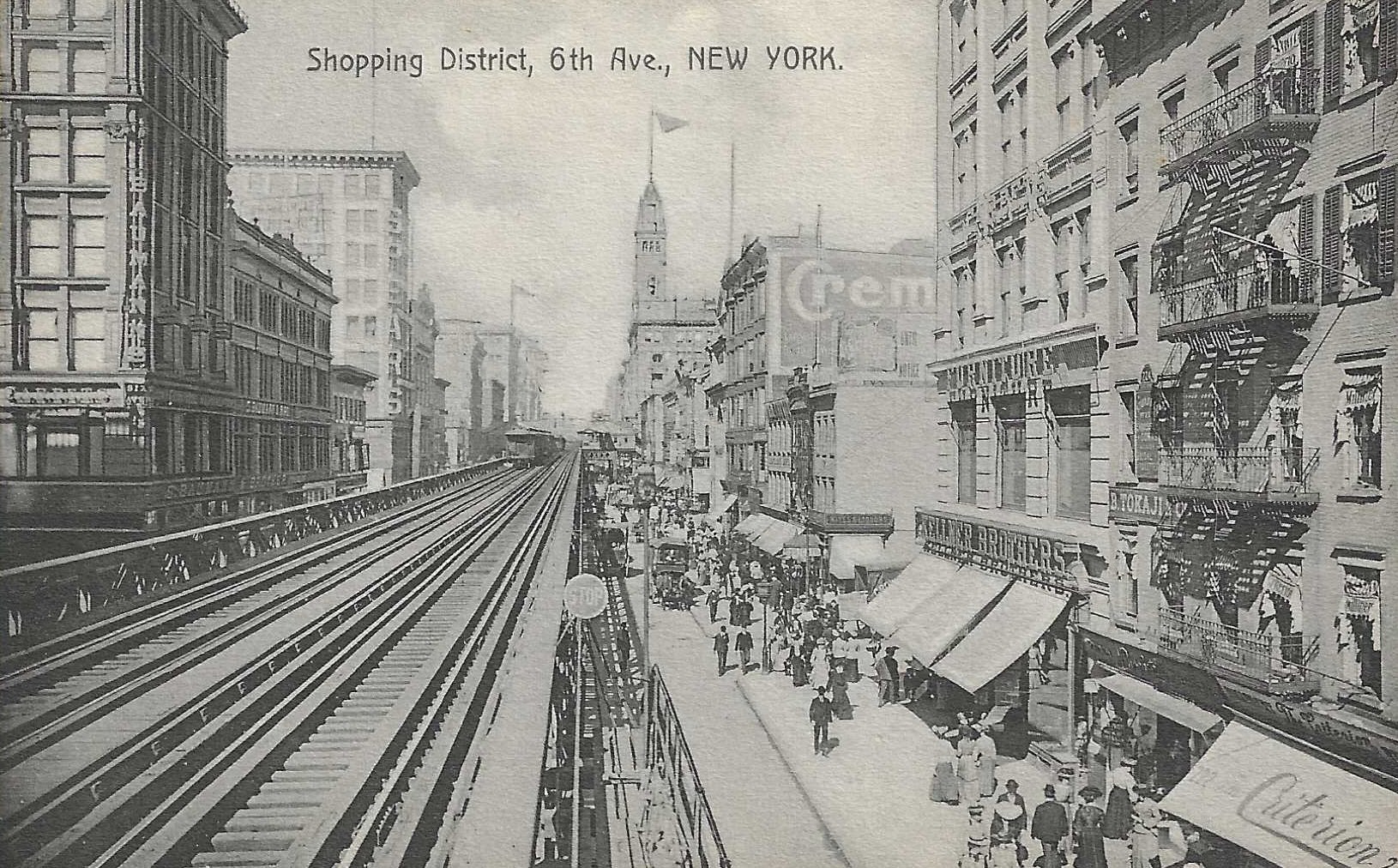
That’s not to say that New York women were inclined to avoid a “deal.” Bargain basements were an innovation where kitchen staff and factory workers could buy discount dishware, pots and pans and men’s, women’s, and children’s clothing.
The department store concept was carried beyond New York to Chicago, St. Louis, Philadelphia, Kansas City and beyond. Districts like San Francisco’s Union Square were established to satisfy the urge to buy. However, New York stayed in the lead through its wholesale industry.
Unfortunately, department stores could not survive the economic dislocations of the First World War. Many profitable palaces went bankrupt and were closed. Many of their buildings became warehouses. The Siegel-Cooper store was turned into a military hospital, known as the U. S. Debarkation Hospital #3, caring for the war-injured and providing intake services for the armed forces.
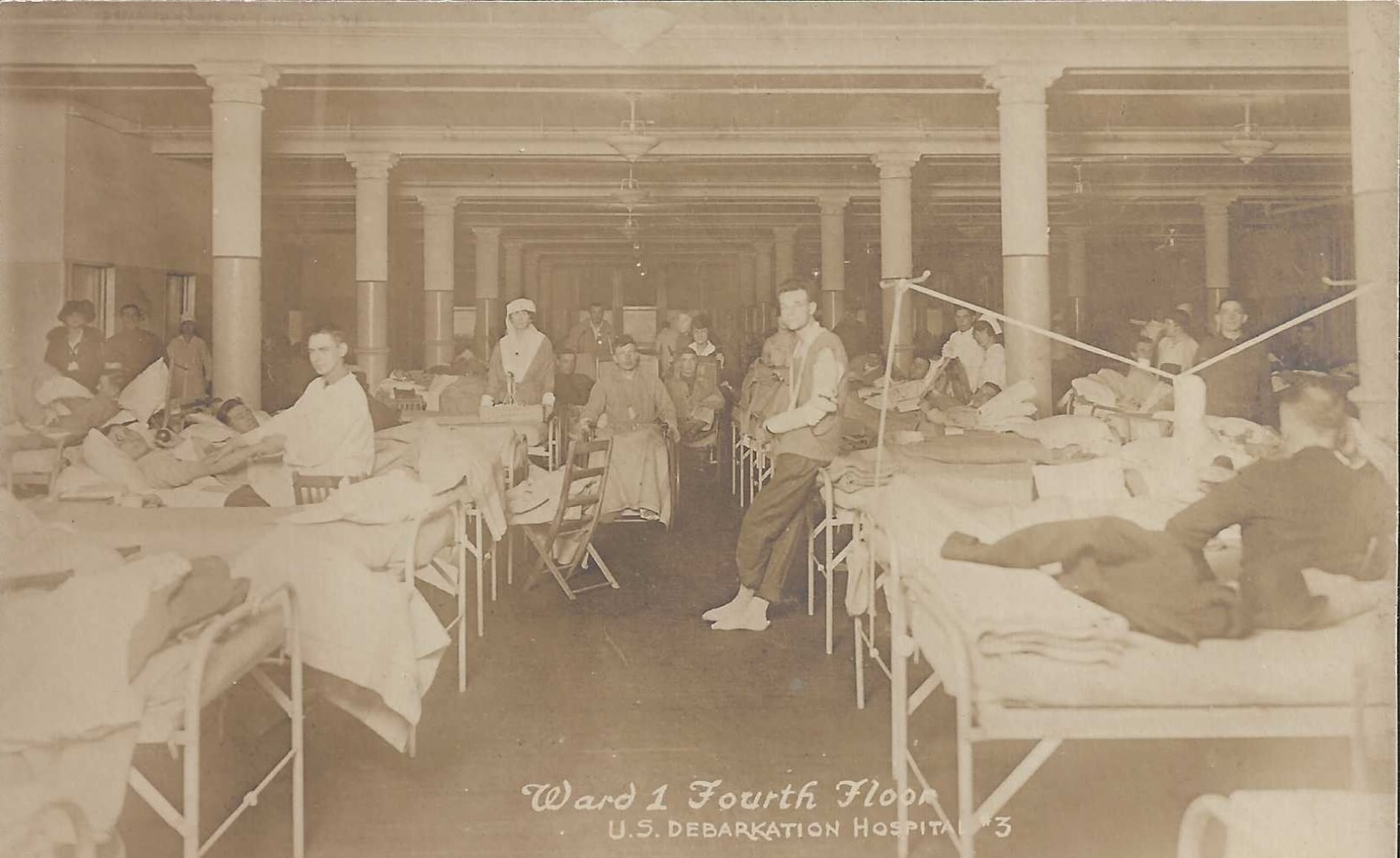
Prior to the First World War, New York’s shopping district was considered as going up Broadway and then, shifting over to Sixth Avenue culminating at Herald Square and 34th Street where Macy’s and Gimbel’s held forth. 14th Street and Union Square was then considered the fulcrum of the district.
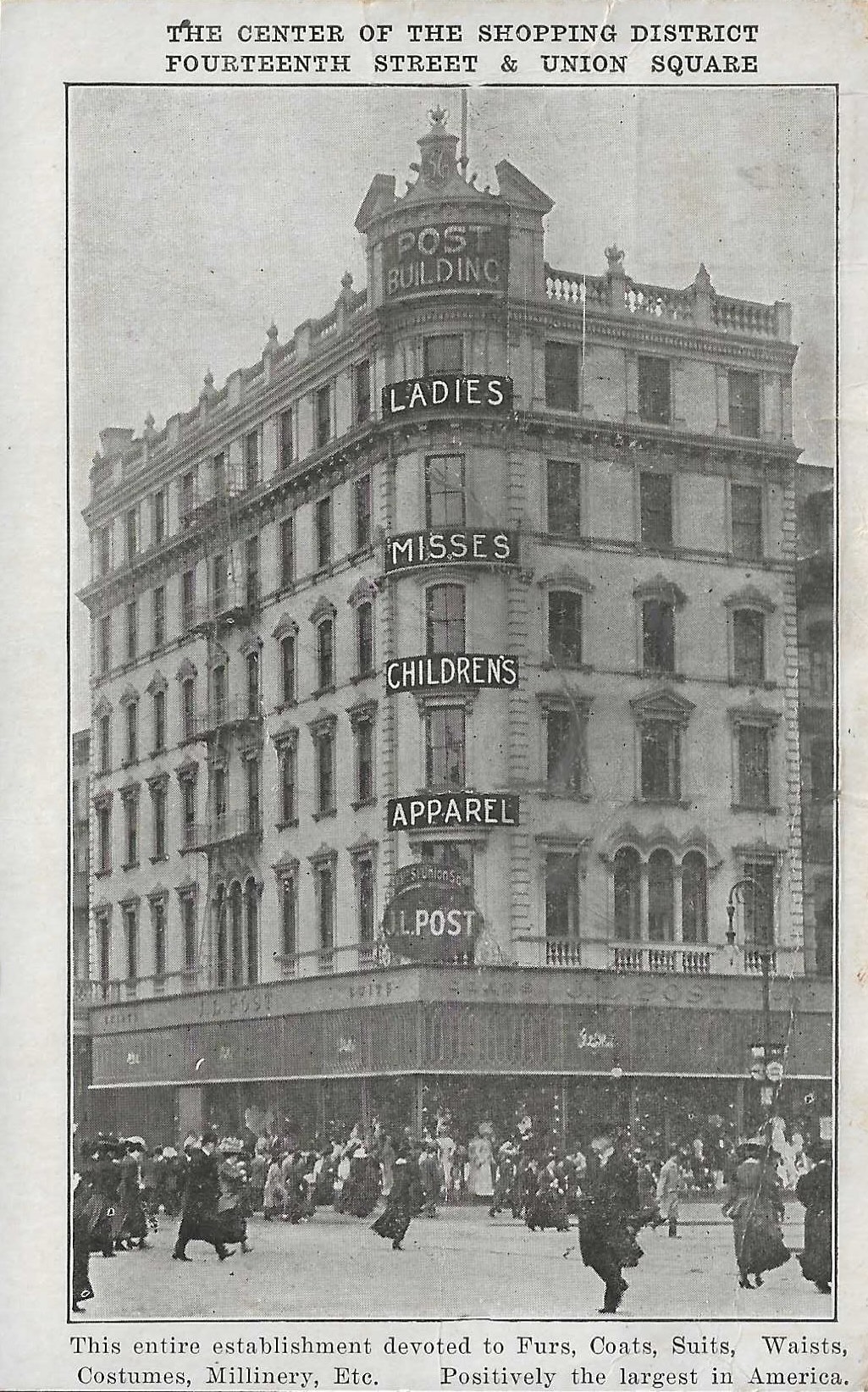
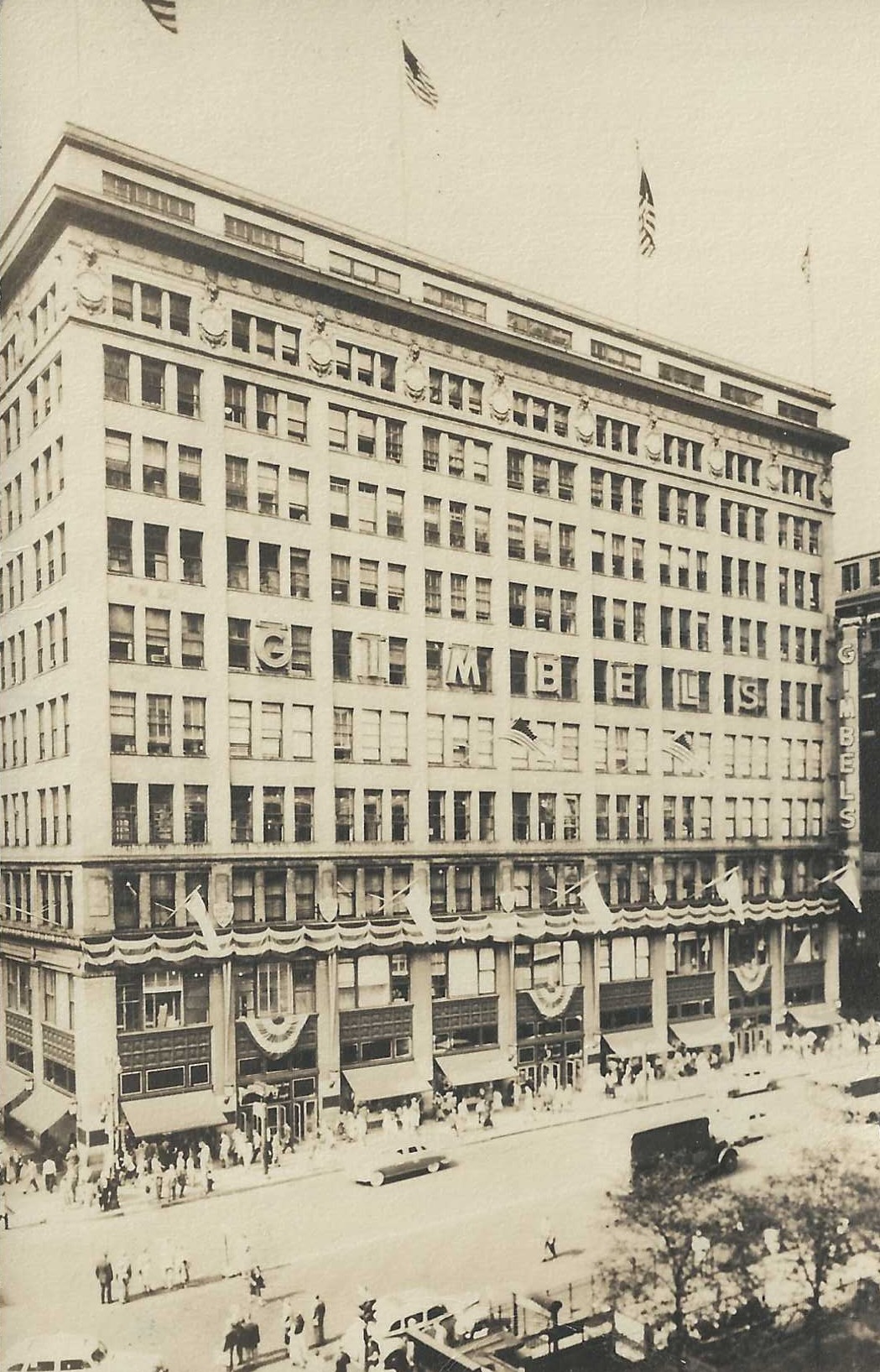
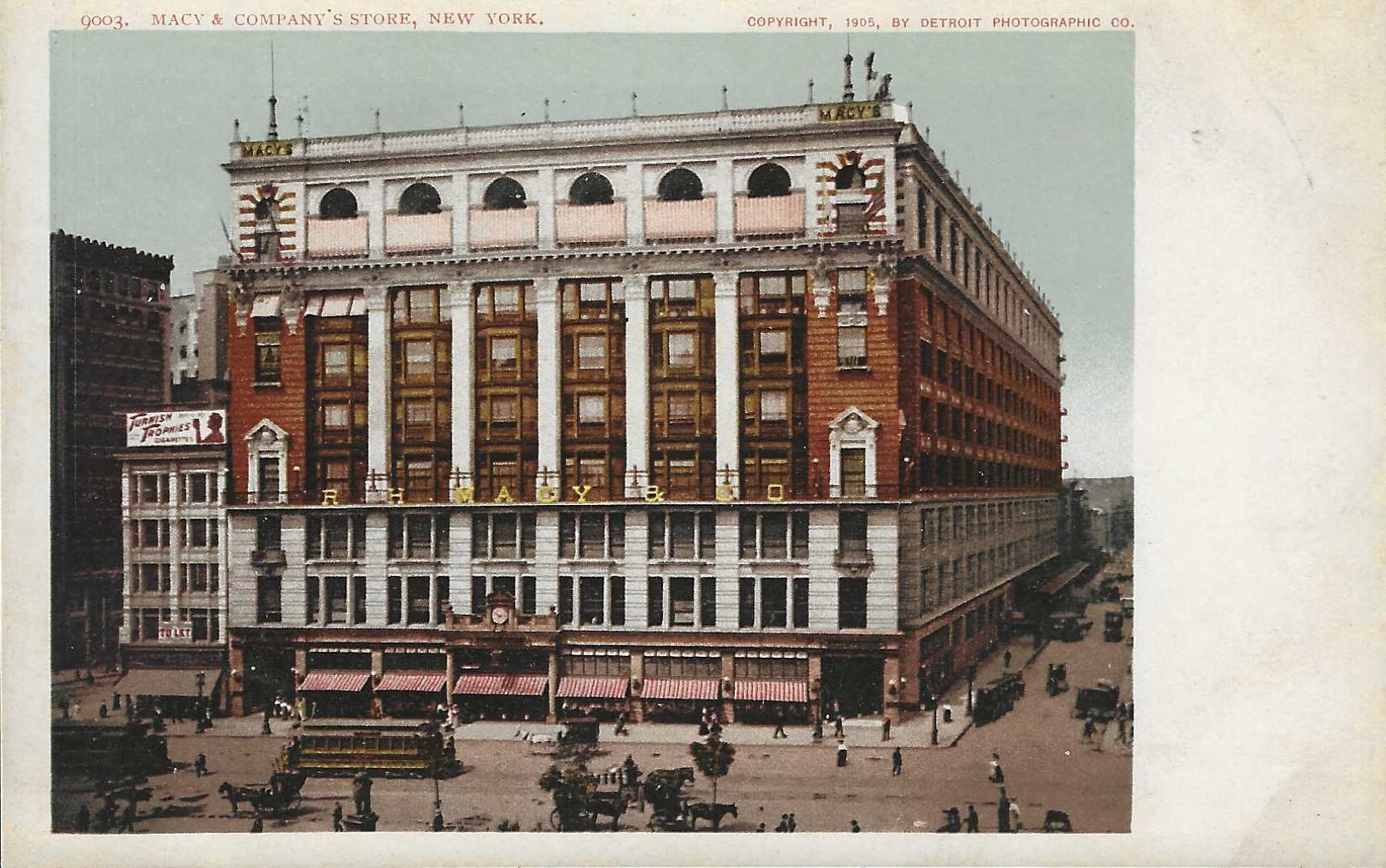
Things changed after the war with the movement of stores, jumping across 34th Street and, then going up Fifth Avenue. Lord & Taylor moved from Broadway and 20th to the much more fashionable Fifth Avenue between 38th and 39th streets. B. Altman went from 621 Sixth Avenue in the Ladies’ Mile to the corner of Fifth Avenue and 34th to 35th Streets, practically right across the road from Mrs. Astor’s mansion that was about to be turned into the Waldorf-Astoria Hotel and later, in the 1930s into the Empire State Building.
Arnold Constable touted a move from 6th to 5th Avenues in a linen postcard. This advertising card for Rogers Peet graphically illustrates the geographical shift from downtown to the Ladies’ Mile to Fifth Avenue.
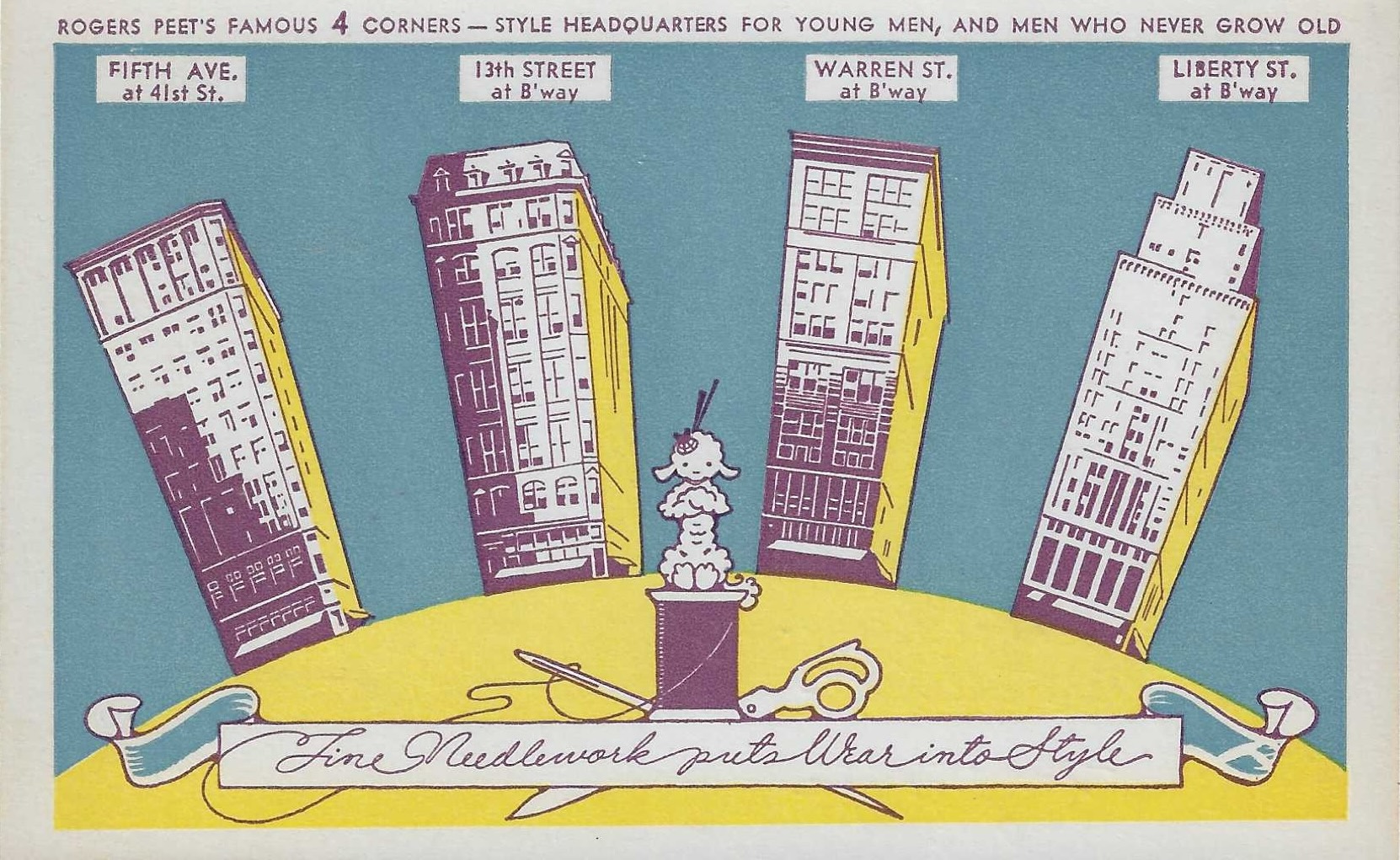
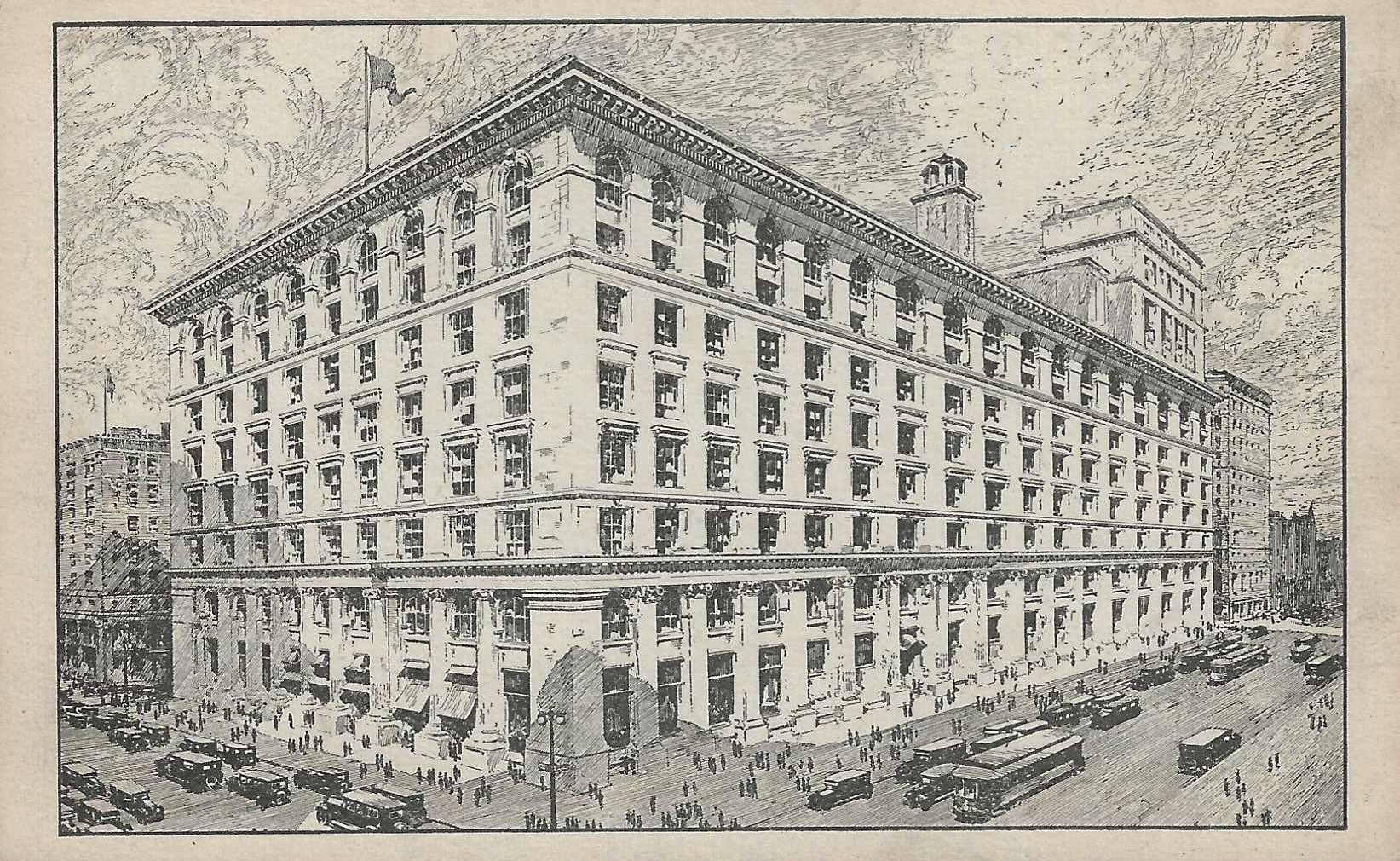
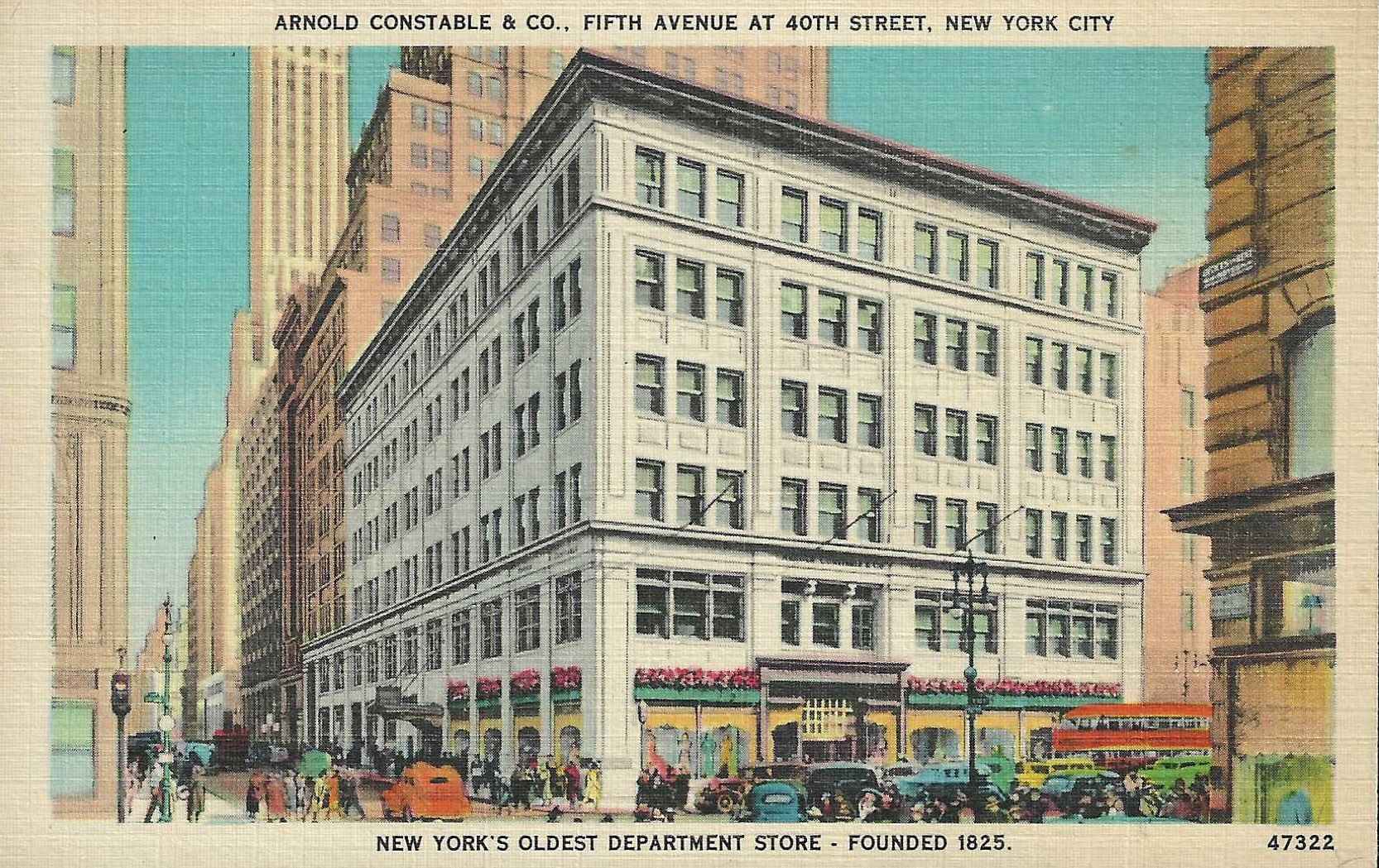
The stores reopened up Fifth Avenue to the Plaza Hotel at 57th Street – Bergdorf-Goodman, Saks Fifth Avenue, Henri Bendel, Bonwit Teller in addition to Lord & Taylor. It was not just a geographic move but also one that involved climbing the social register and striking their appeal to luxury-oriented consumers.
The 1920s, following conclusion of the Great War, was again an epoch of affluence and conspicuous consumption. The “flapper era” was a time to indulge. Americans were flush with cash and looking for goods to spend their money on – radios, automobiles, clothing and jewelry.
Merchandisers started to use comparison shopping for competitive intelligence and to evaluate internal operations. Macy’s didn’t tell Gimbels, but they certainly kept a close eye on what was working for their respective retail rivals down the street.
The look and feel of department stores changed – escalators replaced elevators, and revolving doors replaced swinging doors so that more people could enter without feeling crowded. Lord & Taylor created experiential spaces including a sun parlor, a breakfast nook and a library with a constantly rotating set of interiors. Parisian haute couture became idealized.
In addition, department stores began paying attention to men with advisory services to help them shop for the women in their lives. Not just men, the idea of “personal shopping” was proposed to keep saleswomen involved in every aspect of the customer’s experience with the store.
This transformation was largely a consequence of the advancing entry of women into the labor force, especially in the sales category. The statistics tell the story: in 1880 the census tallied 8,000 saleswomen. A decade later in 1890 that number ballooned to more than 58,000. By 1920, more than a half-million women were working in retail sales. Much of the retail savvy acquired in the Ladies’ Mile era was sustained in the evolving department store model.
Women’s advances did not stop with sales. By the next generation, women’s intensive knowledge about the female customer led to ownership and senior management positions in department stores. Julie Satow’s When Women Ran Fifth Avenue describes the climb of Dorothy Shaver at Lord & Taylor. By integrating the fine and practical arts, Shaver brought Art Deco design into fashion. Hortense Odlum’s transformation from a Forest Hills housewife and unpaid advisor to the presidency of Bonwit Teller, after the store was purchased by her financial tycoon husband, was another notable shift in that era.
Back-office operations acquired a new importance and began receiving resources and attention. Executives realized that maintaining stock was as critical to financial success as purchasing goods. Not being able to meet a customers’ request immediately was a lost sale. Keeping a stocked back room was as important as the sales floor.
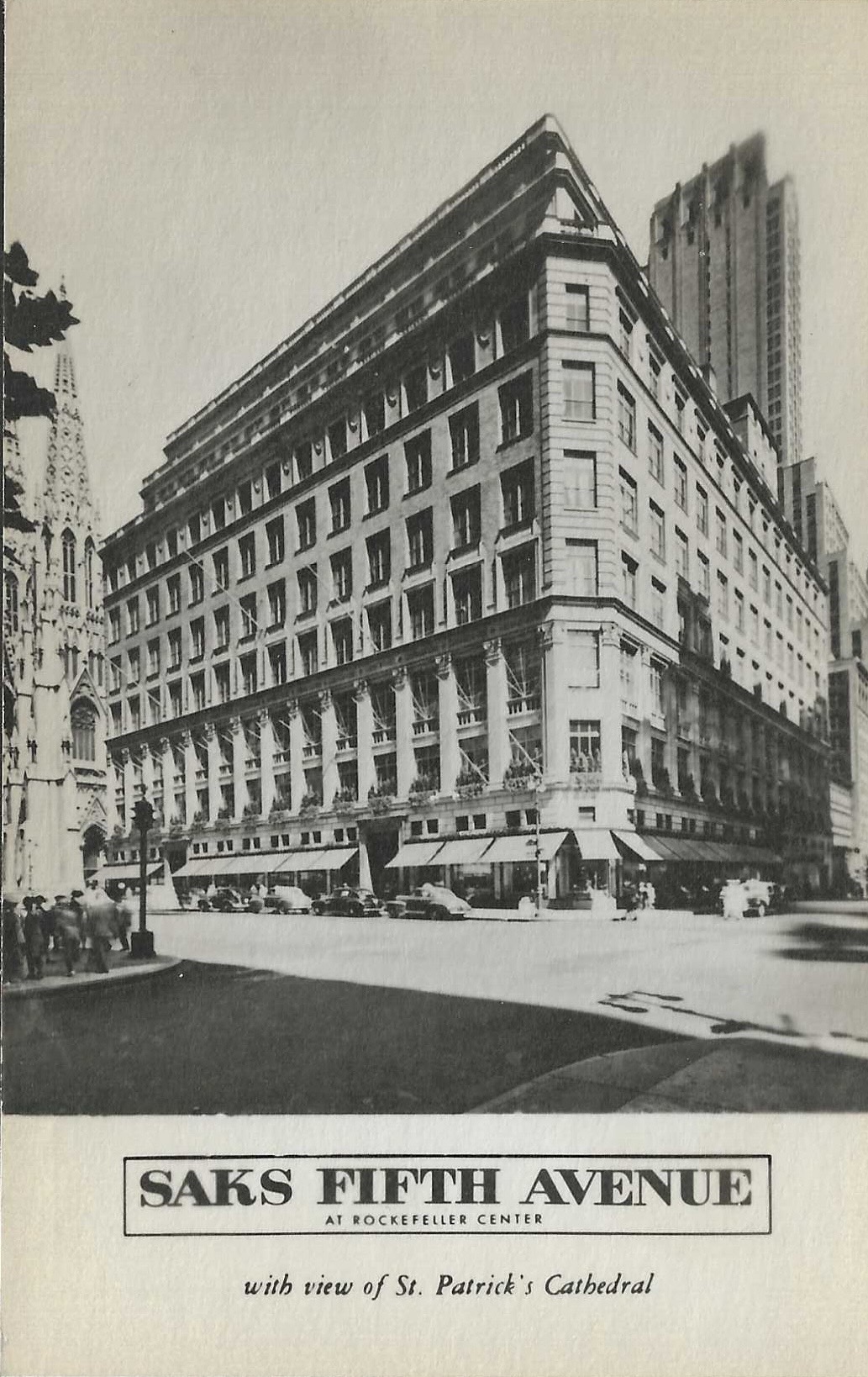
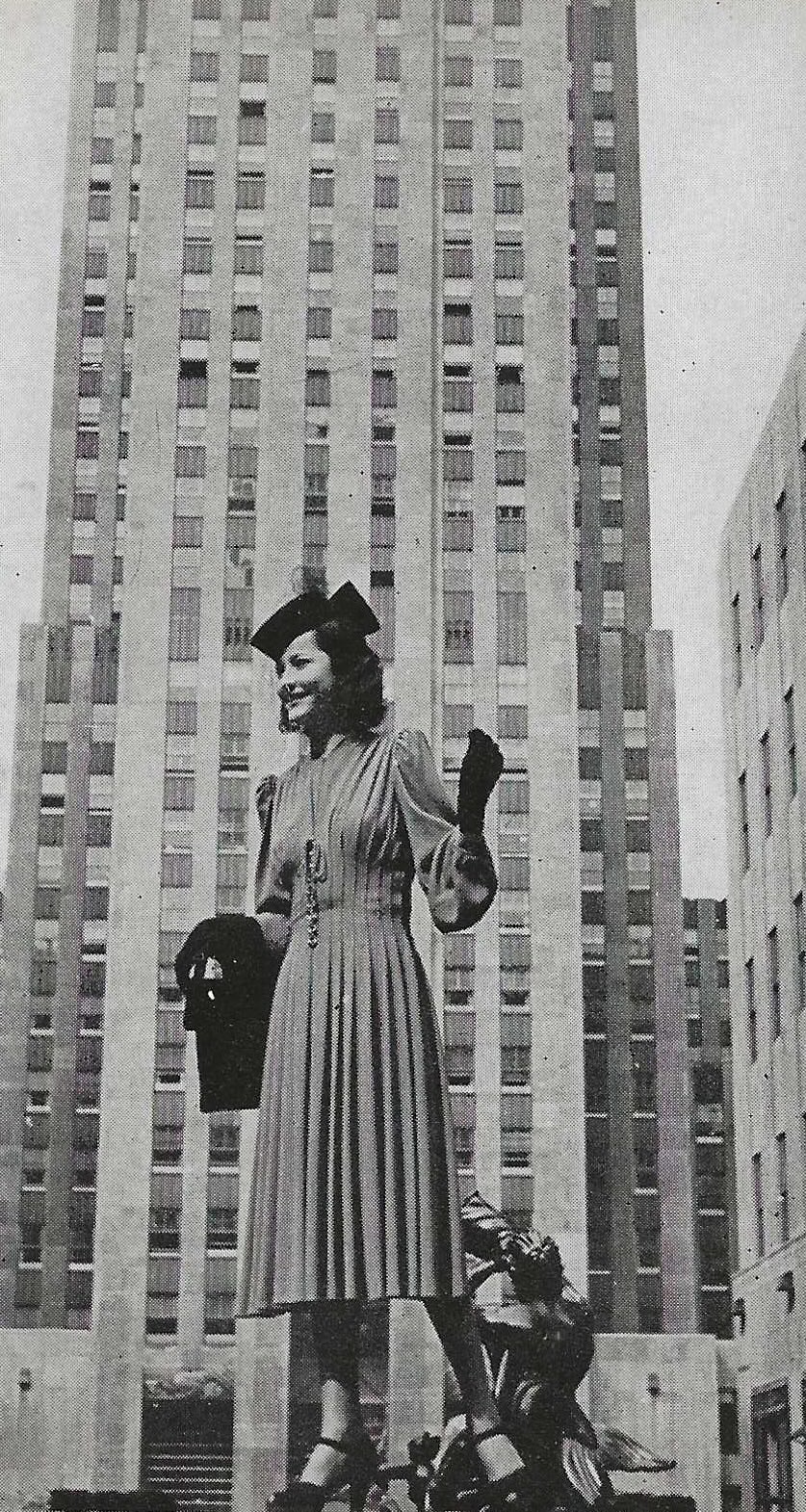
Advertising and marketing developed a new cachet since a category with many entrants requires each one to assert its own distinctiveness – to brand itself uniquely and give consumers a reason to purchase through each outlet. During the critical holiday season, the 1947 movie Miracle on 34th Street made the department store as much of a character in the film as Santa Claus. Saks Fifth Avenue issued a set of postcards in the 1940s that I like to call “Chiffon Meets Brick” that instantly positions the retailer as fashionable by reinforcing its proximity to the recently constructed Rockefeller Center.
Macy’s strengthened its ownership of Thanksgiving, making its annual balloon parade a national holiday rather than just a quirky New York event.
Store owners began to preoccupy themselves with their saleswomen’s looks. Department stores opened lunchrooms so that sales staff wouldn’t get too skinny and exercise facilities so they wouldn’t become too fat.
The Depression and Second World War were kinder to department stores than the First World War had been but still created difficult financial pressures. Hard times both promoted and challenged women’s climb into the labor force. Many saw them responsible for making way for men – to go back to being homemakers – when they were called upon to sacrifice their economic advances. Then, with the arrival of peace, the United States experienced an unparalleled economic boom.
The Postwar boom had a profound impact upon shopping practices. The marriage rate increased after the war and, consequentially, so did the birth rate. Government programs such as the G.I. Bill provided home construction loans and supported an increase in housing. The outcome was a major population shift to the suburbs creating needs for washing machines and other major appliances, household furnishings as well as for baby and children’s clothes and toys.
The resulting increase in automobile ownership altered the urban ecology. Families stopped thinking about the city center as their nexus for employment, entertainment and shopping. Department stores, sensing opportunities as households were expanding, decided to follow their customers and shift their investments in favor of suburban locations. New York stores opened branches in places like Paramus, New Jersey, Scarsdale, and Garden City, Long Island. Downtown retail centers lost their significance as branch stores and shopping malls siphoned off customers.
The 1950s and 1960s are also recalled as a highly politicized era. A revolution in civil rights changed the racial profile of the stores’ customers, employees and suppliers. Female shoppers entered the stores with a higher level of political consciousness and increased demands. Everything that seemed to be supported by the “test of time” was suddenly disparaged and subjected to radical revision.
The early reaction by the department stores as they were challenged to be fresh and maintain novelty ended up putting power in the hands of designers. The grand scale of the Ladies’ Mile era stores devolved into a “street of shops” emphasizing designer brands within the department stores. Rather than being greeted by an outsized expanse, shoppers found stores broken into distinctive architectural spaces holding a curated selection of items.
Then, the fundamentals shifted as new types of retailers entered the competitive marketplace and informality replaced the strict dressing norms that had kept customers coming back to stay fashionable each season.
Discounters and category killers emphasized availability and price. New York’s E.J. Korvette was there first and placed itself strategically as a discounter right between Macy’s and Gimbels in Herald Square. They were followed nationally by Walmart, Kmart and Target. Category killers provided extensive selections and highly competitive pricing. Like the discounters, they relied on self-service and expected consumers to arrive at the store with sufficient background knowledge. Examples include Home Depot in home construction and hardware, Best Buy in consumer electronics, Toys “R” Us in toys and Staples in office supplies.
The ultimate category killer, of course, was the Internet. Online shopping allowed unlimited choice and pricing control was shifted to the customer.
By the 1980s and 1990s, the department store concept seemed antiquated, tired and rudderless, given all these changes in retailing and the reorientation of the retail consumer. Stores with deep heritage originating on the Ladies’ Mile and earlier in New York history began to fail and close. B. Altman closed in 1990. Lord & Taylor ended sales in the early-2000s. Its landmarked building is today owned by Amazon. Arnold Constable ceased operations of its 5th Avenue store in 1975. Henri Bendel was sold in 1985 to the Limited’s Leslie Wexner who did not share its sales philosophy; it ceased operations in 2019. Bonwit Teller shut down in 2000. The store sold its building to Donald Trump, who at that time was a real estate developer. He replaced the venerable department store with Trump Tower. Except for holdouts like Macy’s and Saks Fifth Avenue, the department store concept has died.