Prior to World War I, the attitude toward cigarette smoking in the United States was hostile, restrictive, and related to moral and social reform movements. Cigarettes were widely stigmatized and viewed as a sign of general moral decay. In Pre-WWI America, cigarettes made up less than 5% of total tobacco consumption in the United States.
During World War I, the reality of trench warfare for the soldier caused a massive change in thinking. The psychological comfort, camaraderie, and quick stress relief offered by cigarettes outweighed all pre-war moral arguments. An additional benefit too was that the smell of the cigarette smoke overcame some of the odors of mud, waste, and death in the trenches. Fighting in WWI was static, with soldiers switching between long waiting periods to battling through day-long artillery barrages. Smoking became a coping mechanism to handle both stress and boredom. The convenient transportable design of the pocket cigarette made it a better fit than pipes for the WWI soldier.
Private donation funds were created by various civilian groups to help provide tobacco for soldiers overseas, where it was scarce and expensive. British and Canadian organizations like London’s Over-Seas Club established the “Tobacco and Comforts Funds.” Tobacco manufacturers sold heavily subsidized cigarettes to those private funds. In the US, over the two-year period of 1917-1918, total cigarette production was 30 billion greater than the average 2-year prewar production. Of that total, approximately 16 billion cigarettes were acquired by private tobacco funds, and the remaining were sold to the military.
The donated cigarette and tobacco packages usually included a return postcard addressed to the donor. This allowed contact between soldiers and those at home, even if they were strangers. It was an opportunity for a brief communication with the “normal” world. For civilians at home, receiving such a postcard proved their money was directly impacting a real person on the front lines.
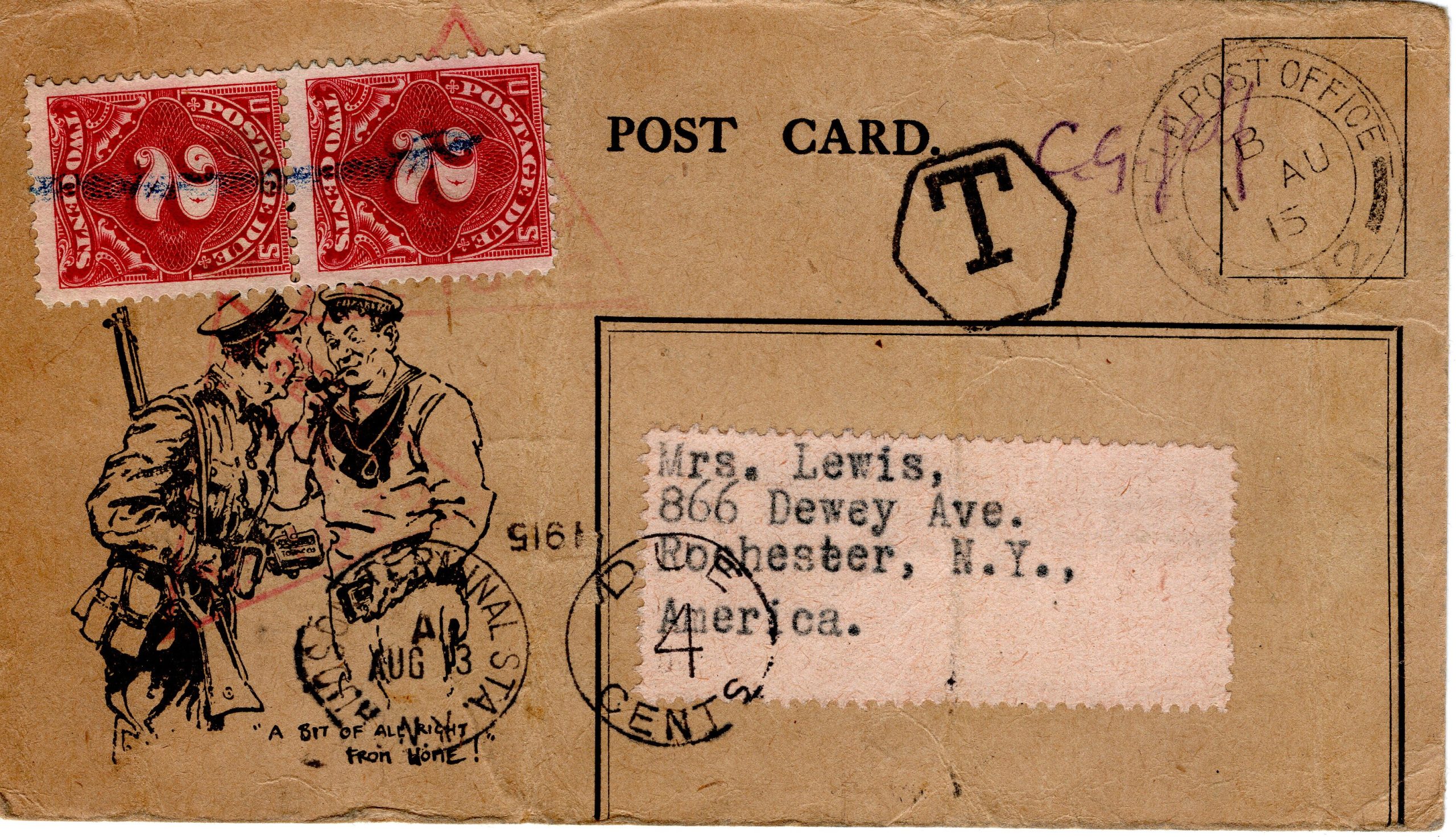
This tobacco receipt card was mailed by a soldier in the 6th Battalion, The Buffs, British Expeditionary Force in August 1915, serving in France. The soldier, who died in October 1916 during the Somme Offensive, wrote to an American to thank her for the cigarettes sent by her contribution to a tobacco fund. While the British soldier could send mail postage free to Great Britain, it would have cost him one British penny (equal to US 2 cents) to send this postcard to the USA. On arriving at New York, the postcard was marked “T” for postage due, and 4 cents (double the unpaid postage) was collected from the addressee.
In April 1917, when the US declared war on Germany, the civilian domestic postcard rate was one cent but increased to two cents on November 1, 1917. In October 1917, the US Congress authorized free postage for members of the armed forces serving overseas when mailing 1st class postcards and letters to the continental US.
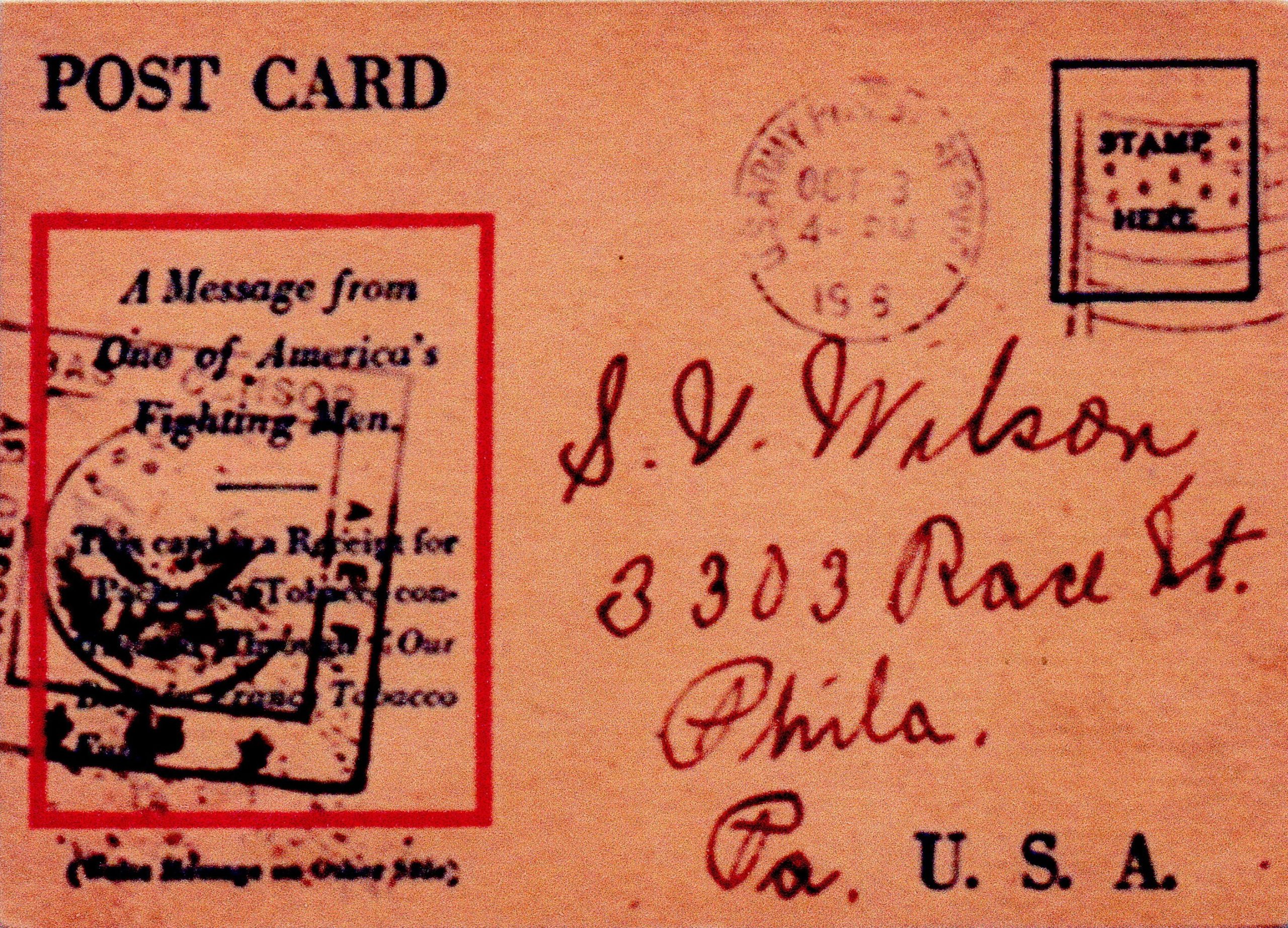
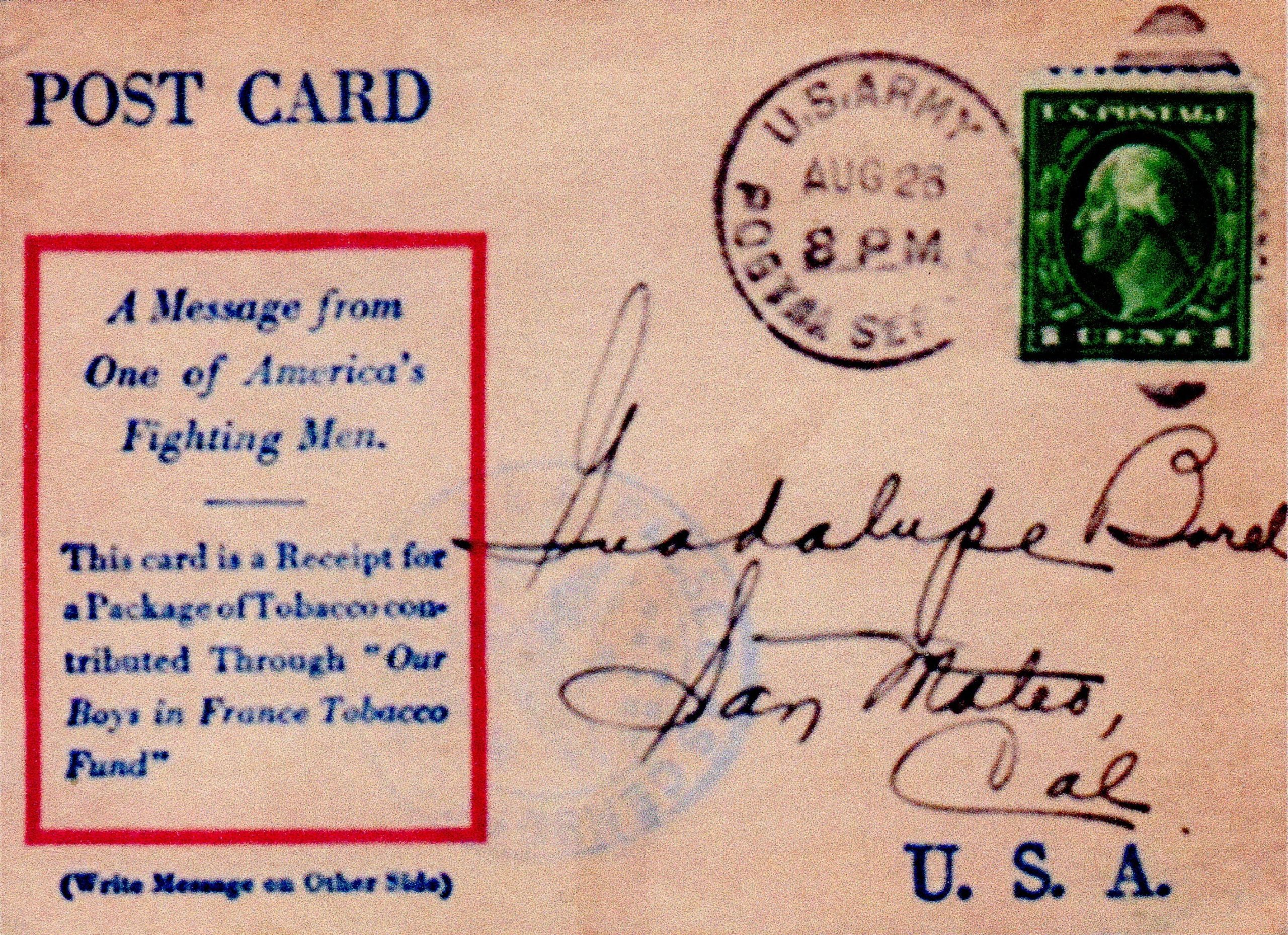
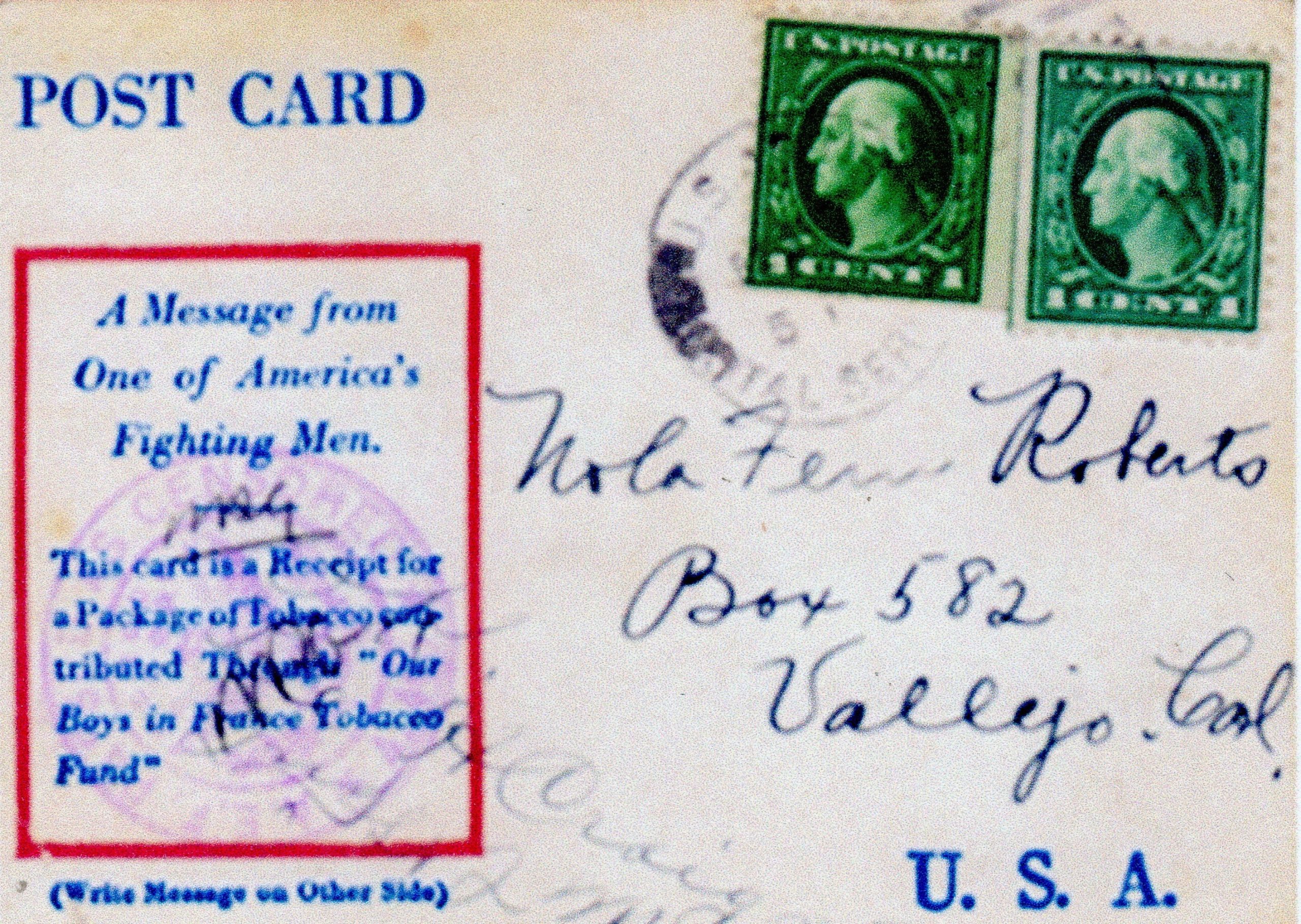
These different “tobacco thank you” cards mailed from soldiers overseas to the US were mailed through the US Army Postal Service and censored at the time of mailing. (You may double-click on the card mailed to Vallejo, California, to enlarge the image and examine the “Censored” purple stamp.) The messages on the back all express their appreciation for the gift. Since the sending soldier had the “free mail” privilege, the postage affixed in the US when the postcard was packed in the tobacco package was meaningless.
In WWII, the military also saw tobacco as a necessity to the maintenance of fighting men, so much so that four-cigarette packets were added to each K-ration (=12 cigarettes per day) before they added toilet paper to the ration pack. The demand on the front lines remained insatiable, and tobacco donation funds were set up to send extra “luxury” cartons to troops overseas. Local communities formed dedicated clubs solely focused on raising money to buy bulk cigarettes to send overseas. Organizations like the Elks and the Moose collected pocket change from members to purchase millions of cigarettes directly from cigarette manufacturers.
Companies such as General Motors developed a specialized corporate donation program to keep morale high among the thousands of GM workers drafted into service. GM distributed brand-name cigarettes (such as Camels or Chesterfields) and included pre-addressed postcards inside the cigarette boxes, with messages such as: “A gift from General Motors—Good luck to our men in service.” The deployed employees would sign the card and write an update or thank-you note to their home factory or assembly plant in Detroit.
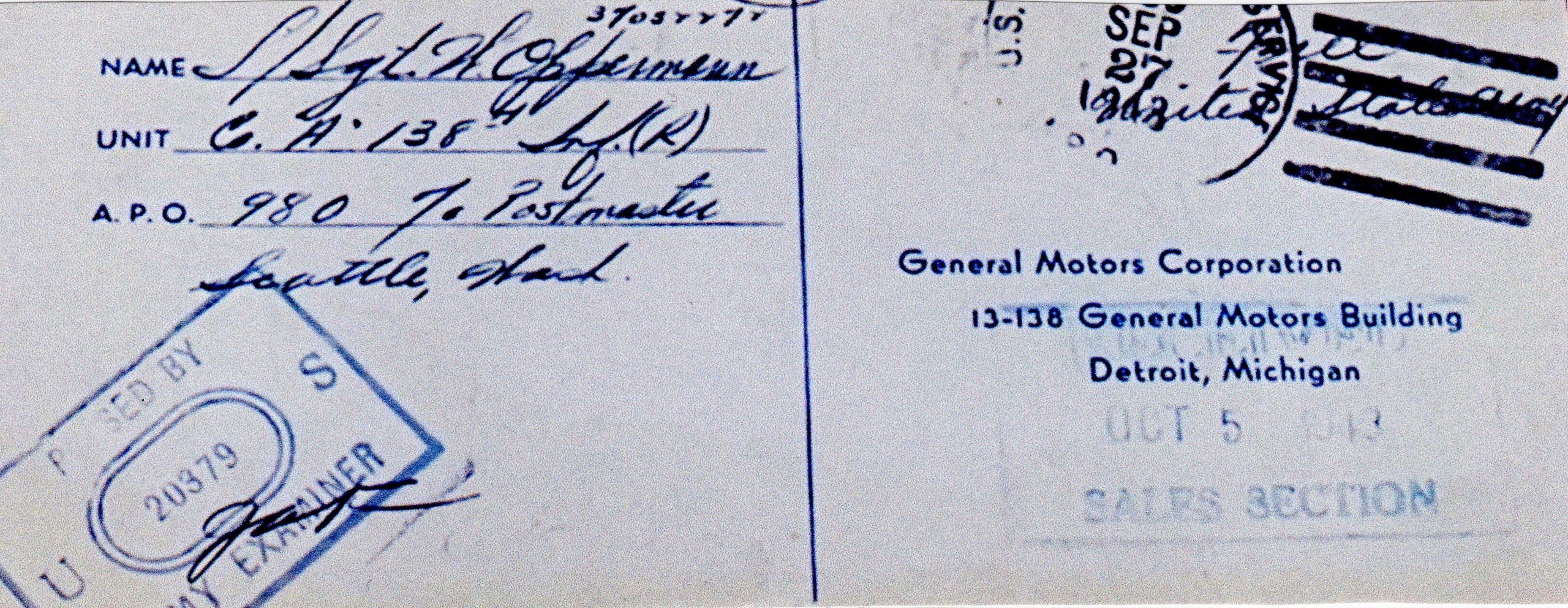
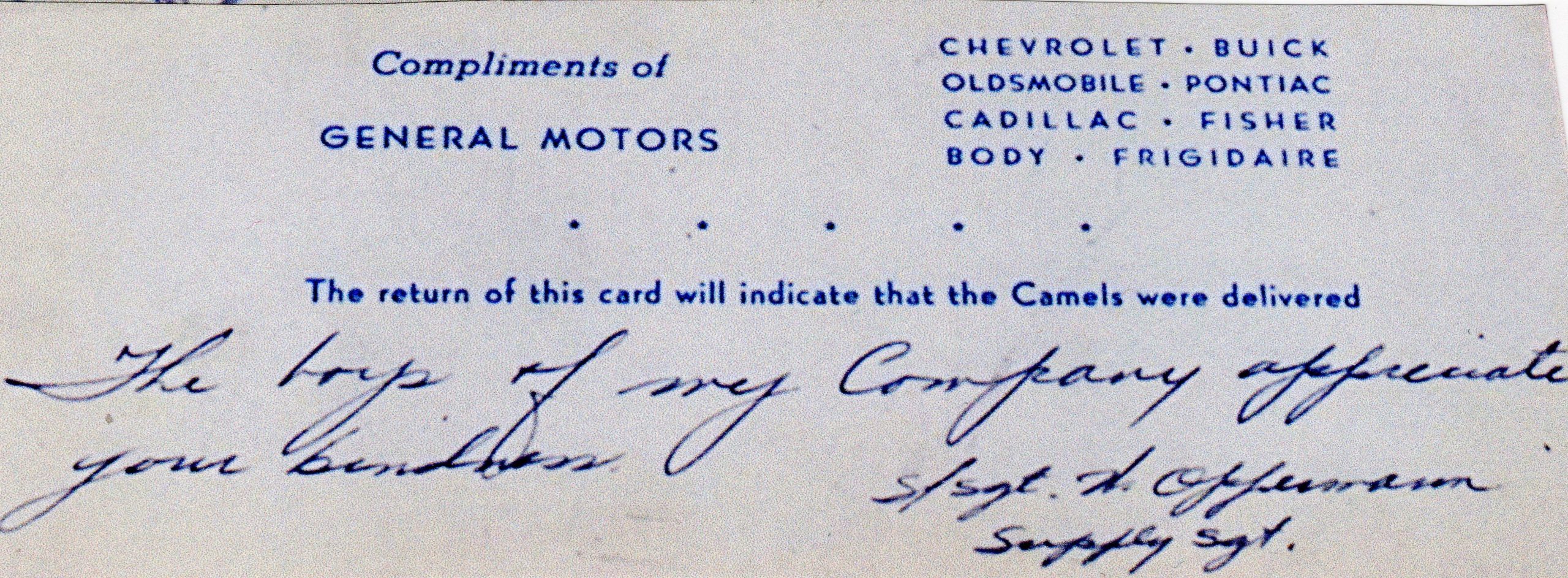
As of April 1, 1942, armed forces personnel had free postage on 1st class letters and postcards whether the sender was inside the US or overseas. The cards above thank General Motors employees for their kindness.
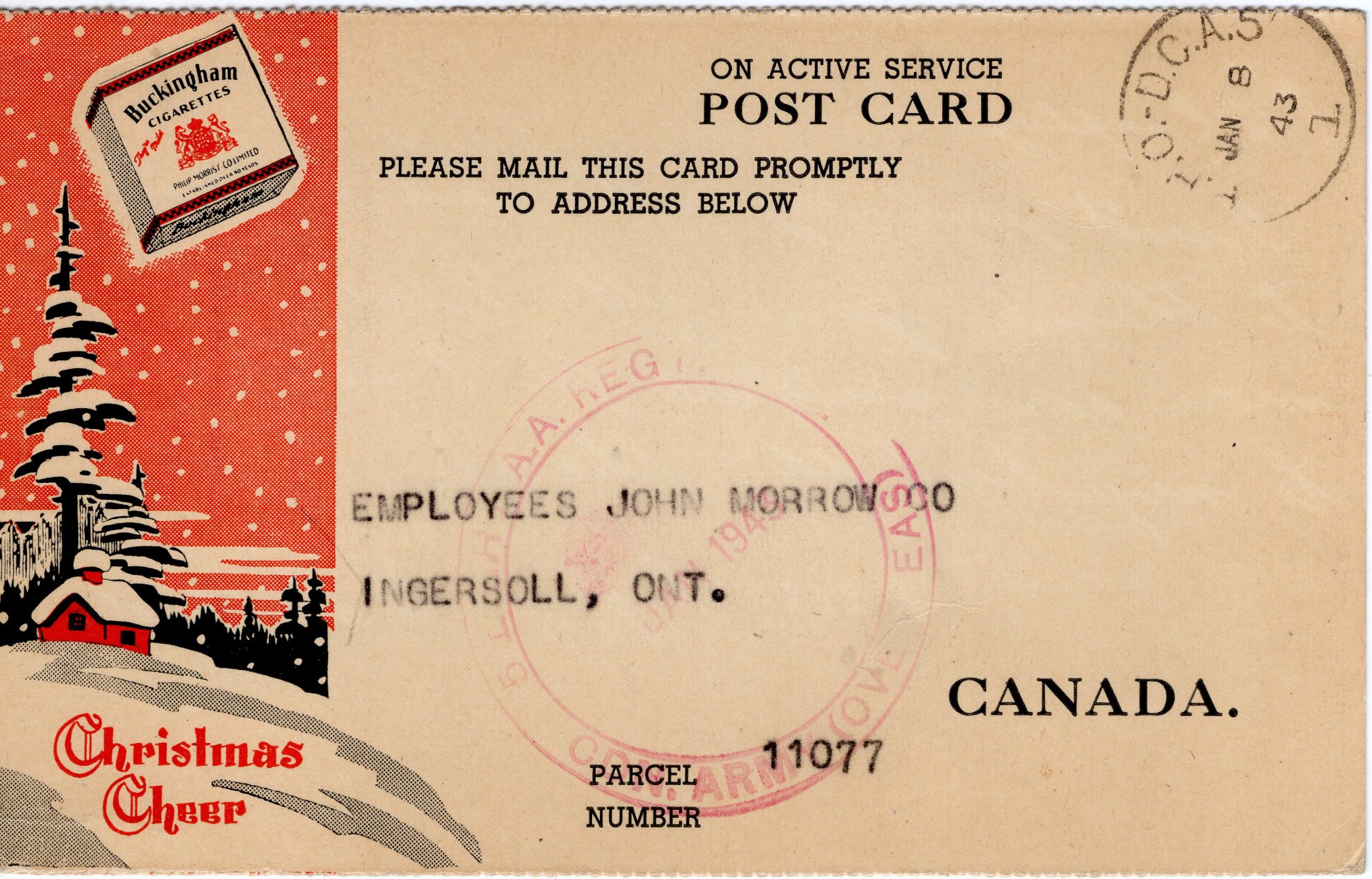
This “On Active Service” postcard was mailed by a Canadian soldier in January 1943 from England. Like the US, overseas Canadian troops in WWII had a free First-Class mail privilege for mail home. This card was sent to the John Morrow Company, which was a producer of high-tensile bolts, nuts, and precision drills used in the construction of military transports, aircraft, and armaments. The factory workers partnered with local women’s auxiliaries to pack and ship morale care packages (including cigarettes and comforts) to Canadian servicemen deployed overseas.
During World War I and World War II, tobacco receipt thank-you cards (often called “Smokes Acknowledgement Cards”) served as a unique feedback system that connected frontline military recipients directly with civilian donors at home.
Because cigarettes and pipe tobacco were considered vital for maintaining wartime military morale, civic organizations like the Over-Seas Club Tobacco Fund in Great Britain and companies such as General Motors distributed millions of cigarettes inside comfort parcels. A pre-printed postcard addressed to an individual donor or company was included inside the package. Upon receiving the parcel on the front lines, a soldier or sailor would fill out the card, verifying safe arrival and adding a brief, personal message.
In their messages, soldiers universally emphasized two things: the intense scarcity of cigarettes during heavy fighting and how much a simple luxury boosted their mental health.