Four great edifices were torn down in New York City during the 1960s: Pennsylvania Station, the 5,920-seat Roxy Theater, the City Investing Building, and the Singer Building.
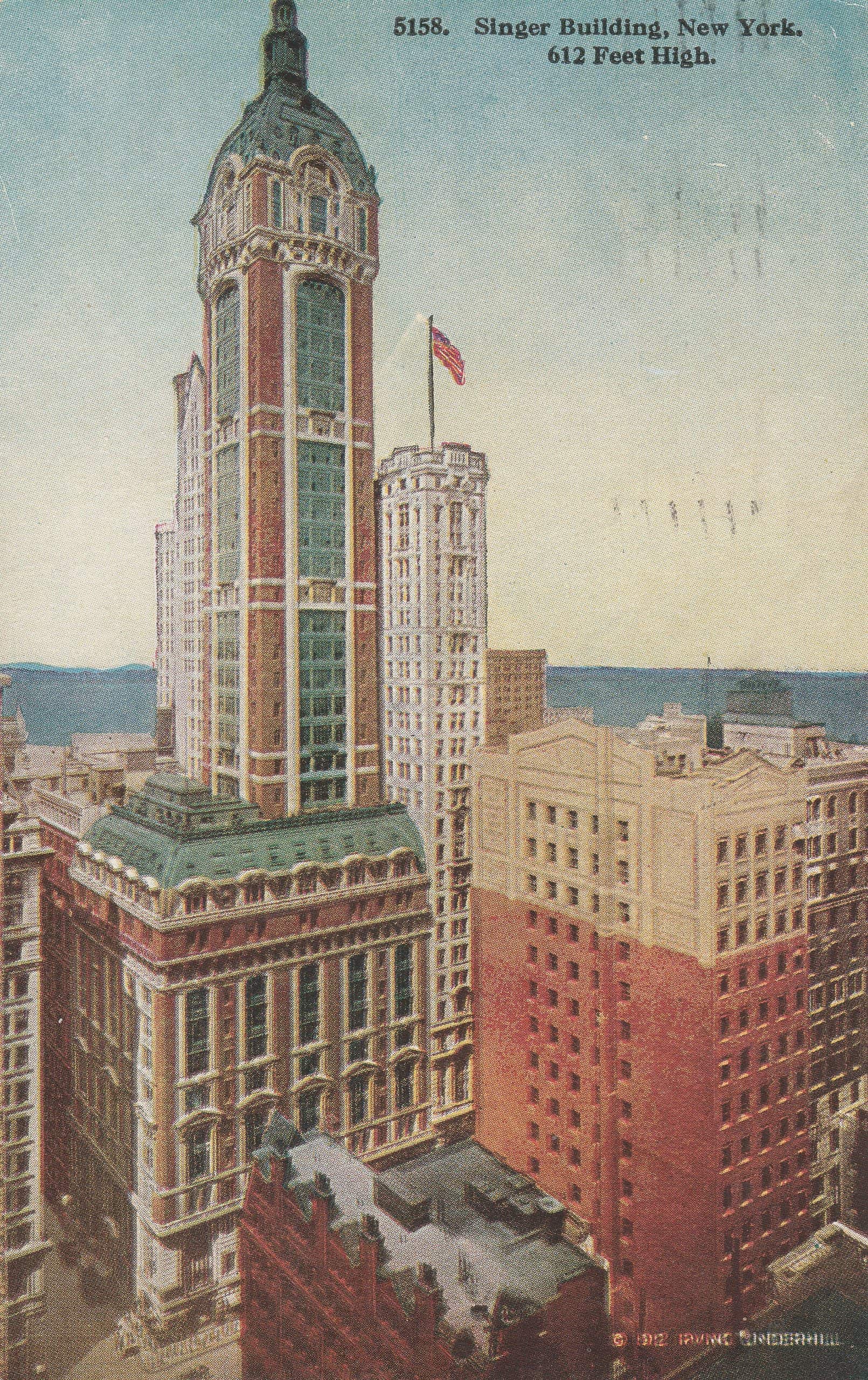
Above, left, Singer Building, New York, 612 Feet High
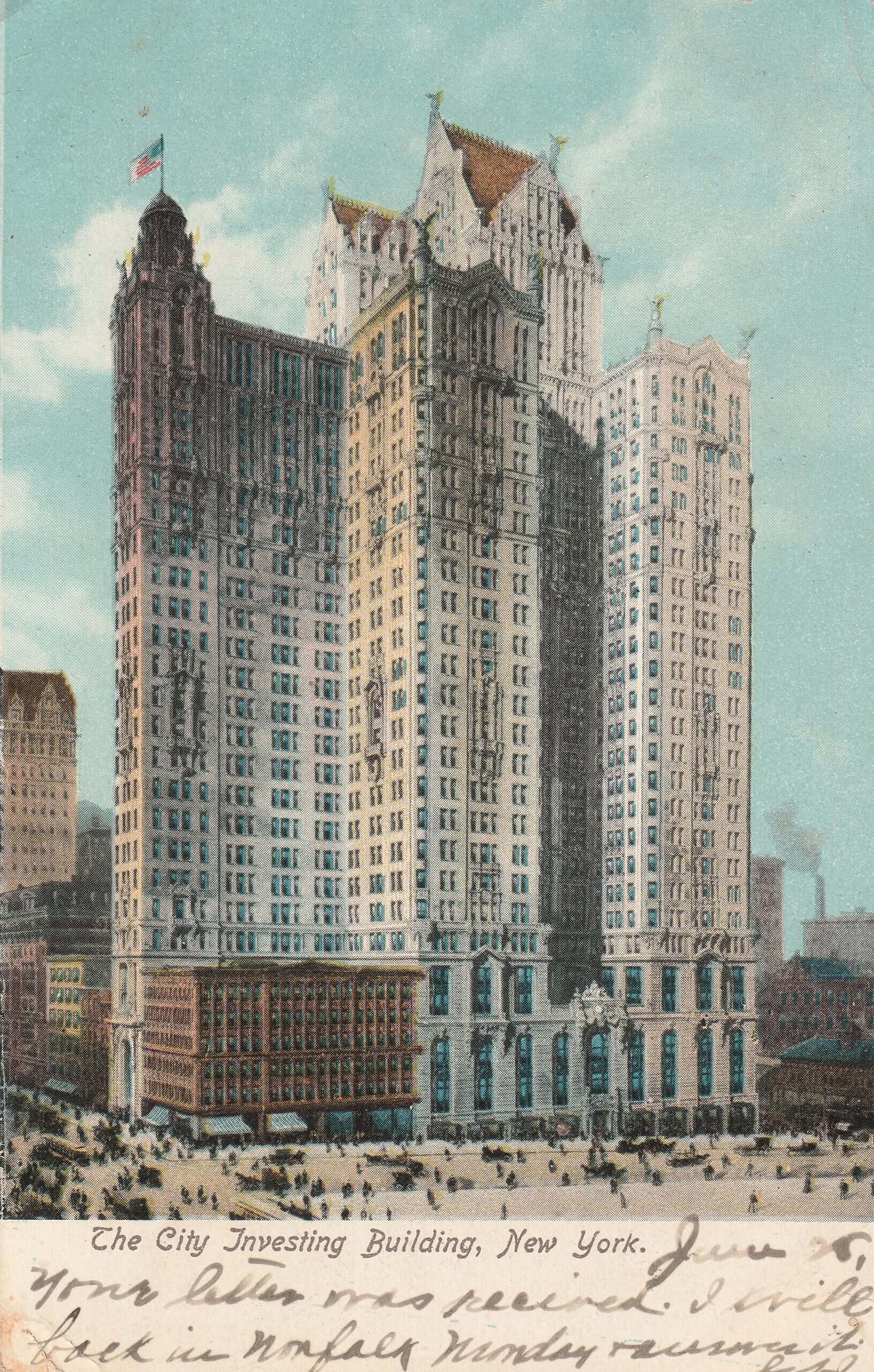
Above, right, The City Investing Building, New York
Architectural historians still shake their heads six decades later that these magnificent structures were demolished supposedly in the name of progress. The Roxy Theater made way for the expansion of the Taft Hotel and an office tower. Penn Station was replaced by the fourth iteration of Madison Square Garden and an office building, and the Singer Building and the adjacent City Investing Building (sharing the same block) were replaced by a 54-story soulless steel and glass skyscraper initially named the U. S. Steel Building, later renamed One Liberty Plaza.
Founded in 1851, the Singer Sewing Machine Company was the world’s largest manufacturer of sewing machines. The company established its headquarters in New York City in 1853.
By 1890, Singer controlled 80% of the global sewing machine market with factories in the U. S. and overseas.
Located at Broadway and Liberty Street in the heart of New York’s financial district, the Singer Building began construction in 1897 and completed in 1898. The original 10-story Beaux-Arts structure was red brick and stone with a mansard roof. French Second Empire design elements were also utilized. An adjoining 14-story structure on Liberty Street was built from 1898 to 1899.
In the first decade of the twentieth century, the two buildings were expanded to form the 14-story base of the Singer Tower. In 1906, seven years after the completion of the first building, work began on the tower that celebrated the company’s global success and prominence.
Architect Ernest Flagg designed the tower to be set back from the street to allow natural light to flood the building as well as letting air circulate. Built in the ornate Beaux-Arts style, the tower utilized steel frame construction. Its exterior was constructed of red brick, bluestone trim, and terracotta ornamentation. Five million bricks were utilized in construction. Due to the crowded streets of lower Manhattan, many building parts were preassembled off site.
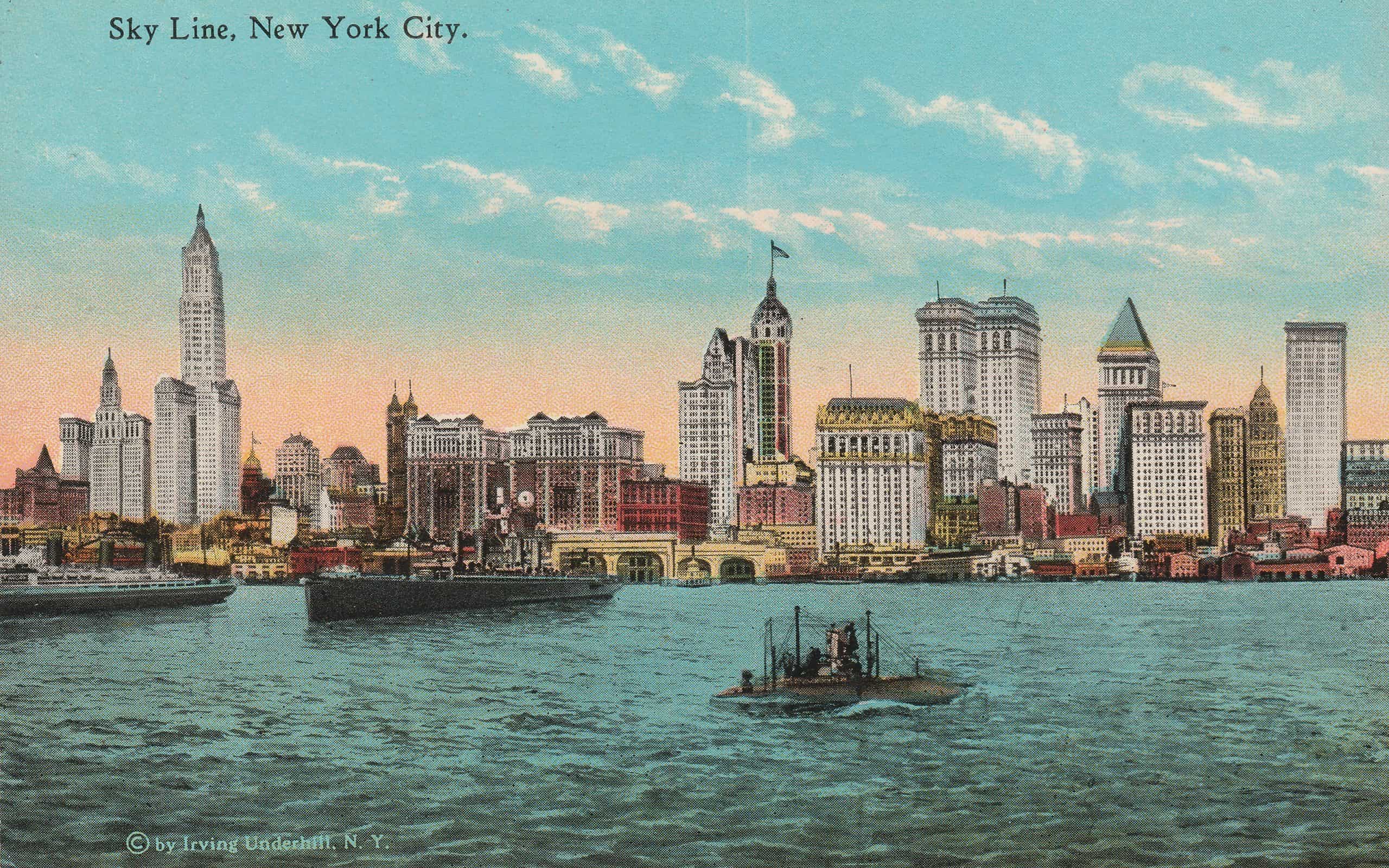
The Singer Building was an engineering masterpiece. It generated its own electricity in a basement power plant. Coal fired boilers provided steam heat throughout the building. There were 1,200 individual thermostats to regulate the temperature. Air was filtered to remove dust and humidified to provide an early form of air conditioning, and a massive telephone switchboard served the building. The tenants had access to a central, building-wide vacuum system. A refrigeration plant provided ice cold drinking water throughout the building. An electric clock system provided the correct time while secondary clocks throughout the building were actuated by the master clock located on the south landing in the lobby.
When completed on June 23, 1908, after twenty months of construction at a cost of $8 million, the Singer Tower was the tallest building in the world. The Singer Tower topped the former record holder, the Park Row Building, by 226 feet, however, the Singer Tower held the title for only one year when the Metropolitan Life Insurance Company Tower eclipsed it in 1909.
Standing 612 feet tall (plus an additional 62 feet were contained in an ornamental spire), the Singer Tower’s 41 stories made it New York City’s first skyscraper. Today it would be equivalent to a 60 story building. The building encompassed 410,000 square feet of office space, had 16 electric elevators, and an observation deck on the 42nd floor. A copper sheathed dome with a lantern equivalent to a five story building topped the tower and a 58-foot tall flagpole rose from the dome’s top. From it flew a Singer Company pennant, not Old Glory. Six projectors built by General Electric and 1,600 incandescent lamps illuminated the tower at night making it visible for twenty miles. It served as a navigational beacon for ships entering New York harbor. The 40th floor observation deck offered an unobstructed view of thirty miles in all directions for a fifty cents entrance fee. It closed in the early 1930s.
The Singer company occupied each level above the 31st floor. The company’s directors were housed on the 34th floor. They leased the tower’s lower sections to tenants who wanted a prestigious address and a state of the art building in the financial district. At $3 per square foot, Singer initially projected $250,000 in annual rental income to offset the cost of its headquarters.
The Safe Deposit Company of New York leased 10,000 square feet in the basement. Their space was not a dank, dingy basement, but more like the interior of a cathedral with its ornate columns and arched vaults. Its vaults contained several thousand safe deposit boxes.
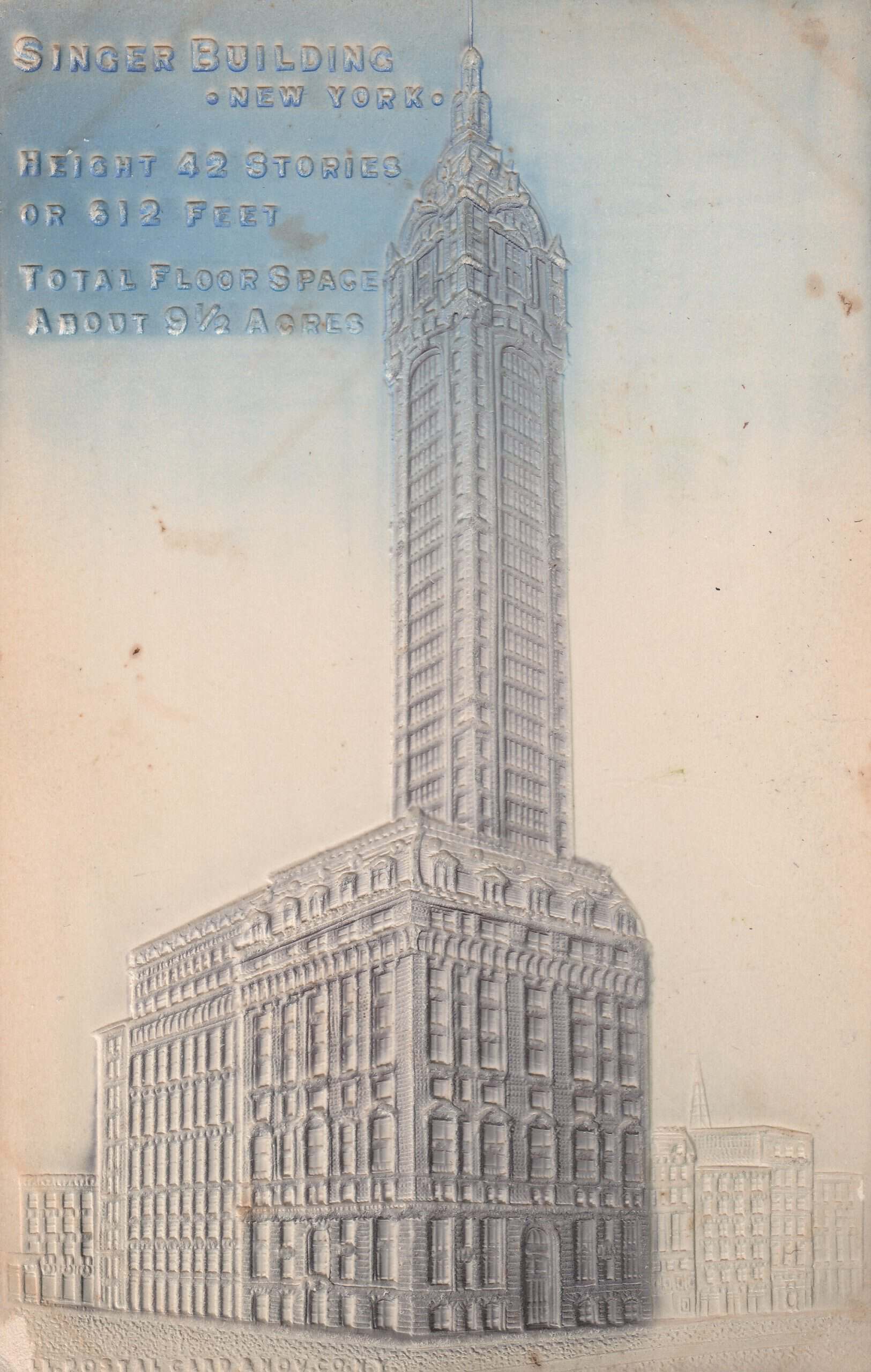
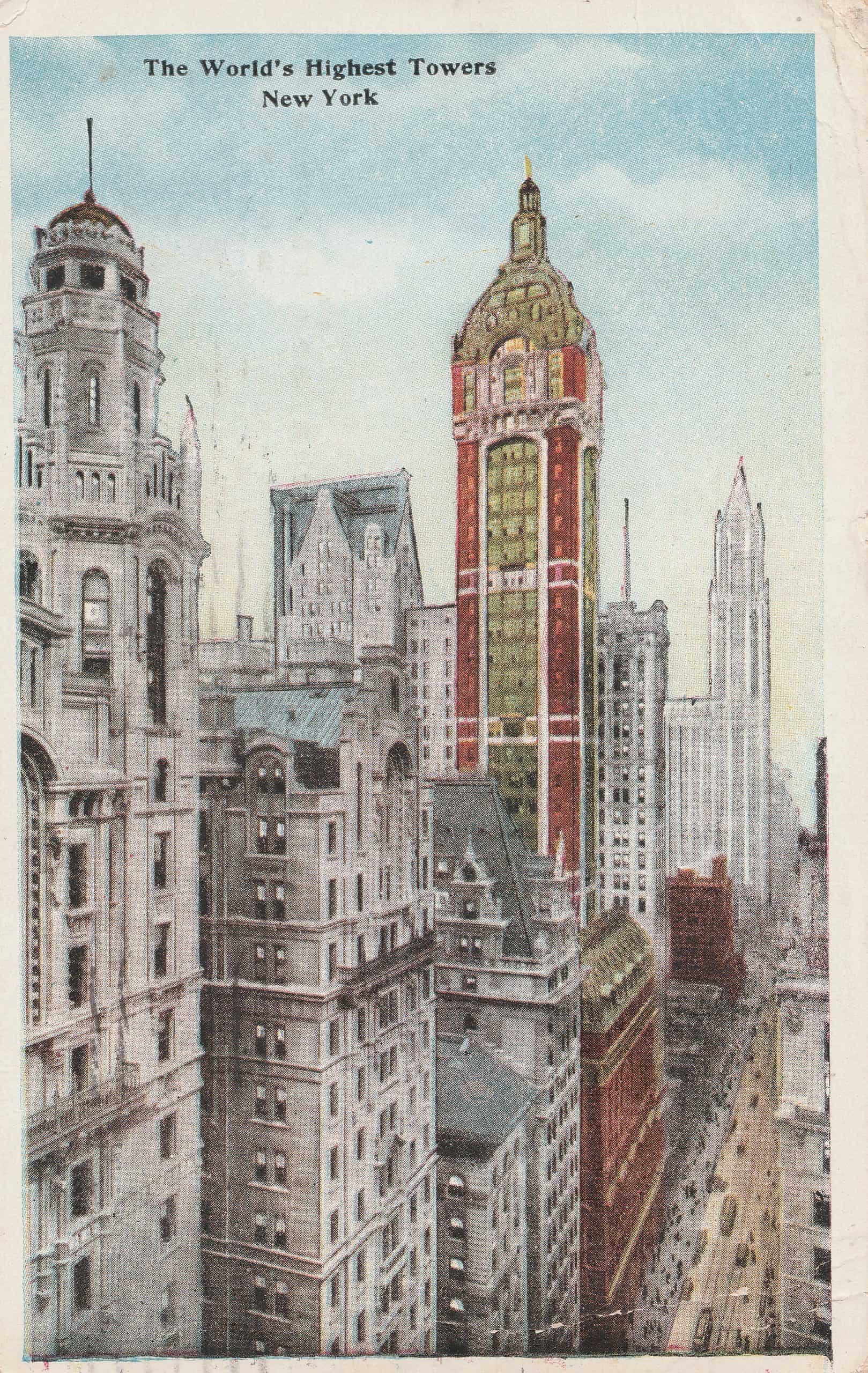
Once a state of the art building, by 1958 the Singer Building was only the 16th tallest building in New York City, and it was functionally obsolete. Its electrical and phone systems did not adequately support 1950s office technology, and maintenance costs were spiraling. Potential tenants wanted large open floor plans instead of the Singer Building’s cramped 4,200 square feet of office space per floor.
Even if the building were renovated, it could not overcome the inefficient use of space. Land values in lower Manhattan had skyrocketed and the block containing the Singer Building and the adjacent City Investing Building was ripe for redevelopment. It was only a matter of time before someone pulled the trigger.
In 1961, the Singer Company left the tower and leased six floors in 30 Rockefeller Plaza in Midtown Manhattan. It sold its former headquarters to the development company that had also purchased the City Investing Building. In 1964 U. S. Steel purchased the two buildings to demolish them to use the prime real estate underneath to construct its new headquarters.
In 1967, demolition of the Singer Tower and City Investing Building began and was completed in early 1969. It was the tallest building ever demolished up to that time. The City Investing Building was the third tallest building ever torn down.
Preservationists attempted to have U. S. Steel incorporate the building’s opulent marble lobby with vaulted ceilings in the new building but were unsuccessful. The only part of the Singer Building remaining today are chandeliers from the lobby, which were salvaged and installed in the East Building at Pratt Institute in Brooklyn. Other than a few historic preservationists, no one shed a tear at the demolition of the once iconic building.
The U.S. Steel Building/One Liberty Plaza is deemed a success using the metrics that doomed the Singer Building. The new building served as the U. S. Steel’s headquarters and had 2.3 million square feet of office space. Each floor has 37,000 square feet of open space, almost an acre, housing hundreds of office workers. Merrill Lynch leased forty floors when the U.S. Steel Building opened in 1972.
I’ve found no postcards of One Liberty Plaza and even if they existed, I doubt anyone would send one of a rather nondescript black steel and glass office building.
These are great cards of the Singer building. I remember my parents taking my brother and me to the Singer building just to ride the elevators. They were hydraulic, which was very fast and smooth. Even as a kid, I knew that those elevators were faster than the normal elevators.
The author stated “no one shed a tear at he demolition.” I am shedding a tear right now. I only wish I had a chance to see the remarkable Singer Building!