In 1913 in Douglas, Arizona, the owner of six rundown mining cabins gussied them up and began renting them to passing drivers creating the first tourist camp. As Americans set out for automobile adventures in the 1920s, tourist camps or tourist courts sprang up to serve them on highways across the country. These camps were often small, offering around a dozen cabins, and most were mom and pop operations. Sometimes a tourist camp had a diner or gas station nearby. The few lodging chains that existed in the United States concentrated on urban hotels ignoring this new segment of the traveling public. Between 1920 and 1925, the word motel, a blend of motor and hotel, came into usage. “Autel” was also used to describe these lodgings.
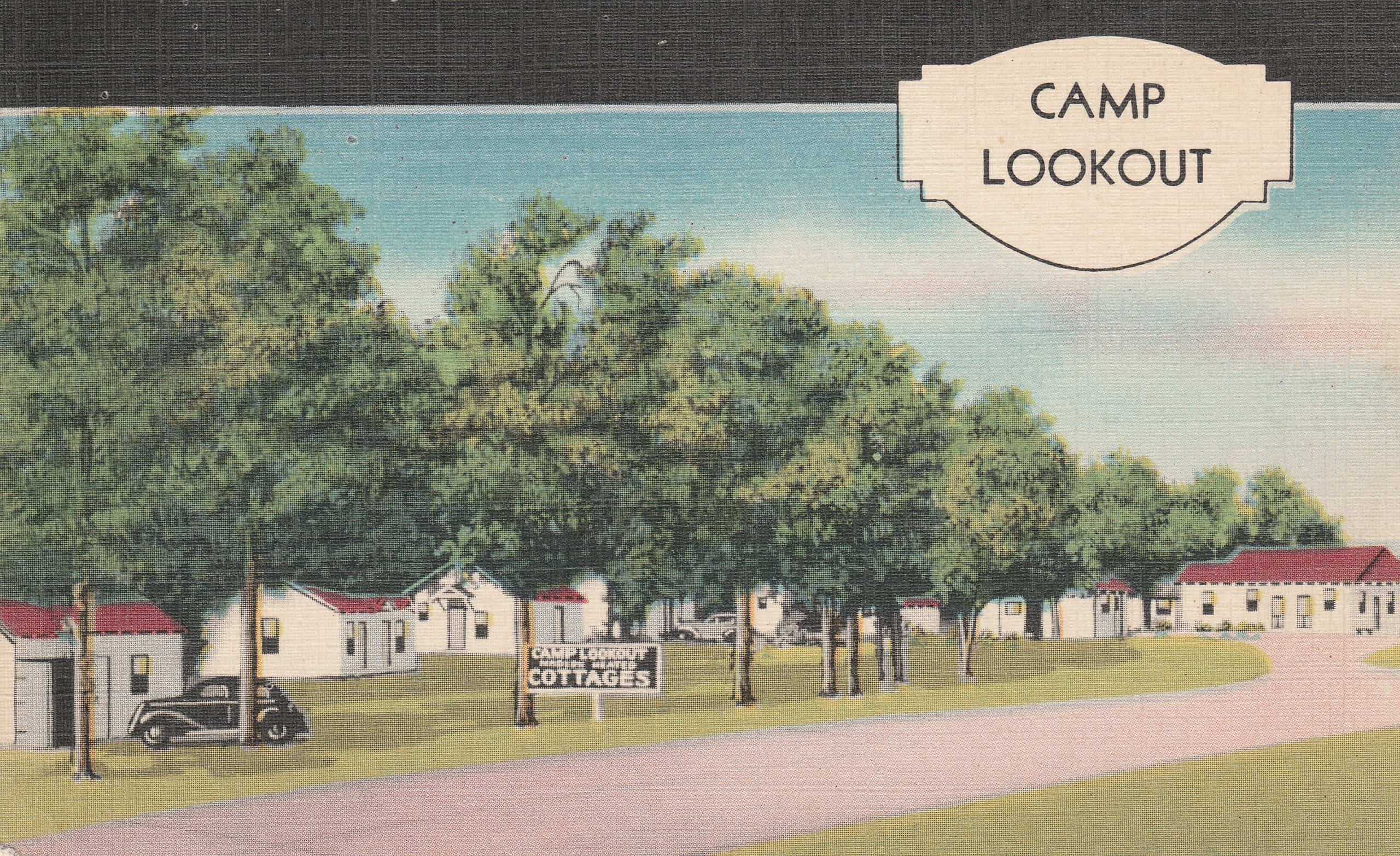
Missouri – self-proclaimed the most modern on Route 66
Early motor courts lacked amenities and often had a reputation for poor cleanliness. If a motorist was lucky, the cabin had running water. Many travelers saw motels as a front for the world’s oldest profession and bootleggers. For many motor court operators, “the two-hour tourist” or the “hot pillow trade” was the difference between profit and loss during the Depression.
The embryonic motel industry wasn’t helped by the fact that gangsters like John Dillinger and Pretty Boy Floyd used them as hideouts. FBI Director J. Edgar Hoover declared, “The tourist camp today is a new home for crime in America, a new home of disease, bribery, corruption, crookedness, rape, white slavery, thievery and murder.” Travel guidebook publisher, Duncan Hines, believed that motels should adopt a code of ethics and quality standards to improve their reputation.
Tourist court and motel operators began forming referral organizations that required its members to maintain standards of quality and cleanliness. Referral chains ensured travelers of consistent service at member motels across the country. They published and distributed useful annual guidebooks that listed member motels, their location, and phone number. Later the guidebooks offered photos of member motels. Using these guidebooks, travelers could easily find the next stop on their vacation.
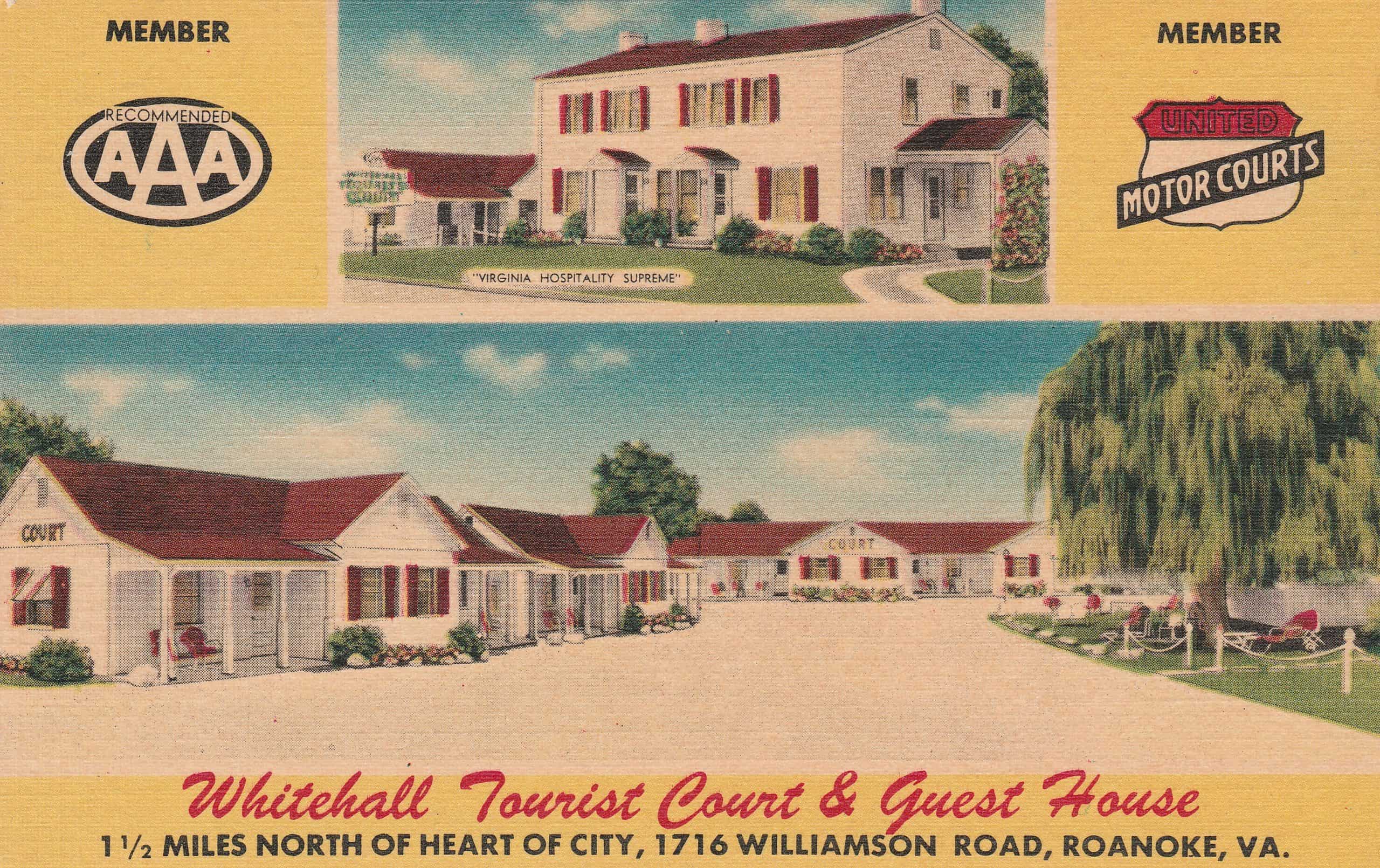
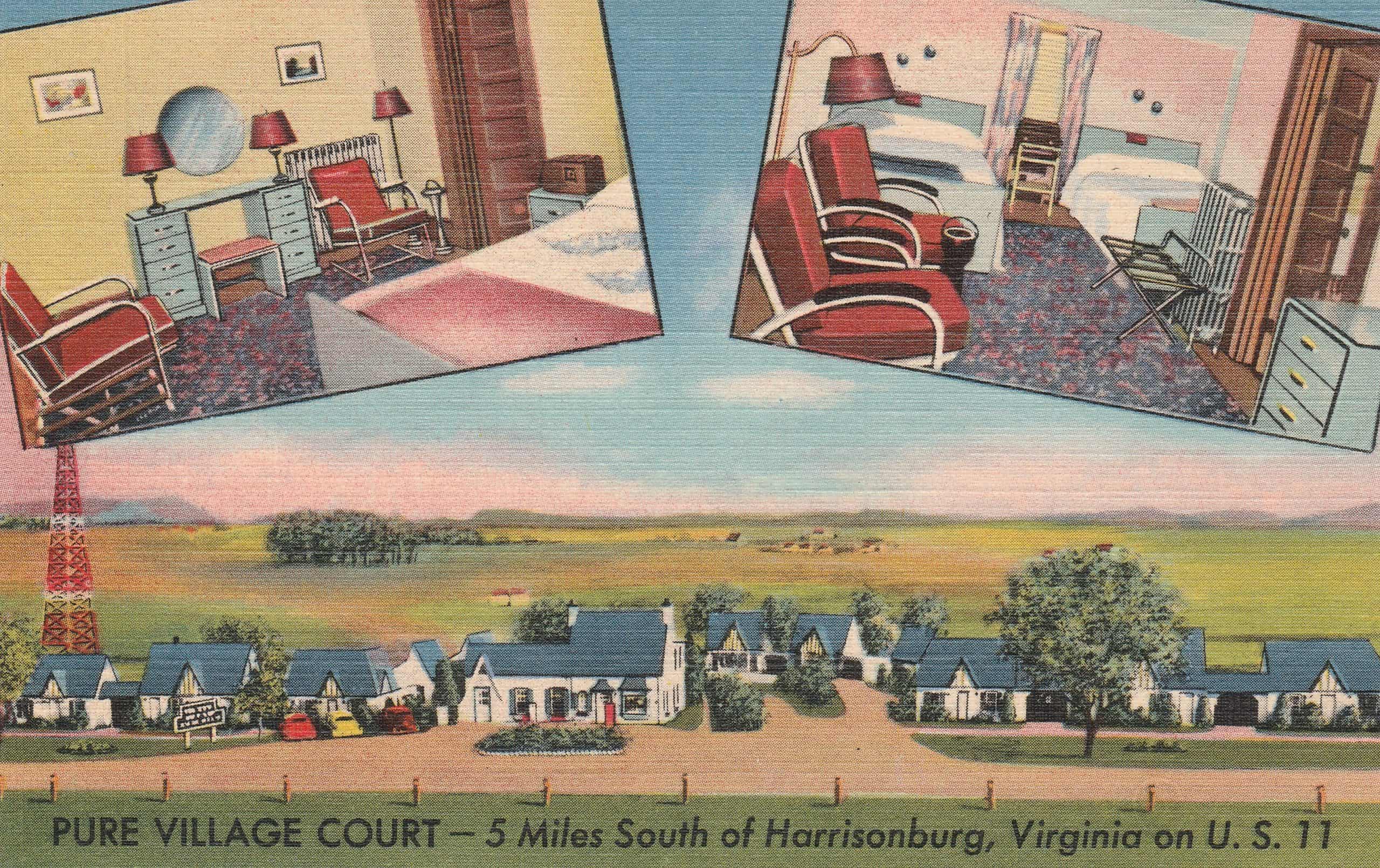
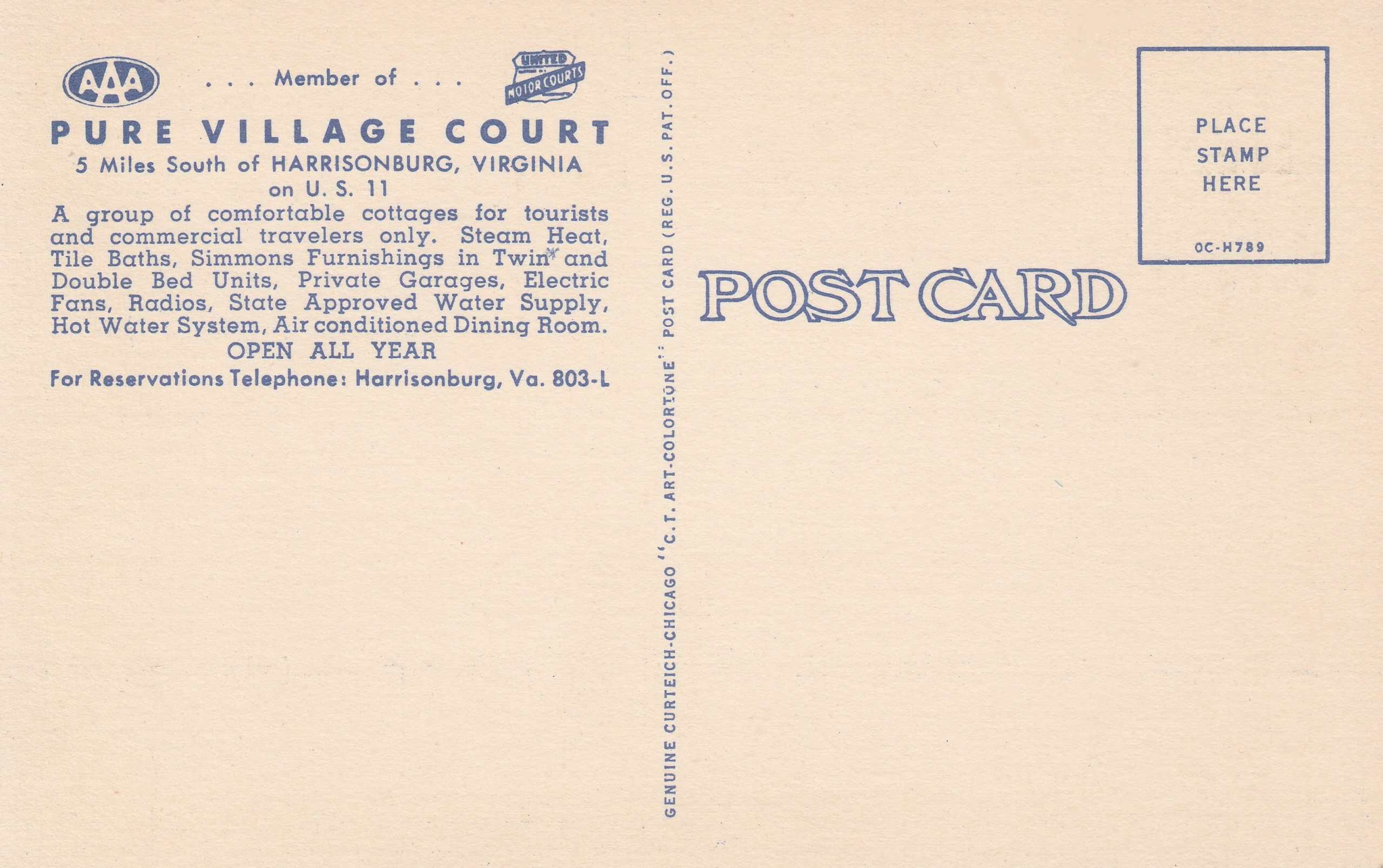
Established by a group of motel operators in California in 1933, United Motor Courts was a non-profit organization of independently owned motels that promoted its members. It quickly became a leader in the motel industry. By 1937, United Motor Courts had almost 300 members, concentrated on the West Coast and across the Sunbelt. California, Texas, and Florida had the greatest concentrations of members. Other similar “referral” groups were founded, but none were as successful or large as United Motor Courts.
Members of United Motor Courts had a sign for motorists to learn that they were a member and followed the group’s standards. Their slogan was “A Sure Sign of Comfort.” United Motor Courts published a guidebook until the early 1950s when the group went defunct due to issues with its standards and their enforcement.
The Colonial Court Motel in White Sulphur Springs, West Virginia, was affiliated with Superior Courts United. “Lucky for the Traveler” was the group’s slogan and a four-leaf clover was their logo.
Founded in 1950, Superior Motels had over 500 member motels at its peak (mostly on the East Coast) and published an annual directory of its affiliates. In 1964, the group was renamed “A Superior Motel.” The later used motto of the chain was “Travel Superior Courts United and Be Sure!” The group disbanded around 1980.
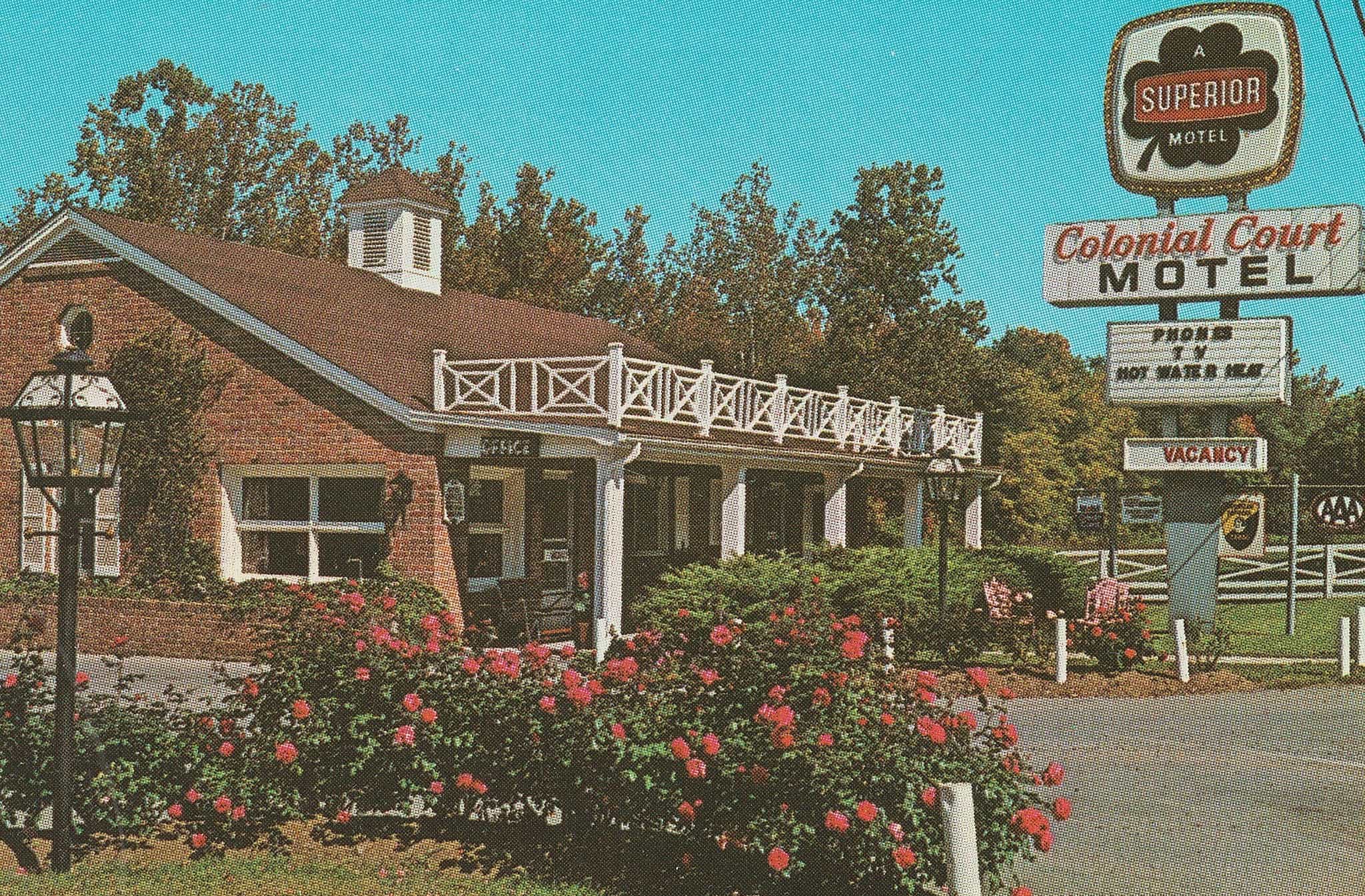
West Virginia – Superior Motels
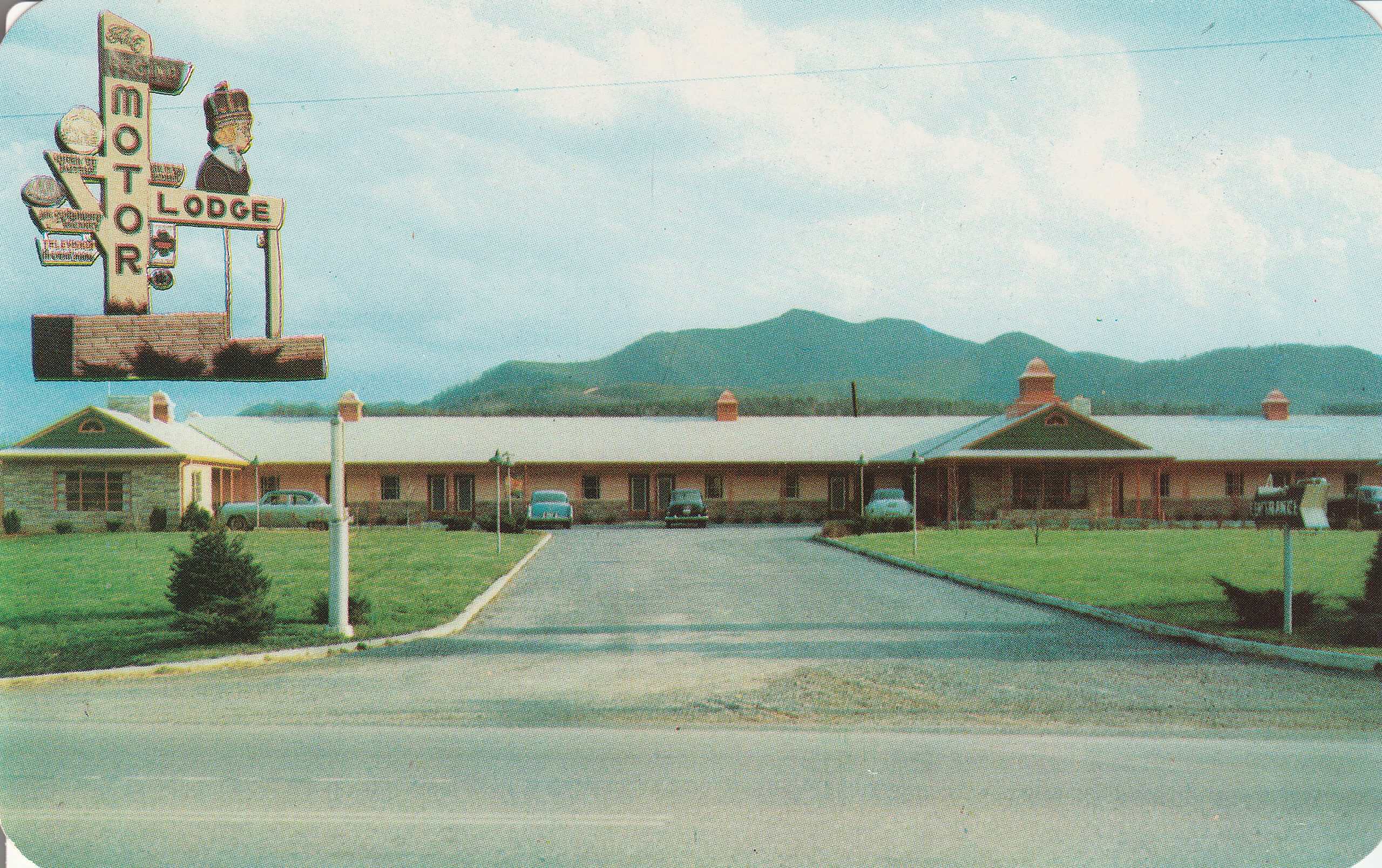
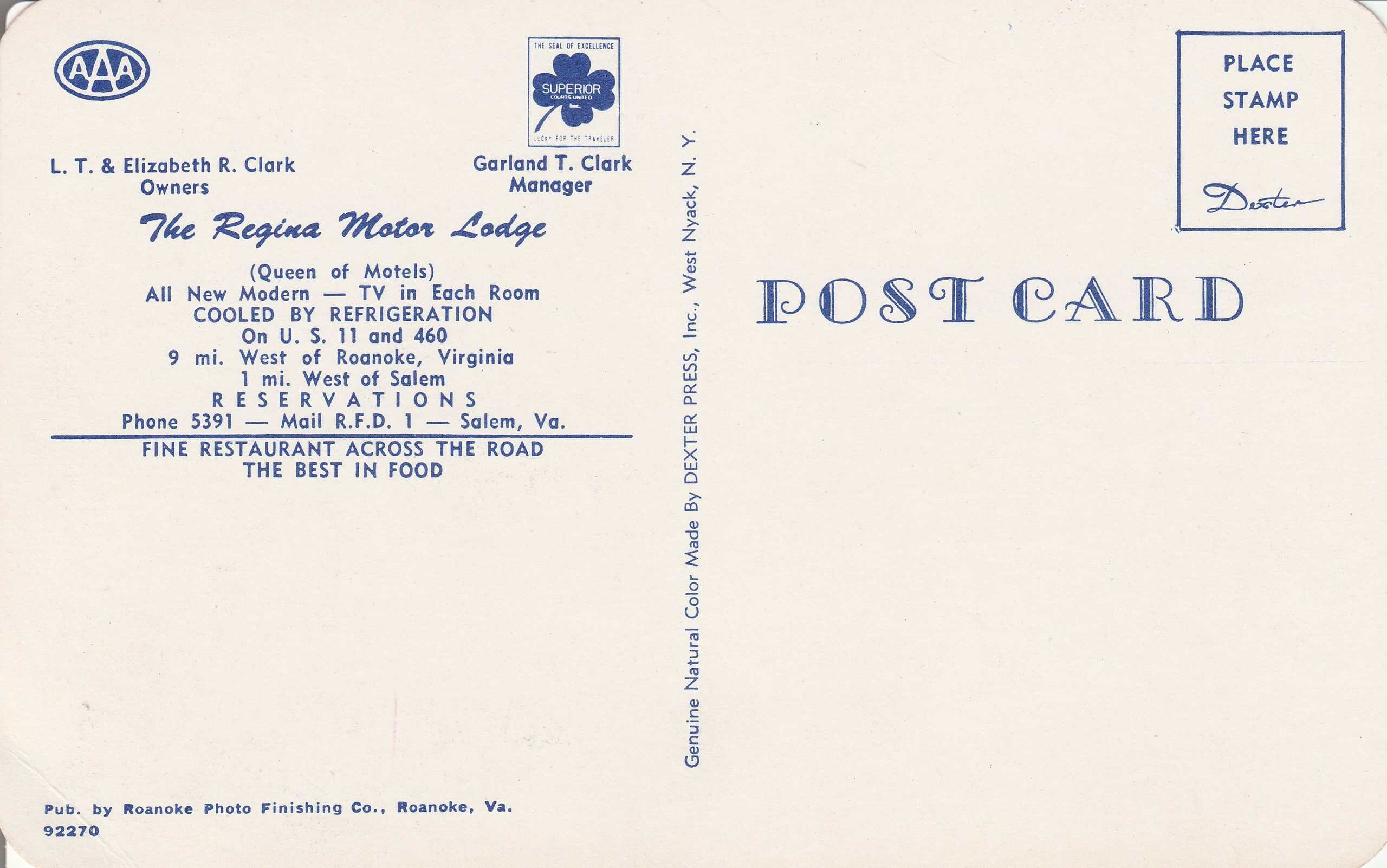
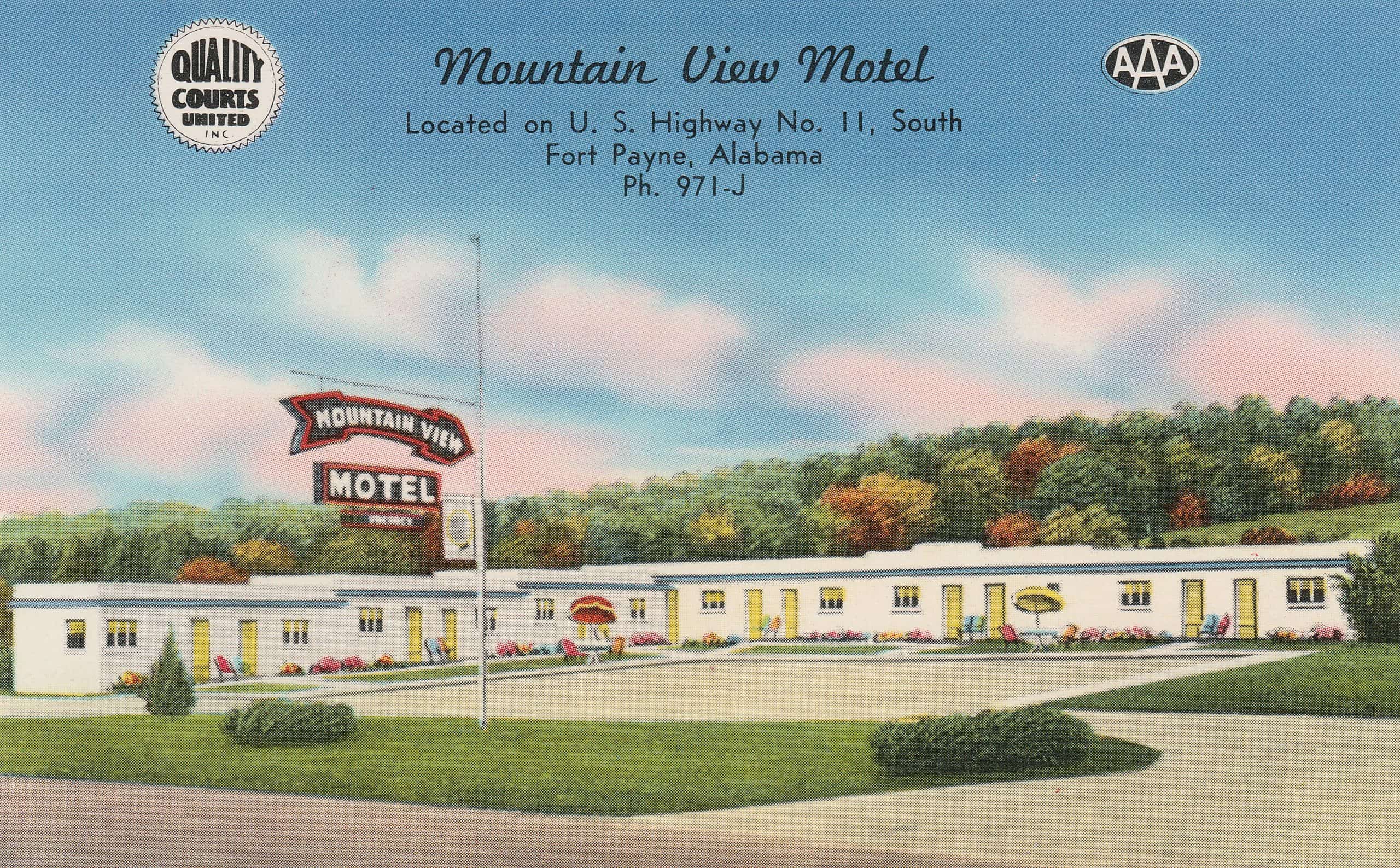
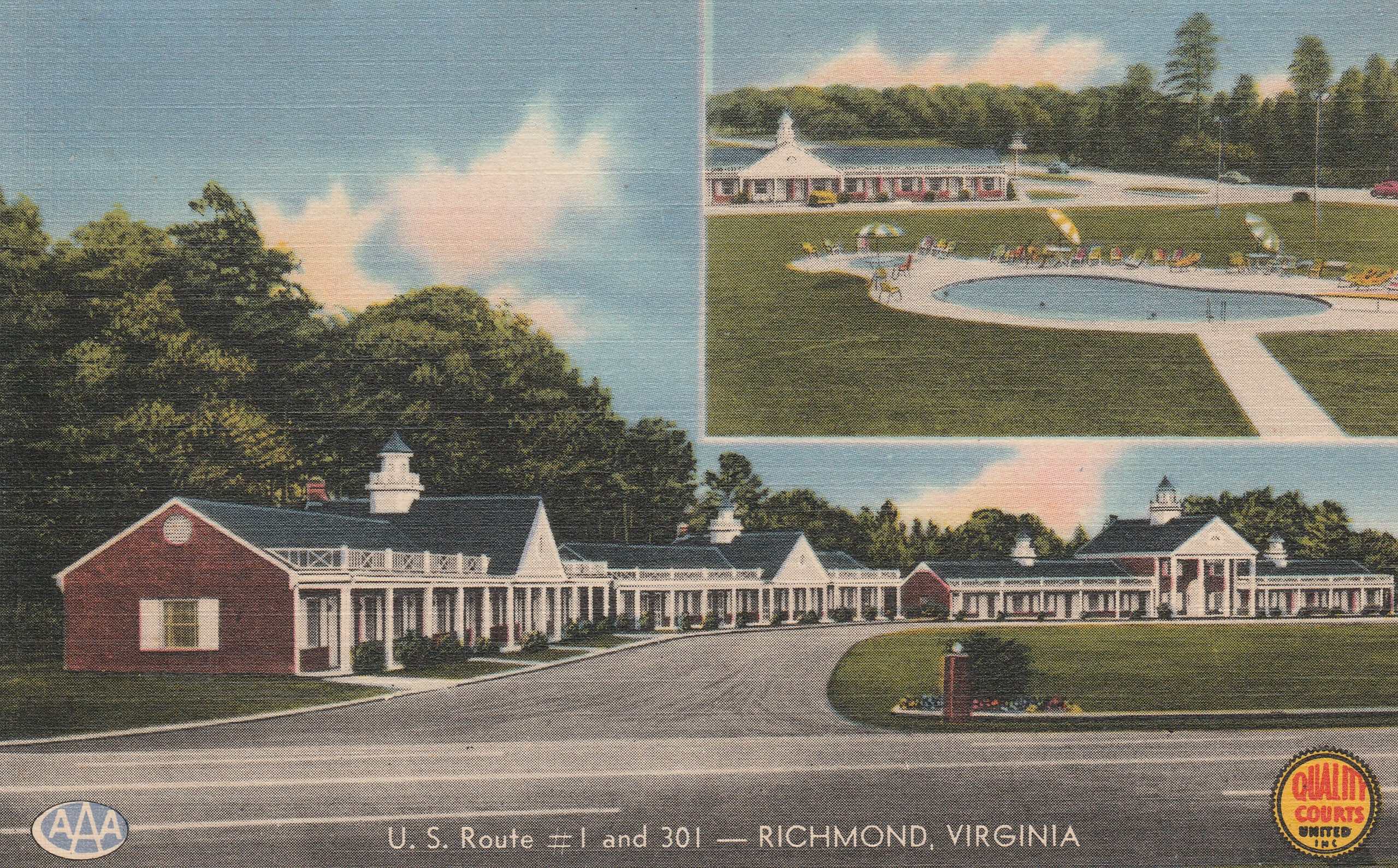
A splinter group from United Motor Courts, Quality Courts United, began as a referral chain in 1939. Founded in 1939 by seven Southern motor court operators who were disgruntled that United Motor Courts failed to enforce its quality standards and kick out members that failed to comply.
Quality Courts United soon signed up 40 members that wanted stronger quality standards and operated east of the Mississippi River and by 1950 had 126 members. In the 1950s, Quality Courts United members offered guests wall-to-wall carpeting, daily changes of linen, 24-hour desk service, and in-room telephones. By the early 1960s Quality Courts United had over 600 members and converted to a for-profit franchised operation in 1963 and became Quality Inn. It continues today as the lodging industry giant, Choice Hotels.
Best Western was another splinter group from United Motor Courts. At United’s 1947 annual convention, M. K. Guerin, a Long Beach motel operator, expressed dissatisfaction with United’s failure to police member motels. He started Best Western with 66 motels concentrated in Western states. Like Quality Courts United, it was a referral chain, and by 1951, Best Western had 197 member motels, all west of the Mississippi River.
Guerin aggressively monitored members adherence to the group’s high standards and ran the group with an iron fist. He traveled around the country inspecting member motels and expected the group’s members to report others that failed to comply. Unlike United Motor Courts, Best Western immediately expelled non-compliant motels from the group. One year, Best Western forced out 15% of its members. Best Western created the first national reservations system, requiring members to place a teletype machine in each motel.
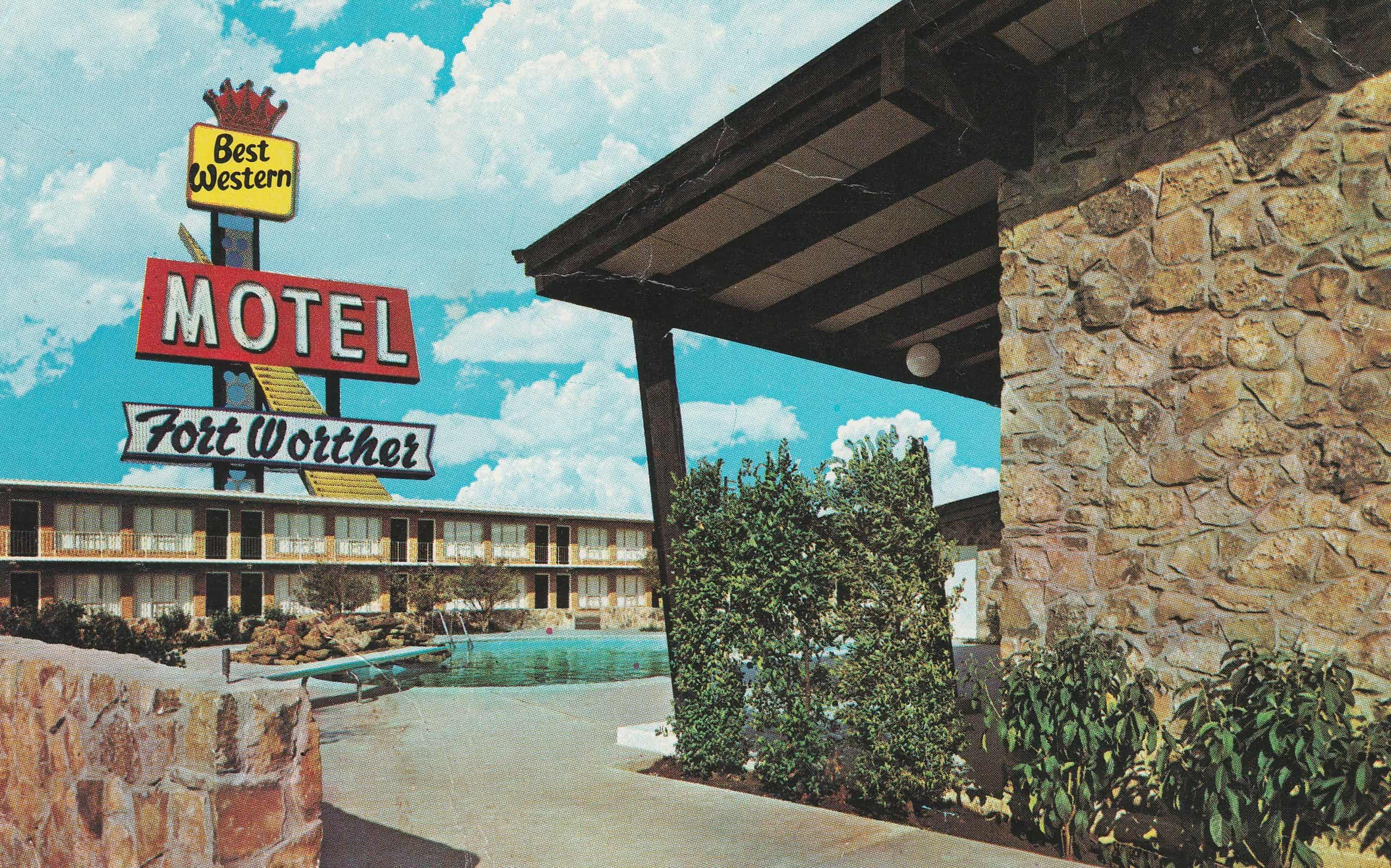
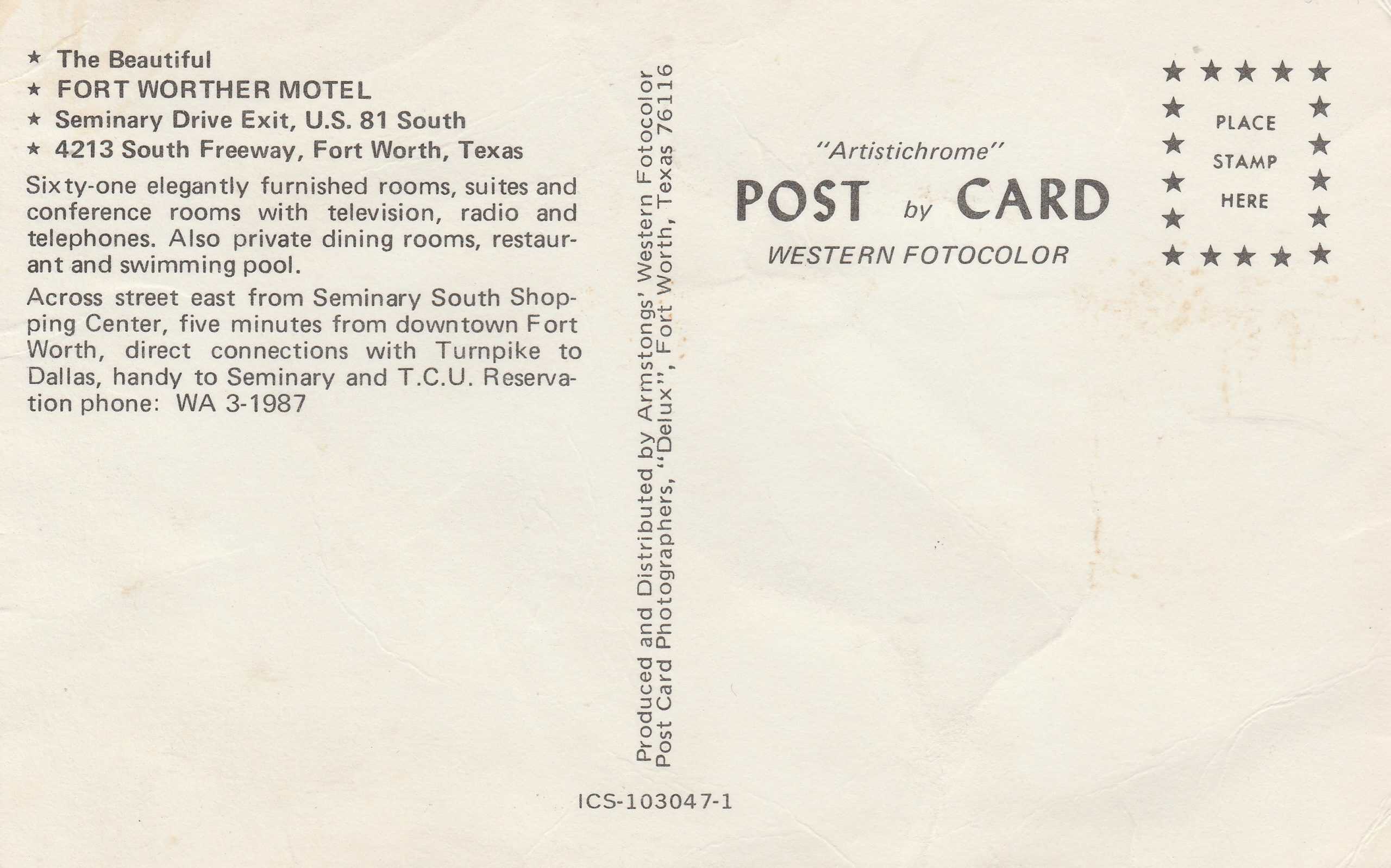
In 1949, Quality Courts met with Guerin, and the two organizations agreed to promote each other and divide the country. Best Western operated west of the Mississippi River and Quality Courts stayed east of the Mississippi. When Quality Courts became a for-profit franchising organization, Best Western discontinued the co-marketing program and began to operate in the eastern United States. Before the internet, Best Western published six million copies annually of its directory of member motels.
In 1966, Guerin was ousted from the group’s leadership by the Board of Directors who saw him as dictatorial despite making Best Western America’s largest lodging chain. Without Guerin’s hard work, the group would’ve likely failed. Best Western expanded outside the United States, to Australia in 1975, and now operates in 100 countries. In 2018, Best Western members turned down a proposal to convert to a for-profit, franchised organization, as Quality Courts had done in 1963, and continues to operate as a non-profit group of independent inns as envisioned by Guerin in 1947.
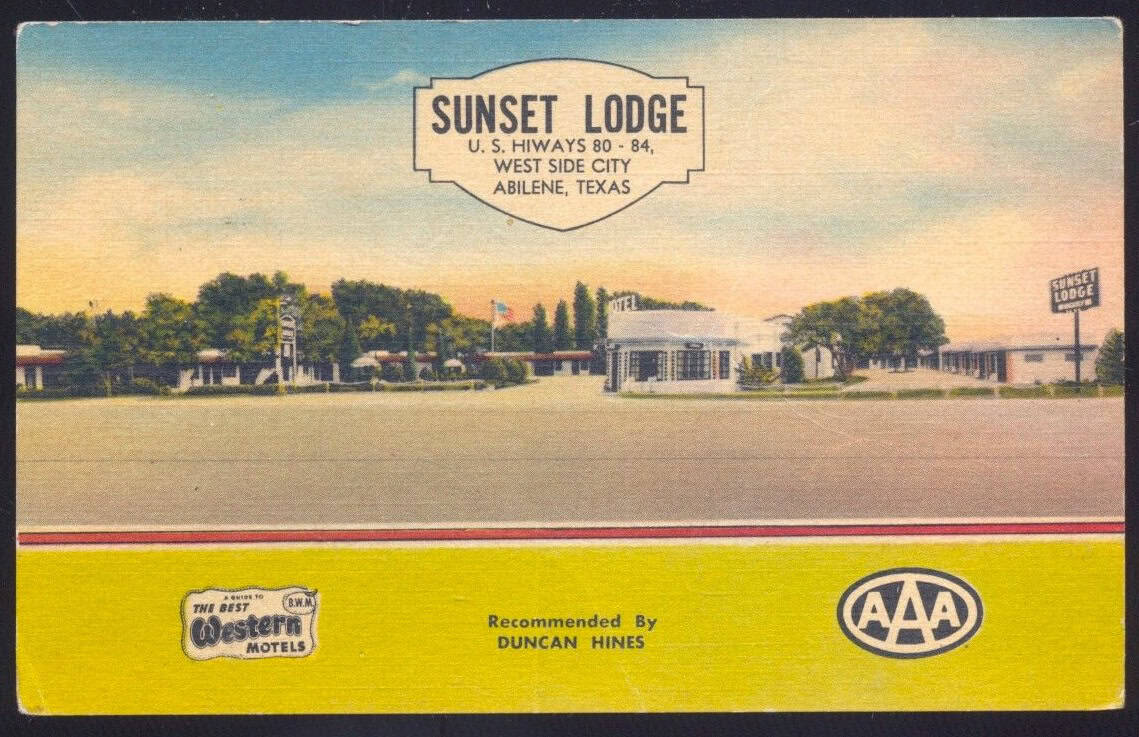
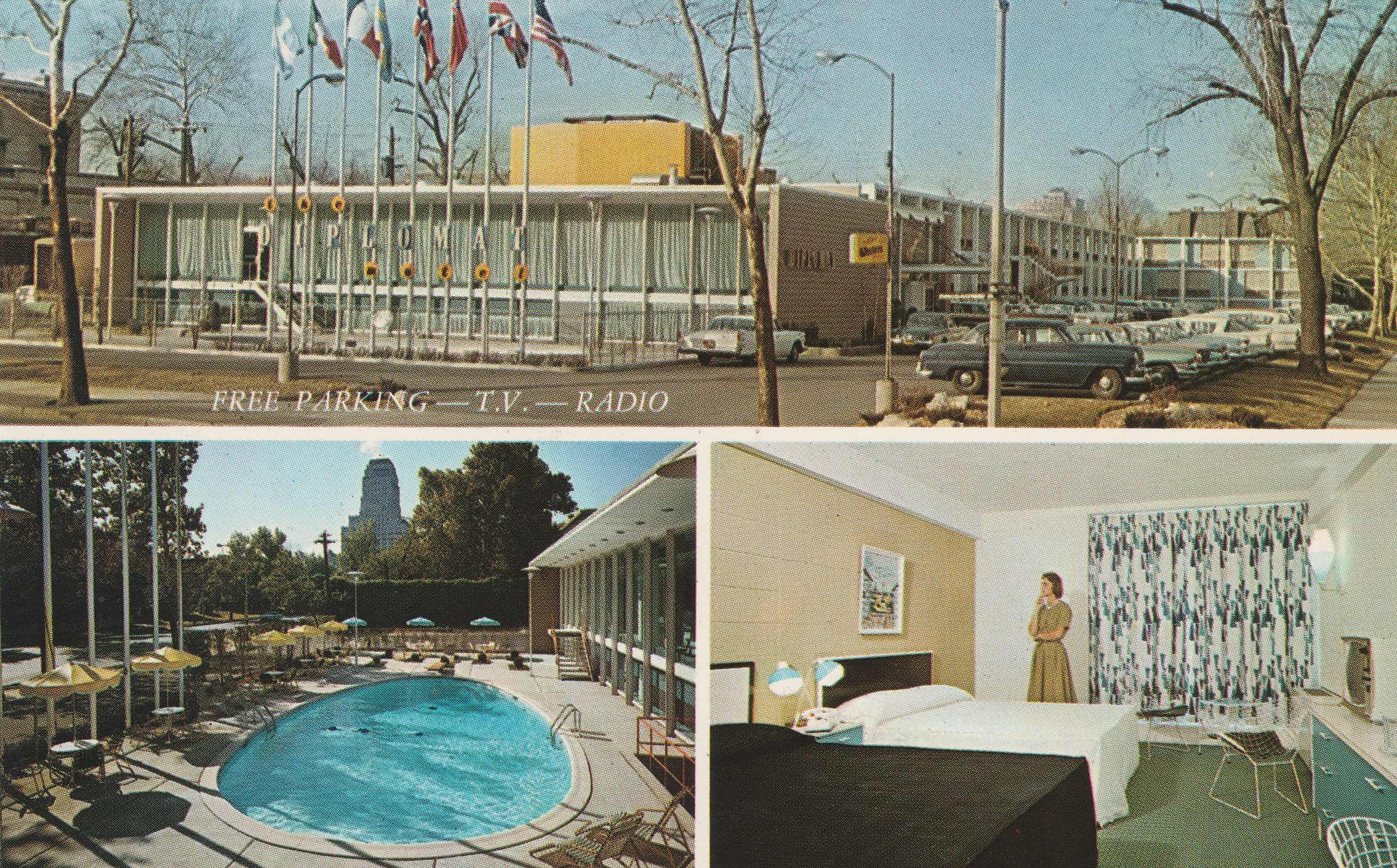
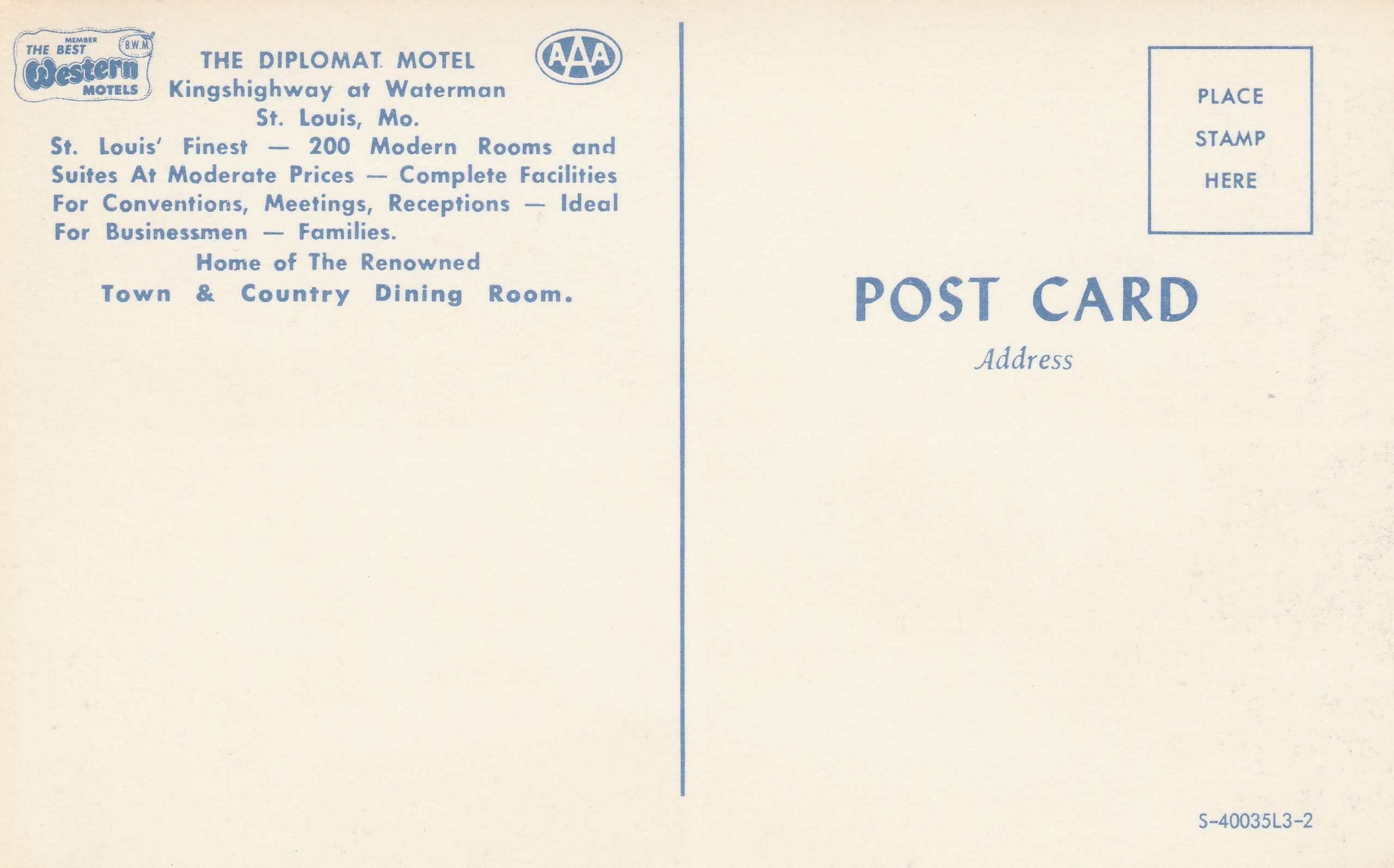
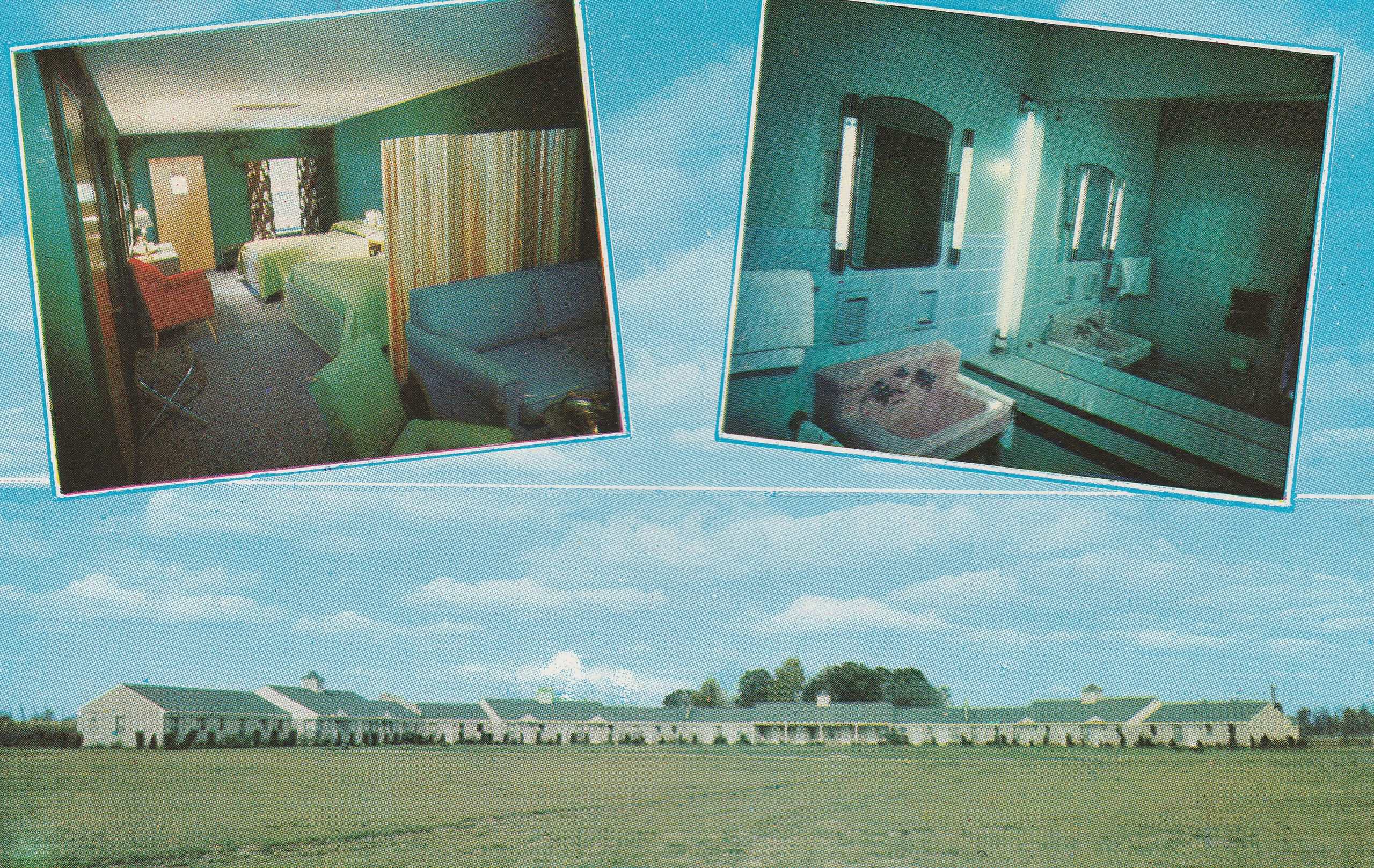
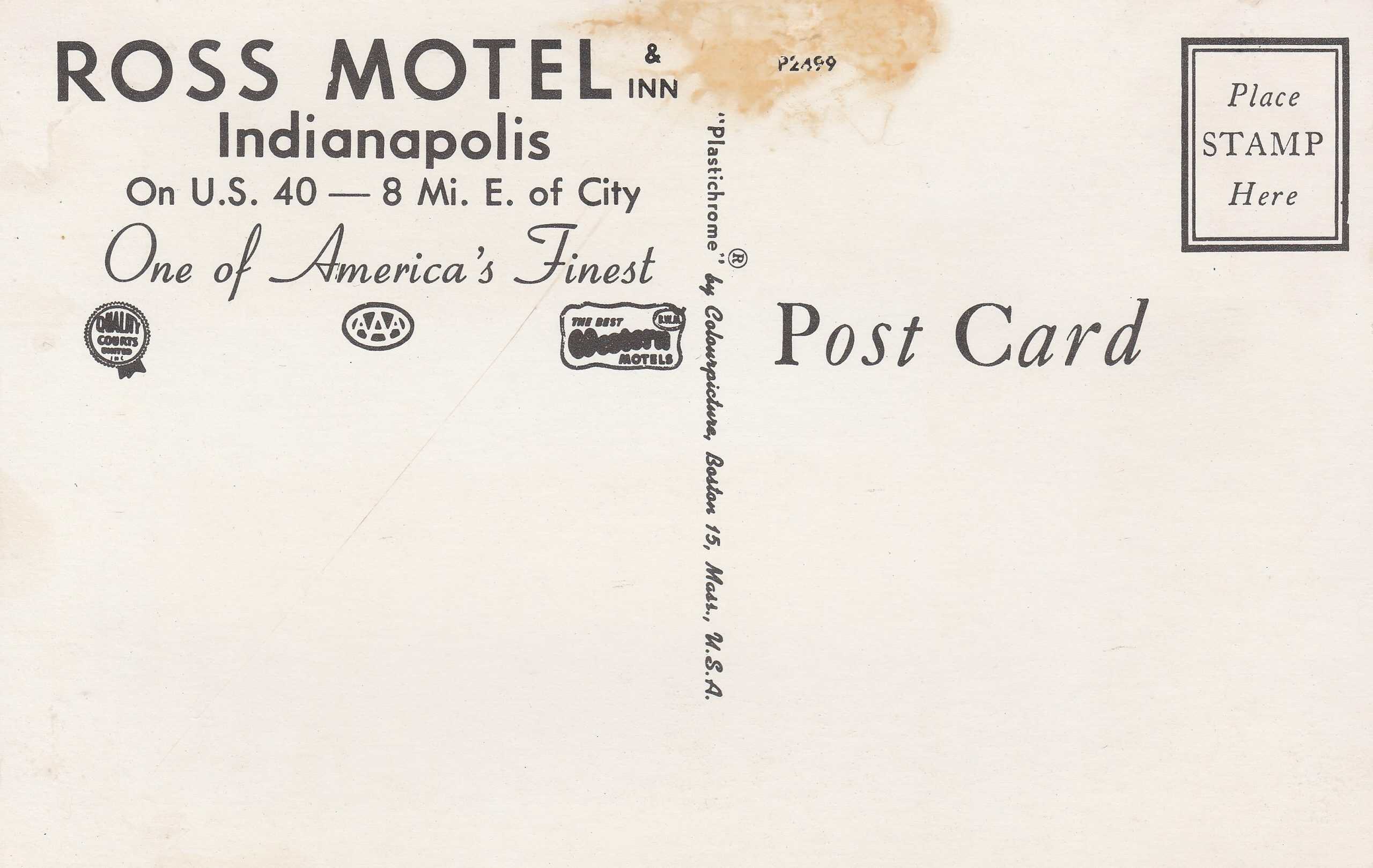
By the 1960s, over 60,000 motels were operating in the United States. Referral chains had determined what American travelers desired for their nightly lodging and brought about the next phase of motel development, franchise lodging chains like Holiday Inn, Howard Johnson’s, Marriott, Ramada Inns, and Quality Hotels.
Referral chains in the United States went extinct except for Best Western. The concept remains popular overseas, especially in Europe, where organizations like the French Relais & Chateaux (over 500 members) and Logis de France (2,400 members) operate like Best Western.
Excellent article Mr. Hennelly. Informative history. Thank you. I published a book a few years ago on Cottage Colonies on the Outer Cape (Cape Cod, MA). These clusters of small cottages were a variation on the motor court, providing guests with week-long stays that were often repeated year after year. Today, many of these family-owned and operated vacation spots are now condos enabling many to buy a sliver of a piece of the beautiful Cape.
My father’s siblings would spend their week at the beach at Young’s Motel and Cabins in Hampton Beach, New Hampshire. Like your Cape Cod cabins they were torn down and replaced by condos. One of the Young’s cabins was saved and moved to the grounds of the Tuck Museum of Hampton History. After a two-year restoration by museum volunteers of the cabin’s exterior and interior to its 1950’s appearance, the cottage opened to visitors in 2008.
Great history of how tourist courts began and their unsavory reputation at first.
Nice to learn the distinction between the franchise chains and the referral chains. Great article!
This is an excellent article, one which I enjoyed very much as Motel Postcards are my number favorite topic to collect. And because we stayed in a lot of motels when I was a kid. My parents were in a 4-wheel drive club so we traveled all over for races and hill climbing events.
Classic mid-century look –
One of the best motel articles I’ve had the pleasure to read! Never heard “autel” used before. My motel cards are online at deviantart.com/yesterdays-paper – I do little write ups based on my research but nothing so in depth as this. Really wonderful work!
Great article and so well researched and comprehensive, as Dan’s articles always are.
Another excellent article Mr. Hennelly. When I was a very young boy my parents operated a small
motel in the Pacific Northwest. Most likely a large part of why I enjoy motel/hotel postcards so much although all travel related cards are a passion of mine.
I switched to this platform last month and the mobile experience is noticeably better than what I used before. The app loads instantly and I can place bets or spin slots without any lag even on a slow connection. Deposit methods like bank transfer and local wallets are fully supported and the transaction limits fit my weekly budget perfectly. I enjoy how the bonus terms are clearly listed upfront without any tricky conditions. The slot collection is massive and the return rates feel fair compared to other sites. <a href='[Link deleted]