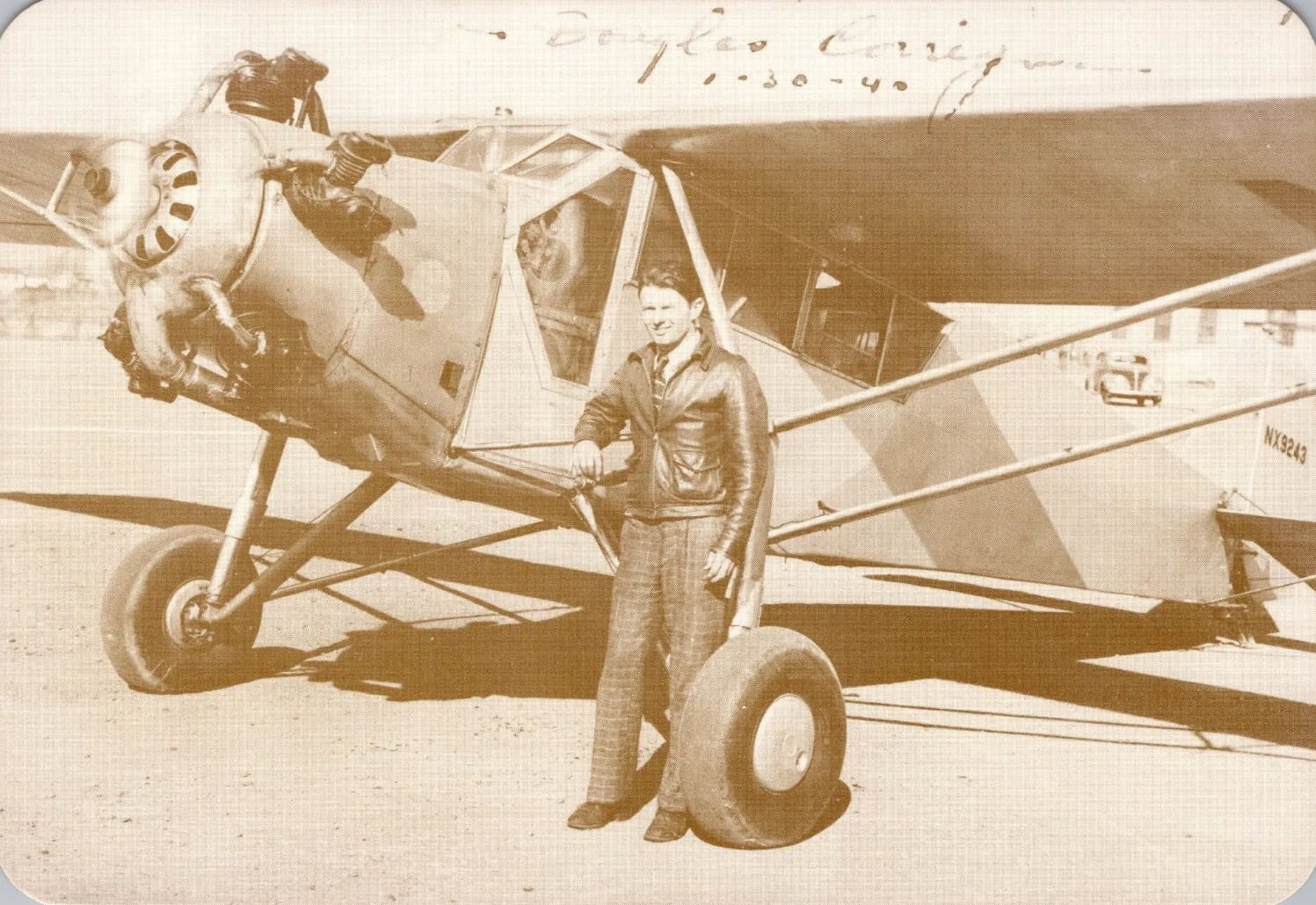
Douglas “Wrong Way” Corrigan was an American aviator who became a Depression‑era folk hero after his supposedly accidental 1938 flight from New York to Ireland — a trip he was explicitly forbidden to make. The essentials: he was born in Galveston, Texas in 1907, left school after the ninth grade, became a skilled aircraft mechanic, helped build Lindbergh’s Spirit of St. Louis, and flew a heavily modified Curtiss Model 50 Robin on his famous “wrong‑way” adventure.
Corrigan was born Clyde Groce Corrigan on January 22, 1907, to a construction‑engineer father and a schoolteacher mother. After his parents divorced, he moved frequently before settling in Los Angeles with his mother and siblings. His formal schooling ended after ninth grade, completed in New York City.
A $2.50 ride in a Curtiss Jenny in 1925 changed his life. Within a week he began flying lessons, and by March 1926 he made his first solo flight. He also spent hours watching mechanics — the beginning of his dual identity as pilot and aircraft technician.
Corrigan joined Ryan Aeronautical in San Diego in 1926, where he helped assemble Charles Lindbergh’s Spirit of St. Louis, including its wing, fuel tanks, and instrument panel. This experience deeply shaped his ambition to fly the Atlantic himself.
Through the 1930s he barnstormed, flew passengers at fairs, and worked as a mechanic. In 1933 he bought a used Curtiss Robin for $325 and began modifying it for long‑distance flight — adding fuel tanks, strengthening the structure, and installing a more powerful Wright J6‑5 engine.
Corrigan’s aircraft was a 1929 model – a single‑engine, high‑wing monoplane. By 1938 it was considered obsolete — even a “flying jalopy.” Key features of his modified version included extra fuel tanks (large enough for 320 gallons of gasoline) in the cabin and nose. Regrettably the additional tanks limited his forward visibility (he could only see out the sides) and forced him to remove the radio and the World War I compass that he later claimed was “stuck.”
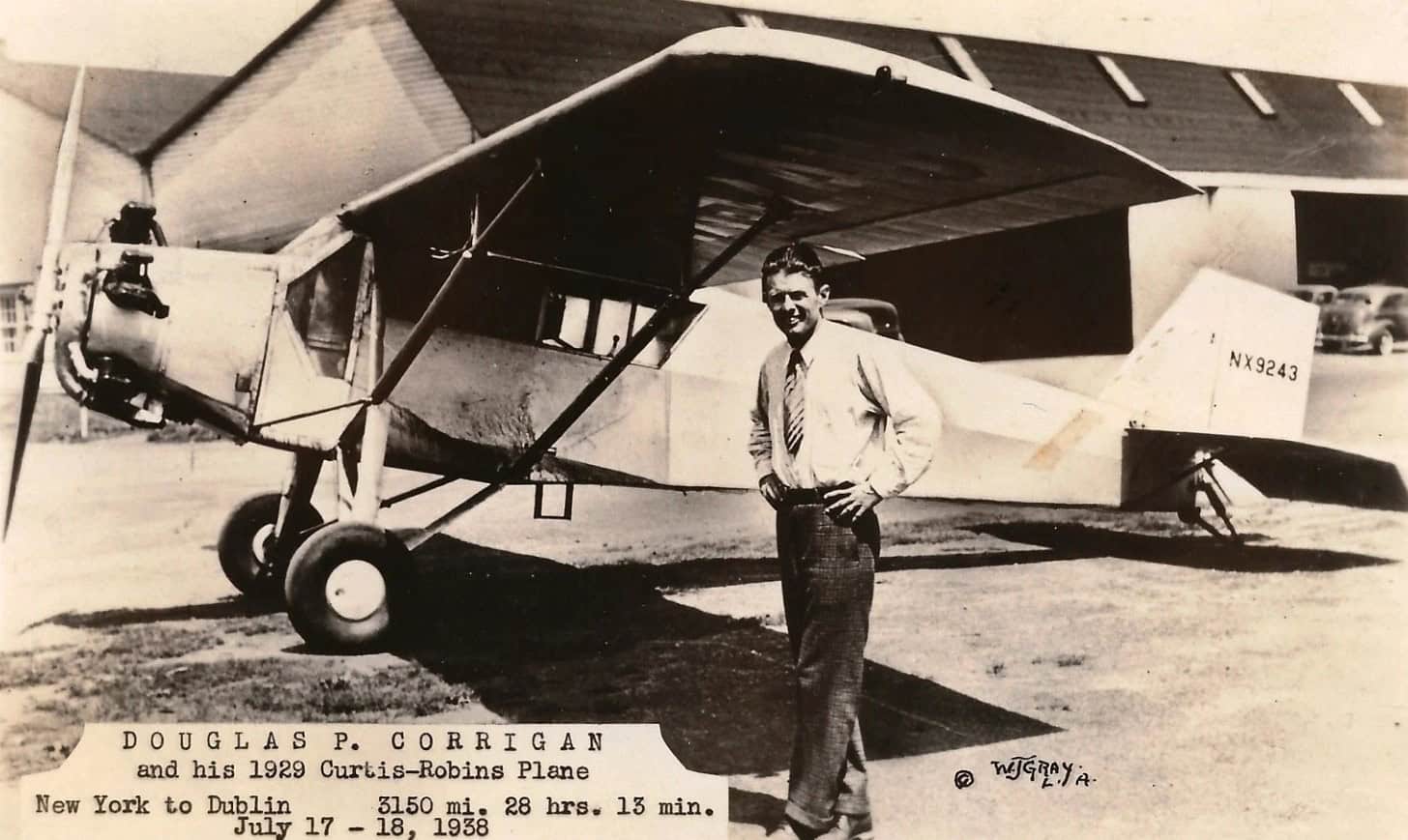
In mid-July 1938, Corrigan flew from Long Beach, California, to New York. He had made his plan and was ready to accomplish it and repeatedly applied for permission to fly the Atlantic — and was repeatedly denied. The authorities (The Department of Commerce) deemed his plane unsafe for oceanic flight. So, he filed a flight plan to return to Long Beach, California.
At dawn on July 17th, he took off from Floyd Bennett Field in Brooklyn. Instead of turning west, he climbed into a cloudbank and headed east. Twenty‑eight hours later, he landed in Dublin, Ireland. As he stepped out of his Robin he looked around and said, “I Just got in from New York. Where am I?”
No one believed him, but no one wanted to spoil the fun.
He claimed that when he left “Bennett” the weather was bad and “heavy clouds” covered every landmark he looked for. He also claimed a compass malfunction and simply that “I got mixed up.”
Corrigan became a national sensation. Newspapers dubbed him “Wrong Way Corrigan,” and the public embraced him as a lovable underdog who thumbed his nose at bureaucracy. But there was a penalty; despite violating multiple aviation regulations, the authorities issued only a five‑day suspension of his pilot’s license — which he served while returning to New York by ship.
Upon arrival, he received a ticker‑tape parade down Broadway and became one of the last great folk heroes of early aviation.
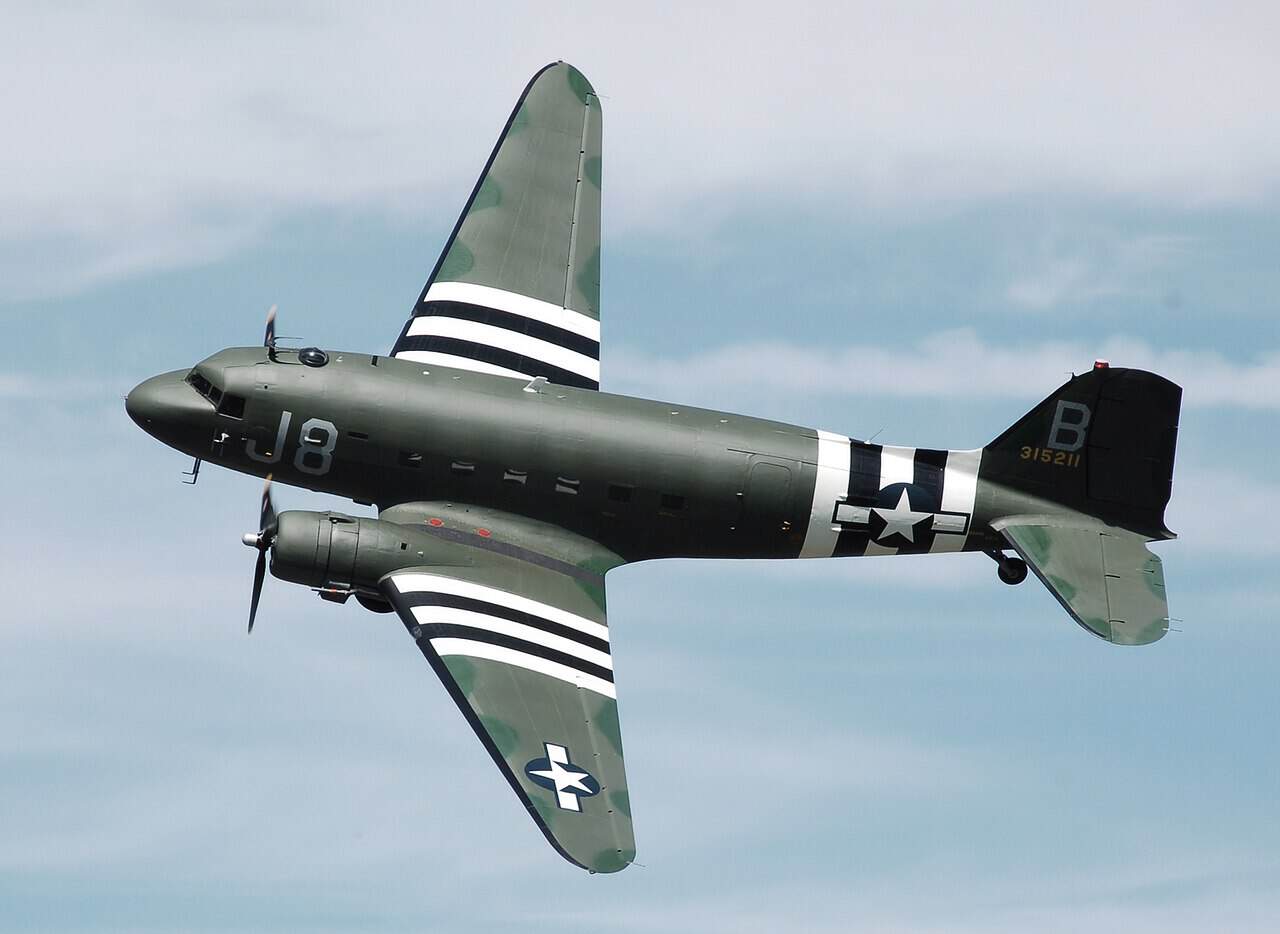
Corrigan wrote an autobiography that he titled, That’s My Story, later in 1938, and starred in the film The Flying Irishman in 1939. And for a short time during World War II he worked as a test pilot for Douglas Aircraft – the manufacturer of the C-47 Skytrain – the plane that took thousands of paratroopers to the beaches of Normandy on D-Day.
He retired to Santa Ana, California, where he bought an orange grove and lived quietly with his wife and three sons.
Corrigan died in December 1995 at age 88. The title of his obituary, simply read: Douglas Corrigan; Flew ‘Wrong Way’ Across Atlantic.
Oh, in case you wonder, when he landed in Ireland, he had no passport and no landing permit. He was held in open confinement, and his plane was confiscated and disassembled. The plane was later packed into crates and shipped to his garage in Santa Ana where it stayed until 1988 when it was reassembled and put on display at Hawthorne Municipal Airport.
A wonderful story.
Amazing! I had never heard of him before.
Fantastic story! I knew the name, but I thought the “wrong way” referred to a flight across the United States, not across the Atlantic. It was nice of the folks in Ireland to return his plane, even if it was disassembled.
Any idea where the “P.” middle initial on the second postcard came from? Is it just a typo?
Ah, the early days of (paraphrased) “it’s easier to beg for forgiveness than to get permission.” Honest mistake, or not 😉, it all worked out and quite an entertaining historical story. I am glad he wrote an autobiography to tell the story. There is something loveable about an underdog winning despite the odds.
Fantastic story!
Such a great story. never heard it before in this amount of detail and backstory. Thank you for sharing.