Trees serve humans in many ways. The are in a partnership with humans that has shaped our lives since Adam and Eve. They provide wood resources for building homes and fueling fires that have kept us warm for millennia. Conversely, their leaves offer shade and cooling. Trees also act as powerful air purifiers, absorbing carbon dioxide and releasing oxygen, which supports human health and combats climate change. Beyond these practical benefits, they stabilize soil, prevent erosion, and support ecosystems that humans rely on for food and medicine. In every season and every landscape, trees stand as our protectors and partners in human survival.
As we drive across our vast country, through forests that are miles long and wide, it is difficult to single out one tree that has an impact on us as an individual, however in nature and history there are examples of how one tree has influenced one individual and the record of influence has become legend. Some examples follow . . .
The Senator Tree, a bald cypress, Florida, USA
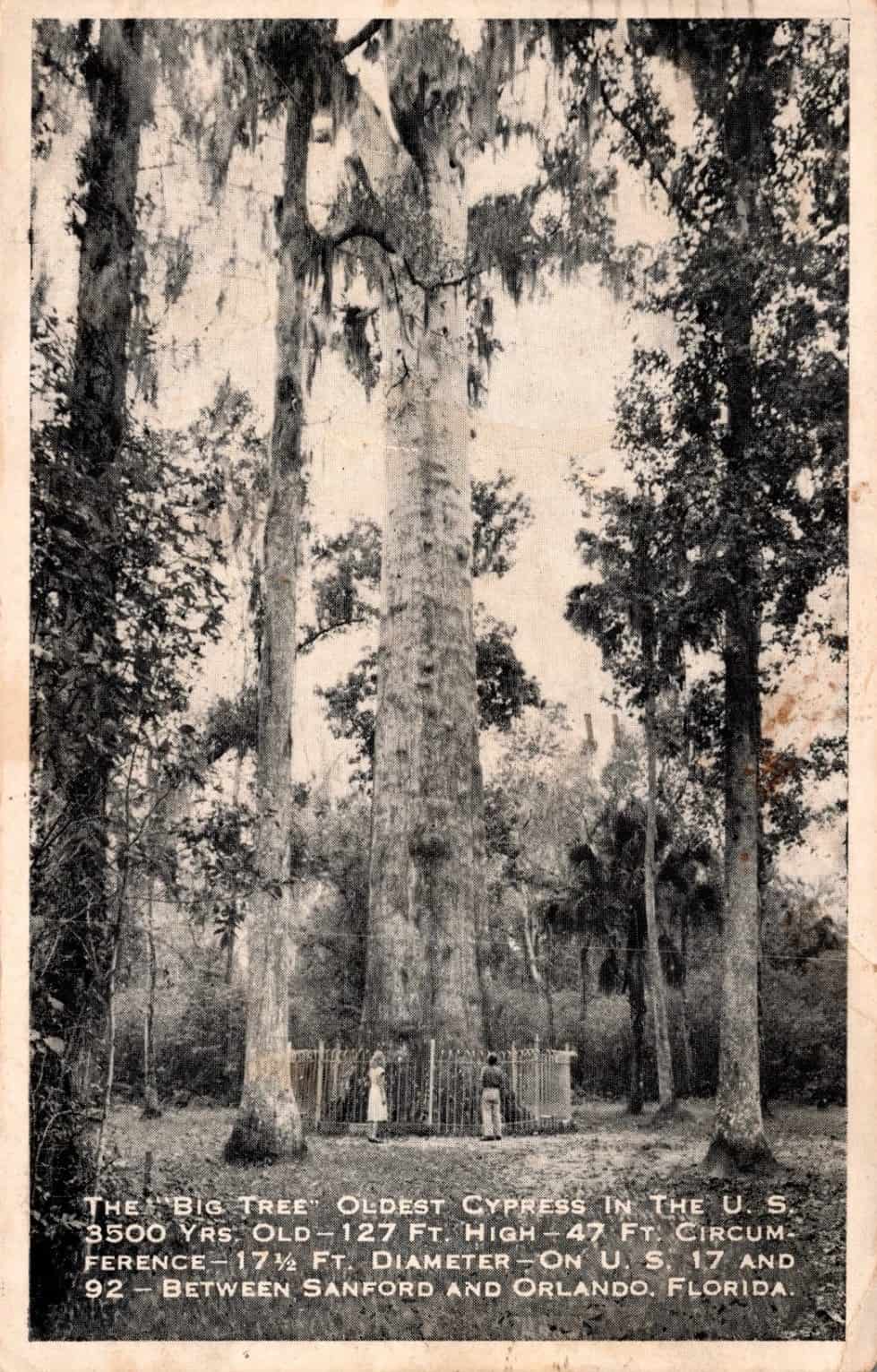
The Senator Tree, a 3,500‑year‑old bald cypress, once stood as one of Florida’s most inspiring natural monuments. Located in Big Tree Park in Longwood, it was not only the oldest and largest bald cypress in the world but also one of the oldest living organisms on Earth. At its height, The Senator reached roughly 165 feet before a 1925 hurricane reduced it to about 118 feet, and its massive trunk measured over 17 feet in diameter.
For years, indigenous peoples, including the Seminoles, used the towering tree as a landmark visible from miles away. Later in the nineteenth century, Floridians and travelers braved swampy terrain to visit it, leaping from log to log before the Works Progress Administration built a walkway to its base. Its cultural significance deepened when Senator Moses Overstreet donated the land in 1927, and President Calvin Coolidge dedicated the site two years later.
The Senator Tree endured hurricanes, droughts, and centuries of change, becoming one of Florida’s earliest tourist attractions. Families picnicked beneath it and children posed for photos with it.
However, the Senator’s legacy ended tragically in January 2012, when a fire caused the ancient giant to collapse. Not more than a twenty-foot remnant remains today.
The Tree of Ténéré, an umbrella thorn acacia, in Niger, North Africa

The Tree of Ténéré once stood as the most isolated tree on Earth, in the vast emptiness of the Sahara Desert. For centuries it served not only as a biological marvel but also as a cultural beacon for Tuareg caravans crossing the Ténéré region of northeastern Niger.
It was an umbrella thorn acacia that survived in one of the harshest environments on the planet. No other tree stood within roughly 250 miles of it, a fact so extraordinary that early twentieth‑century maps marked the tree as a navigational point—one of the only individual trees ever mapped to scale. Its endurance (well over 300 years) can be explained but that is a topic for a different time.
To the Tuareg people, the tree was more than a waypoint. It was a sacred sentinel in a landscape of shifting dunes and blistering heat. Caravans gathered around it before crossing the Ténéré, treating it as a living lighthouse guiding them between Agadez and Bilma. Even in an environment where firewood was precious, no traveler cut its branches.
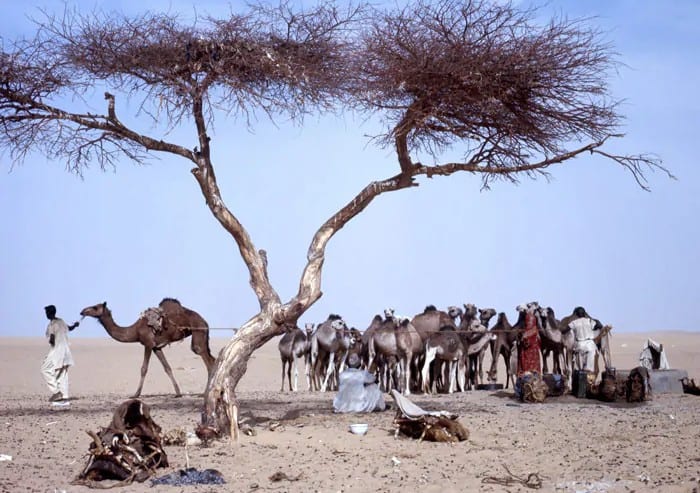
Its end, however, came not from drought nor age but from human error. In 1973, a truck driver, reportedly intoxicated, hit the tree and snapped its trunk. The remains were taken to the National Museum of Niger for preservation and are today on exhibit.
The Tree of Ténéré no longer stands as a living tree. Today, a metal sculpture marks the spot where it once grew.
Anne Frank’s White Horse Chestnut Tree, Amsterdam, The Netherlands
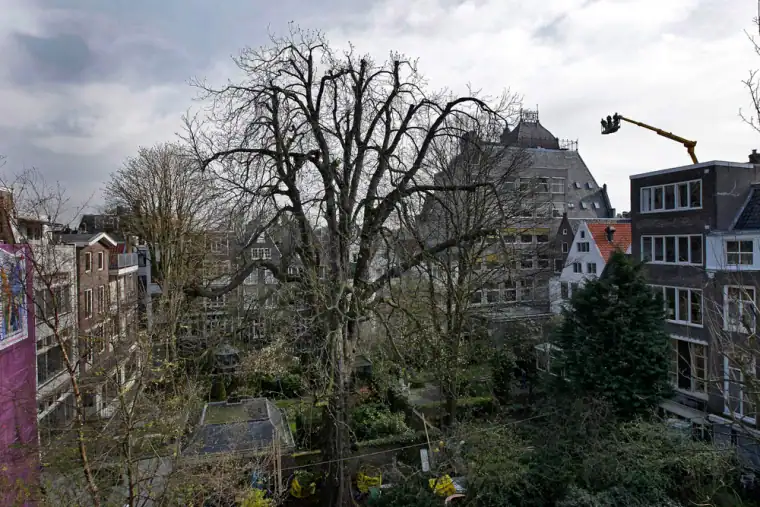
The white horse chestnut tree mentioned in Anne Frank’s diary was the only tree she could see from her attic hideout in the secret annex in Amsterdam. The upper branches of the tree were the only glimpses of the outside world during her more than two years of hiding during World War II. To her the tree became a symbol of freedom and peace.
The tree is a white horse chestnut and stood in the courtyard behind the building at 188 Keizersgracht in Amsterdam. It was already over 170 years old during the war, making it one of the oldest chestnut trees in the city.
Anne saw it from the attic — the only window not blacked out — and mentioned it three times in her diary. During those years in the annex, Anne felt like a “bird in a cage,” as her father Otto later said. The tree, the sky, and the birds became her emotional lifeline.
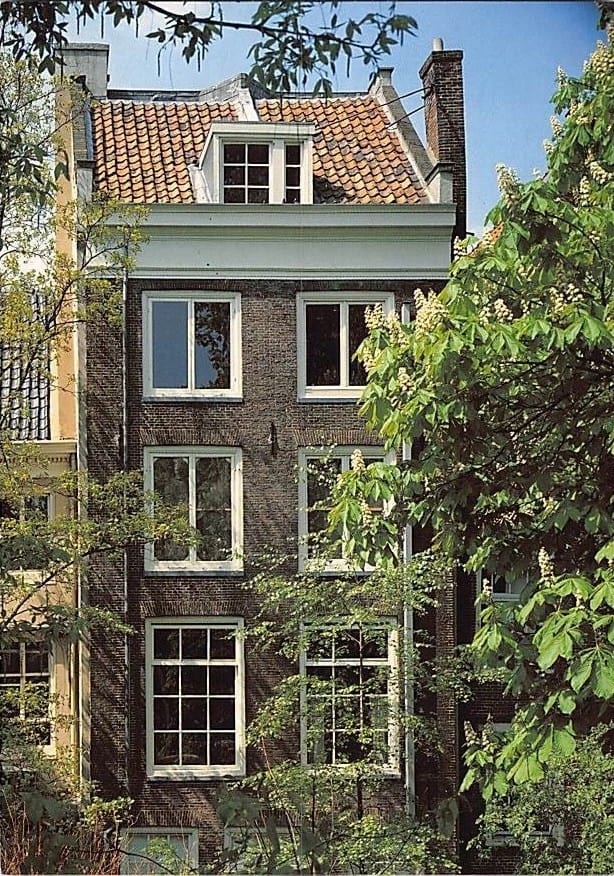
Anne’s most famous passage about the tree was written on February 23, 1944, and describes droplets shining on its bare branches and the silver flight of seagulls. She wrote, “As long as this exists … this sunshine, the cloudless skies, while this lasts, I cannot be sad.”
The tree is gone. By the 1990s, the tree suffered from fungal rot and leaf miner moth infestation, weakening its structure. Attempts were made to save it, including a steel support frame, but on August 23, 2010, high winds during a storm caused the tree to fall from its trunk about four feet above the ground. No one was injured.
There is, however a legacy: before the tree fell, chestnuts were collected and germinated. Saplings were sent to schools, museums and memorial sites, several parks in Amsterdam and other European capitals, and several locations across the United States. The final group was planted in 2013 except for one final planting in 2019 at the United Nations Headquarters.
The chestnut tree is often described as the last living witness to Anne’s time while hiding. It stood through the war, through the decades of remembrance, and finally fell only after her story had become known worldwide.
I so much enjoyed reading about these trees and their importance in the lives of people.
That was strongly brought home by the tornadoes we had in Dover, DE, on Thursday. We lost a 250-year-old tree on The Green. I now need to research if there are any postcards of that tree.