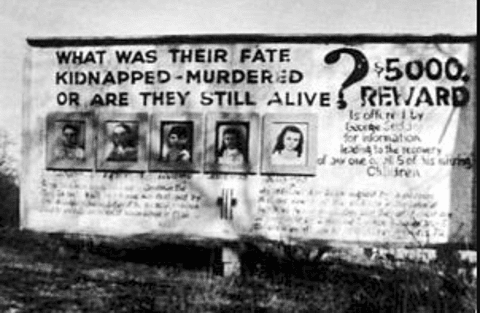
The above postcard was found in a “dollar box” at a recent Pennsylvania postcard show. I tell most of my Postcard Friends that I suffer from, “just one more” syndrome. This was the last card I purchased. I gave the dealer the four quarters I had in my pocket.
Often, postcards like this one lead to some very unsavory tales, but this one has led to an ugly and shocking story, and it is a story of a Christmas Mystery – the tale of the Sodder family’s house fire.
In the early hours of Christmas Day 1945, a home in the town of Fayetteville, West Virginia, became the site of an enduring mystery. The Sodder house fire, one that consumed a family’s home and probably erased the lives of five children, has lingered in memory for more than eight decades. Not only because of the tragedy, but because of questions it provokes. Certainly, it is a story where grief and suspicion intertwine, but never should the lives of children be in jeopardy for any reason.
George and Jennie Sodder were a couple who had carved out a comfortable life. George was born in Sardinia and immigrated to the United States as a young man along with his brother. He married Jennie in 1922 and built a successful trucking business. Their home was along Route 16, the main north-south highway through town. It was a lively house, filled by the antics of their ten children. But George was outspoken in his criticism of Benito Mussolini, an opinion that branded him as someone unwelcomed in the local Italian community.
In the months leading up to Christmas 1945, some strange events suggested that his political views were drawing some unwarranted attention. That year, Christmas Eve began in the usual way. The older children stayed up late, celebrating and by the time the house quieted after midnight, nine of the ten Sodder children were asleep. Only their eldest son was away, serving in the Army.
Around 1:00 a.m., Jennie Sodder awoke to the sound of a heavy thud on the roof of their home but dismissed it. A few minutes later, she woke again, this time to the smell of smoke and soon discovered that flames were already spreading through the downstairs rooms, cutting off access to the staircase that led to the children’s bedrooms.
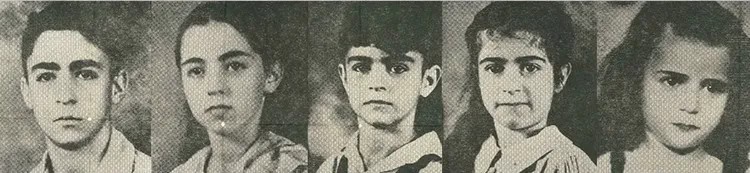
Jennie and George escaped with four of their children: Marion, John, George Jr., and the youngest, Sylvia. Sadly, their other five children, 14-year-old Maurice, 12-year-old Martha, 9-year-old Louis, 8-year-old Jennie and 5-year-old Betty were trapped upstairs.
In the frantic minutes that followed the discovery of the fire, George attempted every kind of rescue. He ran to retrieve the ladder he kept propped against the house, only to find it missing. He tried to start his coal trucks to climb to the second-floor windows, but both vehicles, normally reliable, refused to start. The telephone inside the house had gone dead. Their daughter, Marion, ran to a neighbor’s home to call the fire department, but the response was distressingly slow. The Fayetteville Fire Department, only a few miles away, did not arrive until 7:00 a.m., long after the house had collapsed into embers.
By dawn, the Sodders discovered a horror deeper than the fire itself: no trace of the five missing children could be found. No bones, no teeth, no fragments — nothing. Fire experts insisted that even the hottest house fires do not completely destroy human remains, especially those of children.
The official explanation, an electrical fire, seemed flimsy to George, who had recently had the home rewired and inspected. The missing ladder, the disabled trucks, the dead telephone line — all felt like pieces of a deliberate sabotage.
In the days and weeks that followed, the Sodders began to hear stories that fed their growing conviction that the children had not died in the fire. A woman claimed she had seen the children in a passing car on Christmas morning. Another witness in Charleston reported seeing them with unfamiliar adults. A photograph mailed anonymously to the Sodders in the 1960s appeared to show Louis Sodder as a grown man. Though none of these leads were ever followed or verified, they kept hope alive, but they fueled the despair.
Theories multiplied. Some believed the fire had been set intentionally to cover a kidnapping. Others pointed to the threats George had received from an insurance salesman who warned that his anti‑Mussolini views would bring tragedy. Still others whispered about Mafia involvement, suggesting that George’s political stance had angered powerful figures who sought to punish him through his children.
Through it all, the Sodders refused to let the mystery fade. They turned the site of their home into a memorial garden and, in 1952, erected a massive billboard along Route 16 bearing the faces of the five missing children and a plea for answers. For decades, the billboard stood as a stark reminder of the unresolved tragedy, a landmark that drew curiosity seekers.
Despite state and federal investigations, no definitive evidence ever emerged. No arrests were made. No bodies were found. The Sodders lived the rest of their lives not knowing the truth about that Christmas morning. Jennie wore black until her death in 1989. The billboard came down shortly after Jennie died.
Today, most of the Sodder family is gone. George died in 1969 and his five surviving children are gone too. The lives and whereabouts of the five who disappeared on that Christmas day are still unknown, although death certificates were issued for them on December 30, 1945. The Sodder house fire has likely been forgotten, even by the good citizens of West Virginia. Yet a postcard has lasted beyond memory and has sparked another generation who will remember those five unfortunate children.