By 1910 affordable car ownership enabled a transition from horses to automobiles for everyday transportation in the United States. Across the country adventurous car owners were taking to the road for vacations, camping in vacant areas using tents or adapting their vehicles into “house cars” in which they could sleep. In Florida these people came to be known as “Tin Can Tourists.” According to one of several theories about the name’s origin, it was that they ate out of tin cans.
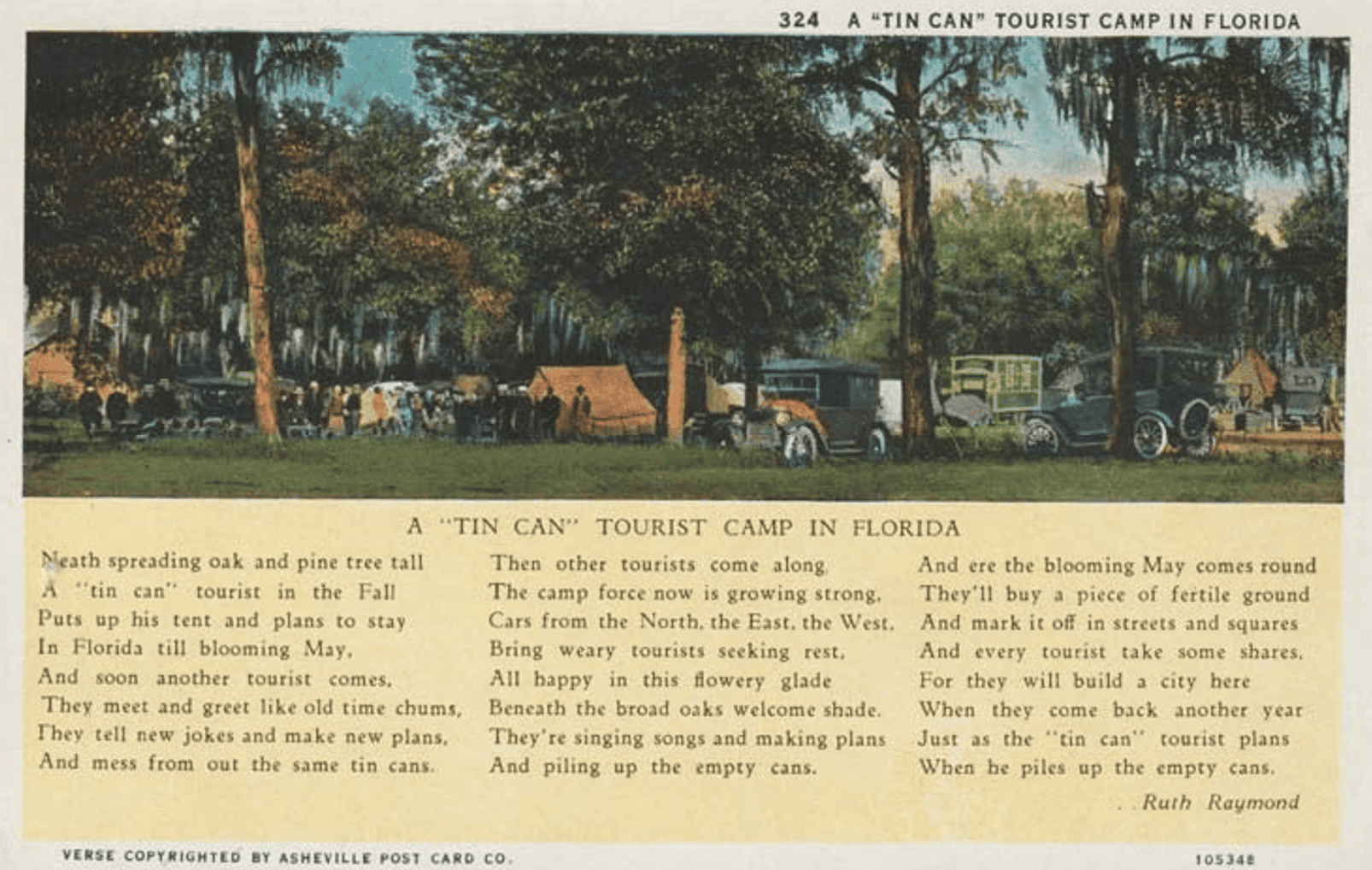
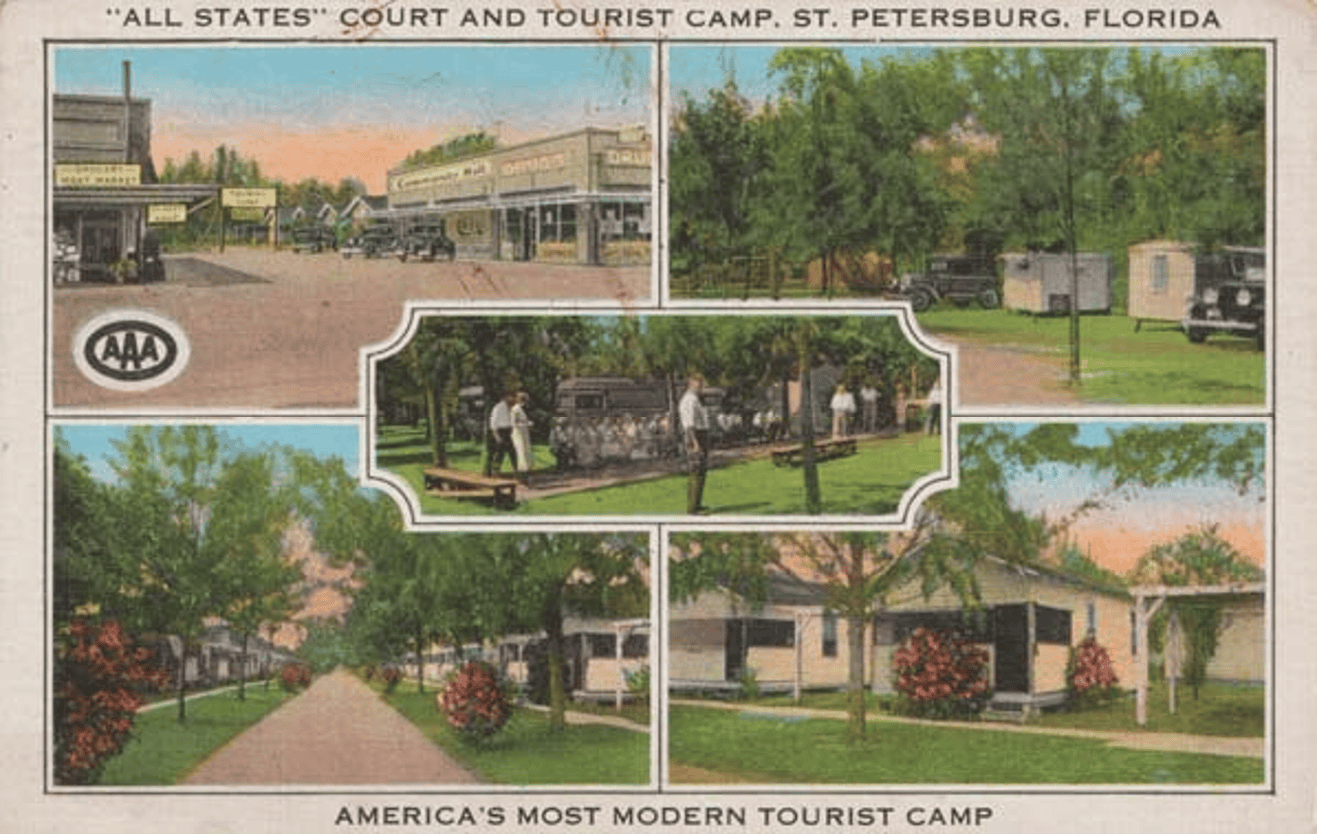
Soon conflicts with local residents over land use led to the creation of tourist courts and camps providing a range of services, where these auto tourists could stay by the day, week or month in small furnished cottages with utilities, private baths and garages, or put up a tent on a campsite, or bring a trailer to stay in. A 1920s postcard depicts the “All States Court and Tourist Camp” in St. Petersburg. It had 48 such cottages and 76 large campsites with modern conveniences.
“All States” also had a community hall, drug store, grocery store, and recreational activities such as shuffleboard. All the things that vacationing retired people from across the country could use, at affordable rates, and share community life together.
A similar but larger enterprise in the 1930s was the Keystone Tourist Court on the Dixie Highway in Miami. The Dixie Highway was an early 20th-century auto trail network conceived in 1914 by entrepreneur Carl G. Fisher to connect the Midwest and Canada to Miami. It utilized funds from local governments, businesses, and citizen groups, and consisted of interconnected paved and unpaved routes rather than a single road. In 1926 it was replaced by the system of numbered state highways.
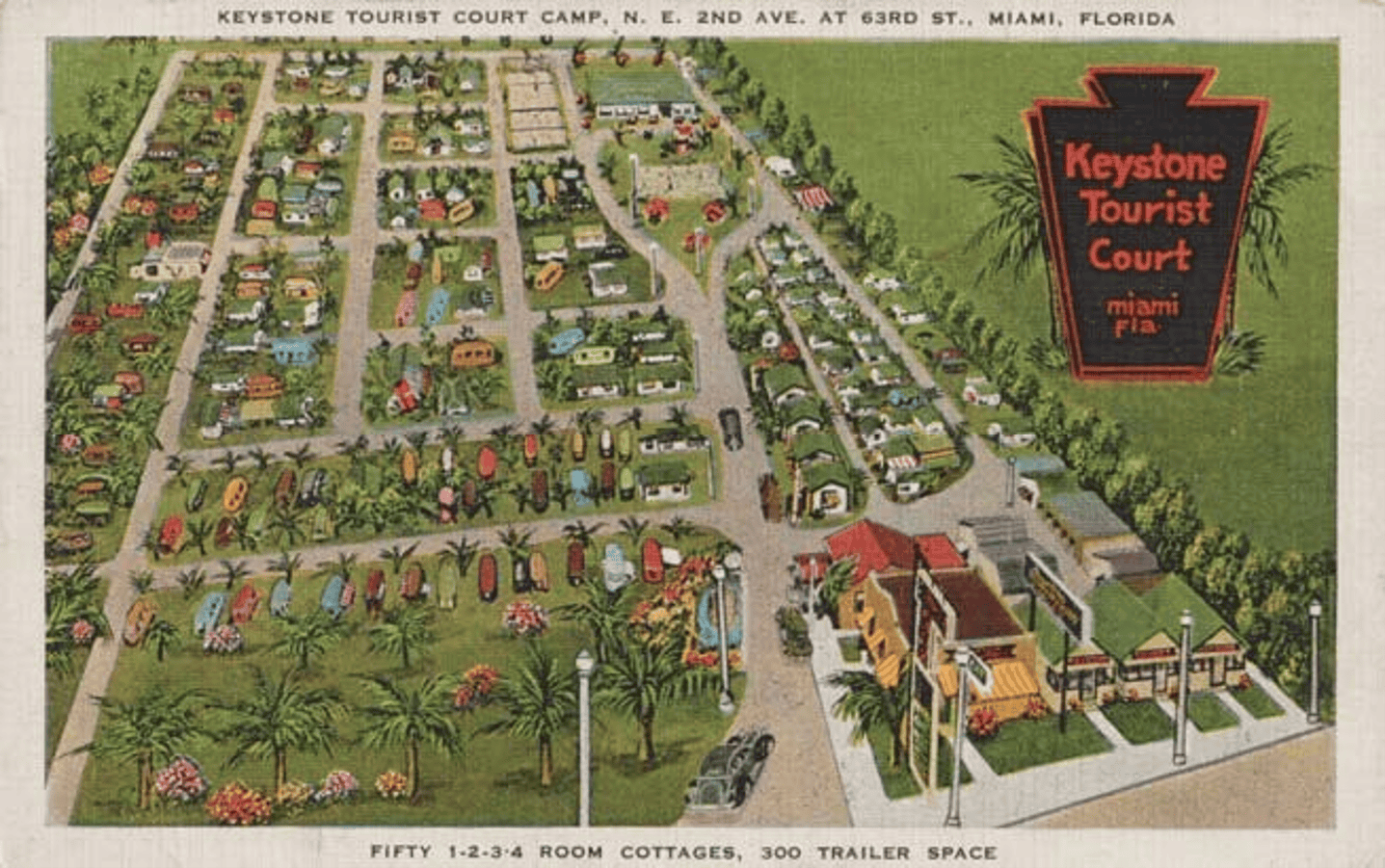
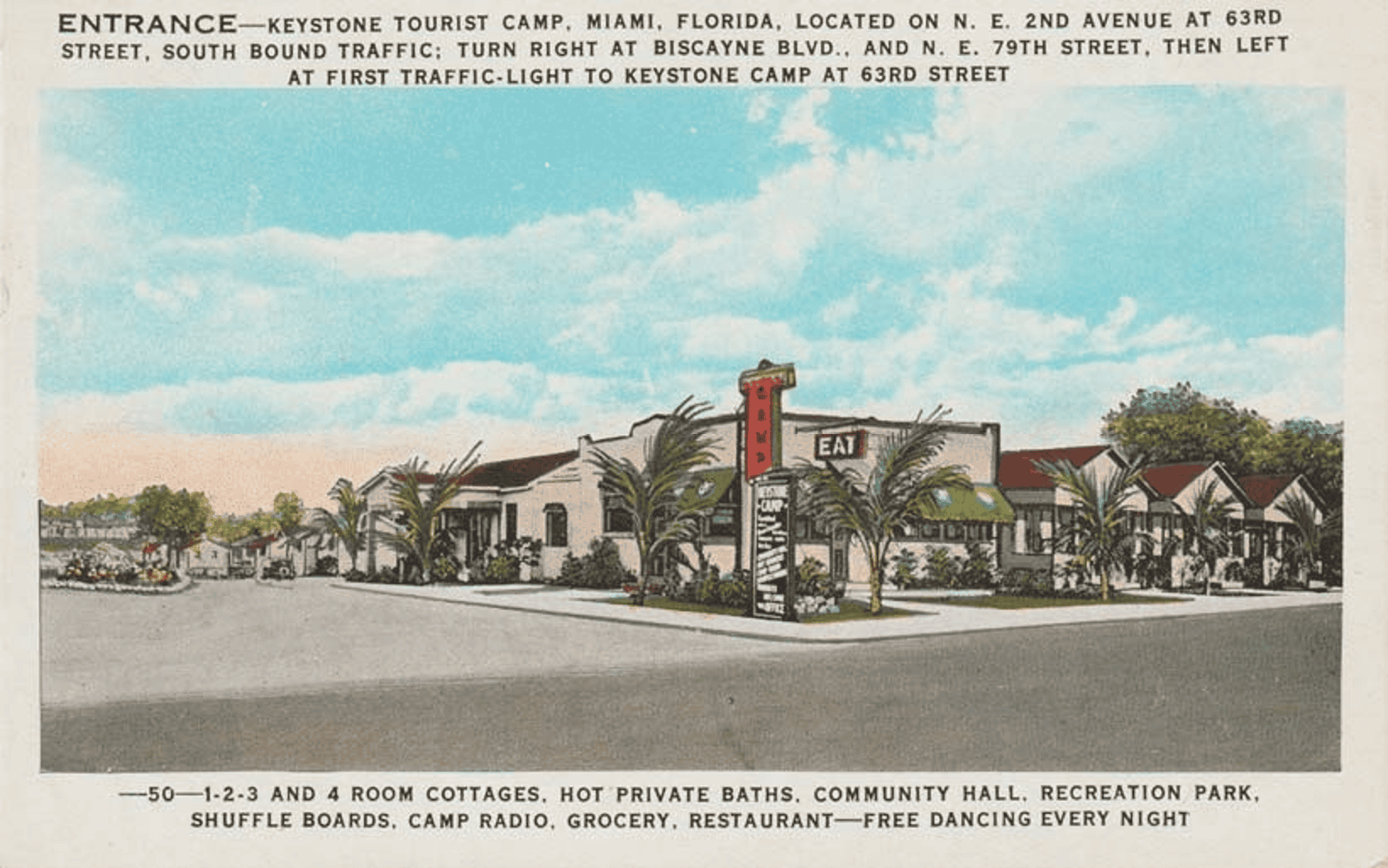
The Keystone Tourist Court featured fifty cottages with hot private baths, 300 trailer spaces, and camping spaces. Calling itself “A City within a City,” its amenities included a community hall, recreation park, grocery store, and a restaurant. Guests could enjoy free nightly dancing, sound pictures, vaudeville, the camp radio, shuffle boards, and tennis. It shut down in the 1960s.
Between 1925 and 1930 automobiles began to be mass produced, so quite large trailer parks came to be established to serve the increasing number of tourists to the state. As they brought a lot of business for local merchants, a real boon in the Great Depression, in some cases they were developed and run by municipalities and service organizations.
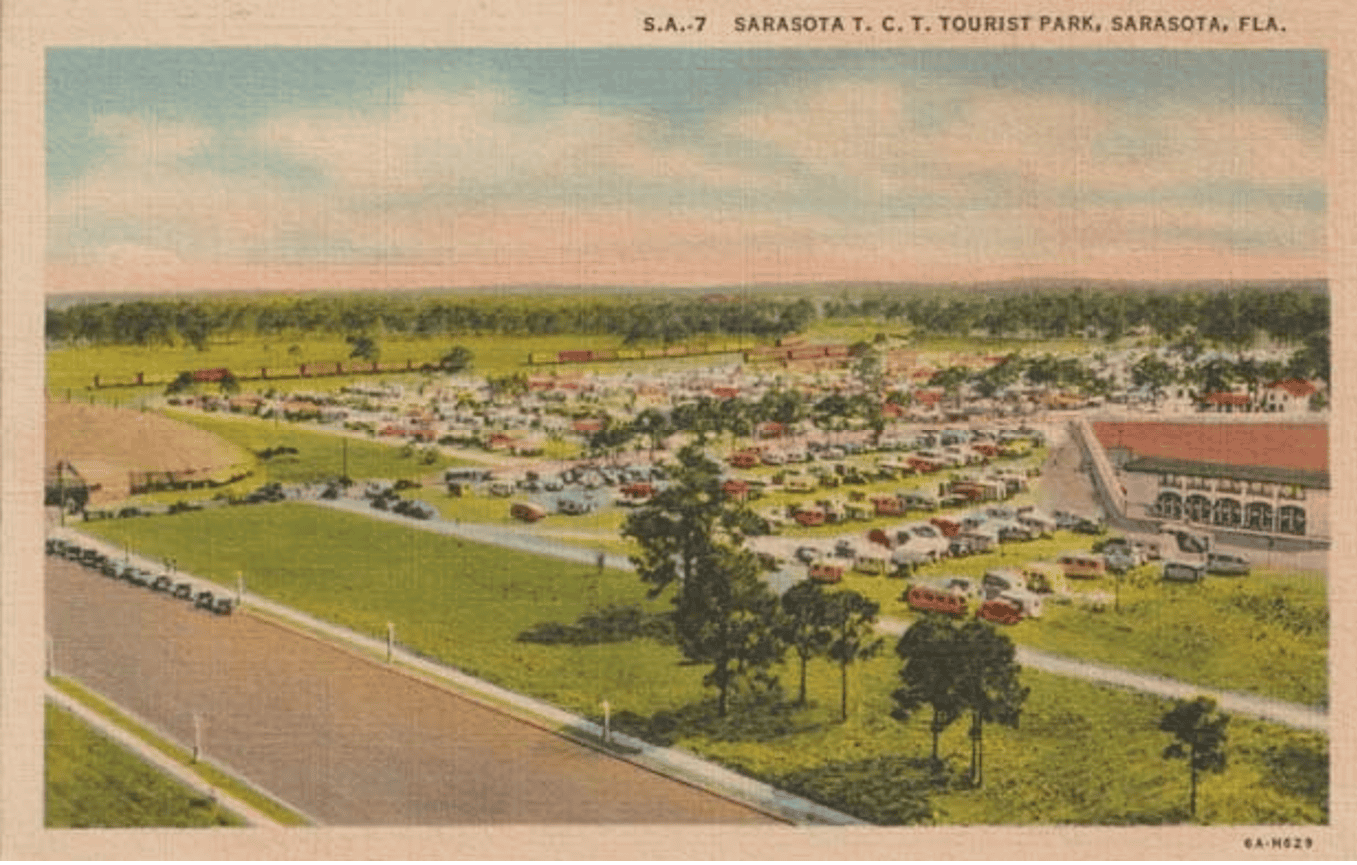
In 1932 in Sarasota, the Tin Can Tourists organization, founded in 1919, opened a trailer park on city owned land which is now part of Payne Park. Some of the in-park activities were dances, parties, trailer park band concerts, organized bicycle rides, and various club meetings. This organization is remembered today for its enforced strict membership, prohibiting alcohol, firearms, and rowdiness. At its 1936 convention in Sarasota, with an attendance of 2,216 members, this trailer park recorded its peak historical capacity of 1,058 trailers and house cars. In later years it became the Sarasota Mobile Home Park, until its closure in the early 2000s.
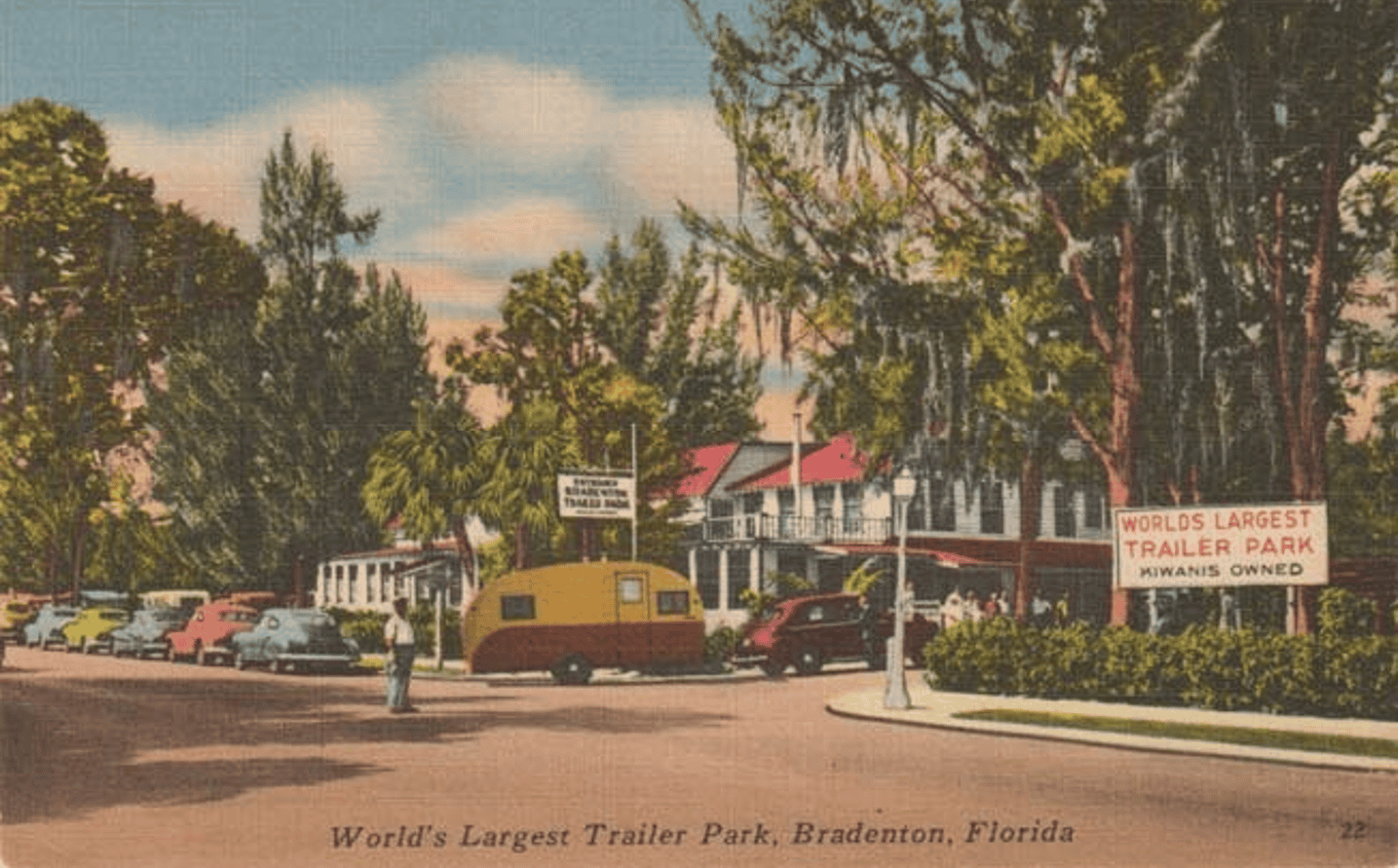
The Bradenton Trailer Park, billed as the world’s largest, was started in 1936 by the Bradenton Kiwanis Club on a 40-acre plot close to Bradenton’s business district. By the 1940s, the Bradenton Trailer Park had installed electric meters, paved streets, and continuous entertainment. It reached a peak capacity of 1,190 lots in 1950. All net profits went directly into a community youth fund supporting groups like the Boy Scouts and Boys & Girls Clubs. In 1997 it was sold to a resident-formed cooperative for $8.8 million and renamed Bradenton Tropical Palms.
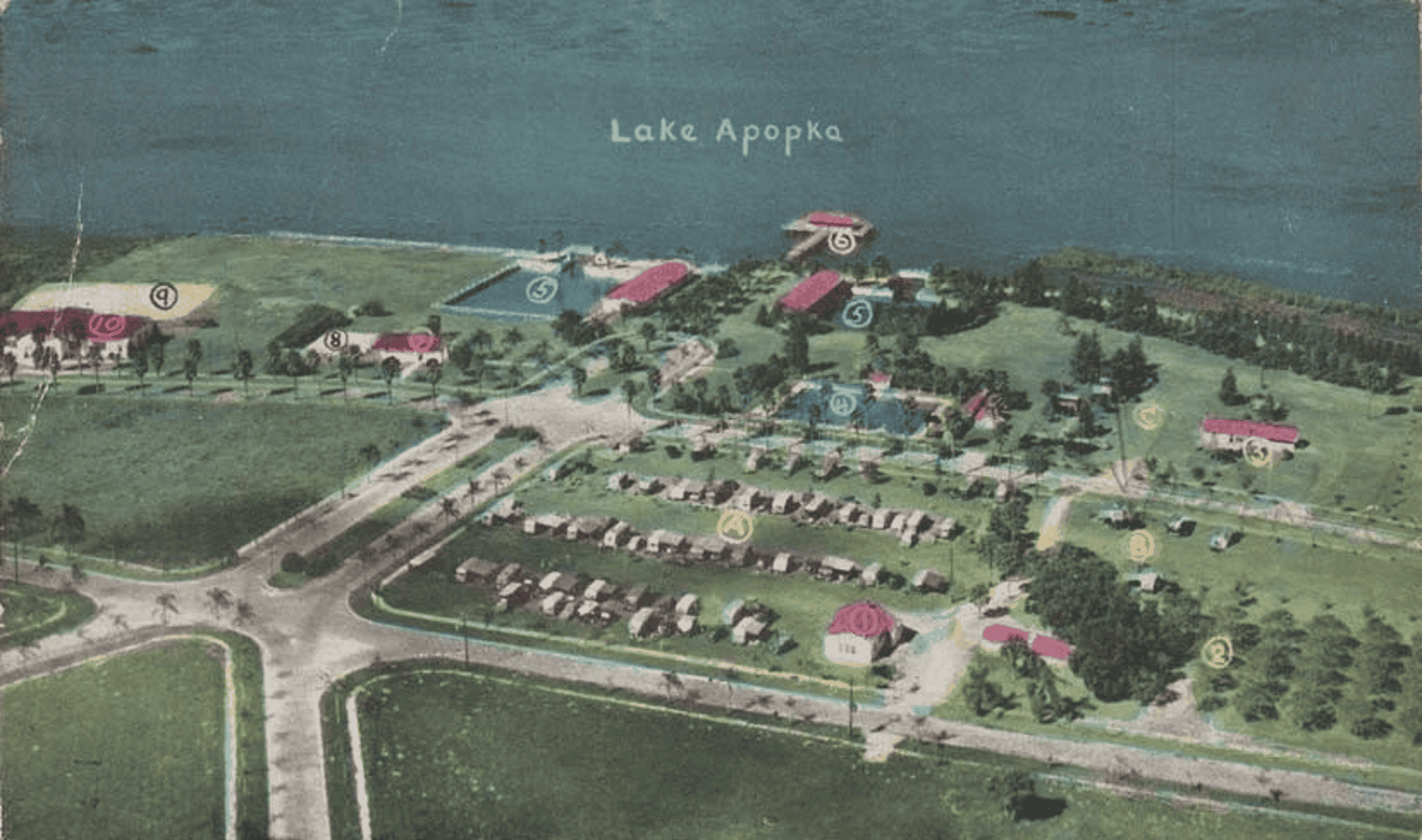
Trailer City on the shore of Lake Apopka is a historic, city-owned 55+ mobile home park located in Winter Garden, 14 miles west of downtown Orlando. It was originally built in 1936 using WPA (Works Progress Administration) funds during the New Deal. The aerial view of it on this late 1940s postcard promotes what was then regarded as its outstanding points: an office and modern restroom, a grapefruit and orange grove, laundry facilities, a swimming pool, a yacht basin, a fishing pier, a club house, shuffleboard and tennis courts, and an auditorium.
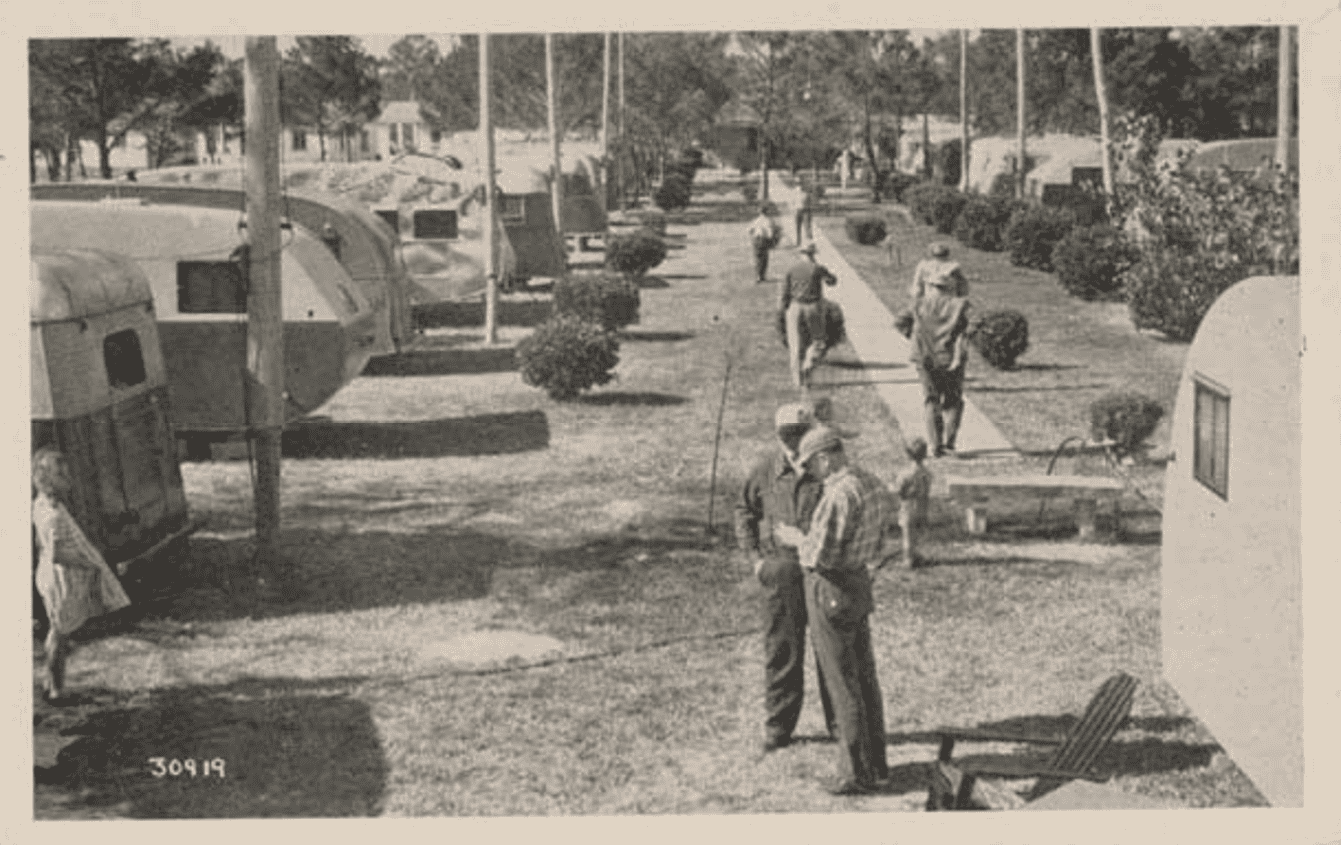
One mile west of Mount Dora was Riley’s Park, founded by Ernest L. Riley and his daughter Thelma Beatrice Riley as well as Thelma’s husband, Lelern “Grady” Simpson. It originally had both cottages and trailer spaces. Today it is a mobile home park with 122 different sized lots.
This late 1940s postcard promised “ultimate accommodations” and emphasized its lawn and shrubbery, neat rows of trailers, and relaxed guests including some who seem to be playing shuffleboard.
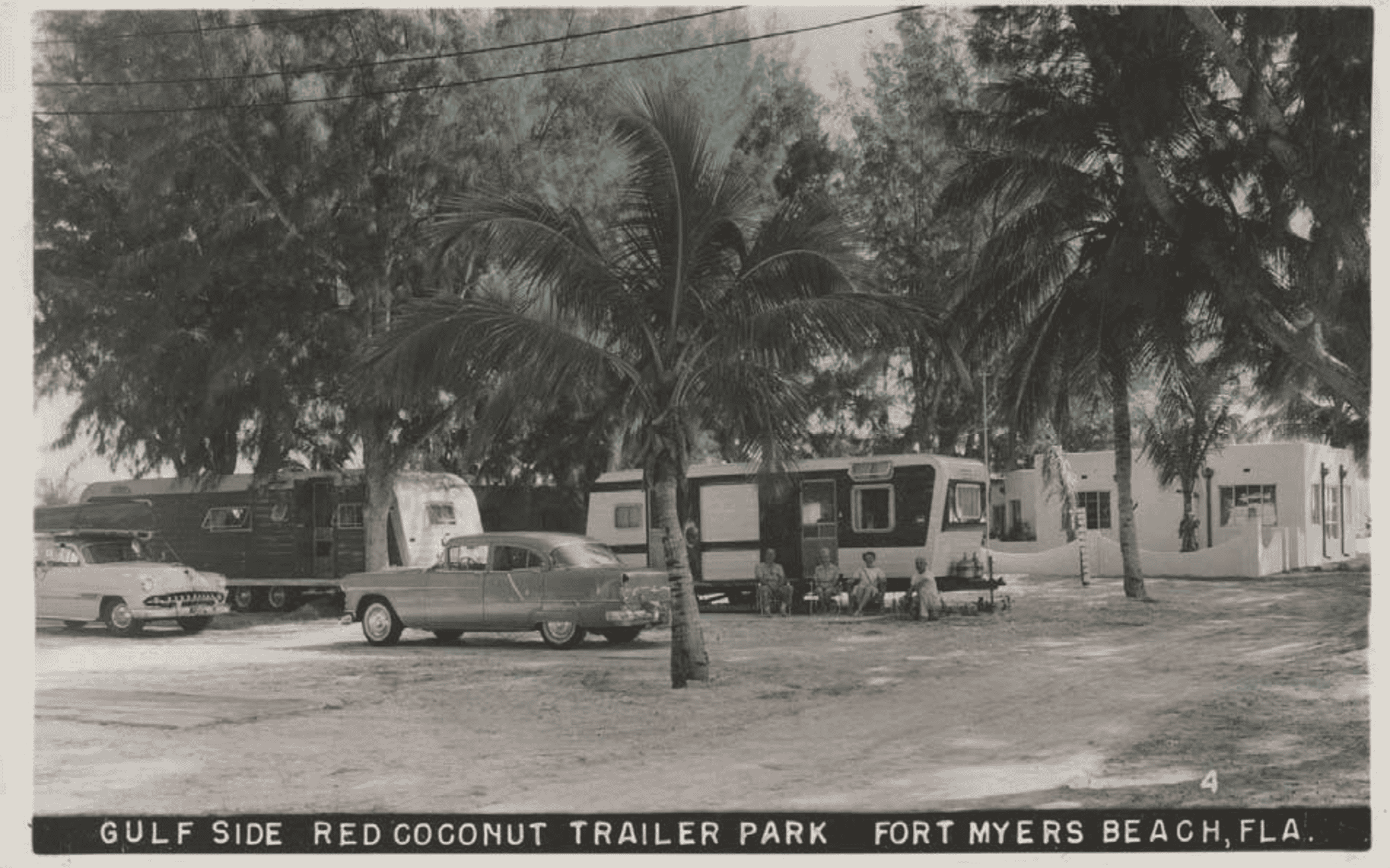
After World War II the country entered an era of prosperity in the 1950s and 1960s, embodied in this circa 1955 real photo postcard of lounging guests and their large travel trailer and new-looking Oldsmobile Super 88 automobile at the historic Red Coconut Trailer Park. It was a 10-acre beachfront campground on Fort Myers Beach, Florida, directly facing the Gulf of Mexico. After being severely damaged by Hurricane Ian in 2022, the property sold for $52 million in September 2023 and a luxury low-rise condo project is planned to be built there.
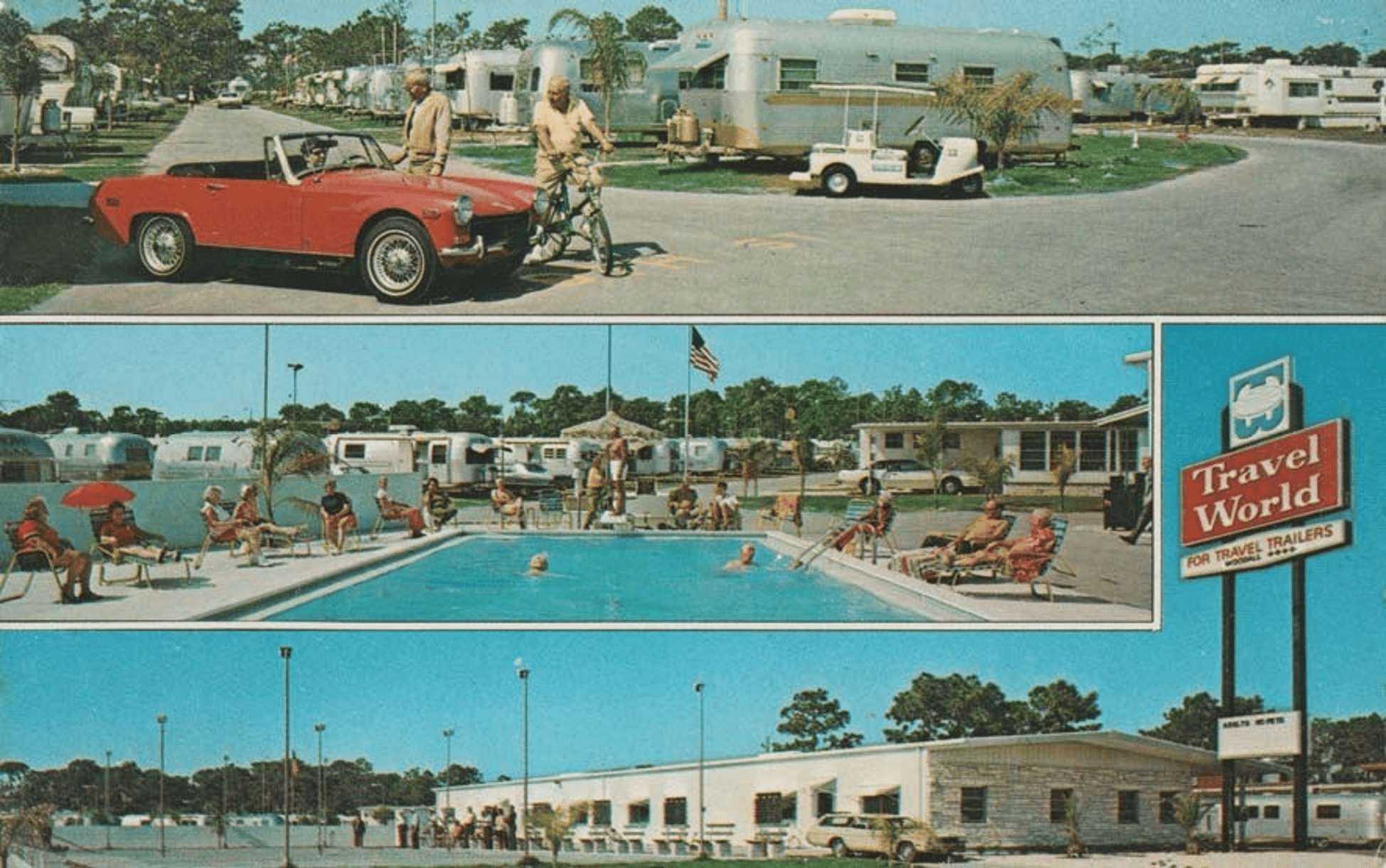
Travel World for Travel Trailers, now known as Travel World RV Park, is eleven miles south of downtown Clearwater. It is an adult (21+) manufactured home and RV community featuring 320 sites, a heated pool, and a clubhouse. This circa 1970s postcard promoted itself as “in the center of all vacation activities” near Gulf of Mexico beaches, golf courses, and attractions such as Disney World 90 miles away. It advertises its amenities of modern laundry, paved and well lighted streets, and concrete patios with walkways. Besides the pool shown on this postcard, it has 12 tournament shuffleboard courts. And from internet photos its giant pylon sign is still there.
The postcards shown here are just a small sample of the many postcards produced of Florida trailer parks. They are often attractive cultural artifacts which testify nostalgically to one of the many ways in which the automobile has dramatically reshaped land use in the United States, and how recreational vehicles have evolved since the 1910s. They also shine a light on the social history of Florida, as one of the ways enabling millions of people to seasonally or permanently migrate to Florida in their later years to live in different types of affordable and engaging retirement communities. And lastly, they mirror how Florida is the historic heartland of modern land shuffleboard, popularized in Daytona Beach and standardized in St. Petersburg during the 1920s.