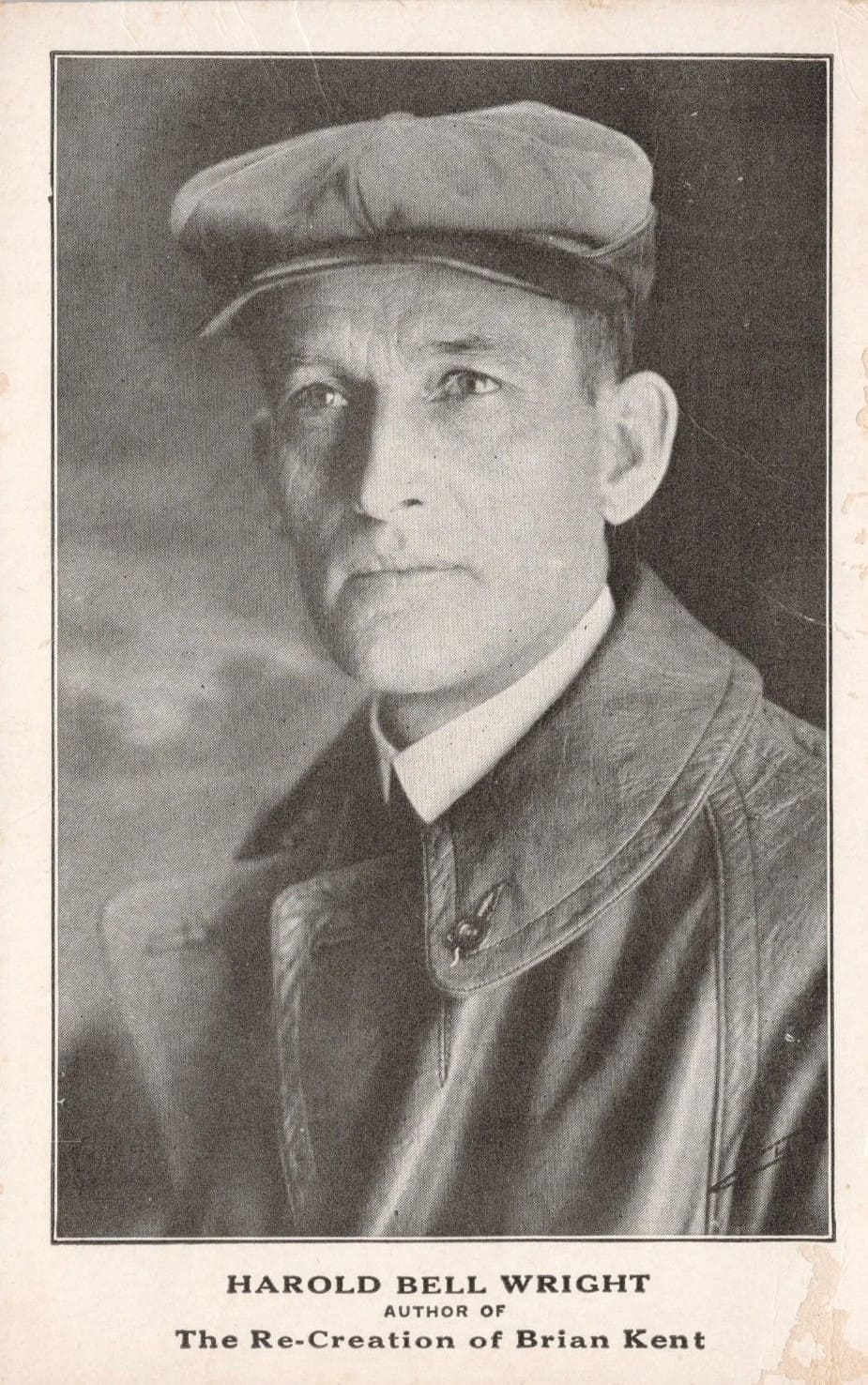
Postcards featuring the life and words of Harold Bell Wright are so bland and unexciting it is hard to imagine anyone collecting them. Truly, has anyone had such a collection?
These are facts: (1) the cards are usually relegated to a dealer’s 25¢ box or (2) found in some “back-table” box that is labeled “please buy these cards, I don’t want them anymore.” As is often the case these aren’t the only facts!
Harold Bell Wright was born in New York state. He certainly did not live a story-book life. His father was a Civil War veteran and an alcoholic. In Harold’s autobiography he wrote that his father “dragged his wife and children from place to place, existing from hand to mouth, sinking deeper and deeper, as the years passed, into the slough of wretched poverty.”
A great change in Harold’s life came in 1902. He published his first novel, That Printer of Udell’s. The central character is Dick Falkner. After his parents die, Dick moves to a town in the mid-West and goes to work for George Udell, a printer. Dick learns the trade and sharpens his skill as a public speaker. In the end Dick moves to Washington to take a political job. The novel made Wright famous.
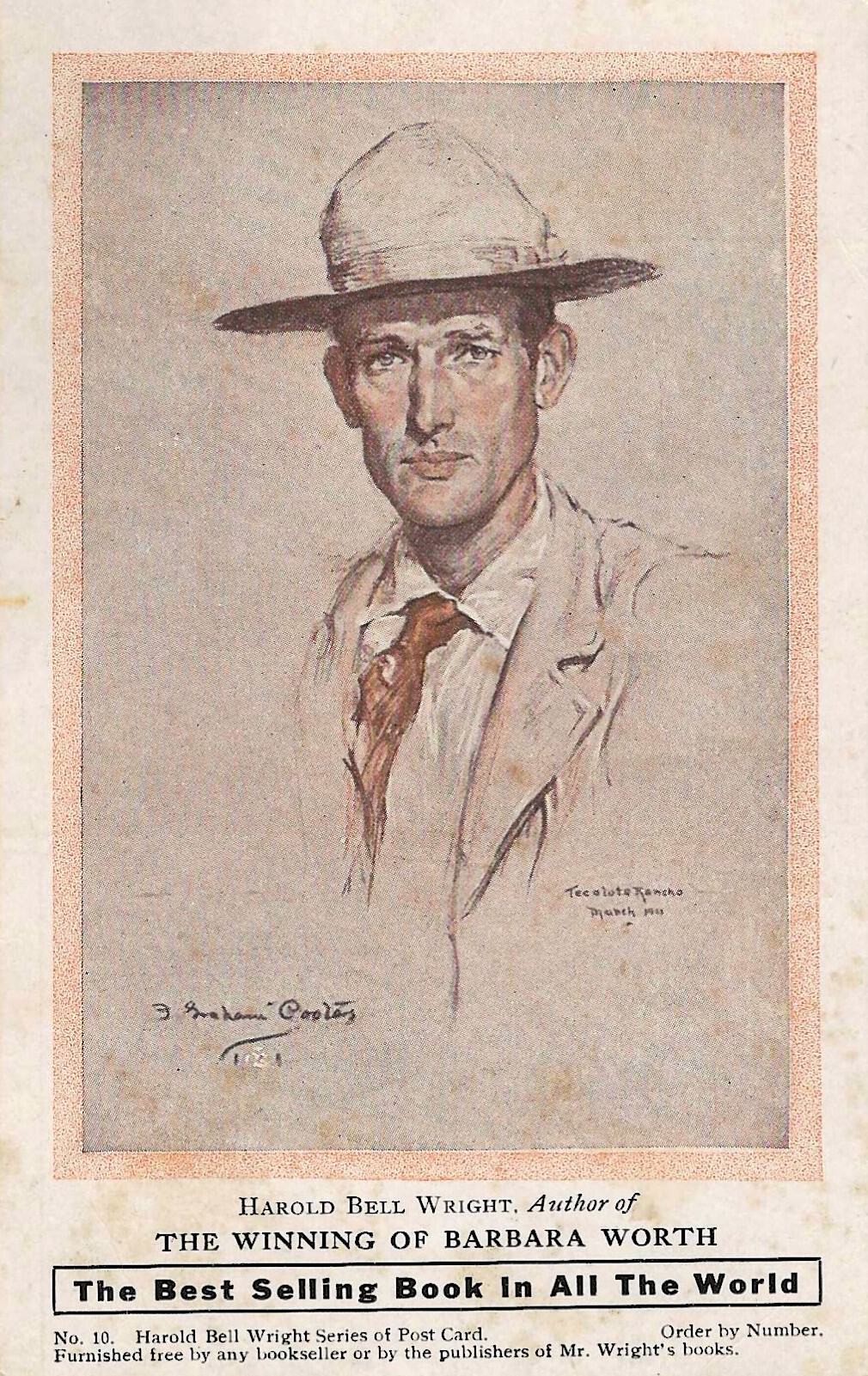
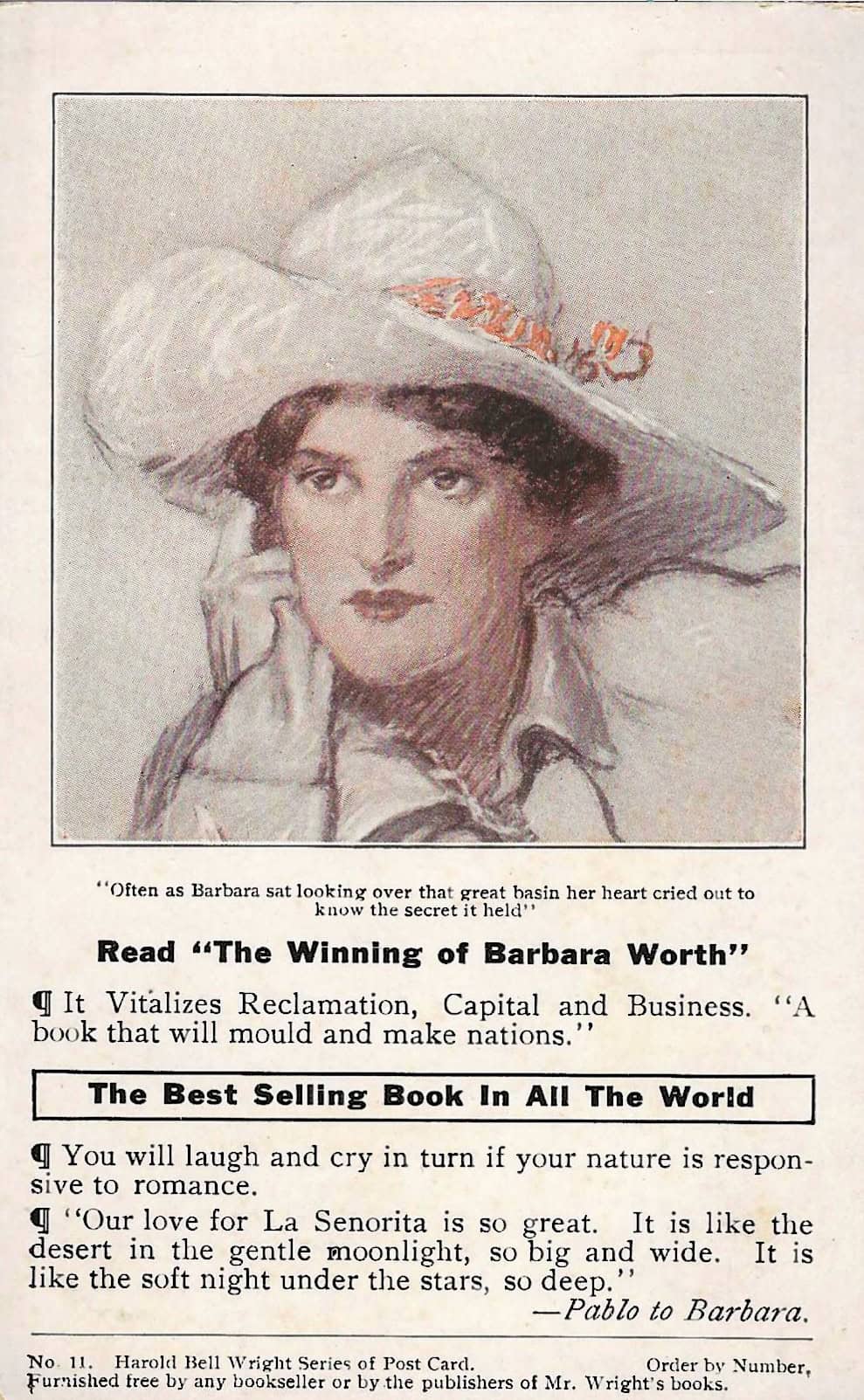
Then in 1907 came The Shepherd of the Hills which made him rich. He is said to have been the first American writer to sell a million copies of a novel and the first to make $1 million from writing fiction. Between 1902 and 1942, Wright wrote 19 books, several stage plays, and many magazine articles. More than 15 movies were made or claimed to be made from Wright’s stories, including Gary Cooper’s first major movie, The Winning of Barbara Worth in 1926.
The Shepherd of the Hills was Wright’s most famous novel and remains closely associated with the Ozark Mountains of Missouri. The story centers on the mountain people, their struggles, feuds, and deep ties to the land. Into that isolated mountain community came a mysterious, elderly stranger known to have escaped the chaos of a big city to live in a backwoods community called Mutton Hollow.
The novel has been the basis for four films and a television movie, and for many readers, The Shepherd of the Hills is a spiritual allegory.
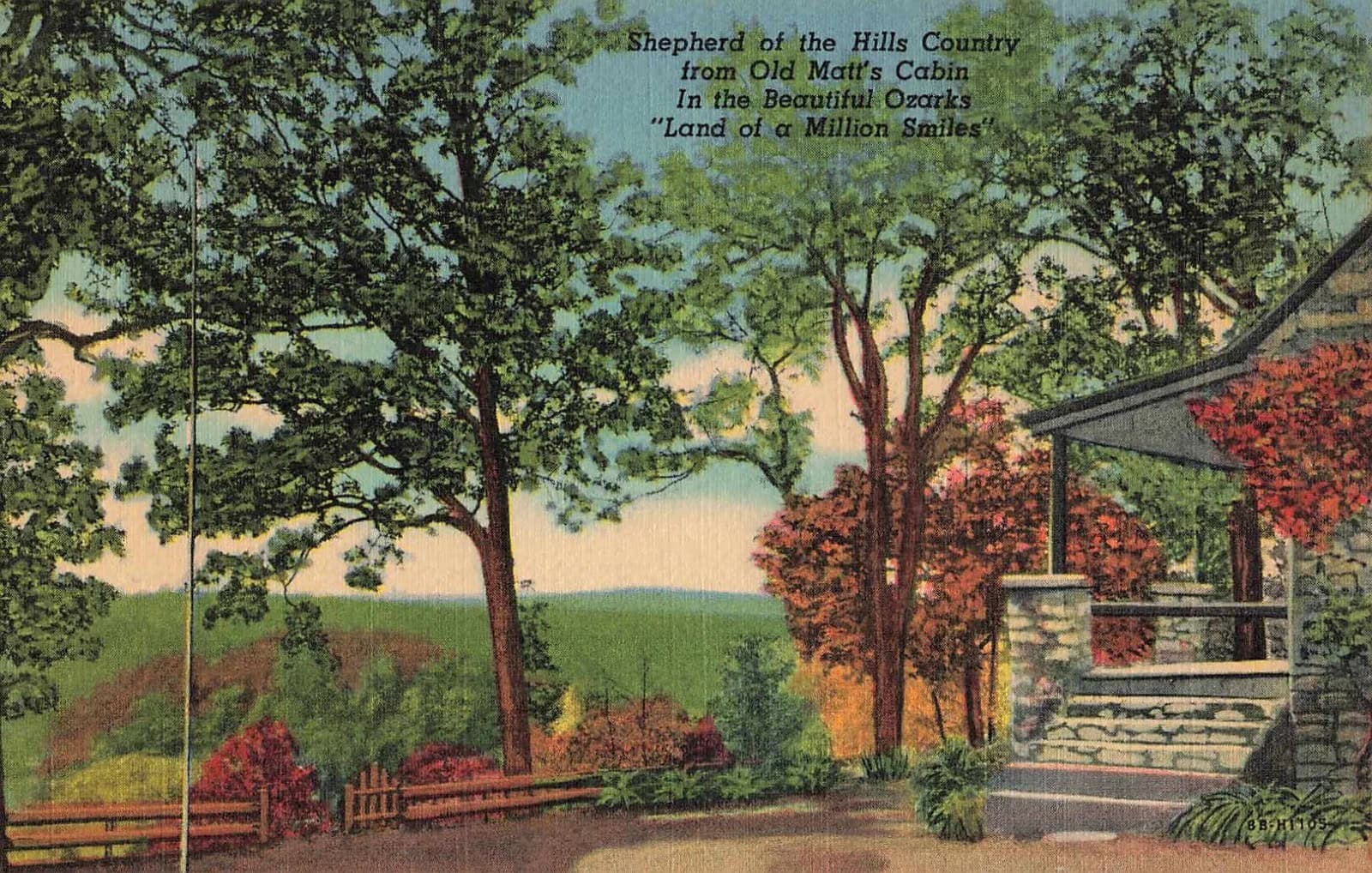
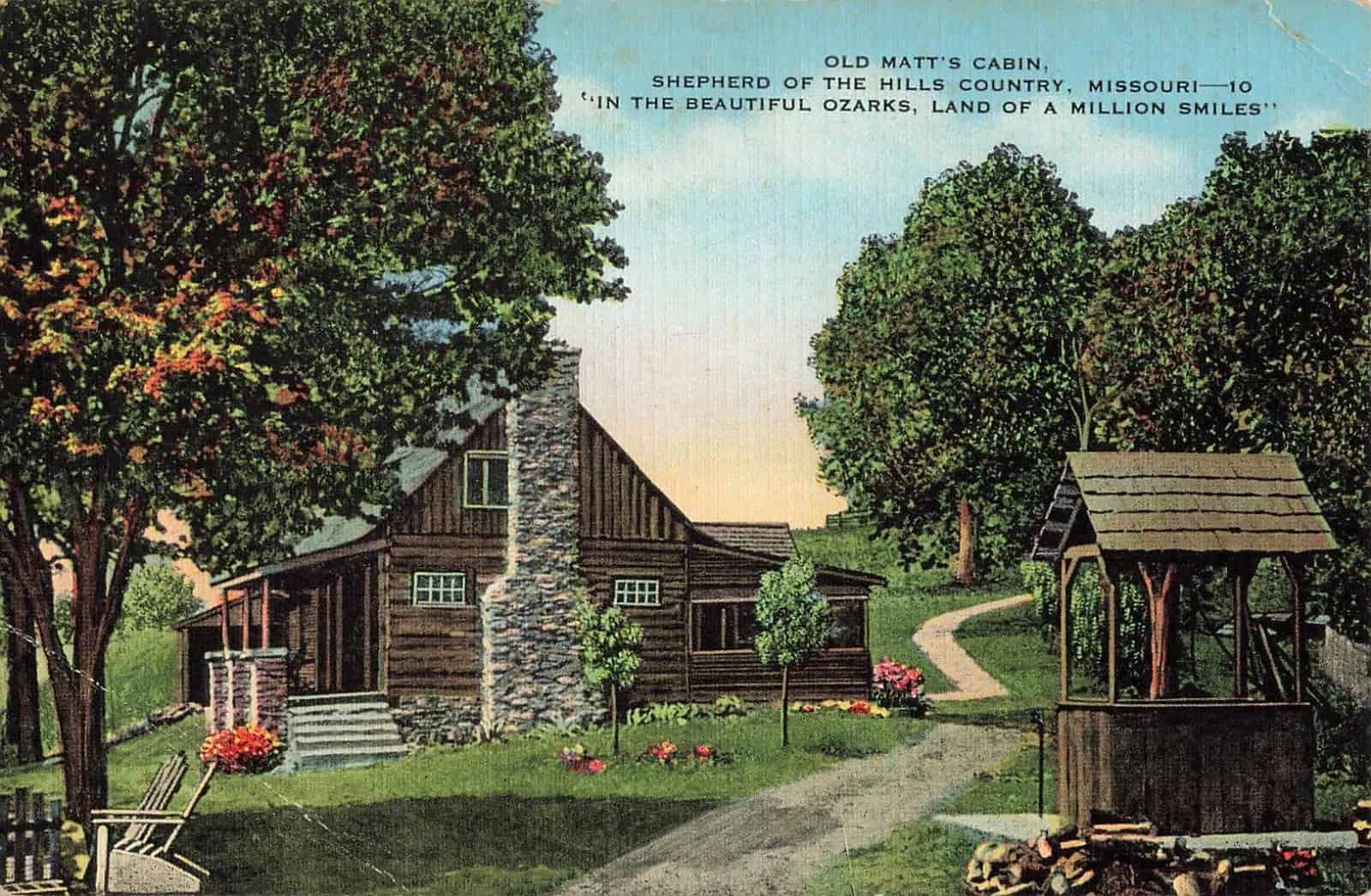
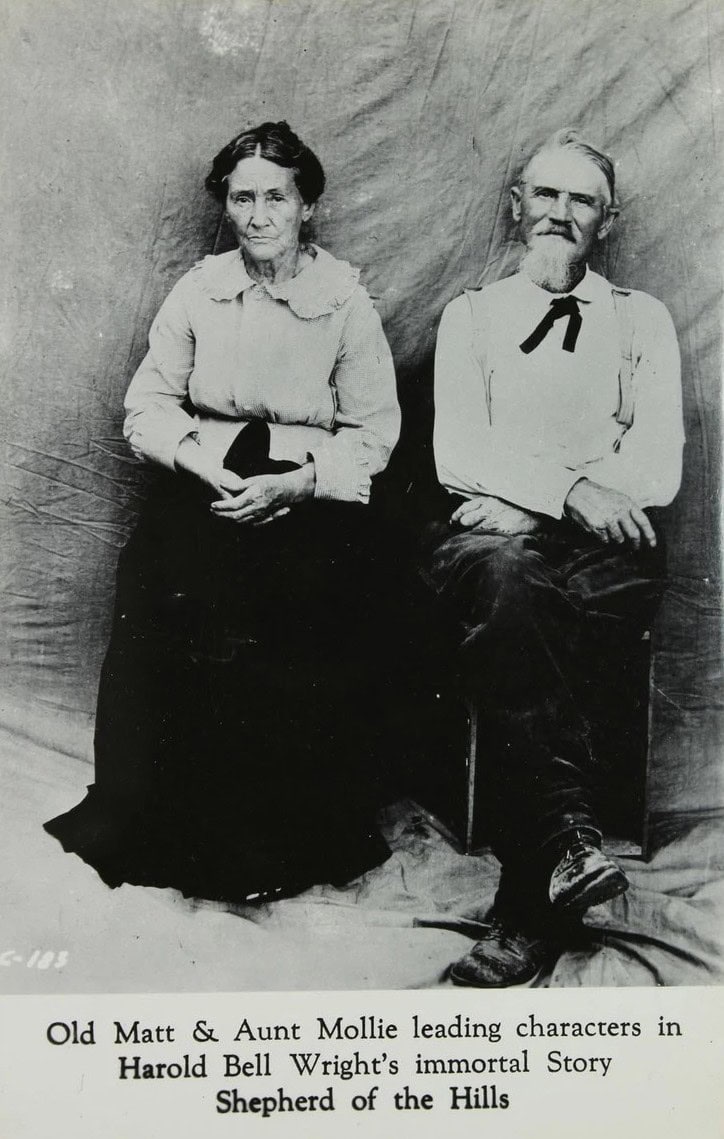
The tale follows Matt Matthews and explores themes of redemption, forgiveness, faith, and personal responsibility. Wright presented the characters as people with dignity at a time when rural Americans were often portrayed as backward or comic figures. The book’s descriptions of the hills, forests, and mountain culture helped introduce the Ozarks to a national audience.
To reckon the social value of the novel, consider this: for more than five decades (1960 to 2013) the tale became a popular outdoor drama staged in Branson, Missouri. When it closed, the outdoor show featured more than eighty actors, forty horses, and an actual nightly burning of the cabin. It was an outrageously expensive production. However, the demand was so great the producers brought it back the next year with a reduced cast and performance schedule.
About ten years ago, there was talk of turning the property where the play was presented into a 177-acre adventure park.
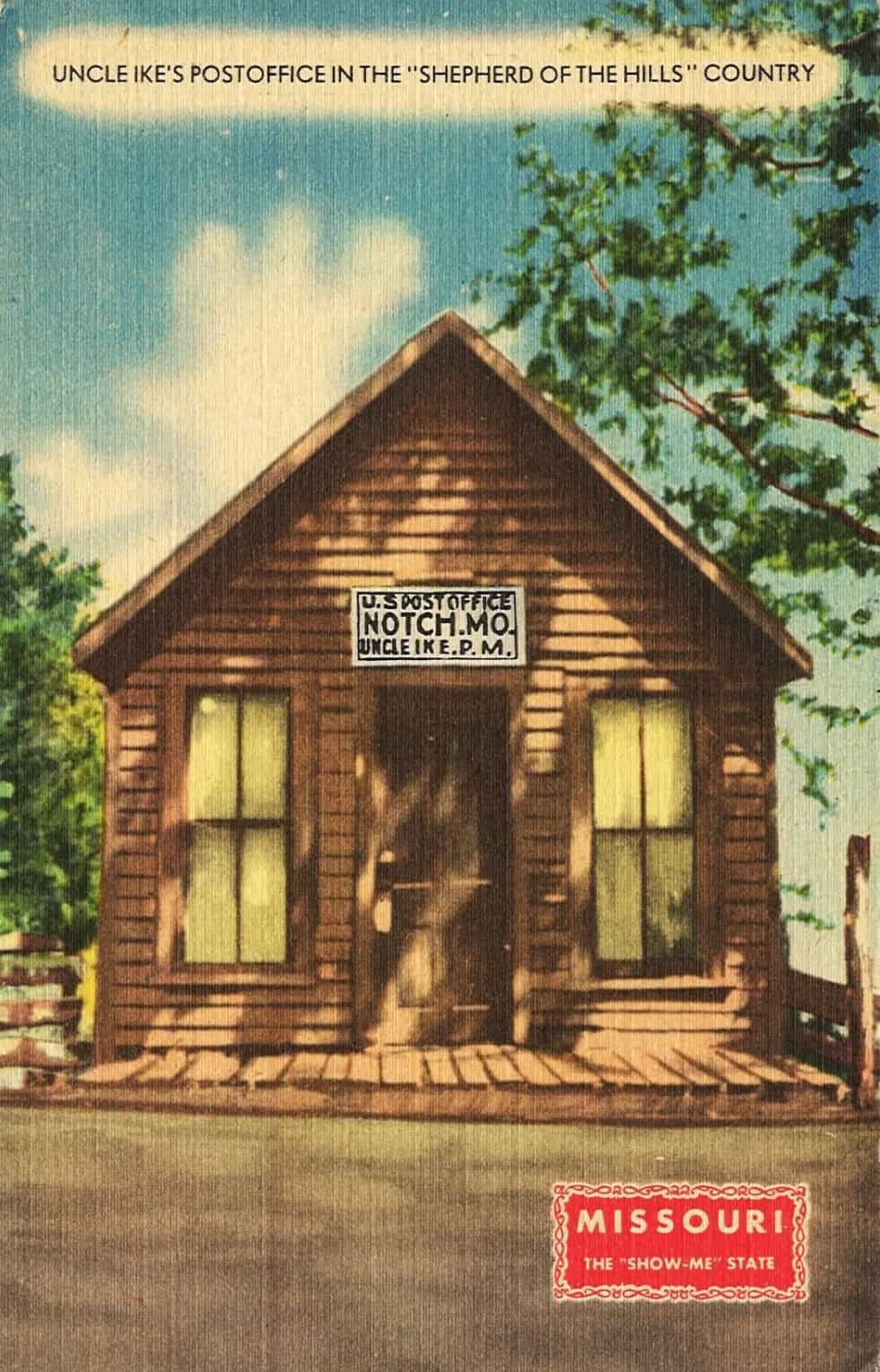
One more interesting fact: The stage set for Uncle Ike’s Post Office where scenes from “the Shepherd” were performed was inspired by the Levi Morrill Post Office and Homestead, an historic site in the Ozark Mountains of southwest Missouri, near the small community of Notch in Stone County. Levi Morrill, a colorful New England-born newspaperman, moved to the Ozarks for health reasons in 1890.
Ike’s, oops, I mean Levi’s Post Office had existed, unchanged for so long that it was added to the Register of Historic Places in 1979. Morrill, himself, became known as “Uncle Ike,” after Wright used him as the model for a character in his novel.
For someone interested in historic places, the Levi Morrill Post Office offers a rare glimpse into a time when the local post office was the social center of a rural community, and when one remarkable postmaster became immortalized in American literature.
Harold Bell Wright died in California in 1944.
***
Bibliography of Harold B. Wright novels.
- That Printer of Udell’s Book Supply Company, 1902–03
- The Shepherd of the Hills Book Supply Company, 1907
- The Calling of Dan Matthews Book Supply Company, 1909
- The Uncrowned King Book Supply Company, 1910
- The Winning of Barbara Worth Book Supply Company, 1911
- Their Yesterdays Book Supply Company, 1912
- The Eyes of the World Book Supply Company, 1914
- When a Man’s a Man A. L. Burt Company, 1916
- The Re-Creation of Brian Kent Book Supply Company, 1919
- Helen of the Old House D. Appleton and Company, 1921
- The Mine with the Iron Door D. Appleton and Company, 1923
- A Son of His Father D. Appleton and Company, 1925
- God and the Groceryman D. Appleton and Company, 1927
- Long Ago Told: Legends of the Papago Indians D. Appleton and Company, 1929
- Exit D. Appleton and Company, 1930
- The Devil’s Highway D. Appleton and Company, 1932
- Ma Cinderella Harper and Brothers, 1932
- To My Sons Harper and Brothers, 1934
- The Man Who Went Away Harper and Brothers, 1942
Filmography of Harold B. Wright’s work
- The Eyes of the World (1917)
- The Shepherd of the Hills (1919, also director)
- When a Man’s a Man (1924)
- The Mine with the Iron Door (1924)
- The Re-Creation of Brian Kent (1925)
- A Son of His Father (1925)
- The Winning of Barbara Worth (1926)
- The Shepherd of the Hills (1928)
- The Eyes of the World (1930)
- When a Man’s a Man (1935)
- The Calling of Dan Matthews (1935)
- The Mine with the Iron Door (1936)
- Wild Brian Kent (1936)
- Secret Valley (1937)
- It Happened Out West (1937)
- The Californian (1937)
- Western Gold (1937)
- The Shepherd of the Hills (1941)
- Massacre River (1949, uncredited
- The Shepherd of the Hills (1964)
Examples of Postcards Featuring Harold Bell Wright
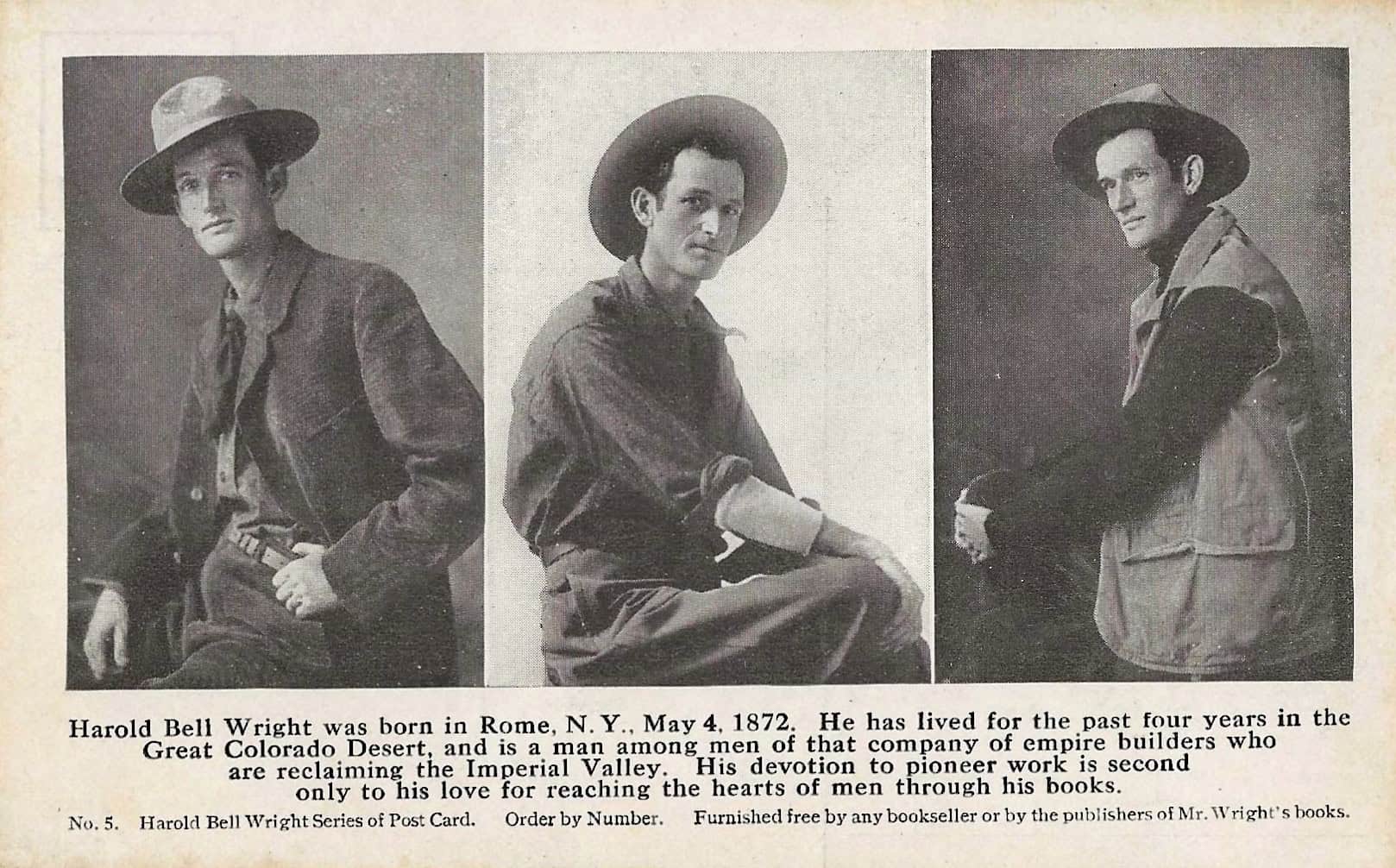
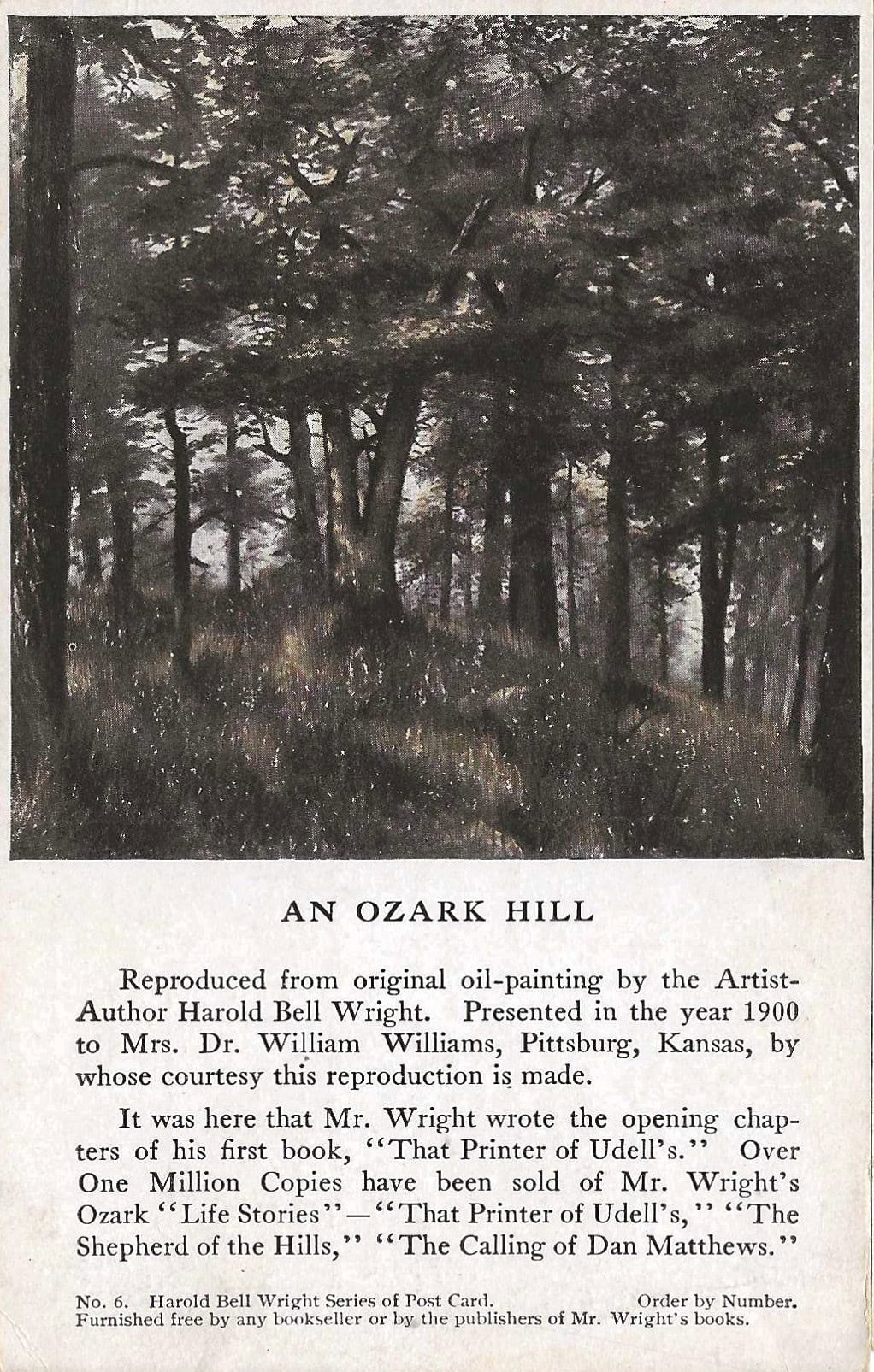
The card above is No. 5. Other cards in the same style have been found with numbers as high as No. 11. It may be safe to assume there are more.
There are no indications as to when the postcards in the style like above were issued, but the bottom line on each card reads, “Furnished free by any bookseller or by the publishers of Mr. Wright’s books.”
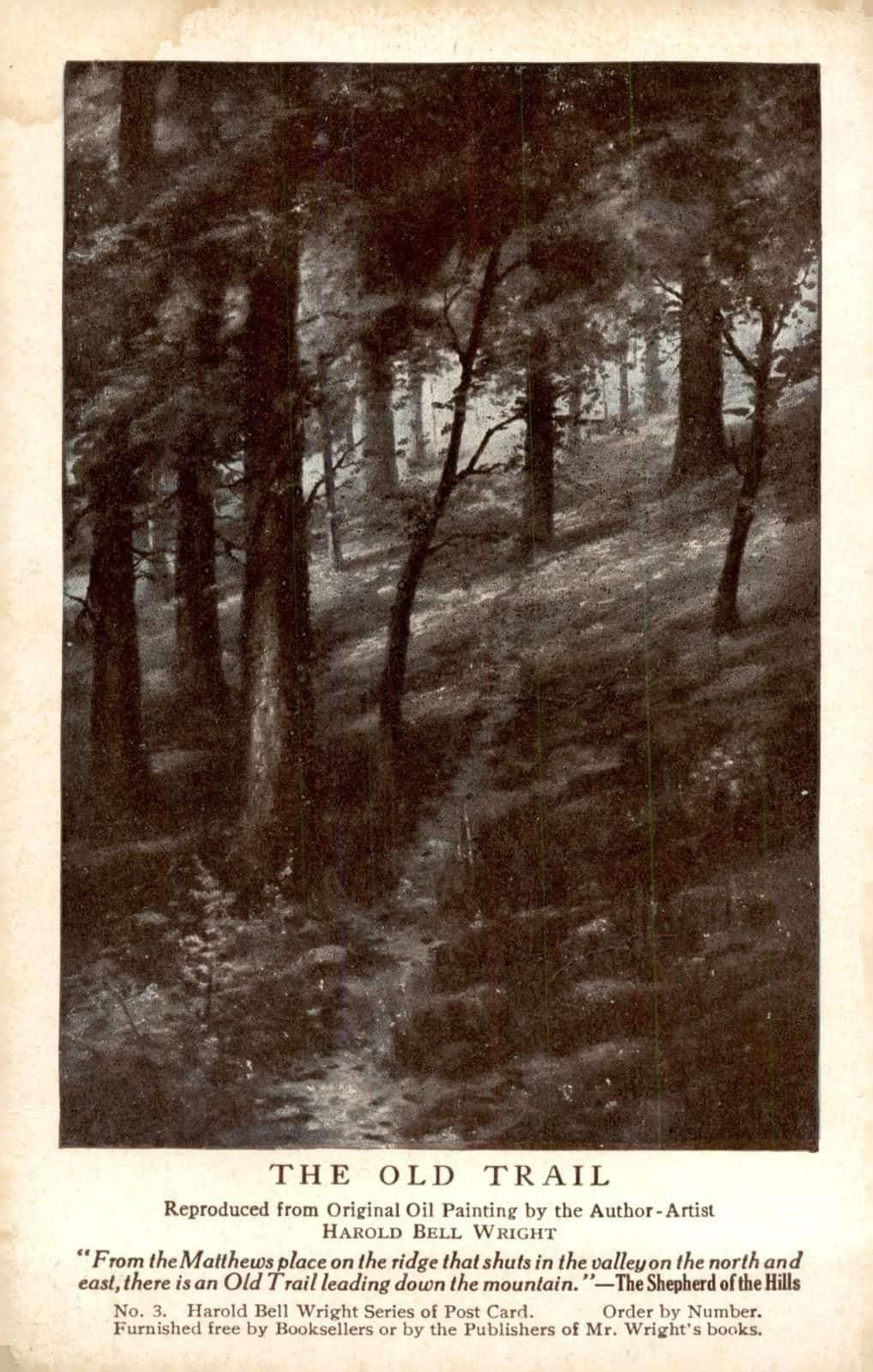
Among his other talents, Harold Wright was also a very accomplished artist. Two of his paintings are seen on other postcards.
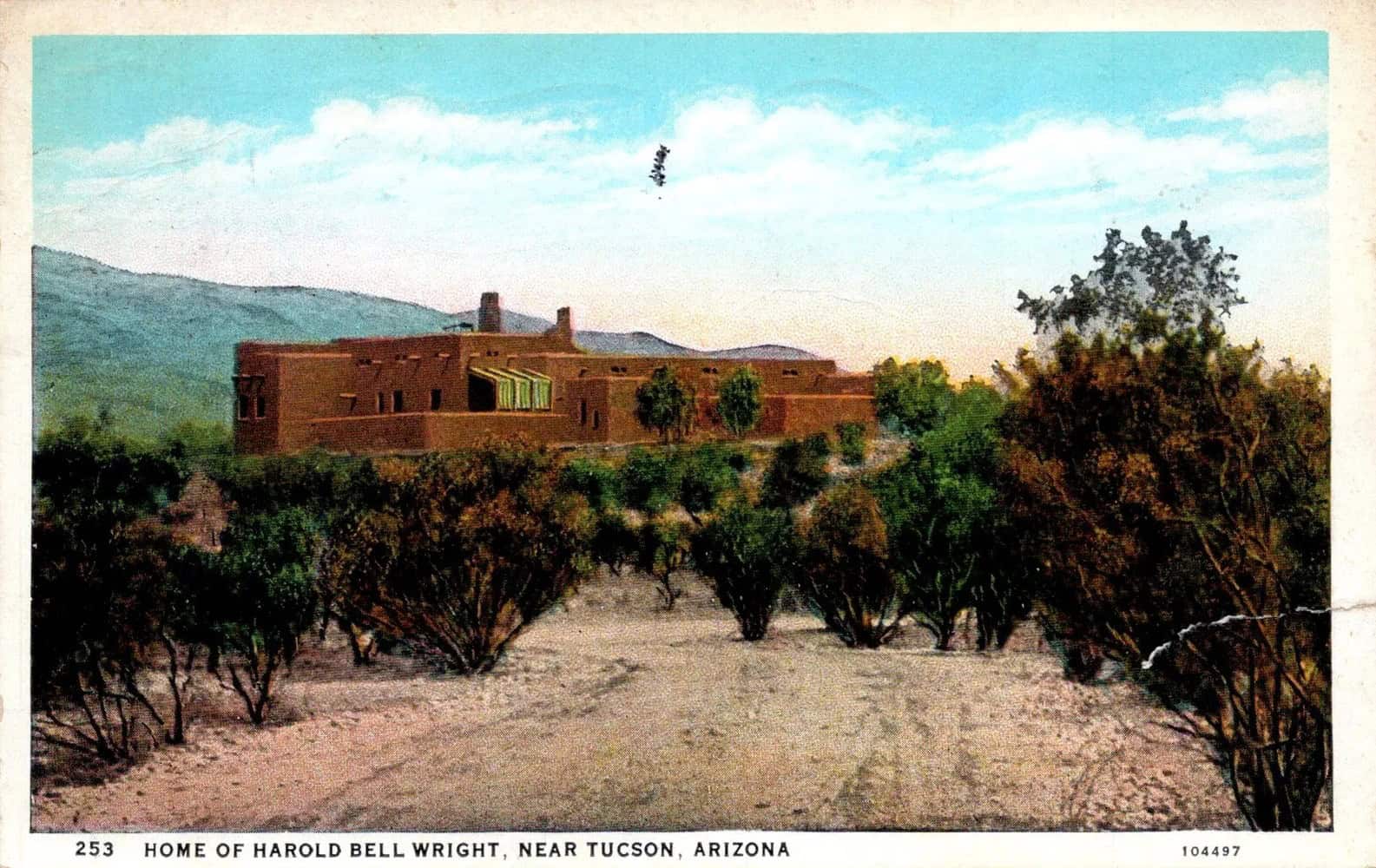
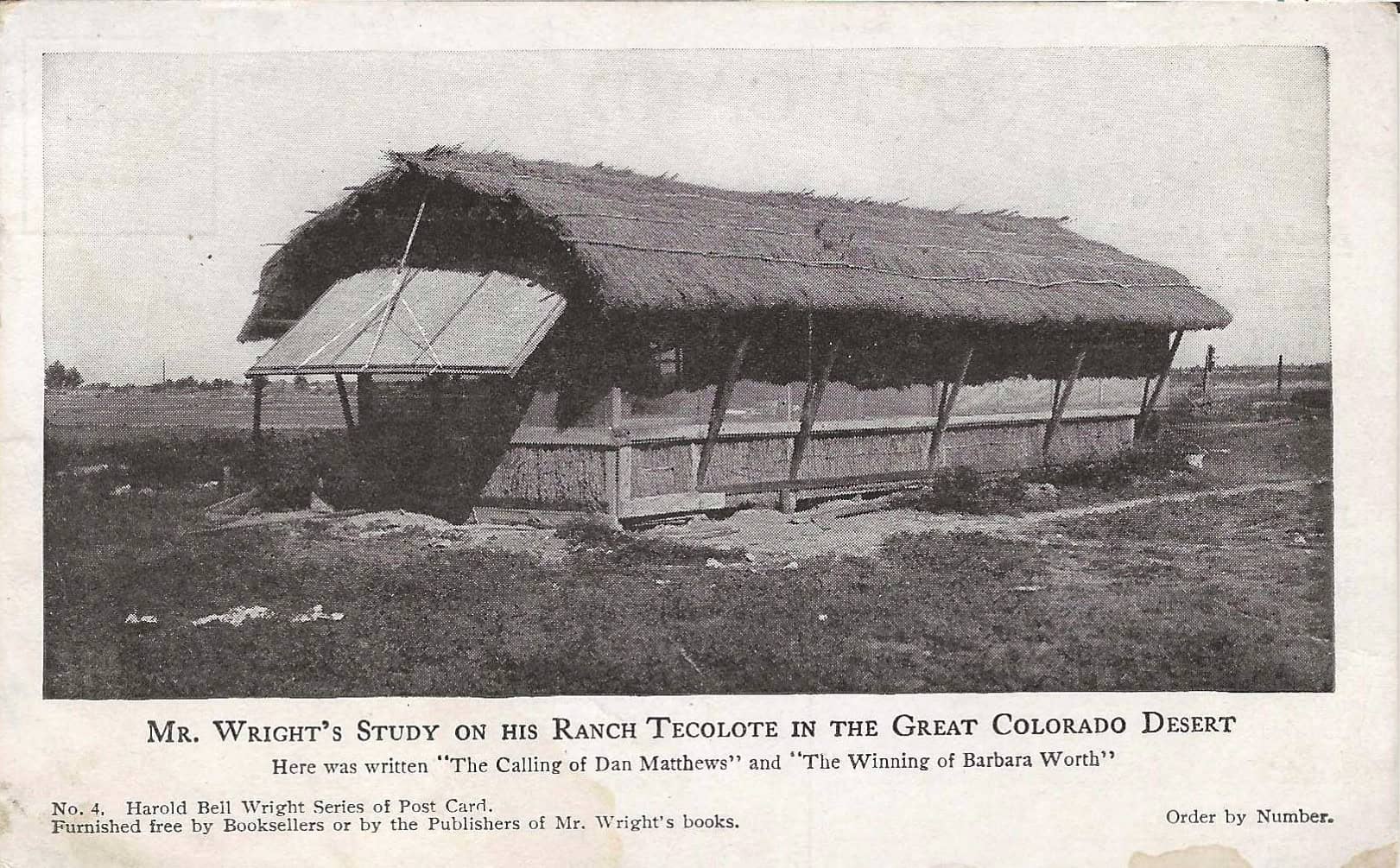
Wright was also somewhat of a nomad. He lived in several homes. Two appear on postcards.
***
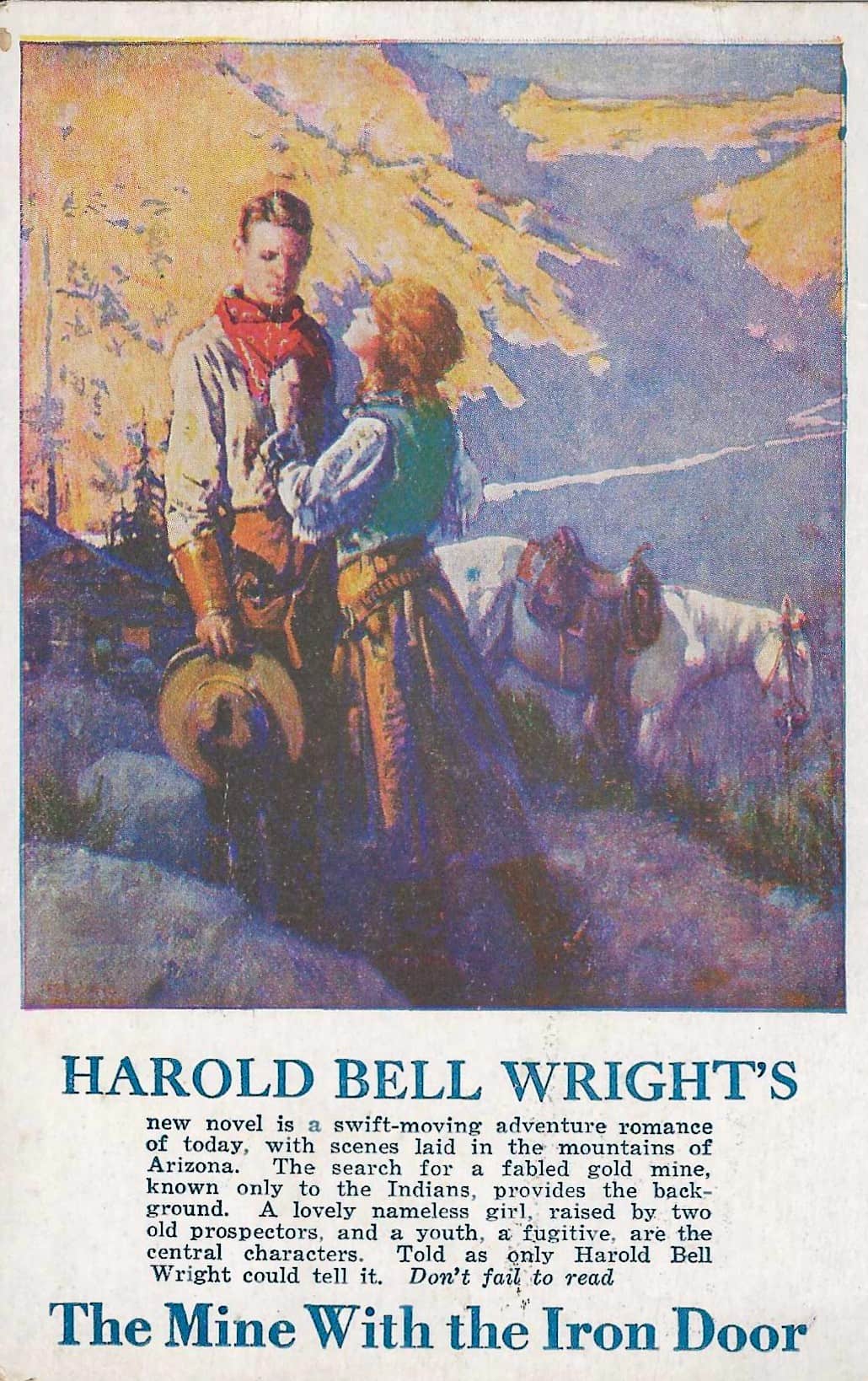
In 1922, Harold Wright penned The Mine with the Iron Door. It became one of his most popular later novels, combining Western adventure, mystery, romance, and the enduring legend of a lost gold mine in the Arizona mountains. The book was first published in 1923 by D. Appleton and Company of New York and carried the subtitle “A Romance.” It ran to approximately 338 pages in its original edition.
The story is set primarily in the Santa Catalina Mountains north of Tucson, Arizona, an area Wright knew personally after spending time in the region. The plot revolves around the search for the legendary “Mine with the Iron Door,” a fabulously rich lost mine hidden somewhere in the rugged desert mountains. Old prospectors, outlaws, adventurers, and fortune seekers are drawn into the hunt, while the novel’s heroine, Marta Hill, finds herself at the center of both the treasure mystery and a romantic storyline.
Unlike many Westerns of the period, the novel places considerable emphasis on the Arizona landscape itself. Wright vividly describes desert canyons, mountain forests, hidden trails, and frontier life, creating a sense of place that was one of his greatest strengths as a storyteller. Readers of the 1920s were fascinated by lost-mine legends, and Wright skillfully blended local folklore with suspense and adventure.
The novel proved successful enough to inspire film adaptations. It became the basis of a silent motion picture in 1924 and later a sound film in 1936, starring Richard Arlen and Cecilia Parker.
By the time The Mine with the Iron Door appeared, Wright was already one of America’s best-selling authors. His popularity and this novel earned Arizona’s scenery national attention. Even today, The Mine With the Iron Door remains an enjoyable blend of treasure hunt and adventure.