Unfinished Business
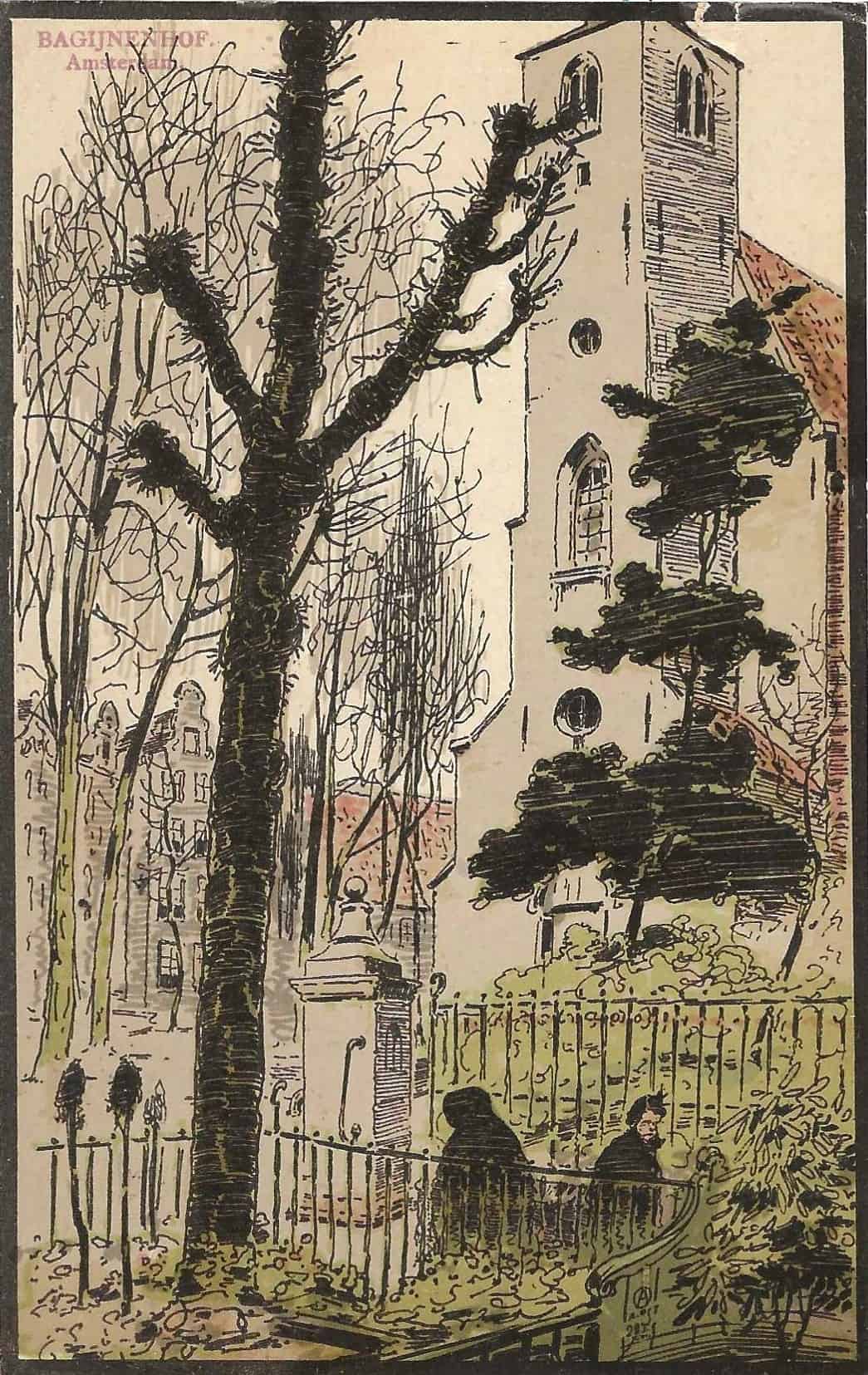
Two women dressed in black meet in a Dutch cemetery, but their silhouettes once sharp against a Norman tower rising behind them begins to fade as the first rays of morning begin to brighten the day. The morning is cloudy, the air damp enough to bead on stone, yet neither woman seems to notice. Ahead of them, the bushes lining the path to the church’s front door form a quiet corridor, as if nature itself is holding its breath.
“I didn’t think you’d come,” the taller woman says. Her voice is steady, but her gloved hands twist around each other.
“I had to,” the other replies. “We started this together.”
A gust of wind stirs the branches, but the women remain still. They look almost like carved figures—dark, unmoving, deliberate. Beneath their feet, the gravel path crunches as they step closer, closing the distance that years of silence had carved between them.
“You know what today means,” the taller woman says. “If we go through with it, there’s no turning back.”
The second woman lifts her gaze toward the steeple, its stone edges softened by the gray sky. “There was never any turning back. Not after what happened here.”
The church’s bell tolled once—low, resonant, final. The sound rolled across the cemetery, rushing by the headstones like an unseen wind. The women exchange a look that carries the weight of shared history, shared guilt, and shared resolve.
They walk side by side toward the church, their steps perfectly synchronized. As they pass the shrubs, drops of dew fall to the ground, but there is no sound. At the door, the elder woman pauses, placing her hand on the cold wooden handle and says, “After this, we’re free.”
“After this,” the other agrees, “we deserve to be.”
Together, they push the door open and disappear into the dim interior, leaving the quiet cemetery to swallow their footprints.
Those We Trust
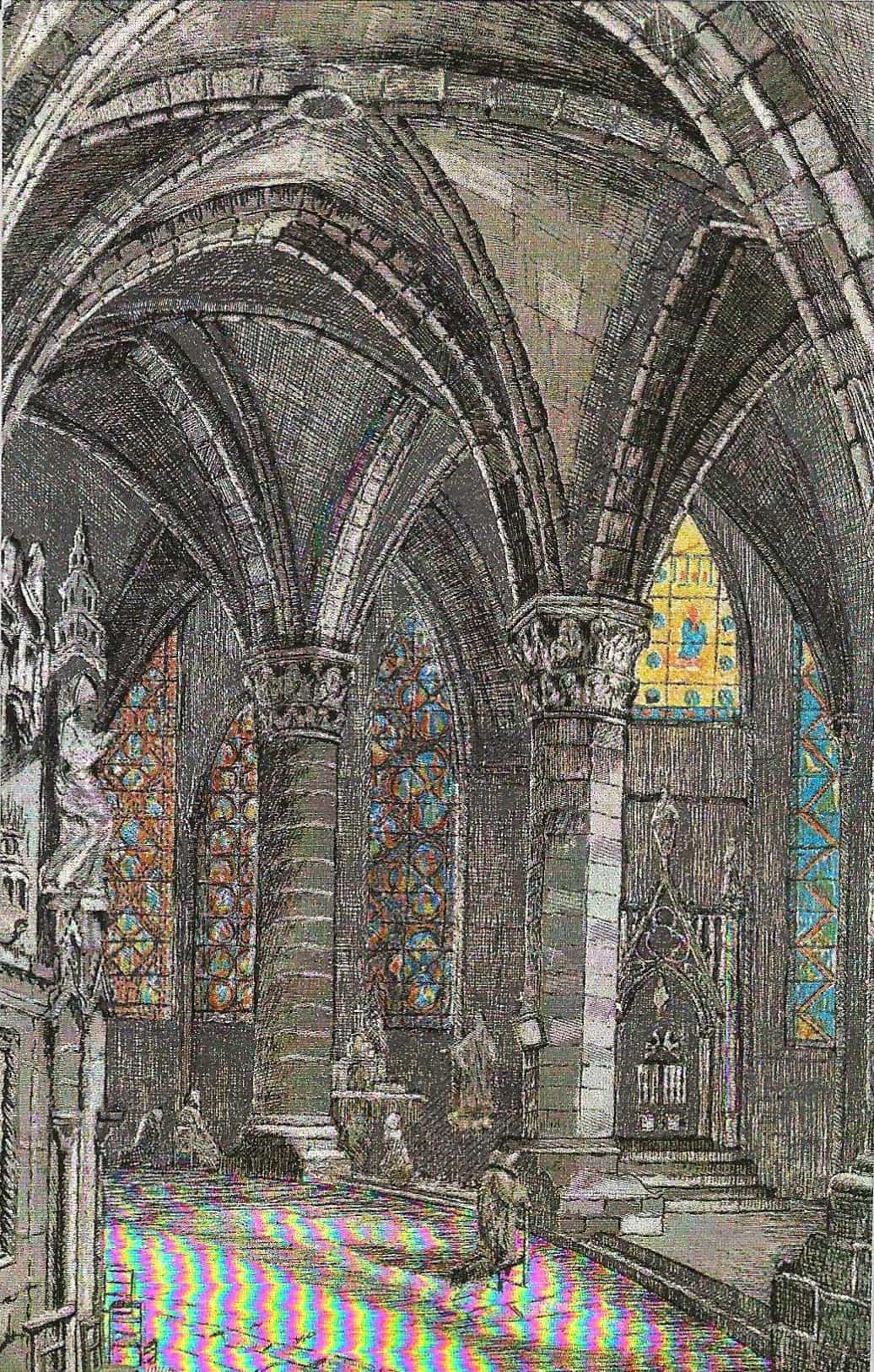
It’s early on a Sunday morning and Alice finds herself in front of a stained-glass window devoted to her grandfather in a gothic church dedicated to St. Andrew. There are others about as the sunshine penetrates the windows behind an altar dedicated to her grandfather. She stands back and waits for an elderly man she recognizes to finish his prayer. After a few minutes she approaches the gentleman and asks, “Do you remember me?
Alice’s question hangs in the air. The sunlight breaks into jeweled fragments across the stone floor.
The elderly man slowly rises from the pew, his fingers still resting on the polished wood as if steadying himself between worlds of the past and the present. The light changes and casts a wash of blue across his silver hair.
He turns and for a heartbeat, his eyes search her face the way one searches for a memory of a long-ago day.
“Alice … it’s you, at last,” he replied. Hearing her name leaving his lips was like a breath he didn’t know he’d been holding. “Of course I remember you.”
His voice trembles, not from age, but from something else, maybe relief.
He glances toward the window dedicated to her grandfather, the reds and golds flickering like living embers. “You look so much like him standing there. I thought I was seeing a ghost.”
Alice steps closer, her hands clasped before her. “I wasn’t sure you’d still come here on Sundays.”
“Oh, I come,” he replies, lowering himself back into the pew. “Some promises don’t fade.”
He pats the space beside him.
“Sit with me. There’s something I’ve been meaning to tell you, something about your grandfather that I should have told you years ago.”
The elderly man folded his hands in his lap. “Alice,” he begins, voice low, “your grandfather was not the man most people knew.”
Alice feels her pulse quicken. “What do you mean?”
He exhales slowly, as though releasing years of silence. “Your grandfather was a hero; he saved my life. But not just mine. There were others. Many others.”
Alice blinked, bewildered. Her grandfather had been a quiet man, yet a craftsman and storyteller, but never a hero in any public sense.
The old man continued, “This church, that window, they’re not just memorials. They’re markers. Clues, if you know how to read them.”
He gestures toward the colored glass. “Look closely at the panel beneath St. Andrew’s staff.”
Alice stepped forward. The sunlight now illuminating a small detail she had never noticed: a tiny carving in the leadwork—an intertwined key and feather.
“What is that?” she whispers.
“That dear Alice is a symbol, that your grandfather belonged to a group dedicated to protecting people who had nowhere else to turn. They called themselves The Keepers of the Feather.”
Alice turned back to him. “Why are you telling me this now?”
His eyes soften with something like sorrow. “Because the work he did, it isn’t finished. And because he left something behind for you. Something only you can open.”
“I have carried this all these years,” he reached into his coat and pulled out a small, weathered envelope sealed with red wax. Immediately, although she had only seen it a few times, Alice recognized her grandfather’s seal.
“Alice,” he says, placing it gently in her hands, “your grandfather trusted you. And now… it’s time you knew why.”
A Sudden Nor’easter Changed Everything at the Lighthouse
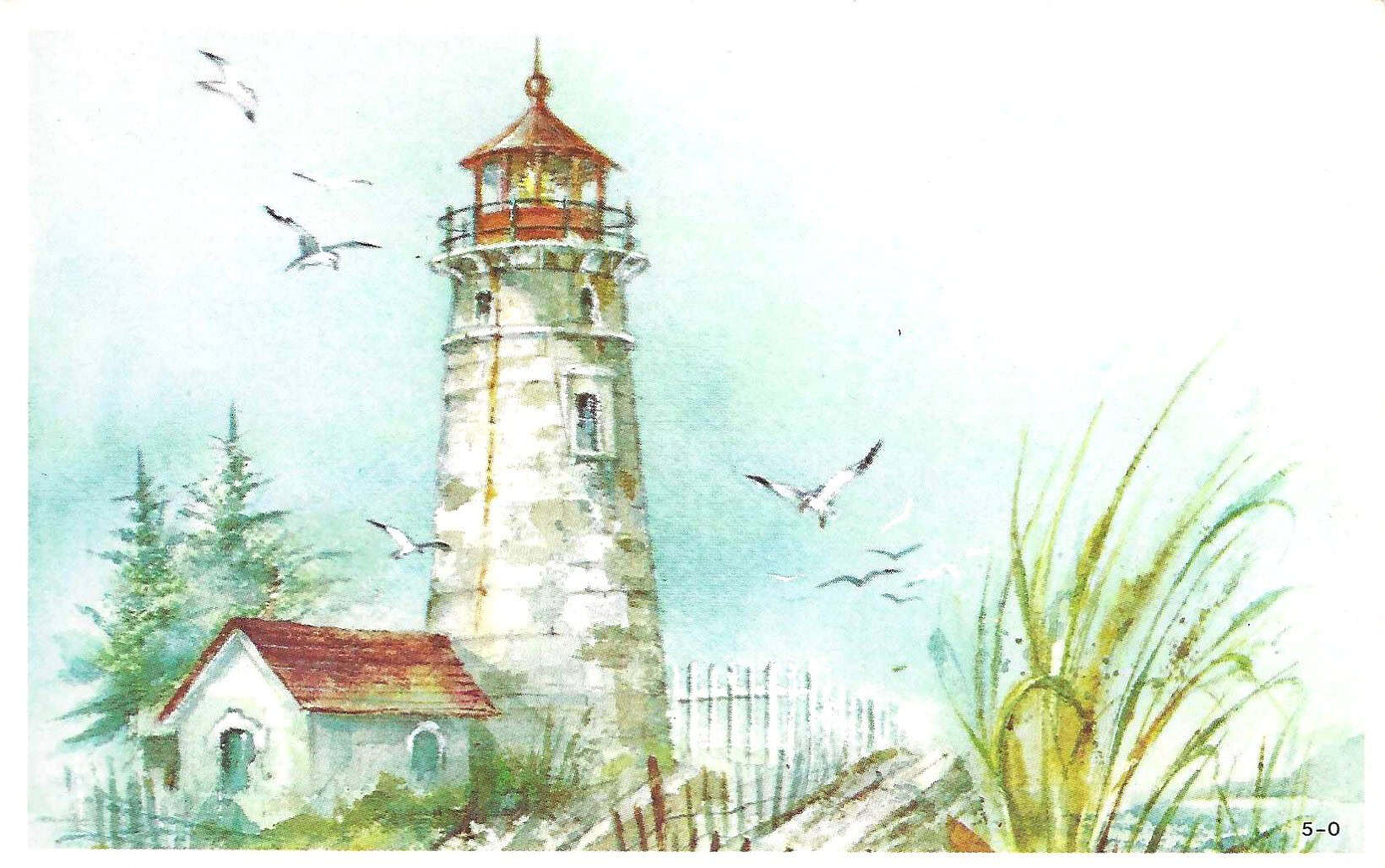
Jedidiah Wellington, 83, the oldest lighthouse keeper still on duty in New England, had just finished telling another “too young, too slight” woman the last applicant for the job he had for the last fifty years, that the job demanded strength she didn’t have, when the wind shifted.
Keeper Wellington had asked about her experiences and was impressed as she recited several lines from her written application that included: a college degree in Marine Science, three summer internships – two in New England, one in Oregon – and two temporary positions on the Great Lakes.
As Martha turned to leave, her feelings of disappointment and rejection nearly overwhelming, a wall of fog rolled in, fast and blinding, the kind that swallows sound and sense. At almost the same minute the distress-call phone rang notifying the keeper that a small research vessel had lost its compass connection a few miles off the shoals.
Before he could react, the young woman was already moving.
“Let me handle this one for you, Sir,” she said as she sprinted up the spiral stairs two at a time, with no apparent effort. She checked the Fresnel lens for alignment; it was “on-the-mark,” trimmed the lamp wick with absolute precision, and pushed open the storm shutters as the first gusts slammed the tower.
When the generator sputtered, she dropped to her knees and with split second timing and the skill of a veteran sailor, she rewired the magneto starter and the beacon roared back to life, cutting a clean white path through the fog.
Down below, the keeper watched her silhouette as she moved around the lantern room. She was steady, unshaken, utterly focused. The radio phone crackled minutes later: the vessel had seen the light and corrected its course. They would soon be safely in the harbor with all hands-on deck.
When she came back down, soaked and windburned, he finally saw what he’d missed. She had what it took – resolve, and not an iota of fragility. She also had a kind of quiet, flinty courage he recognized from his own youth.
“You still want the job?” he asked.
She nodded.
Jed had never hired a replacement for himself, he unbuttoned the cuff of his left sleeve and rolled the cuff up to scratch his elbow, “Well,” he said, “you know you’ll never get rich with a job like this, but ….”
Great story…do we ever discover Alice’s mission?
Ray, you need to become a novelist. These stories are amazing!
I loved the story. You do a wonderful job. Keep up the good work.
Mike
Love these glimpses and glances!