The feeling you get when you solve a puzzle – a rebus, crossword, a word-find, or sudoku – is quite satisfying, but it is satisfying in different ways for different people.
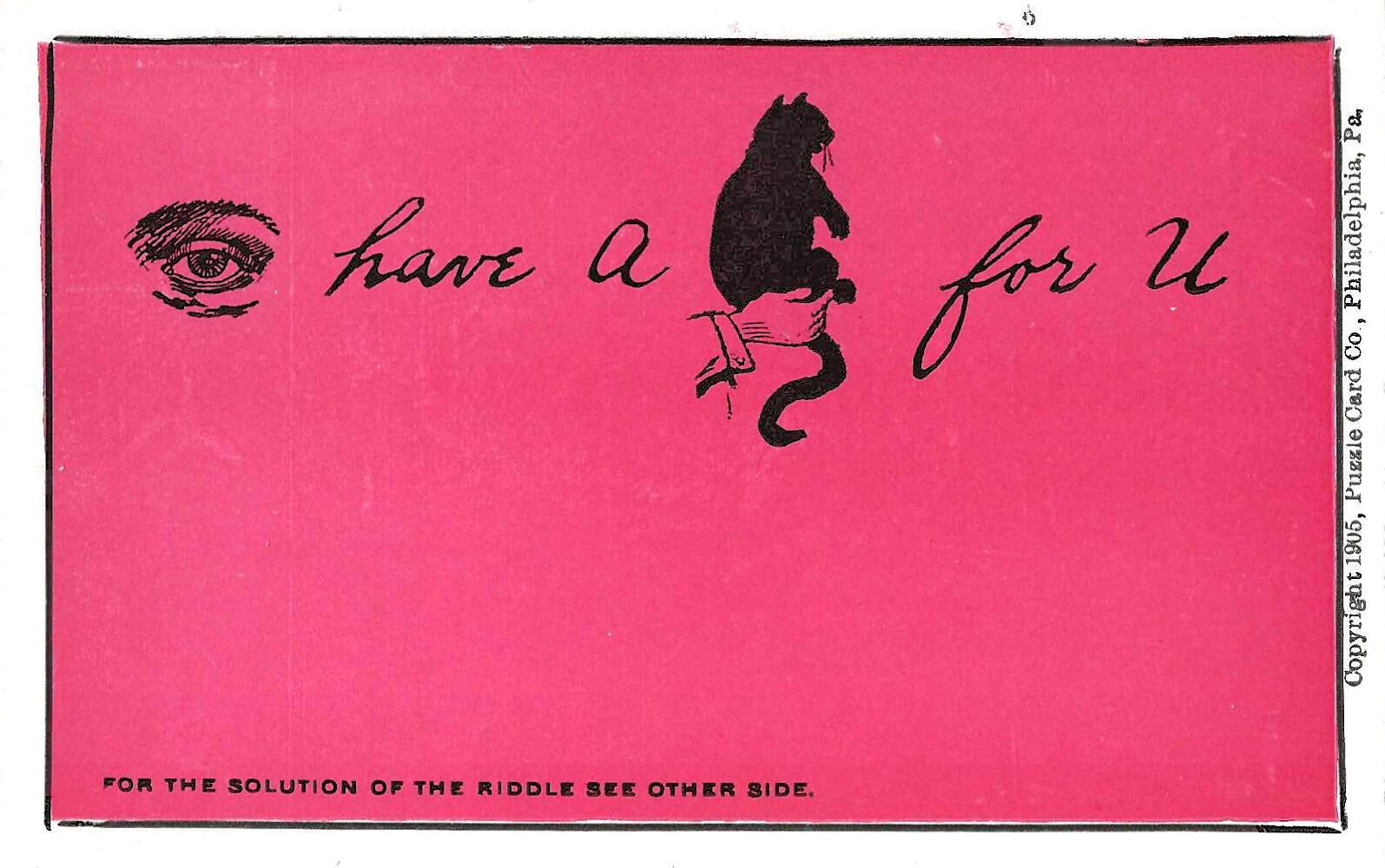
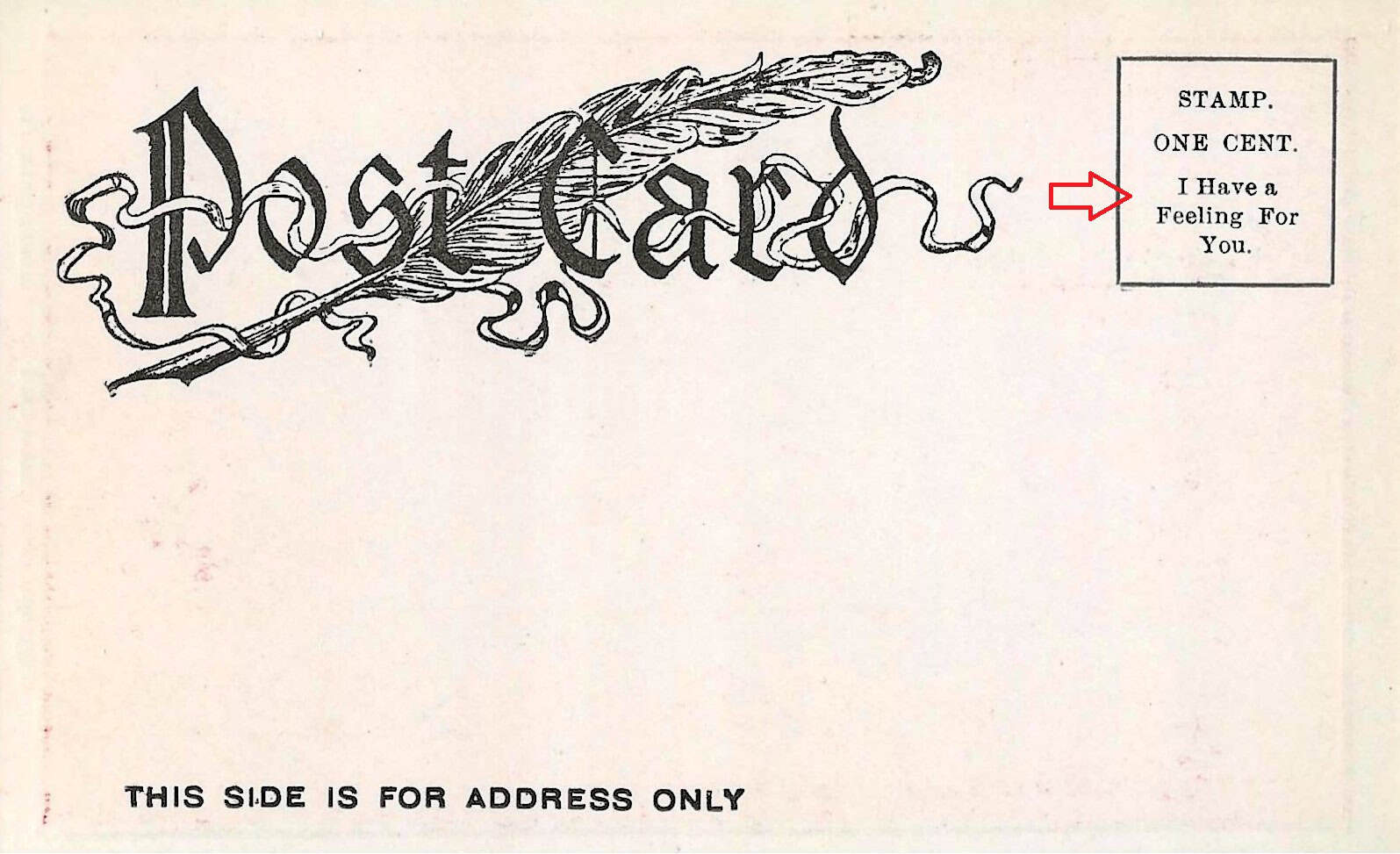
One of the many turn-of-the-century postcard publishers, The Puzzle Card Company of Philadelphia, Pennsylvania, pioneered its way into the puzzle world with a four “rebus” puzzle set in four colors, hence a 16-card set that would cover any correspondence problem that anyone had. But there was a hitch. If the puzzle recipient couldn’t solve the rebus, there was an instruction at the bottom edge to find the solution on the other side of the card. Yeah, it was there but good luck; the solution was located in the stamp box.
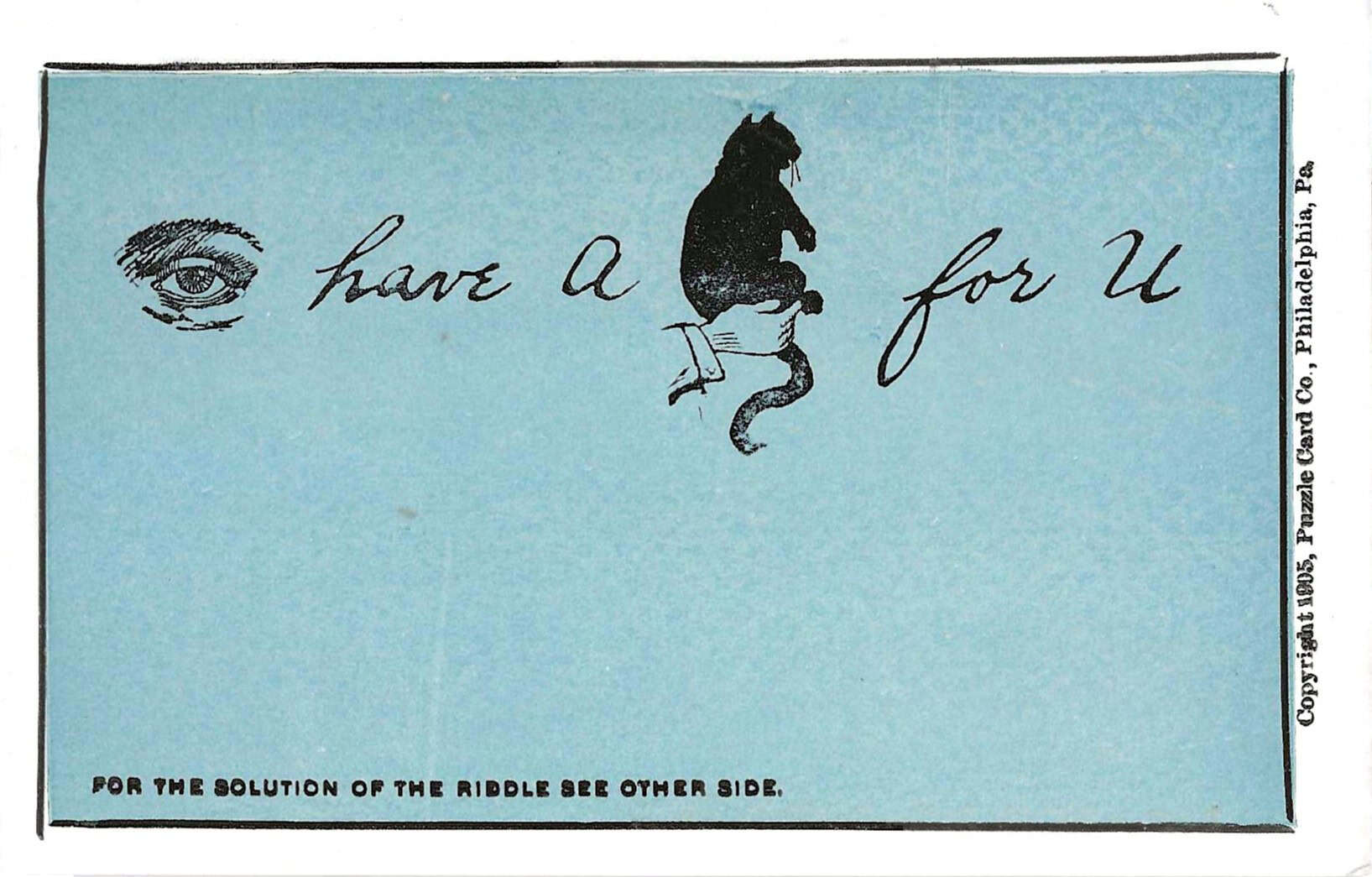
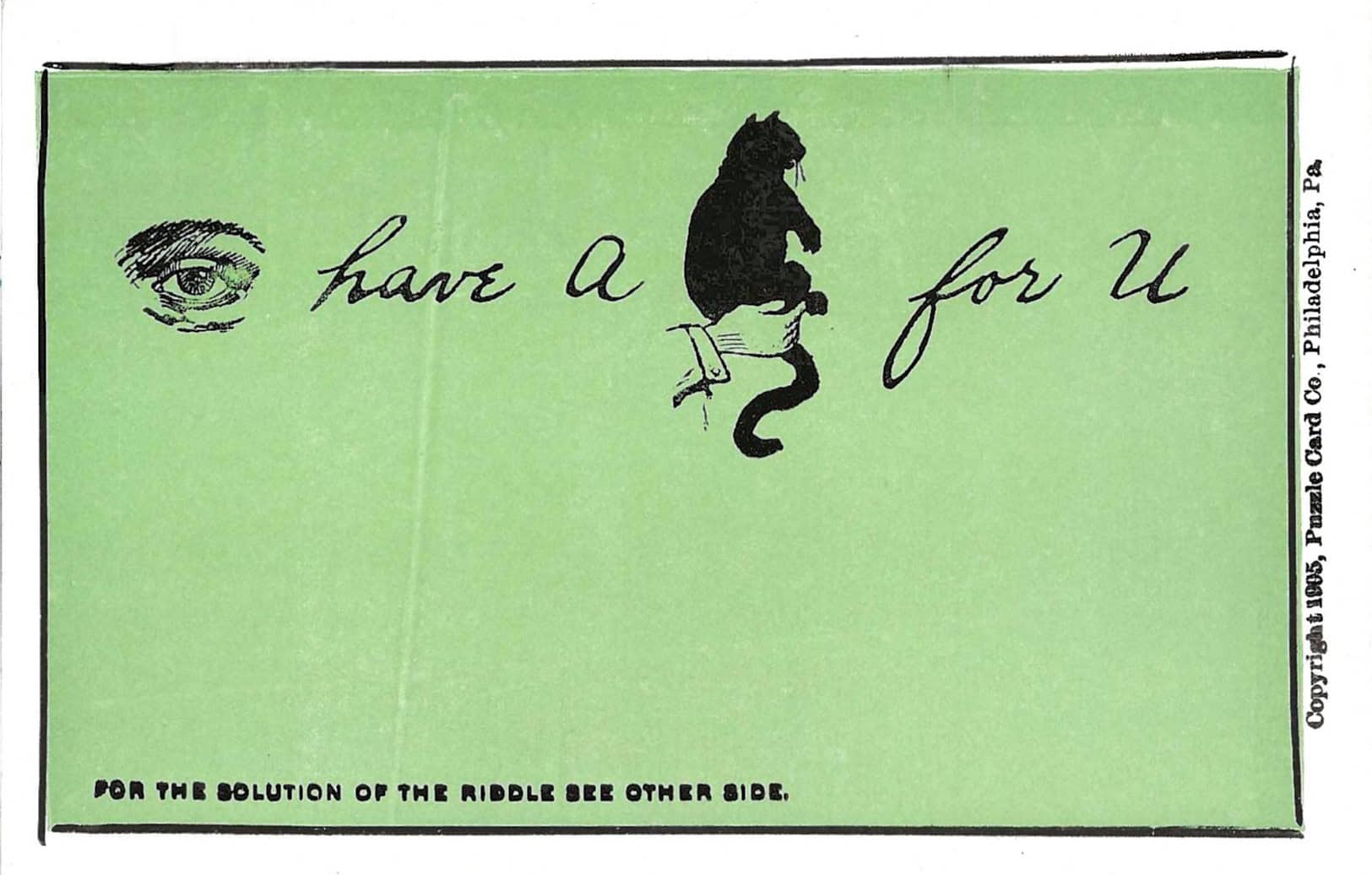
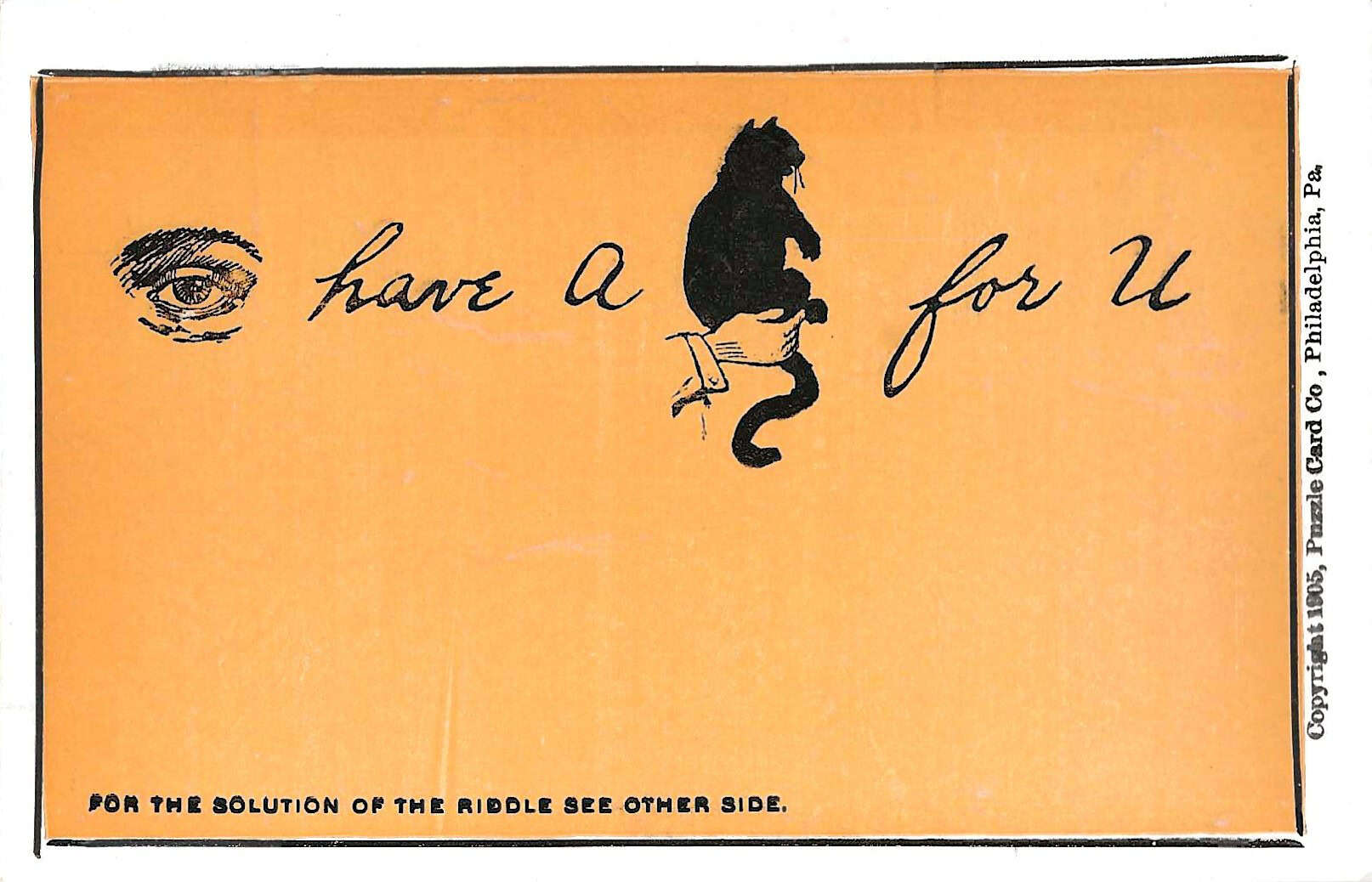
See if you can solve the other rebus puzzles* in this featured set.
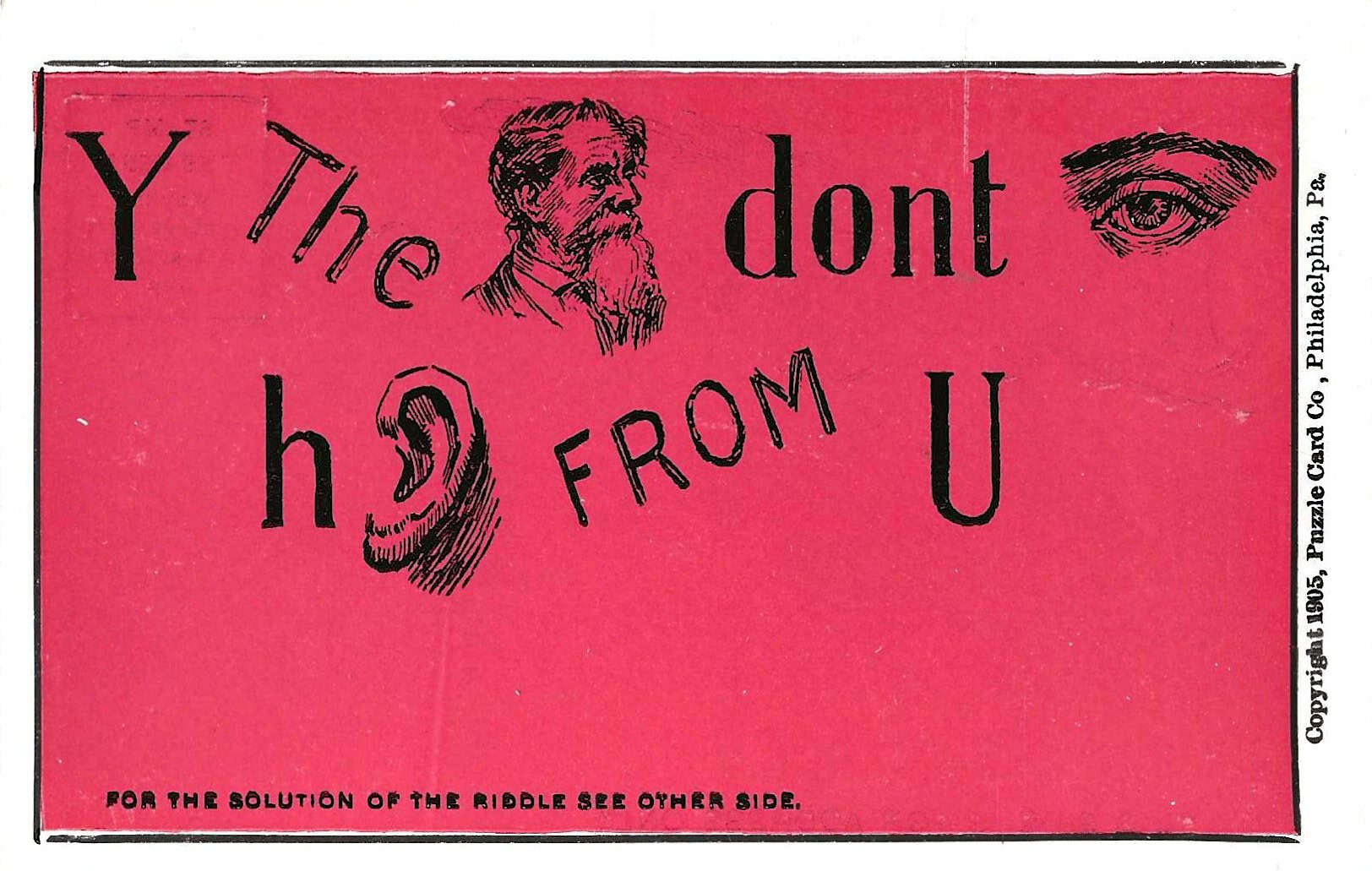
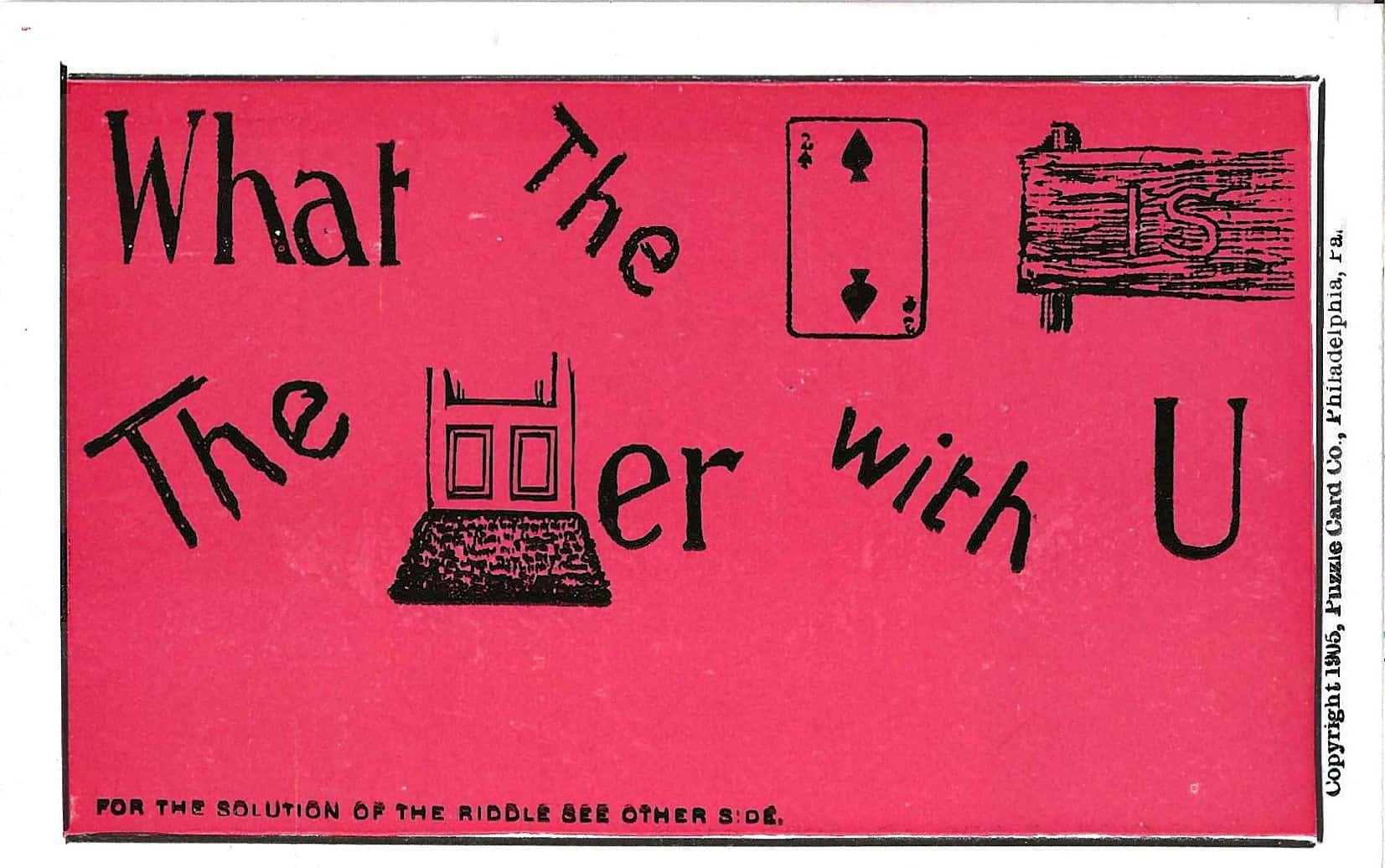
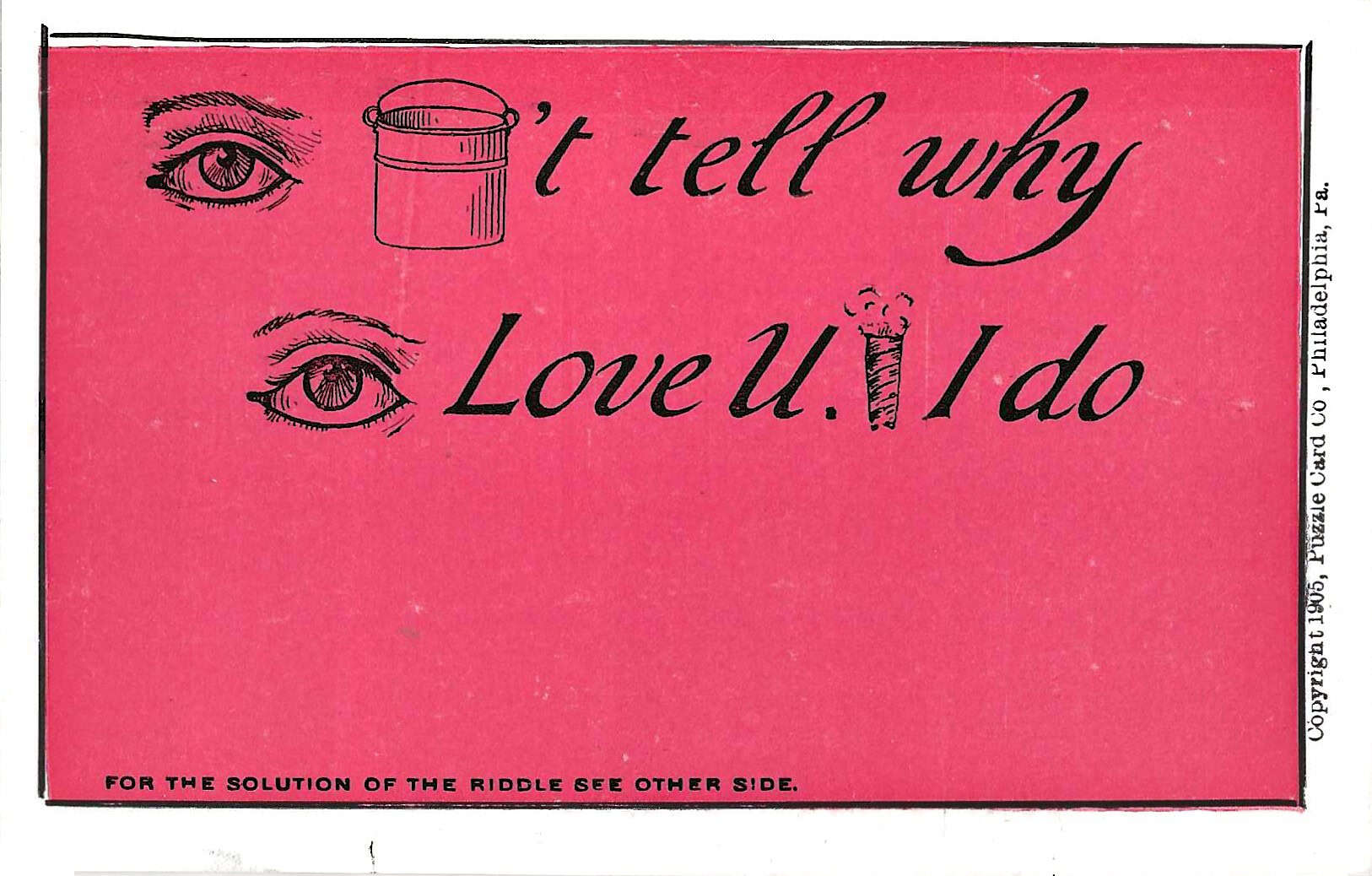
Puzzle solution is one of the most frequent causes
for puzzlers to enjoy an “Aha Moment.”
An aha moment reliably produces a cluster of emotions—chiefly joy (a burst of positive impact when the solution “clicks;” relief (the release found after a period of frustration); surprise (the oddity that comes from finding the unexpected), and certainty (the knowledge that “you know, you know”). These emotions have remained remarkably stable throughout history. What has changed over the years is how we understand, describe, and study those emotions, thanks to modern neuroscience.
These emotions arise because insight triggers dopamine release, gamma‑wave bursts, and activation in the right temporal lobe, all of which create a rewarding, “lightbulb” feeling.
Wow! How is this for an explanation of the obvious?
***
Many of the featured postcards in this essay are more than 120 years old, each is an example of a rebus. A modern dictionary definition for “rebus” is simple, just not very helpful, an older dictionary (1928) describes a rebus as a mode of expressing words and phrases by pictures of objects whose name resembles those words.
***
As the editor of this site, I dislike the words “golden age” of postcards. I know it is commonly used for cards published between 1898 and 1910 or up to 1914 when the Great War began in Europe. However, in this case, let’s continue with, in the “golden age” of postcards simple word puzzles were wildly popular and postcard publishers were aware, hence puzzle postcards were available in every market stall and drug emporium across the nation.
Many artists stayed busy drawing rebus puzzle postcards, the most notable among them was Edith Curtis and the publisher who made ‘dozens of dollars daily’ was Fred Lounsbury. (If Lounsbury is unfamiliar, he founded the Crescent Embossing Company in 1896 in Plainfield, New Jersey, and by 1910, he had expanded operations with an office in New York City and a sales force in Boston.)
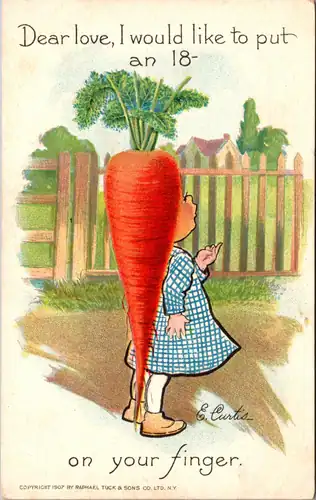
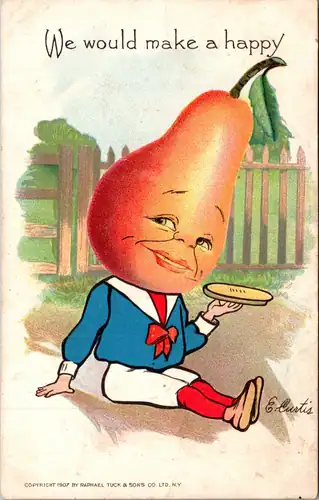
Two examples of Curtis’s vegetable and fruit rebus cards.
This set is an 8-card set and comes in two editions; one with green borders.
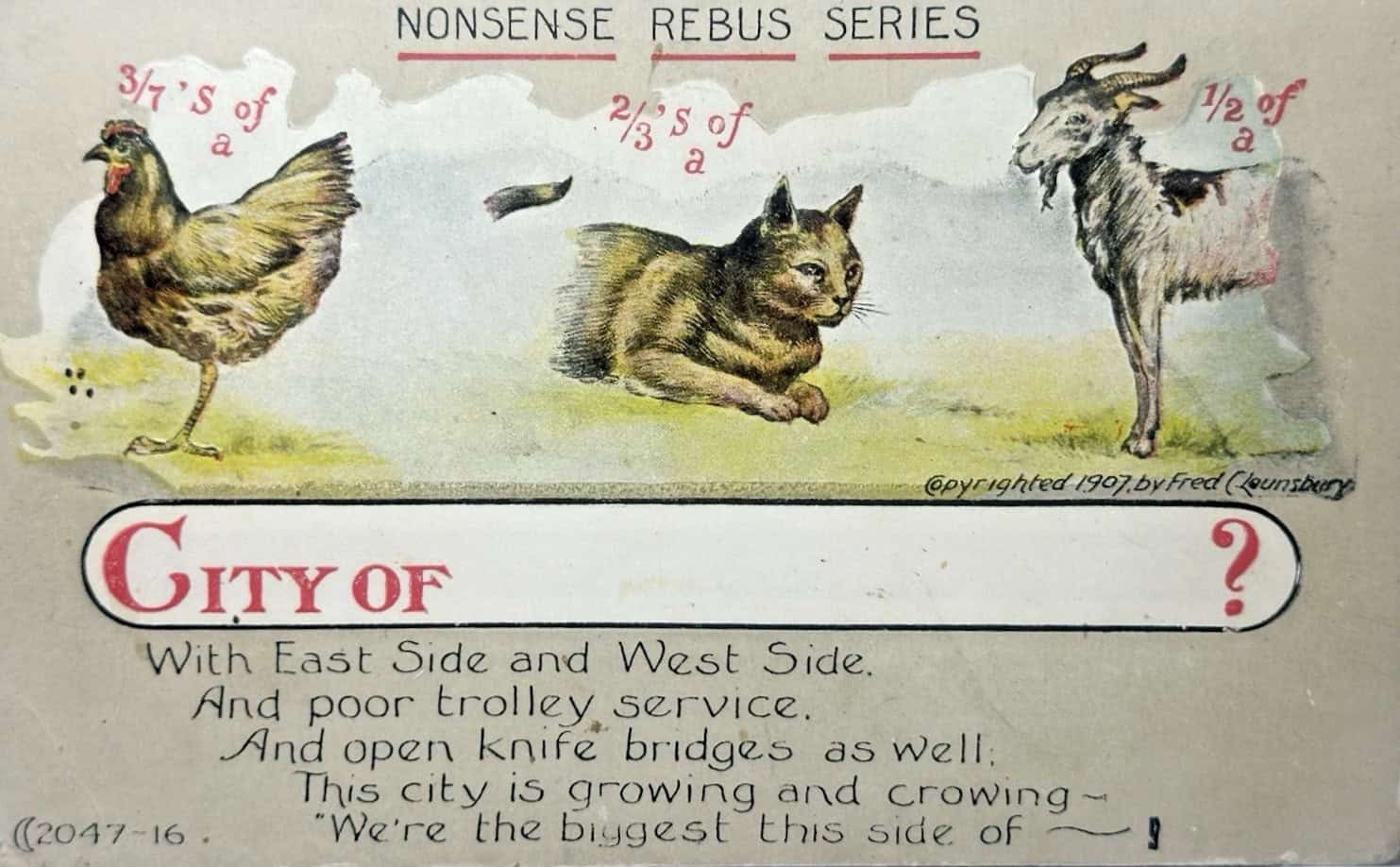
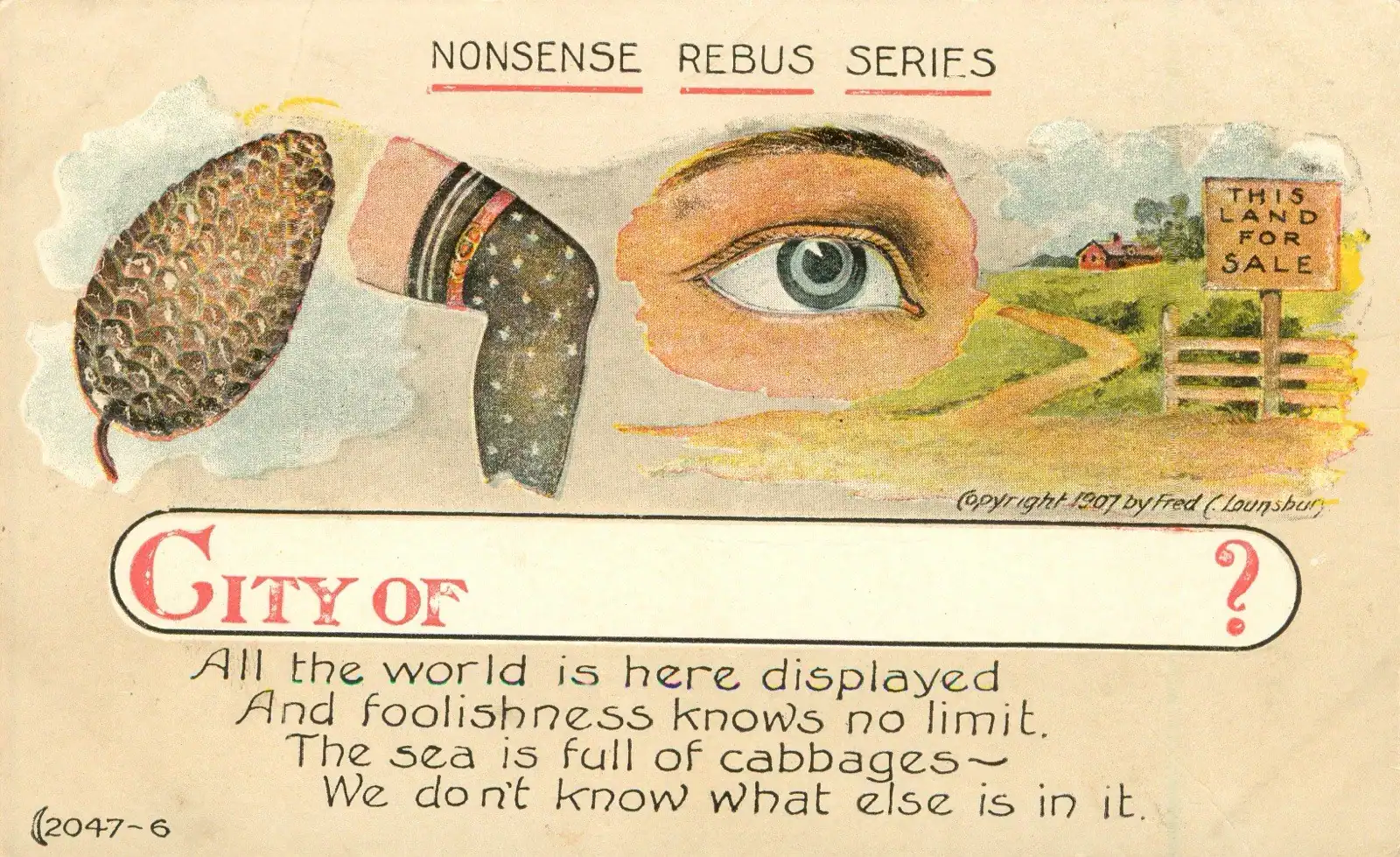
Two examples of Fred Lounsbury’s 12-card set of American Cities rebus puzzles.
Rebus puzzles remain popular because they activate a very specific pleasure center in the mind—the moment of recognition. That “aha” feeling is powerful. It’s the same cognitive reward you get from solving a joke, a math problem, or a mystery. A rebus compresses that experience into a compact, playful form. They’re also highly shareable. In classrooms, on social media, and in puzzle books, they spread quickly because they’re visual, quick to attempt, and fun to compare with others. Their accessibility is part of their charm: children can solve them, adults can be stumped by them, and everyone can enjoy the moment when the answer clicks.
Beyond entertainment, rebus puzzles serve several meaningful purposes. They strengthen visual literacy by training the brain to interpret symbols and spatial relationships. They also support language development, especially for early readers, because they connect images to words and encourage flexible thinking about how language works. Educators often use them to teach idioms, compound words, and abstract concepts in a memorable way. In cognitive science, rebus puzzles are sometimes used to study problem‑solving skills, since they require pattern recognition, inference, and lateral thinking.
Rebus puzzles also have historical significance. They were used in heraldry, medieval manuscripts, and even political propaganda to communicate ideas to populations with low literacy. In that sense, they were an early form of visual communication—a way to encode meaning without relying on text. Today, they still appear in branding and advertising, where companies use symbolic imagery to evoke words or emotions without stating them outright.
So while rebus puzzles are undeniably entertaining, their value extends far beyond amusement. They sharpen the mind, support learning, and tap into a long tradition of visual storytelling. Their popularity endures because they sit at the intersection of art, language, and logic—an elegant reminder that meaning can be hidden in plain sight.
***
*Solutions: (left) “Why the Dickens don’t I hear from you?”
(center) “What the deuce is the matter with you?”
(right) “I can’t tell why I love you, but I do!”
This is a fun article. I got to start the morning with a little hit of dopamine, and learned a few things, too! Thank you.
Edith Curtis’ vegetable and fruit series is so darn cute. I have one or two of the top cards that you listed. They are kind of fun.