I don’t remember what day it was, but I do know it was a week before my birthday in April. My phone rang well after nine o’clock, (just for the record, I hate it when I get calls at night, especially when Jeopardy is on TV). My “Caller ID” identified the call as coming from the president of my local postcard club. I have known – let’s call her Alice – for at least fifteen years, so I knew her reason was a good one!
“Edith,” she said, “What would you do if I gave you 512 postcards of black cats for your birthday?”
The question was such a stunner that my brain froze as I visualized what 512 cards of black cats would look like. I had no idea how to reply or what to say.
“Edith, are you there?” she asked. And I managed to mumble into the phone that I was, and then I added, “What did you just ask me?”
Alice explained that her neighbor from sixty years ago had died in early March and left her collection of postcards to her granddaughter. And, the granddaughter remembered that Alice was also a postcard collector.
At that point the nightmare began. The granddaughter, without notice or permission, wrapped the cards in two sheets of white butcher paper and left them on Alice’s front door mat.
Alice continued with a recounting of a phone conversation she had the next morning with the granddaughter. She asked me if I found the package she left. Then she said, “My Nana wanted you to have her collection.”
Alice continued again. I told her that I simply did not want them because I don’t collect “cat” cards, and don’t know anyone else who does. I told her I would have to spend hours finding someone who would want them. And do you know what she said, “You can’t argue with the dead.”
By that point Alice was nearly in tears, and just before she hung up in desperation she asked, “What should I do?”
***
Soon afterward I called Alice and agreed to help her dispose of her unwanted burden. We decided that I would refuse the “threatened” gift, but that Alice should bring the cards to my house where I have a large table where we could sort the cards to determine their scope and value. We picked Thursday mornings as a good time to “work out our problem.”
It took seven weeks. It seems like a long time, but we weren’t in a hurry and on some Thursdays “lunch” took a lot longer than it should have. The five hundred postcards were analyzed, studied, sorted, and given to other club members. And yes, some went in the closest trash bin.
At the end of the first Thursday, Alice and I decided that five hundred black‑cat postcards is the sort of gift that arrives like a slap in the face. Unorthodox but still charming, excessive, and absolutely demanding an appropriate response. At the same time, we decided on what our response would be – we would tell the story and hope that it would help other collectors deal with similar problems.
The first truth is simple, such a gift cannot be treated as a single object because it really is an archive, a private museum, and many years of whimsy suddenly placed in your care. The challenge is deciding how to honor it without letting it swallow your living space or your sanity.
The initial step is cataloging. Not in a clinical, joyless way, but in the spirit of someone discovering a forgotten trunk in an attic. Each card deserves a moment or two of attention. Handling each card slowly allows you to understand what you’ve been given. You may find themes emerging.
The themes we discovered were many and ranged from Halloween mischief, Belle Époque elegance, early chromolithography, or the peculiar habit of pairing black cats with good‑luck wishes.
Once the initial wonder settles, the practical question rises, “What does one do with five hundred of anything?” The answer is to treat the collection as a conversation starter. Choose a handful that are somewhat special, then at your next club meeting, you approach someone who would appreciate the beauty of the cards and simply ask, “I found these recently, would you like them?” In other words; give them away.
The constant was that when we had “sets of four or more” and offered them to collectors, they were very much appreciated. One gentleman said, “Since you went to the trouble of sorting them into sets, I will happily add them to my collection.”
It took three months – the last twenty were given to an English teacher who uses them as inspiration in her creative writing classes.
Finally, there is the emotional aspect. A gift of five hundred black‑cat postcards is not merely an object; it is a gesture of trust, eccentricity, and perhaps affection. To deal with such a gift is to accept its oddness with grace. You don’t need to become a collector, an archivist, or a scholar of feline iconography. You simply need to acknowledge that someone believed you were the right person for this peculiar inheritance—and that, in itself, is worth cherishing.
***
Even if you dislike cats, I’m sure Postcard History readers will appreciate
a sampling of this “well intended” but “strange” gift.
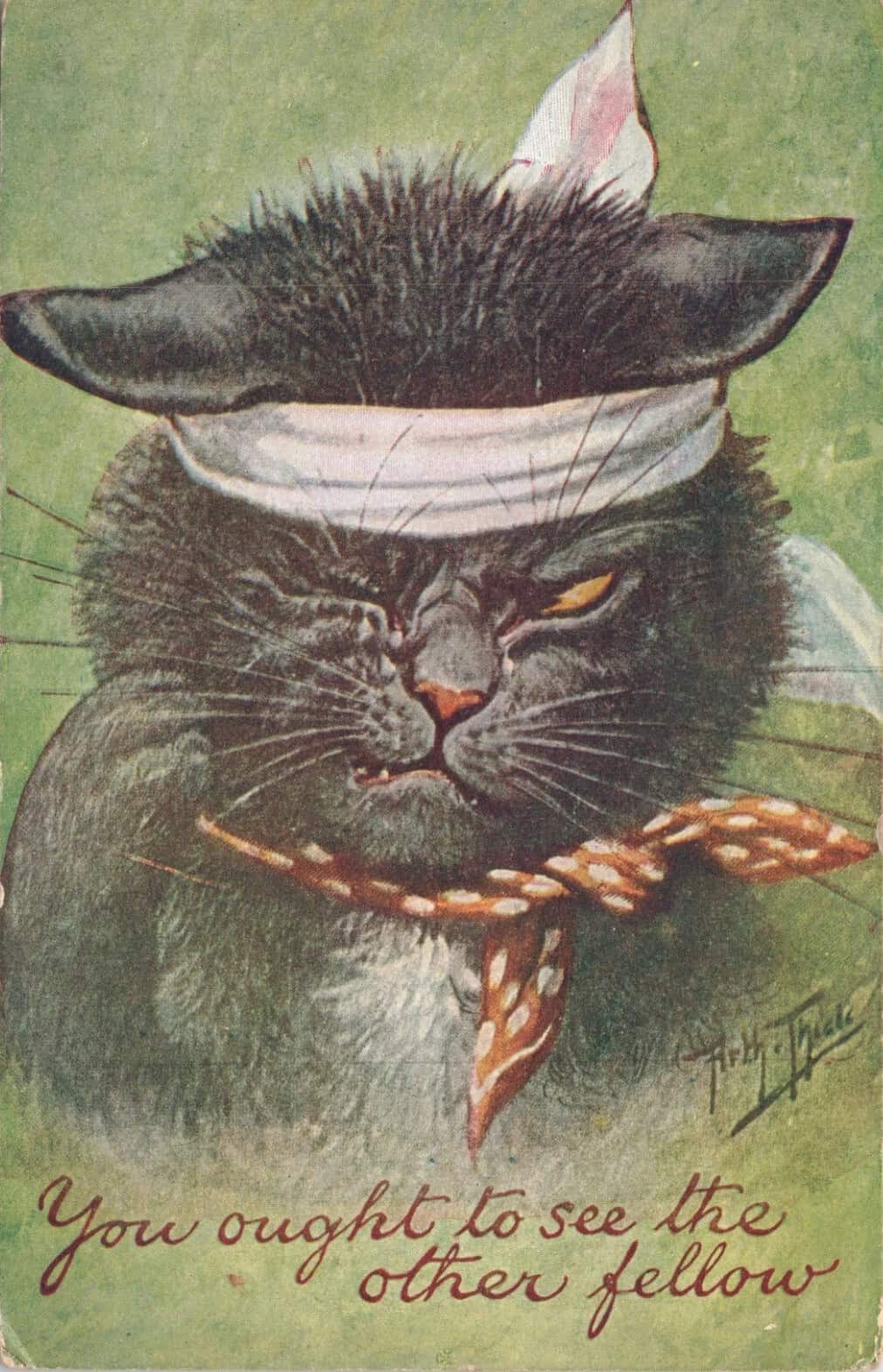
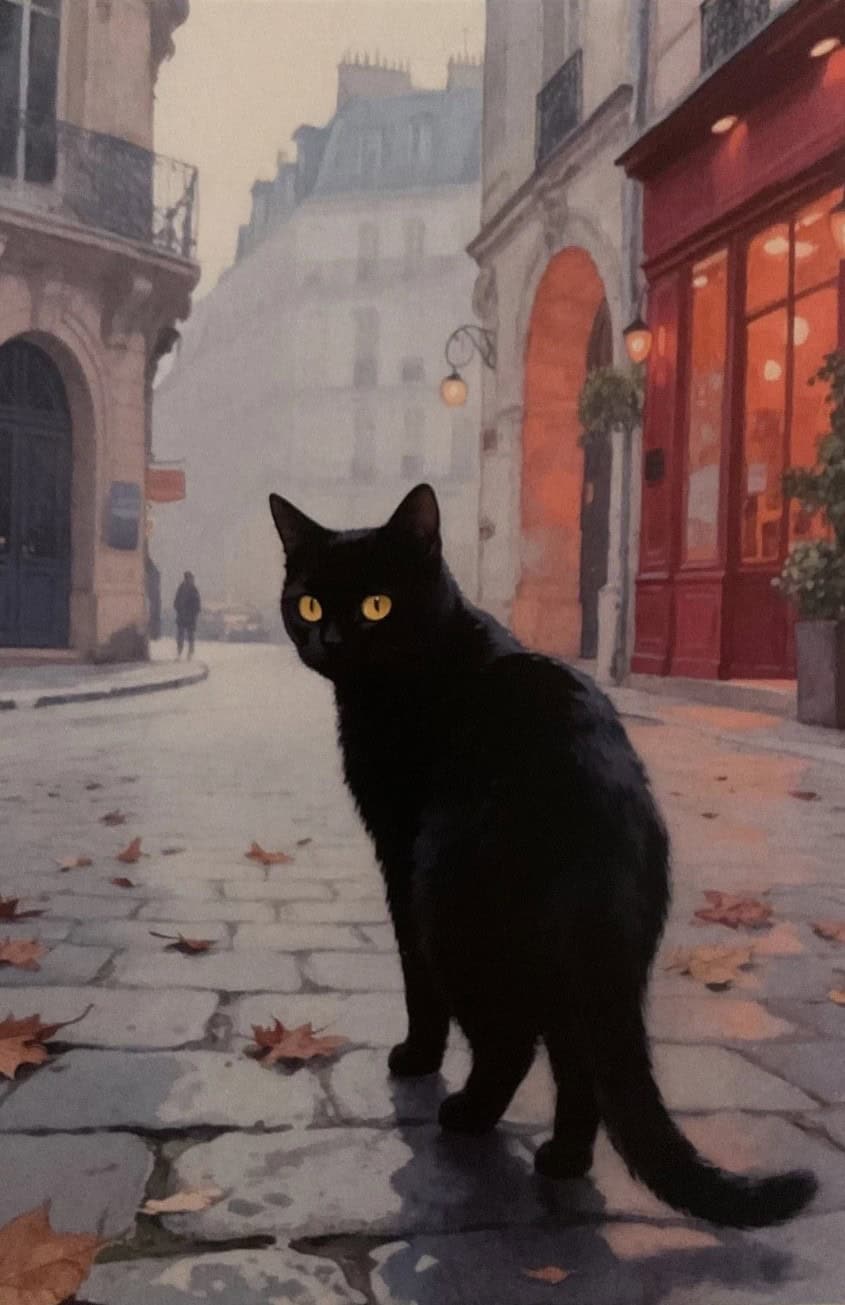
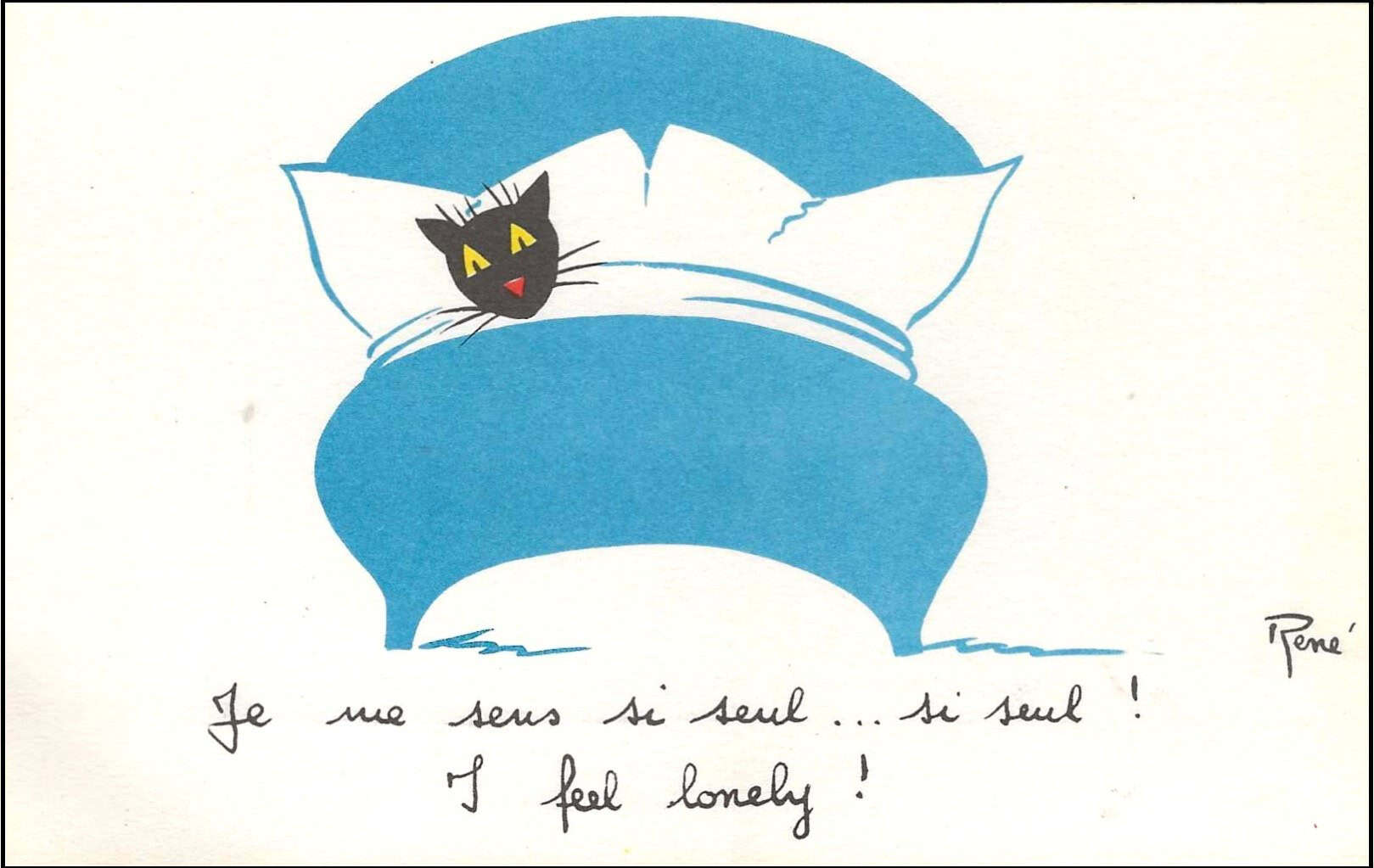
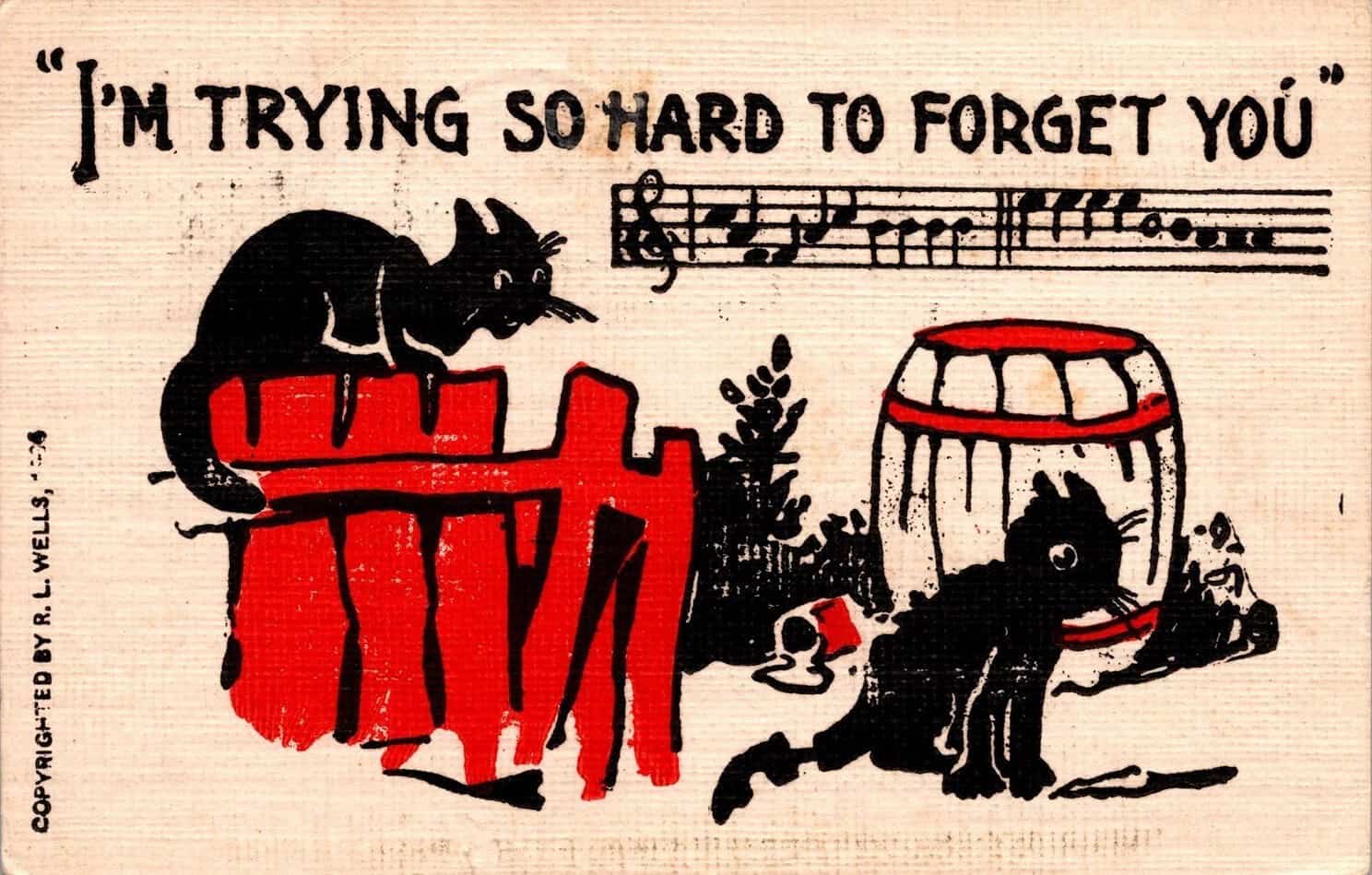
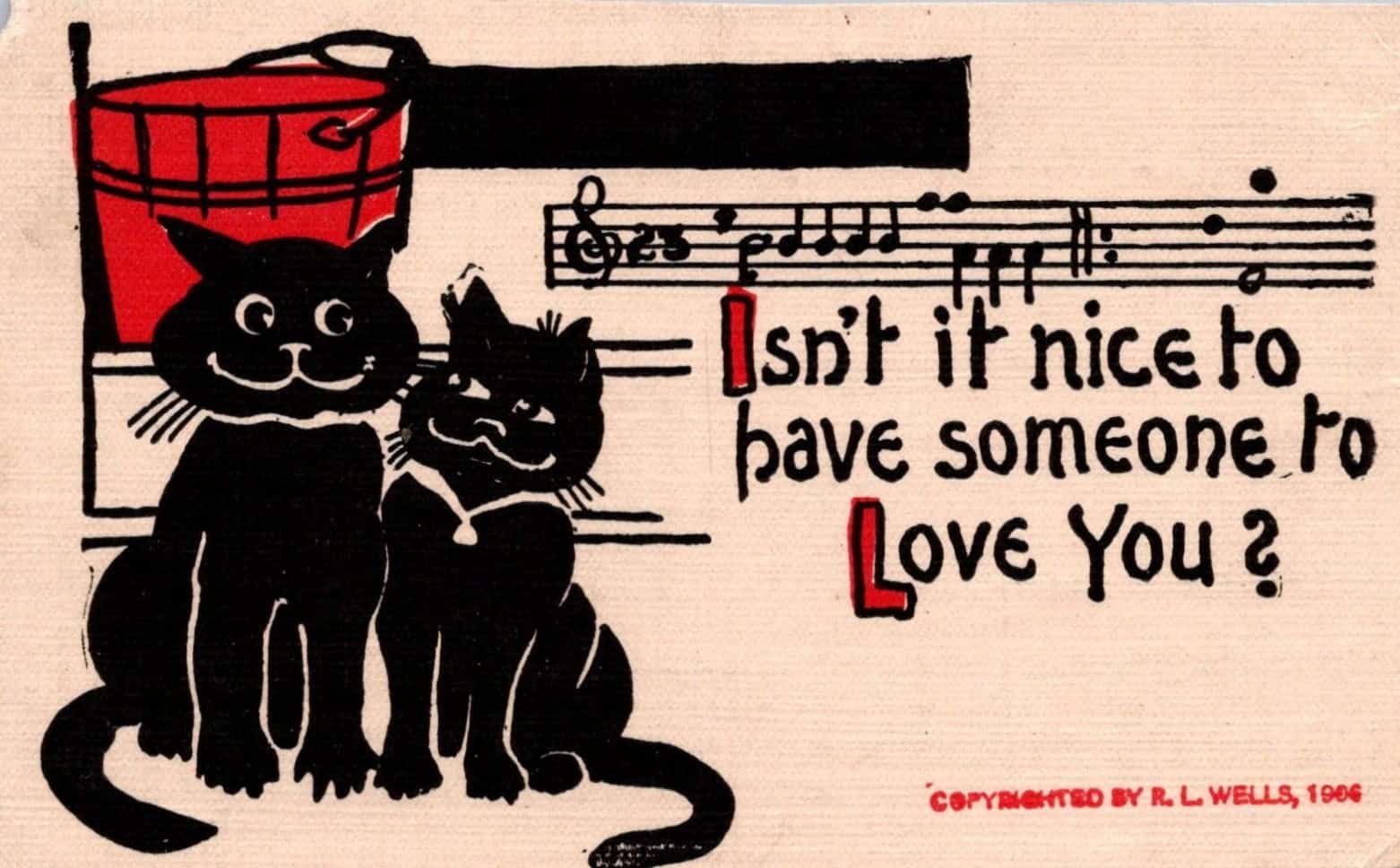
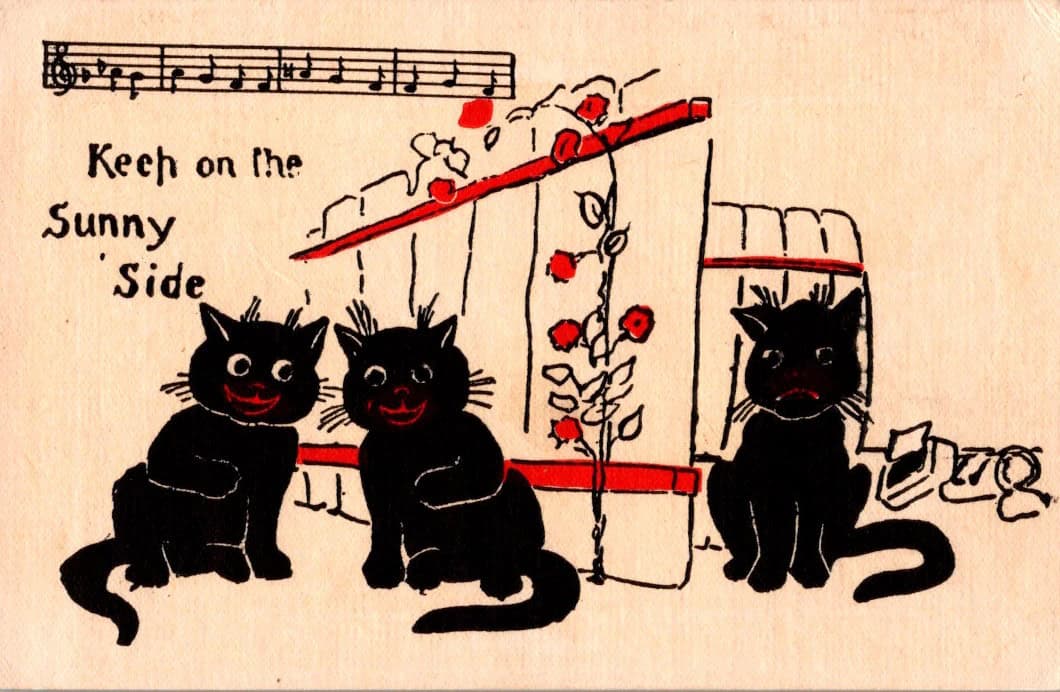
Meow!!
Great story. Gift, inheritance, ethics and thoughtful resolution.
lovely story! i note “some went in the closest trash bin” = how many and were they scanned/copied/photographed in an way to record them?
Lovely little article. I robustly collect black cats. René and Thiele cats are fun and clever.
I quite a few black cat cards in my collection: View cards from Scotland and around the UK, Halloween greetings, and humorous anthropomorphic cats (of all colors) by one of my favorite artists, William Henry Ellam. 🐈⬛🇬🇧
Loved the perspective and way of thinking about gifts that people never asked for.
Thanks for such an interesting postcard story, that was a unique collection, meow!
Okay Bill… Did you pick this particular topic just for us? That one card (Paris Noir) looks exactly like our Bombays… Even the eyes are the right color. Good article…