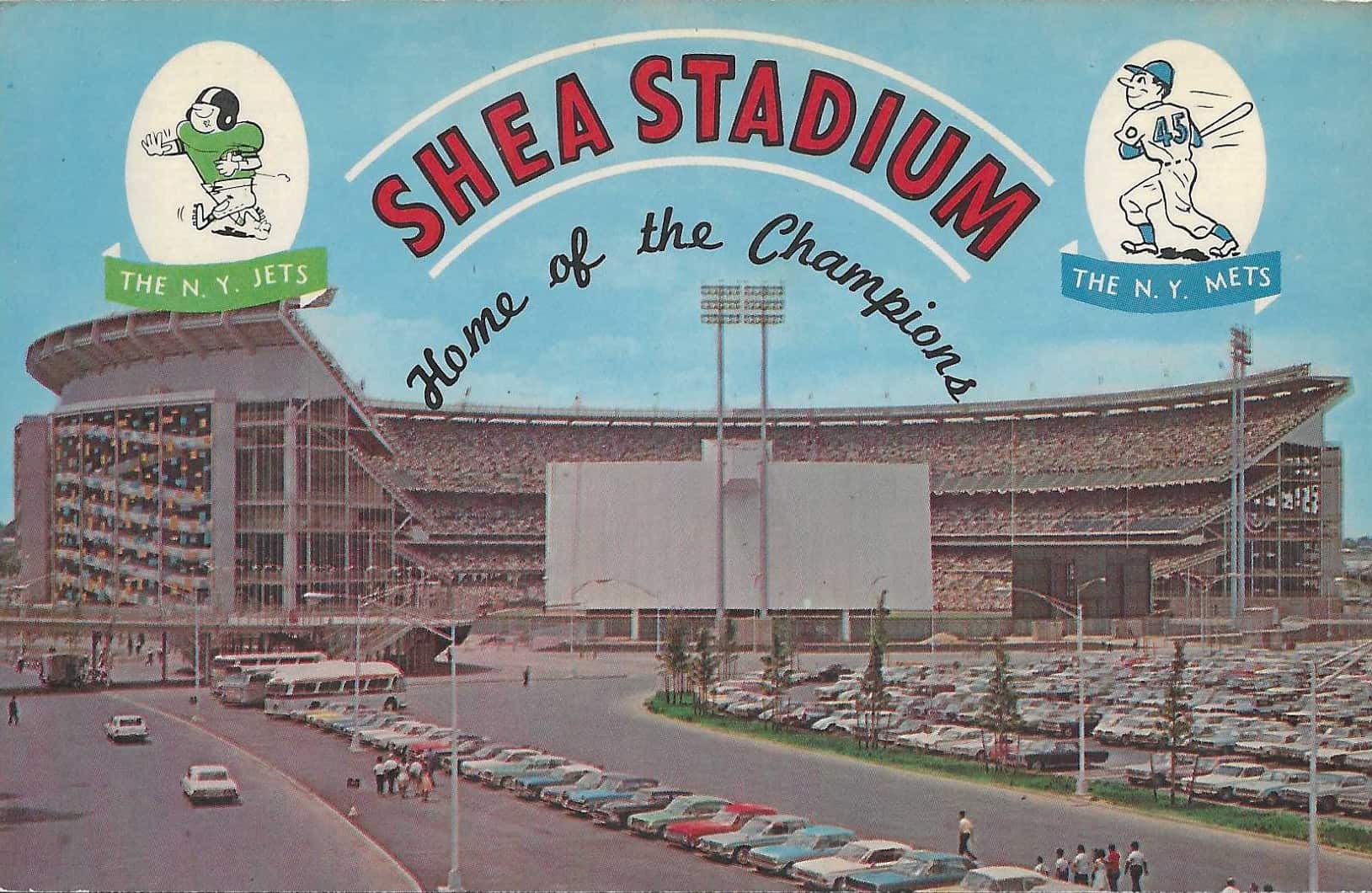
New York’s baseball teams operate out of relatively new stadiums and are now experiencing their own contemporary achievements and disappointments. Citi Field – branded by Citibank, which pays $20 million per year for naming rights – has housed the New York Mets since 2009. It sits right next door to the demolished Shea Stadium which served the Mets from 1964 through 2008. It’s recalled as a rowdy place that also hosted notable appearances by the Beatles in 1965 and Pope John Paul II in 1979.
Two of the teams formerly housed in New York have been happily ensconced in California for more than 50 years now. The New York Giants moved to San Francisco in 1958 and now play ball at Oracle Park located on the shore of San Francisco Bay. The Los Angeles Dodgers left Brooklyn at about the same time and take pride in their home team’s Dodgers Stadium.
However, when you look at the current homes of the Yankees and the Mets, it’s surprising to see how much memory is built into the current architecture of the stadiums and how much they owe to their legendary antecedent ballparks: Yankee Stadium, The Polo Grounds, Ebbets Field and Shea Stadium. Classic Postcards help to tell the story behind the highs and lows of New York City’s great baseball teams.
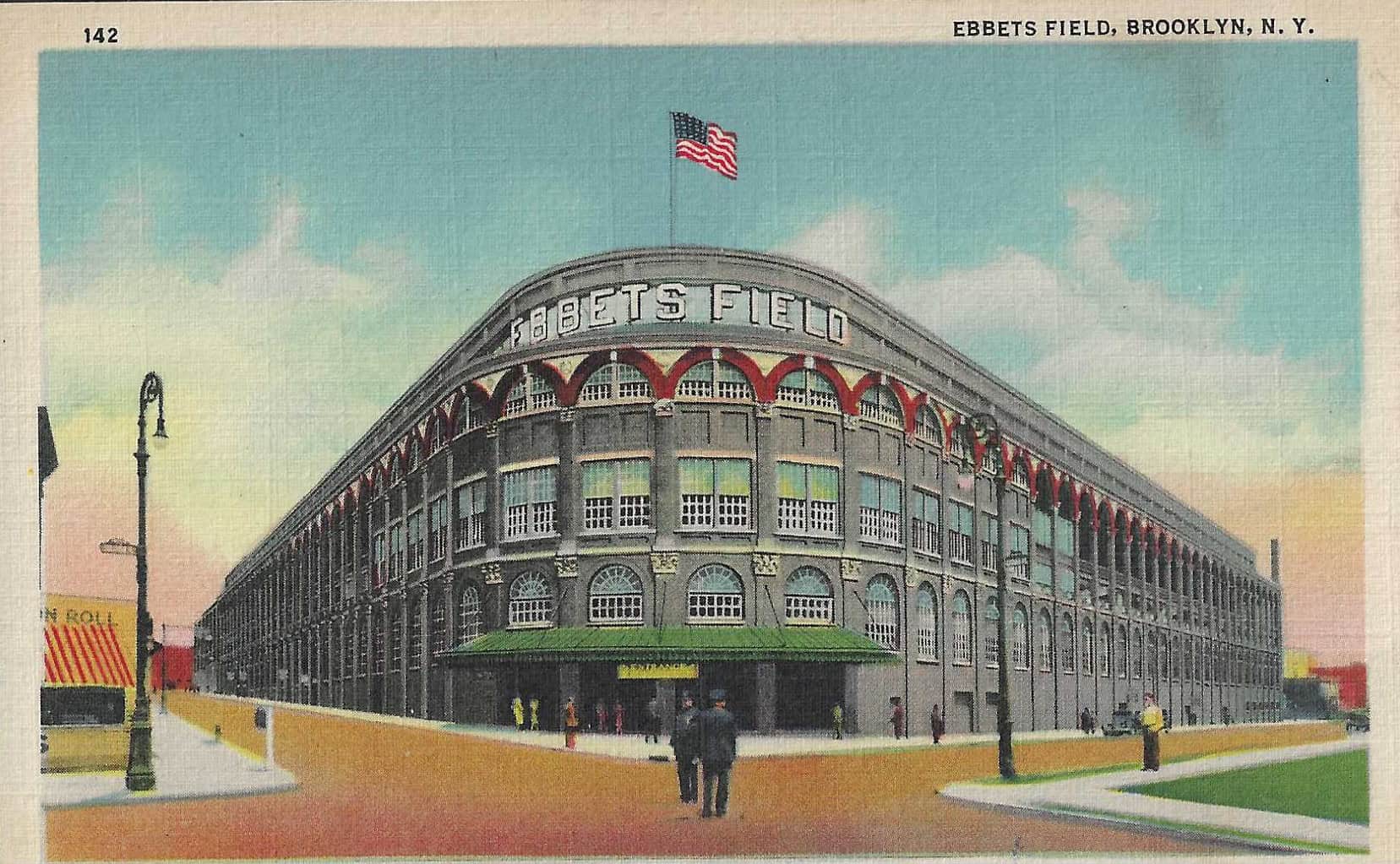
Citi Field is fronted by Jackie Robinson Plaza, commemorating the achievements of the man who racially integrated professional baseball more than 70 years ago and resembles the front of his former stadium, Brooklyn’s Ebbets Field.
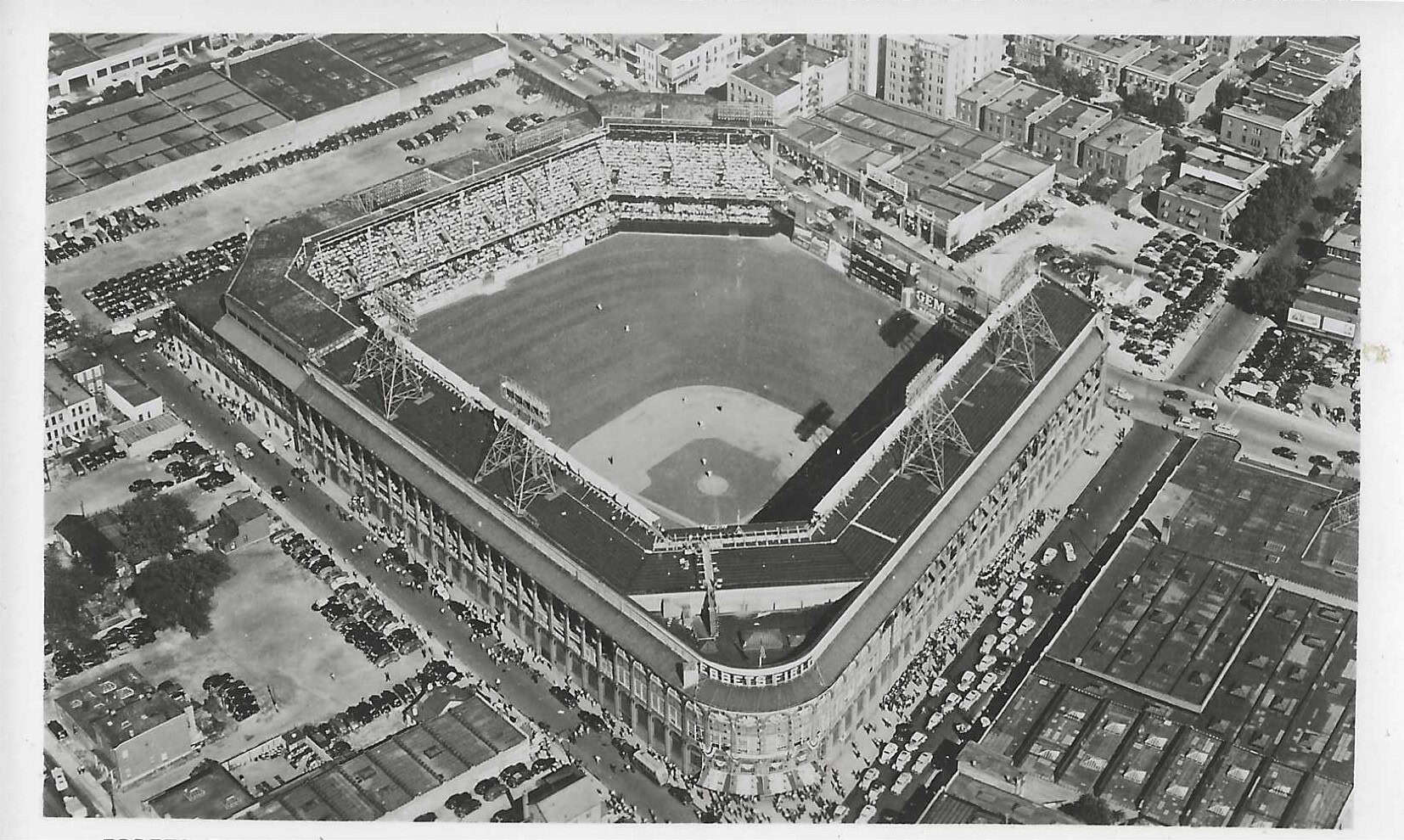
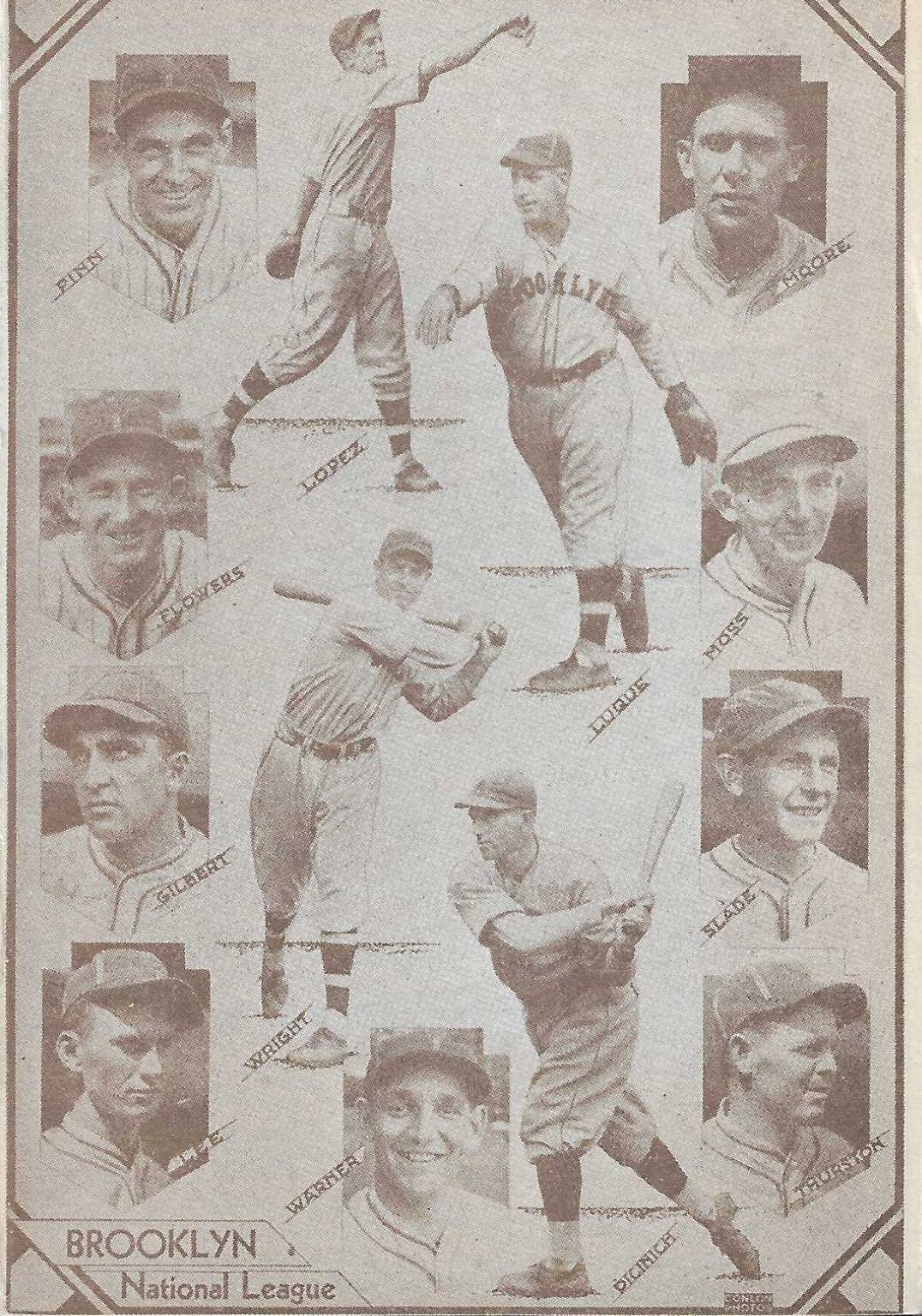
Meet the 1930 Brooklyn Robins. The team was known by several different nicknames simultaneously including the Bridegrooms, Superbas and Kings before the “Dodgers” stuck in 1932. The Brooklyn baseballers’ moniker recalls the ubiquitous streetcars that forced pedestrians to become “trolley dodgers” in the streets of their hometown.
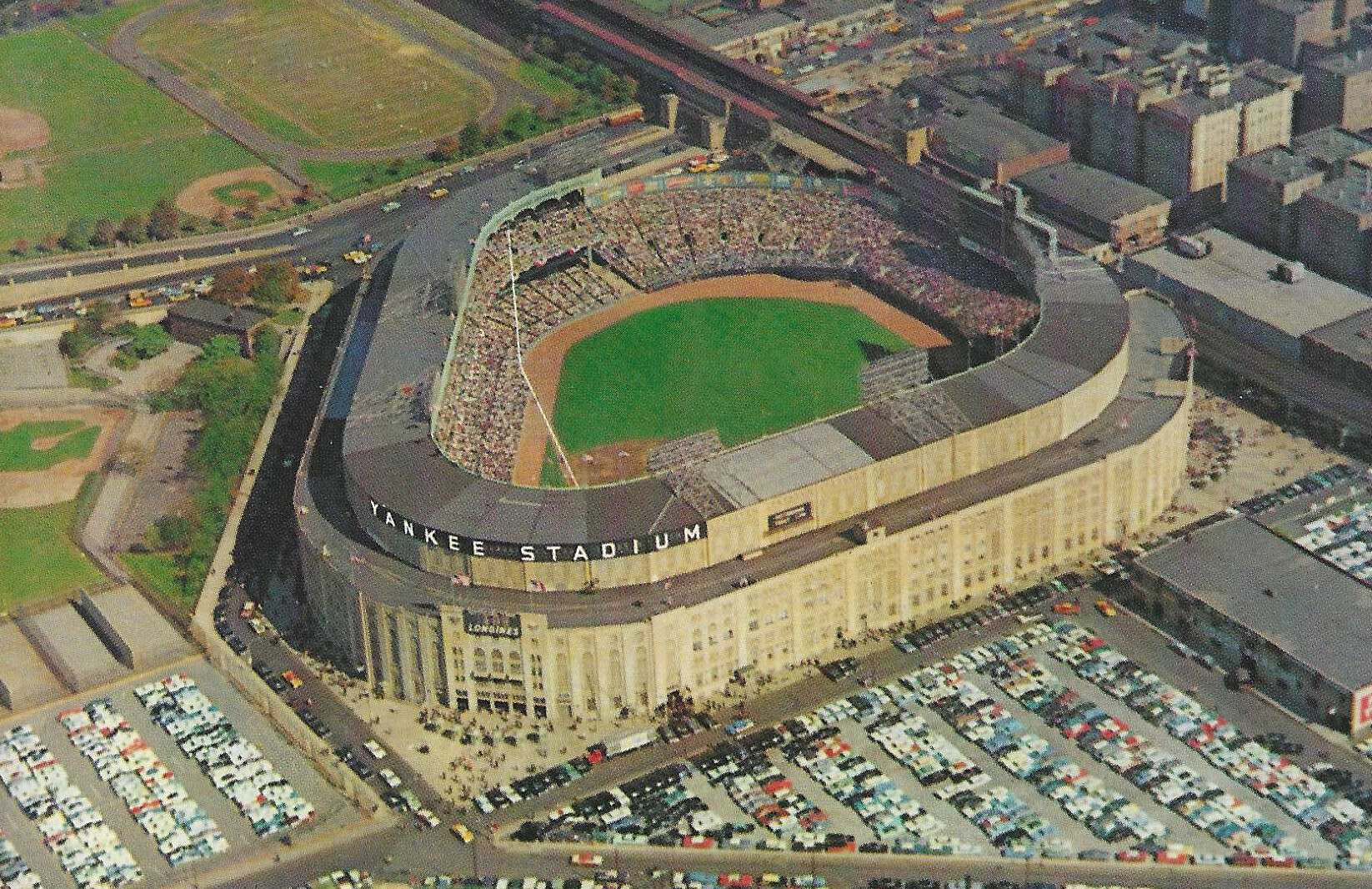
The new Yankee Stadium incorporated design elements of the original Yankee Stadium that operated between 1923 and 2008, including its exterior and familiar frieze.
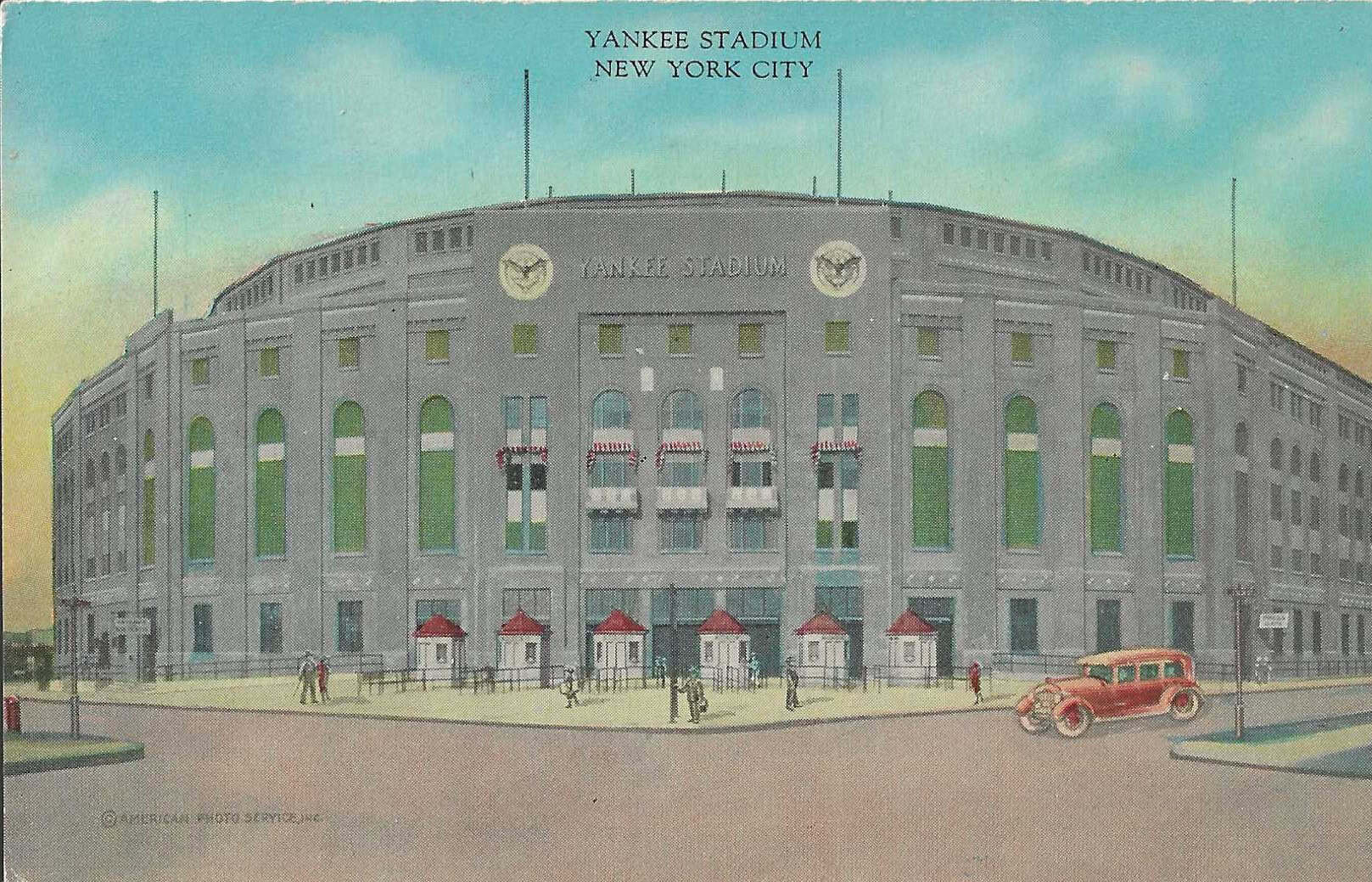
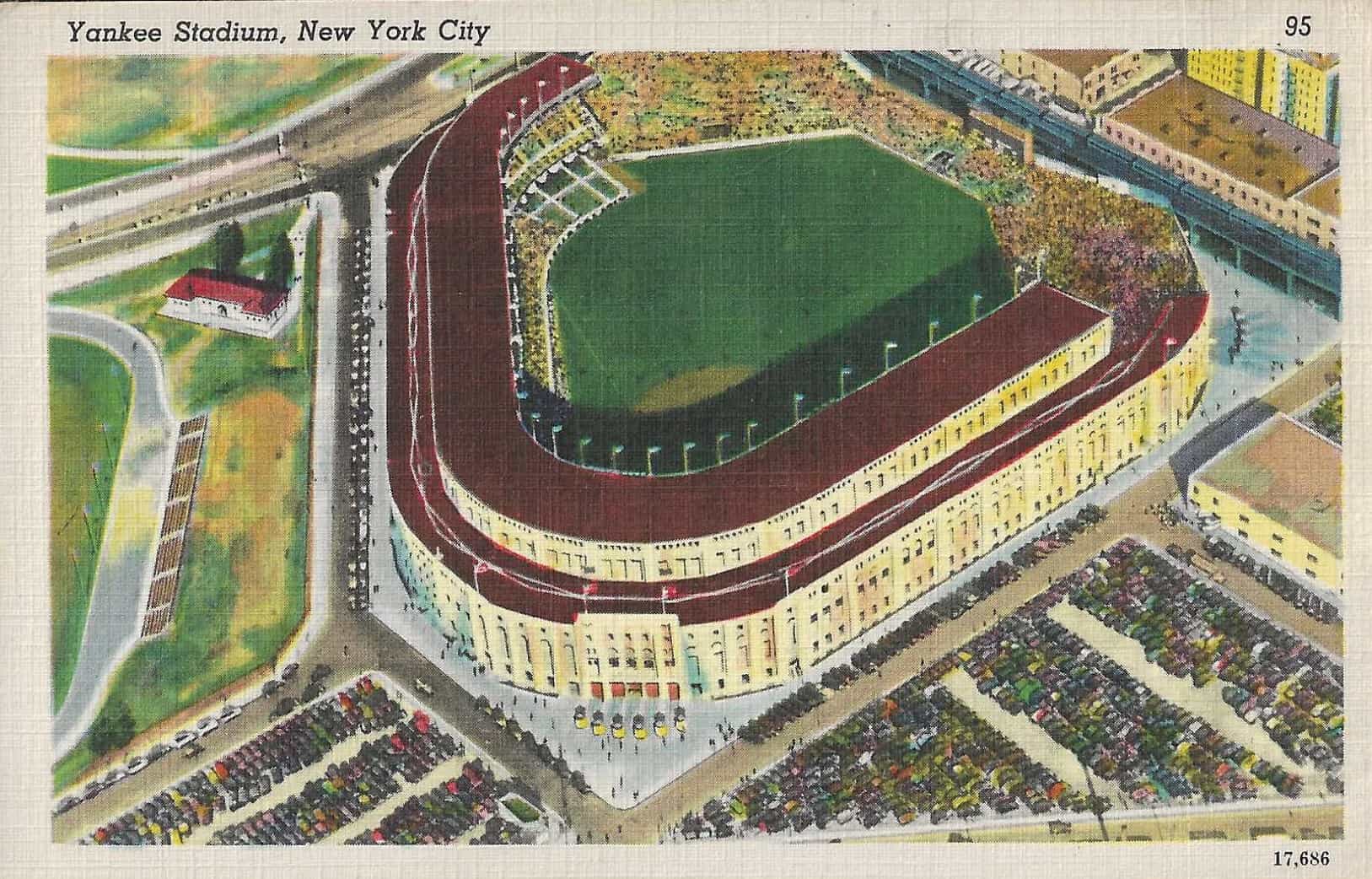
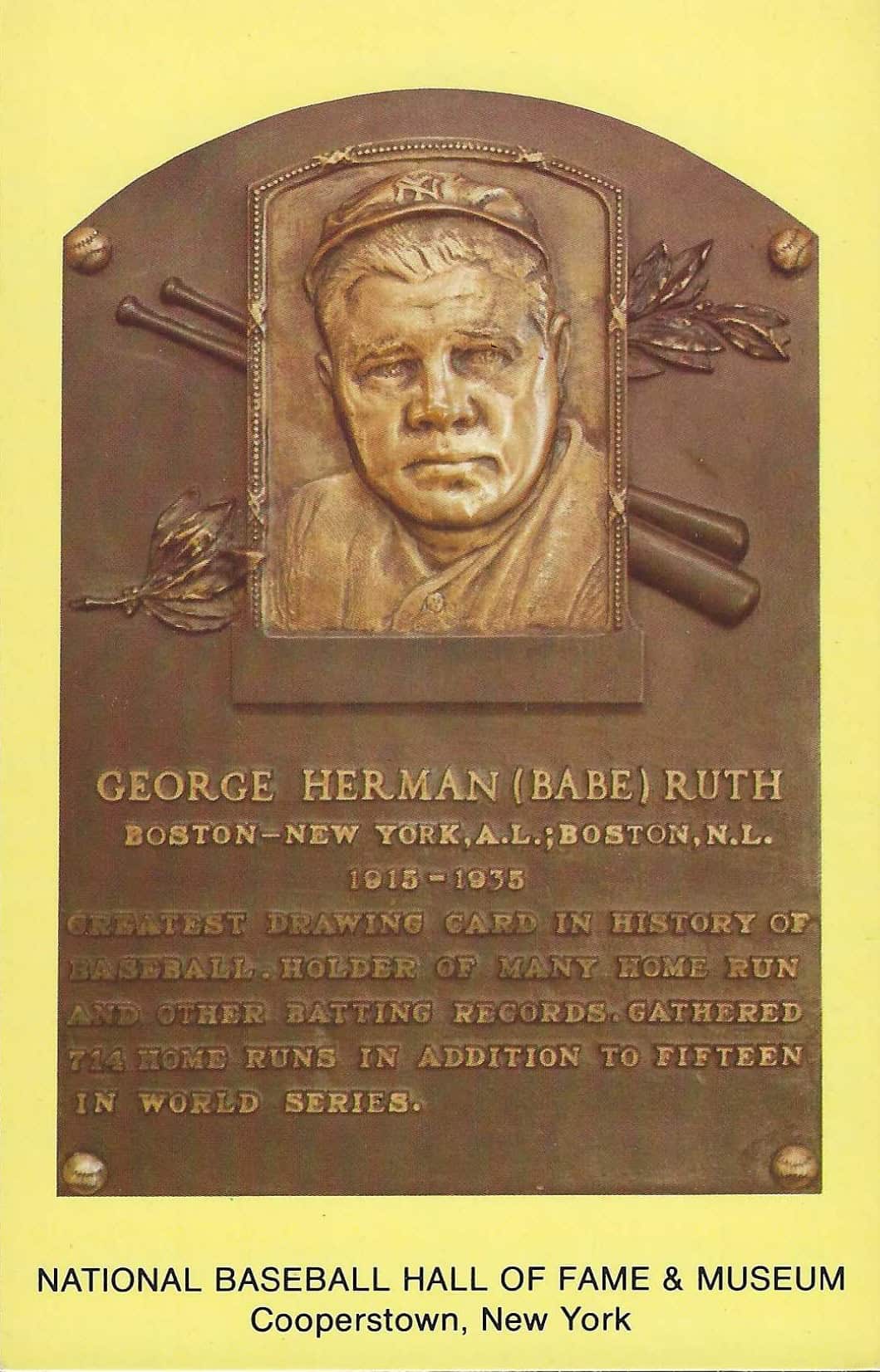
Located one block north of the original Yankee ballpark, the new stadium was built for size, becoming the fifth largest among the 30 Major League Baseball stadiums. The original Yankee Stadium was known as “the house that Ruth built” honoring the tremendous popularity achieved by Babe Ruth’s accomplishments on the field, including his 1927 record 60 home runs in a single season – a record maintained until surpassed in 1961 by fellow-Yankee Roger Maris.
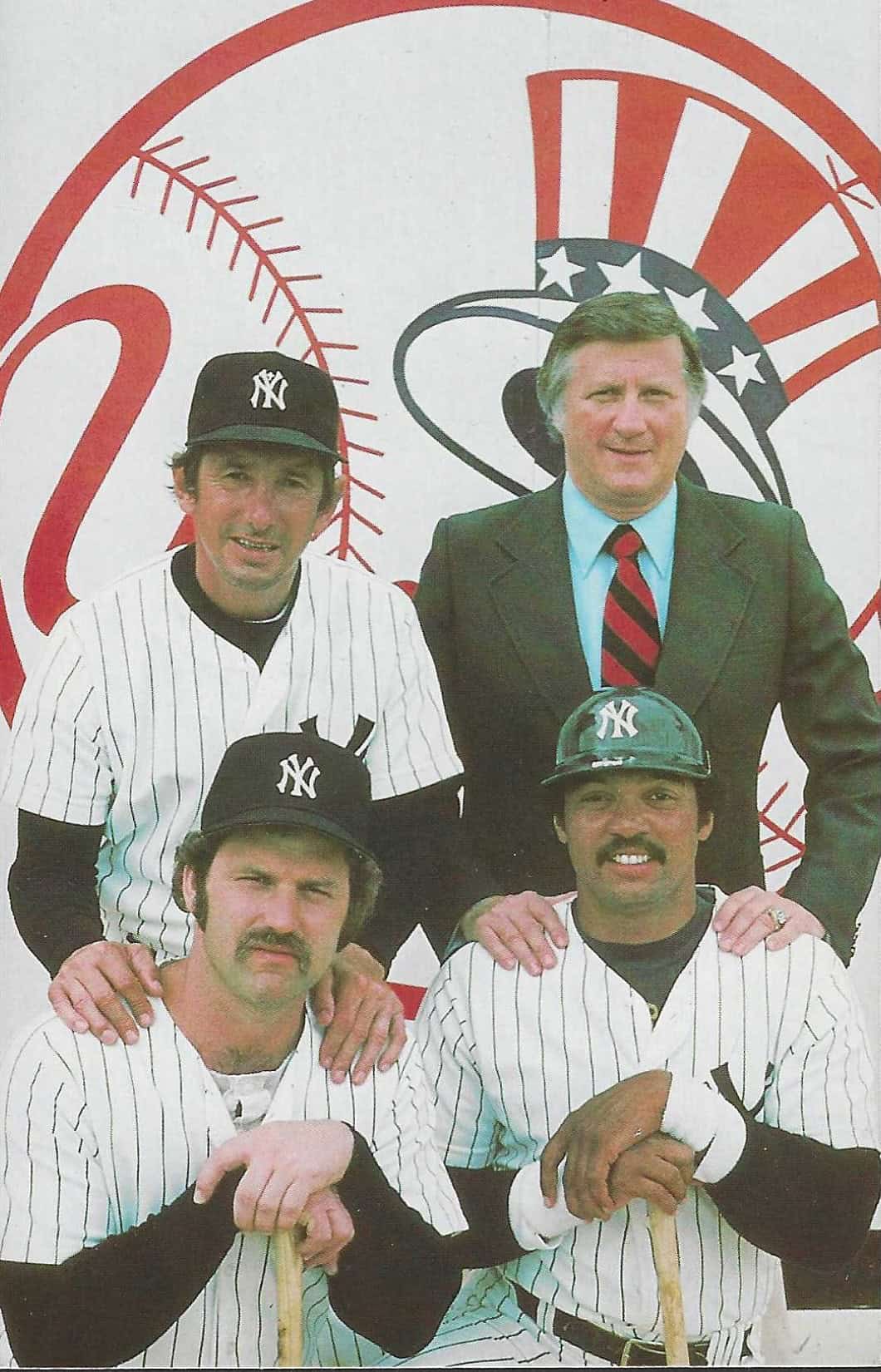
The new ballpark might be named as “the house that Steinbrenner built” owing to the endless efforts by the team’s owner and his threats to escape with the Yankees to New Jersey unless the high dollar cost of public support was forthcoming. It was finally worked out between Mayors Giuliani and Bloomberg and taxpayer subsidies ended up at $1.8 billion out of the final cost of $3.1 billion for the two stadiums.
The cards above reproduce Babe Ruth’s plaque at Cooperstown, New York National Baseball Hall of Fame and a chrome by celebrity publisher Coral-Lee showing Steinbrenner with Yankee superstars Billy Martin, Reggie Jackson and Thurman Munson.
The Yankee’s name and ballpark didn’t come quickly or easily. Most of us don’t remember when the team was called the New York Highlanders and played from 1903 to 1912 at Hilltop Park located in Washington Heights, just about on top of what today is New York-Presbyterian/Columbia University Irving Medical Center, birthplace of my grandson Ezra.
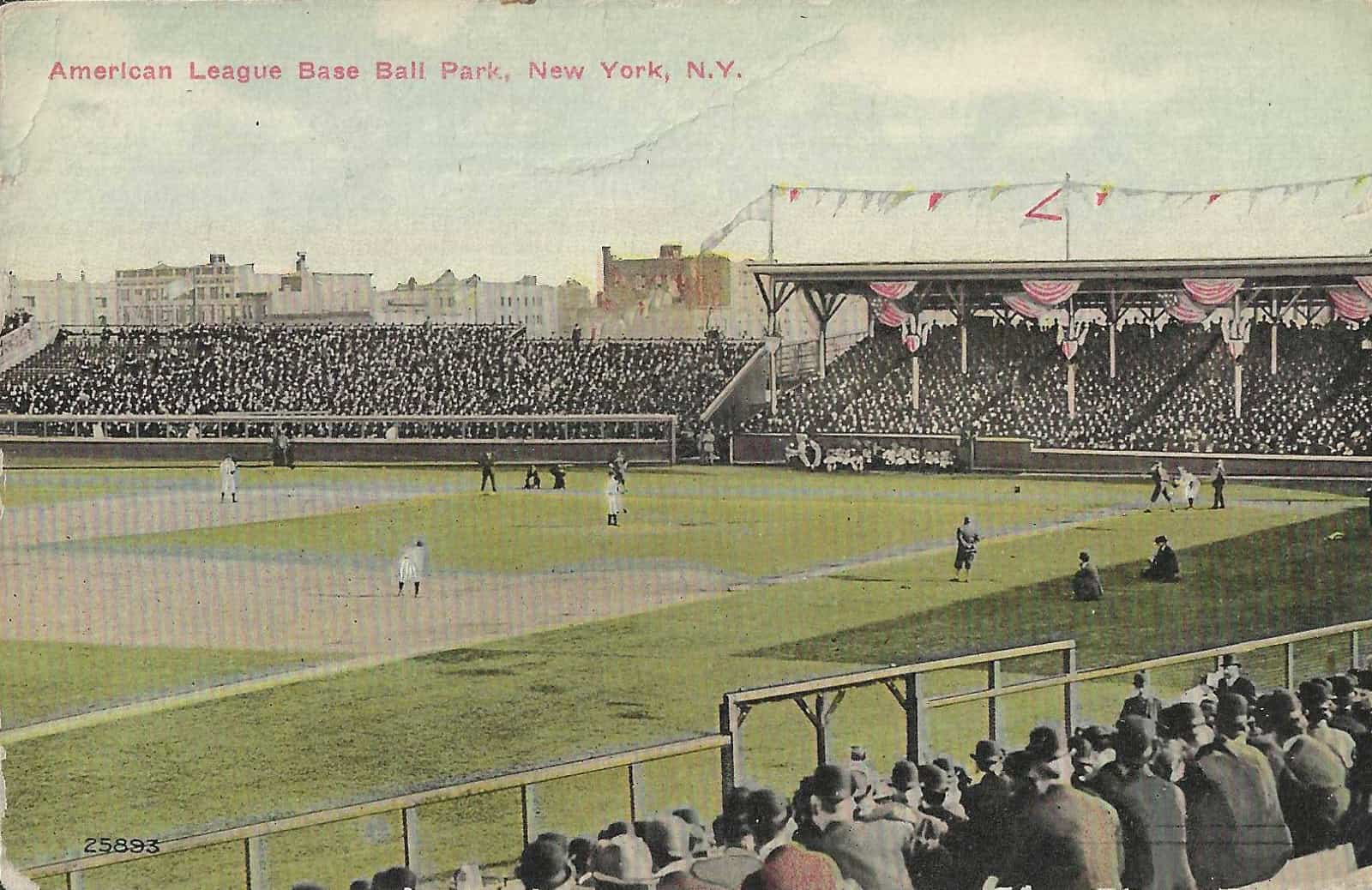
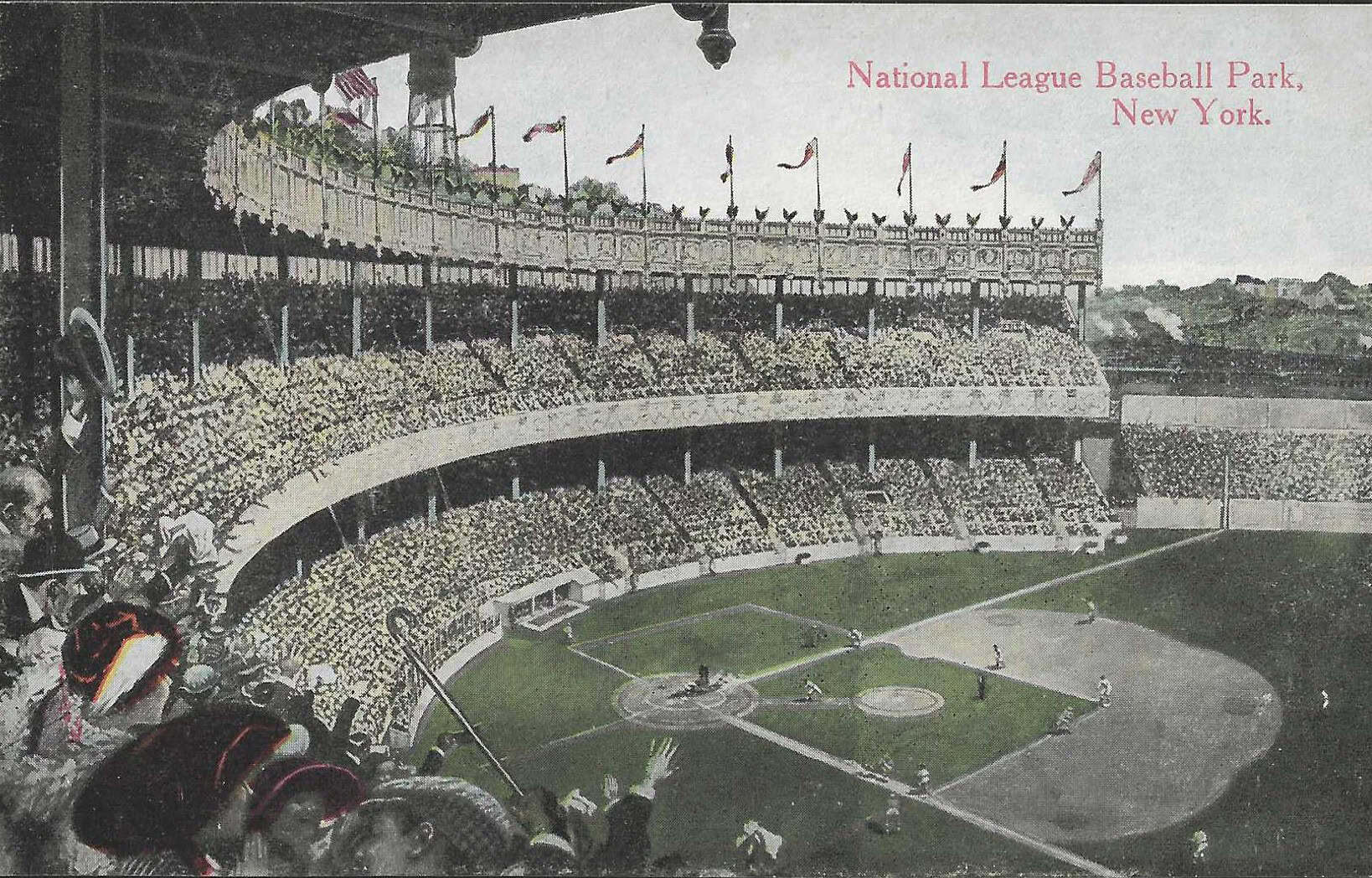
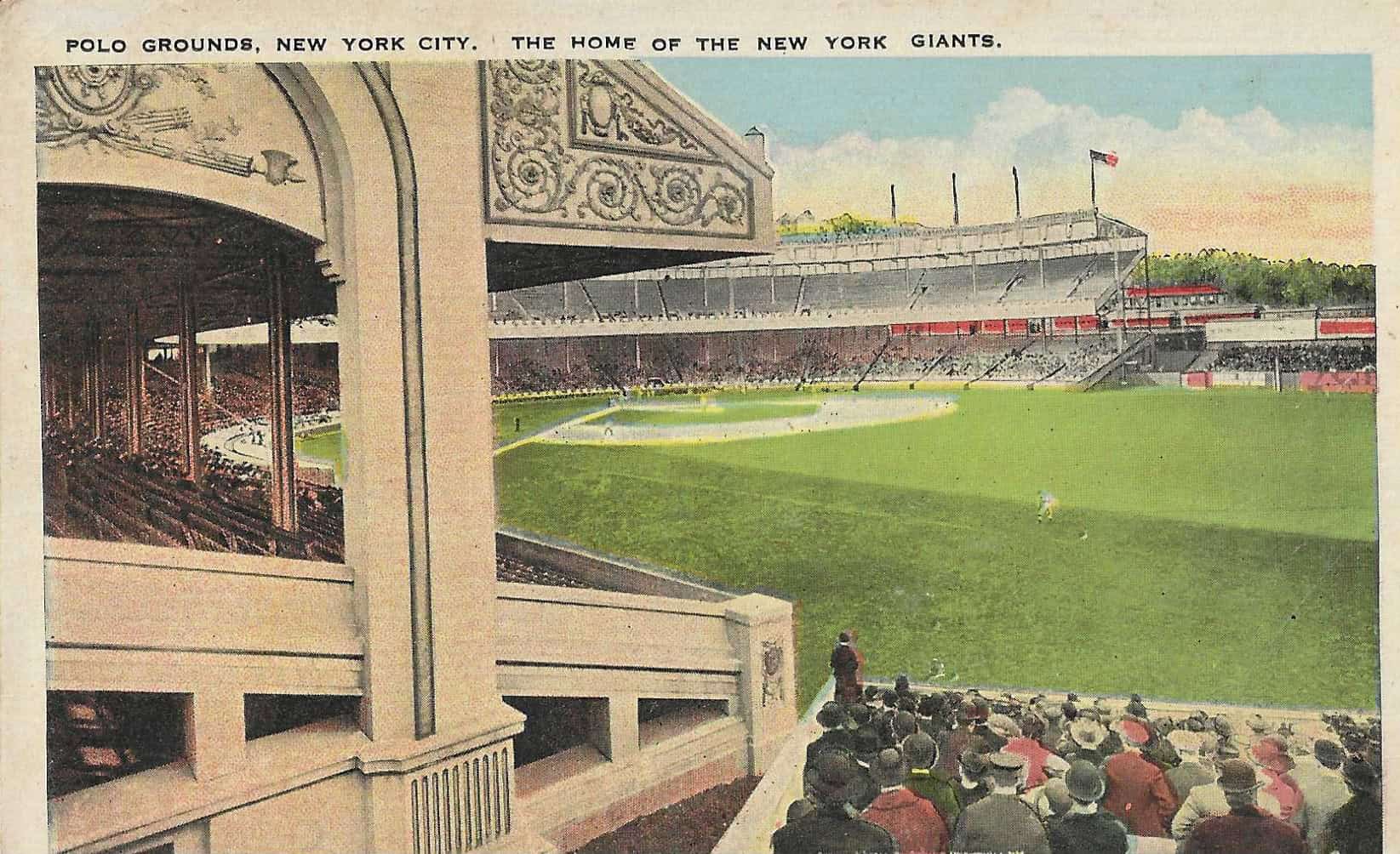
Afterwards, until building their own ballpark nearby in 1923, they shared the newly built Polo Grounds with their rivals The New York Giants, which, as shown above, had a hard time differentiating themselves when the stadium was known as just the National League Baseball Park. The hastily constructed Hilltop Park was considered too diminutive and was demolished in 1914. The American League team increasingly was called the Yankees, and the name was enshrined in their new home, Yankee Stadium.
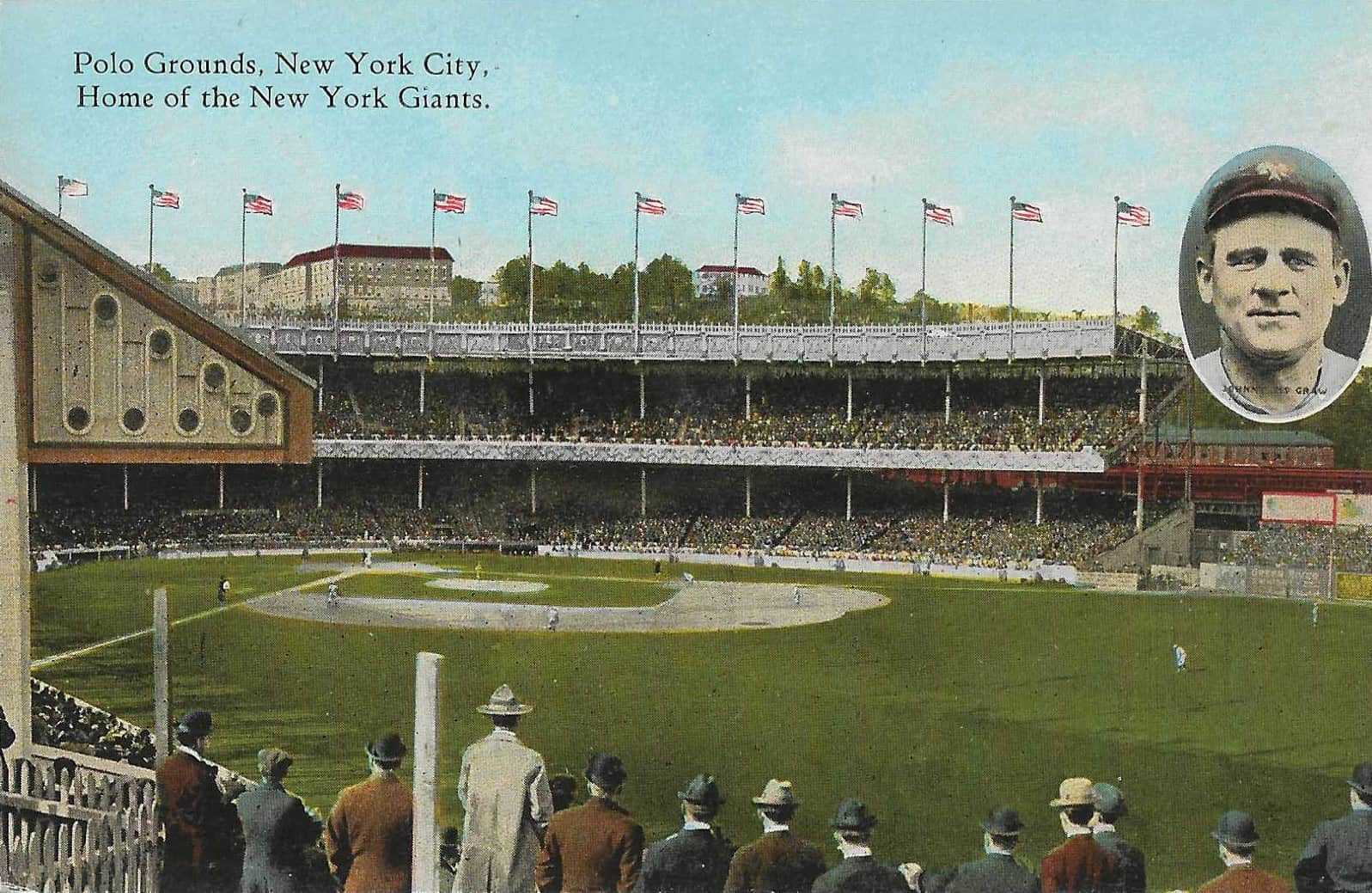
The Polo Grounds postcard above carries the image of Giants Manager John McGraw, curiously not well identified. McGraw was known as an advocate of partitioning his team from the Yankees.
New York’s baseball clubs have long been known for their implacable rivalries with each other and for their mutual desire to maximize their financial success.
One way to accomplish the latter has been to use the venue for other events, from professional and collegiate football, boxing, soccer and ice hockey to concerts and religious conventions.
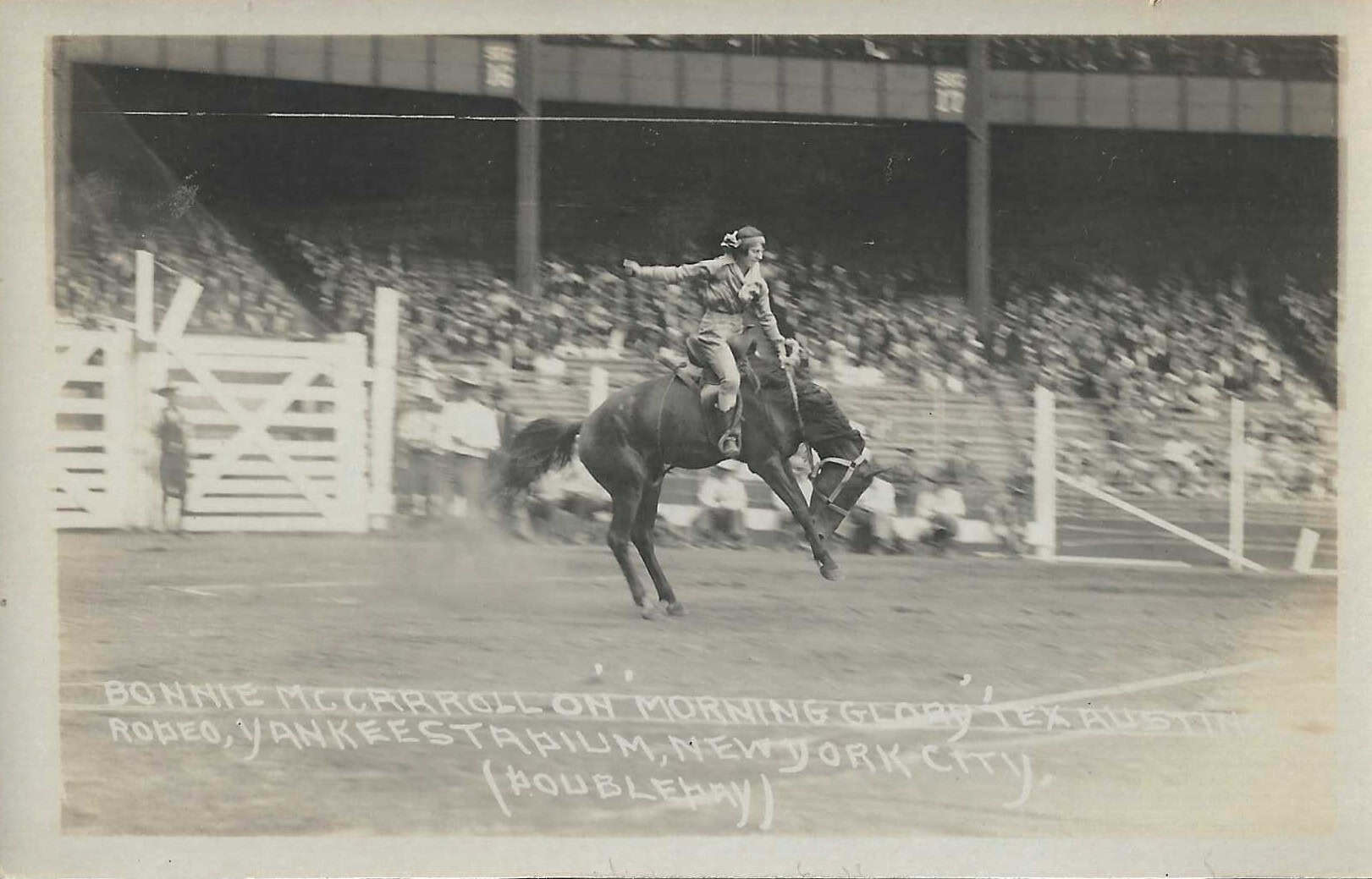
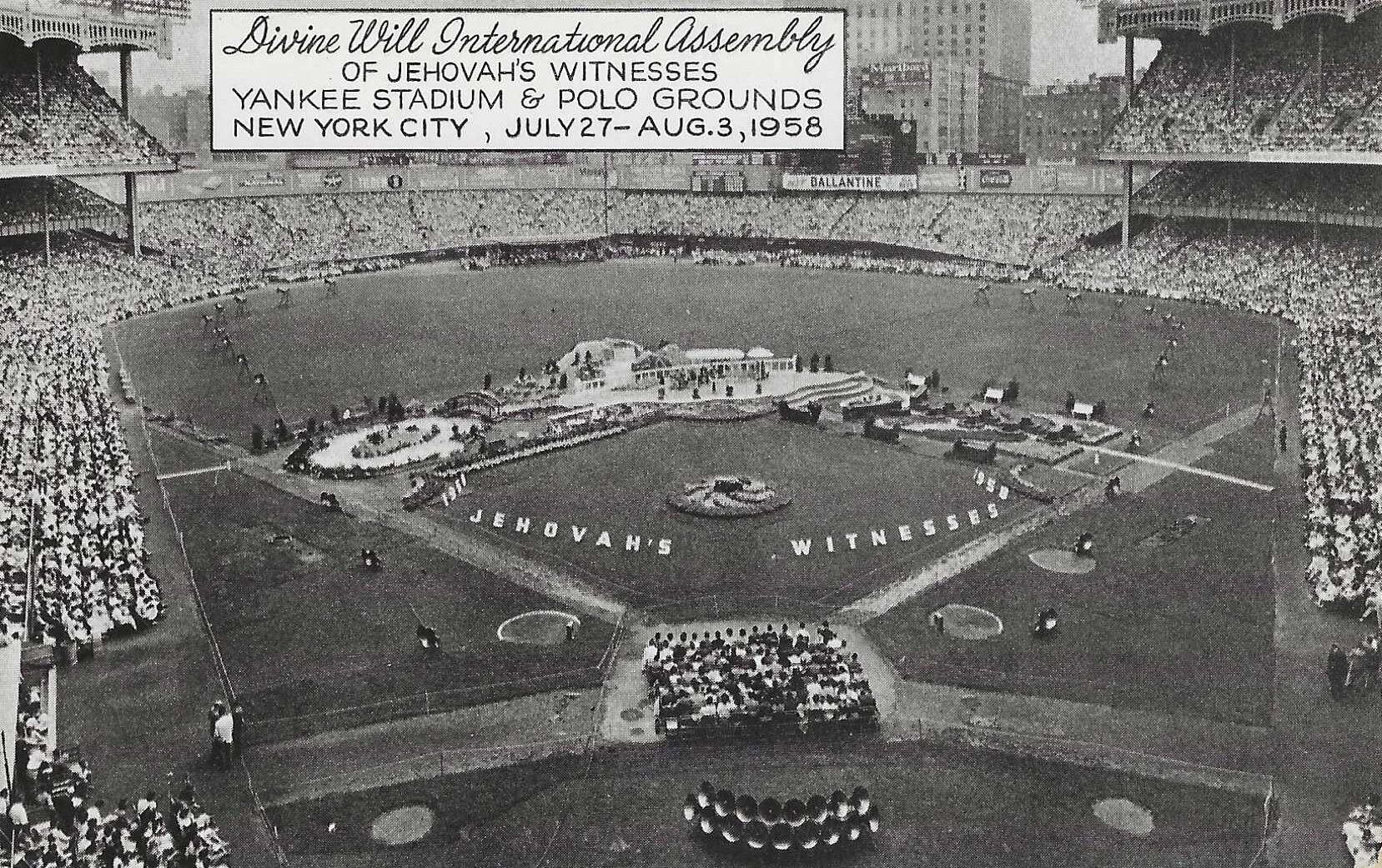
You might think the scene above is somewhere in the Lone Star State and not along the Harlem River. Here’s Cowgirl Bonnie McCarroll riding her horse Morning Glory at the Tex Austin Rodeo bucking her bronco in Yankee Stadium sometime in the 1920s. Next to her is the Divine Will International Assembly of Jehovah’s Witnesses that set attendance records for a single event (123,707) at Yankee Stadium in 1958.
The location represented not just quirky occurrences but iconic moments for sport, in general. Yankee Stadium is where Joe Louis, speaking for the opposition to Nazism in 1938 knocked out Max Schmeling in the first round of the World Heavyweight Championship. It’s where Notre Dame’s Knute Rockne in 1928 encouraged his team, when its spirits were down, to “win one for the Gipper.”
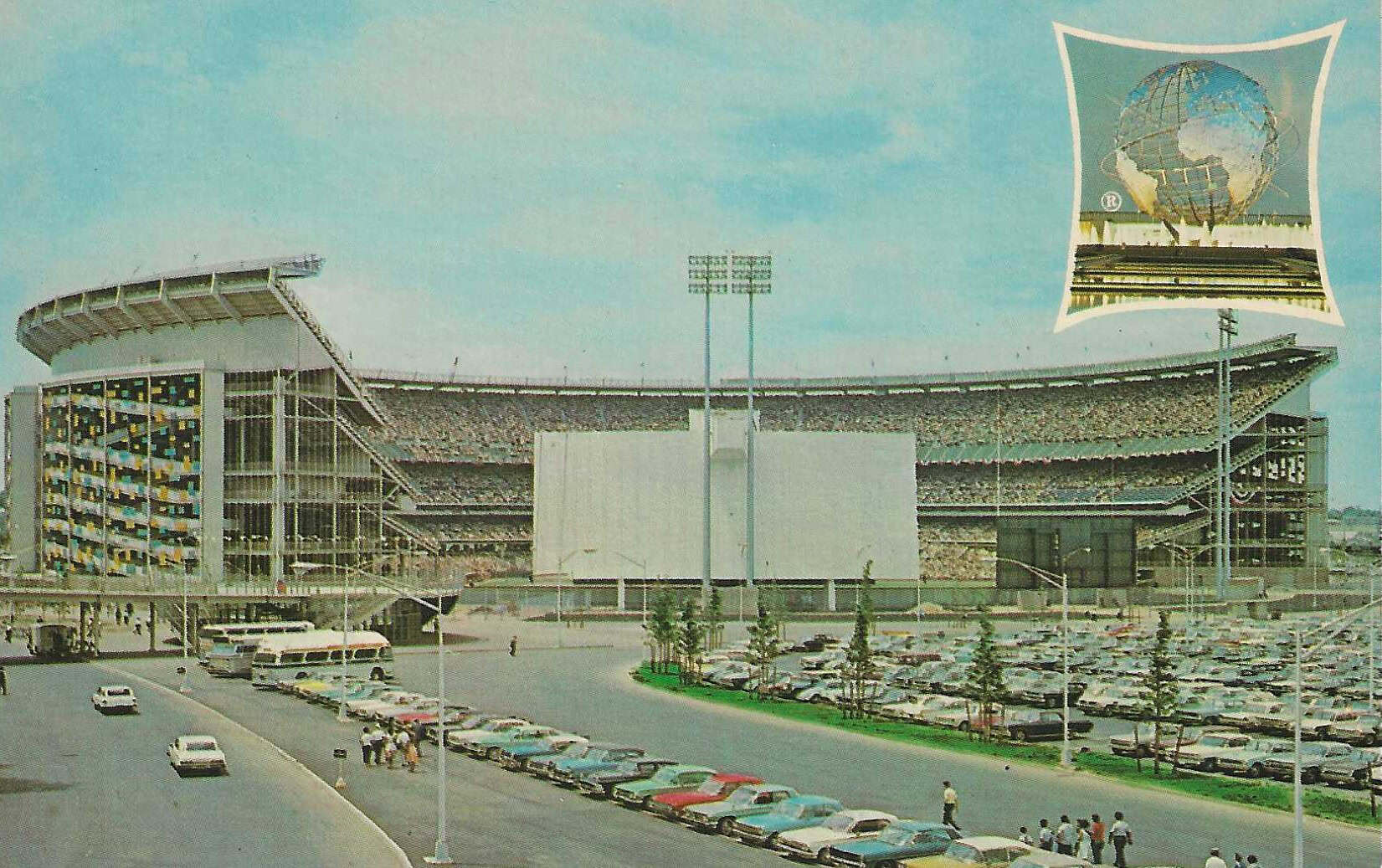
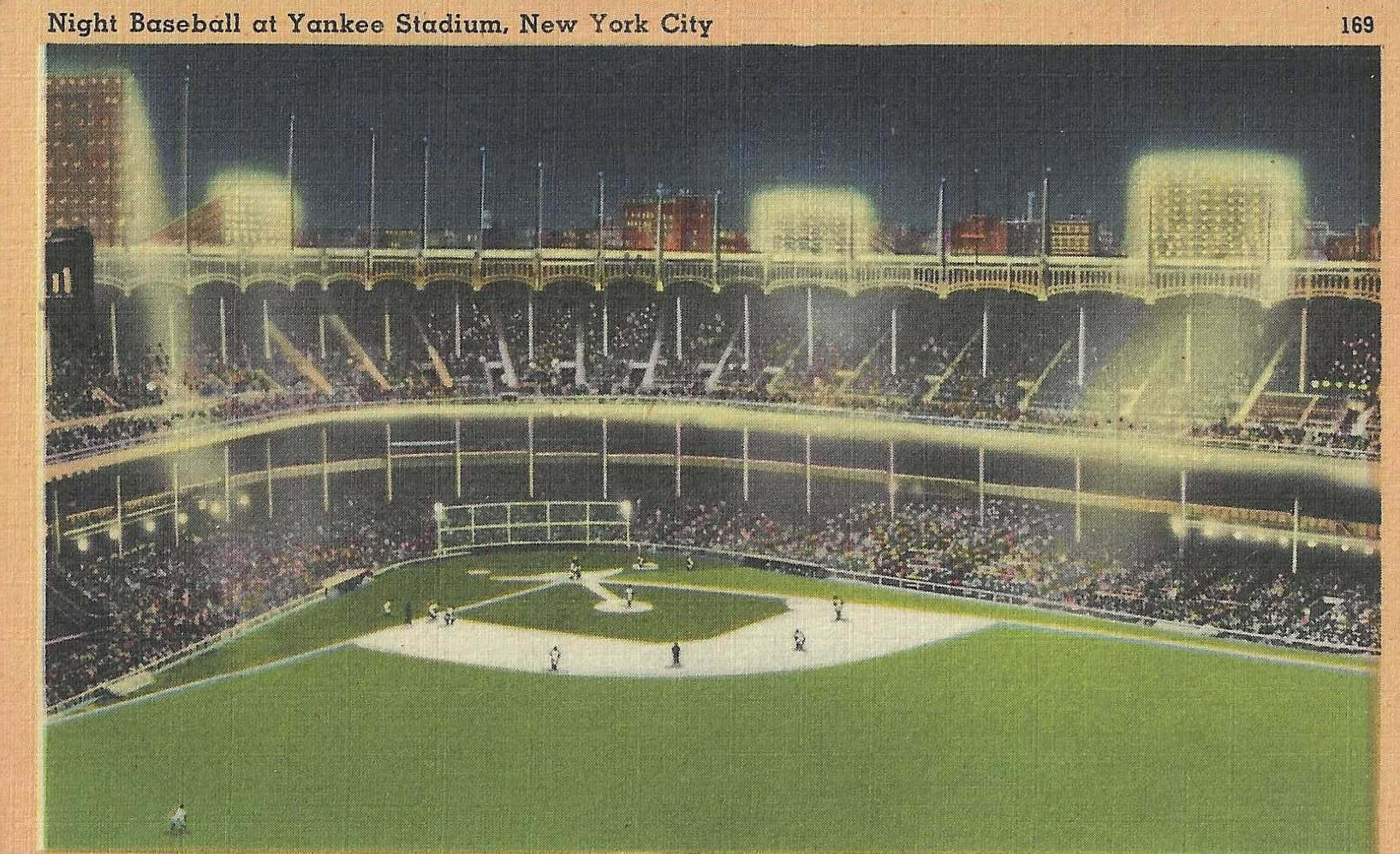
The New York World’s Fair returned to Flushing Meadows in 1964-65 and urged Shea Stadium to include an image of the Unisphere, the Fair’s symbol, on this card which also encouraged fans to attend sports events coinciding with the Fair. Next, this linen mailed in 1951 touts stadium lighting while it was still a novelty. A no-brainer – artificial daylight extended the time allowed for games and enabled working folks to attend without sacrificing their workdays.
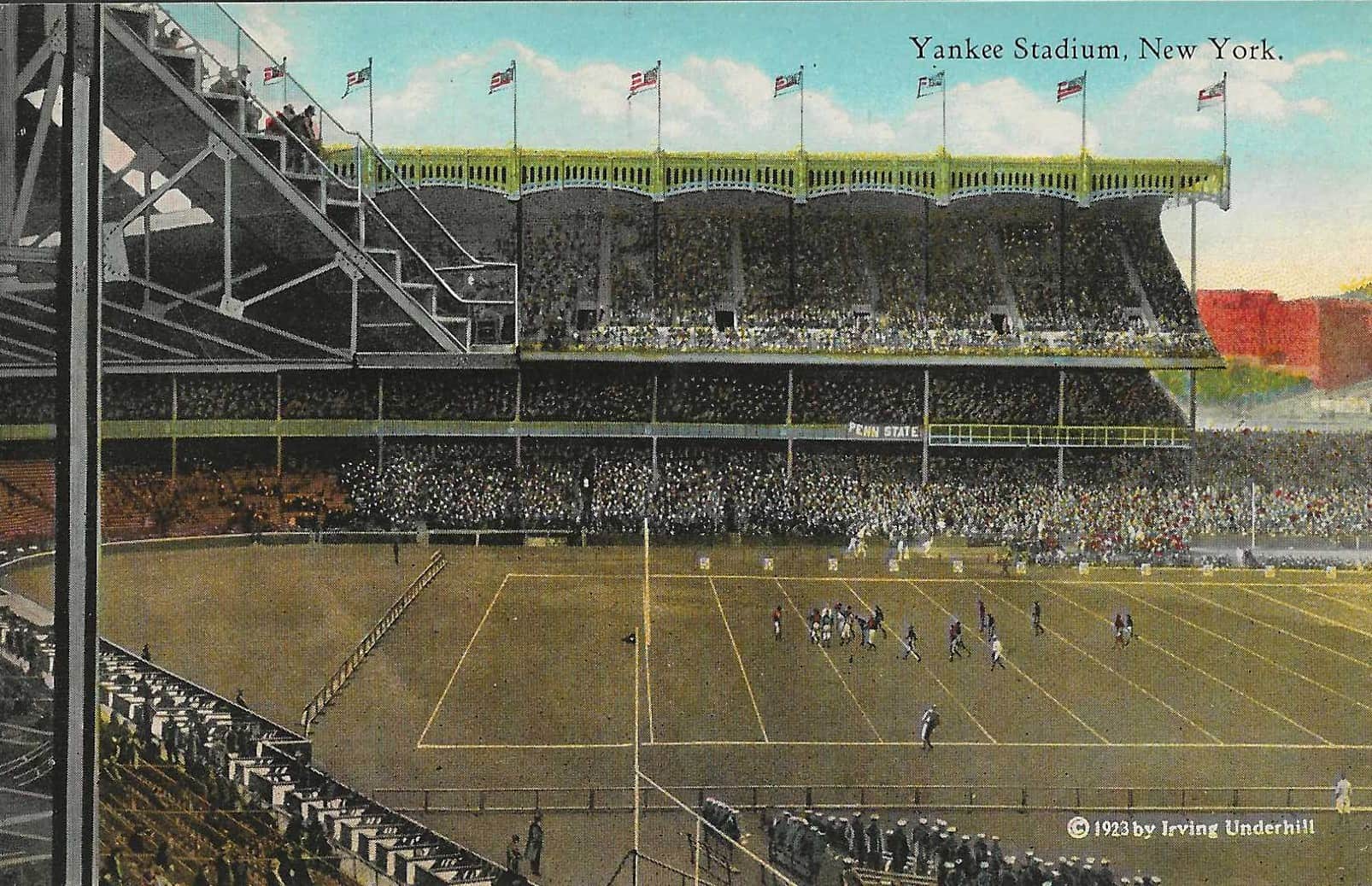
This postcard talks about nothing but baseball while its image shows a football game in progress at Yankee Stadium. After playing here and at Shea Stadium, both the football Giants and the Jets moved to New Jersey in the 70s and 80s. Today, both teams share MetLife Stadium in the Meadowlands.
The intense rivalries between New York’s former teams remains unabated. Even a game between the San Francisco Giants and the Los Angeles Dodgers is thought of as a “subway series.”
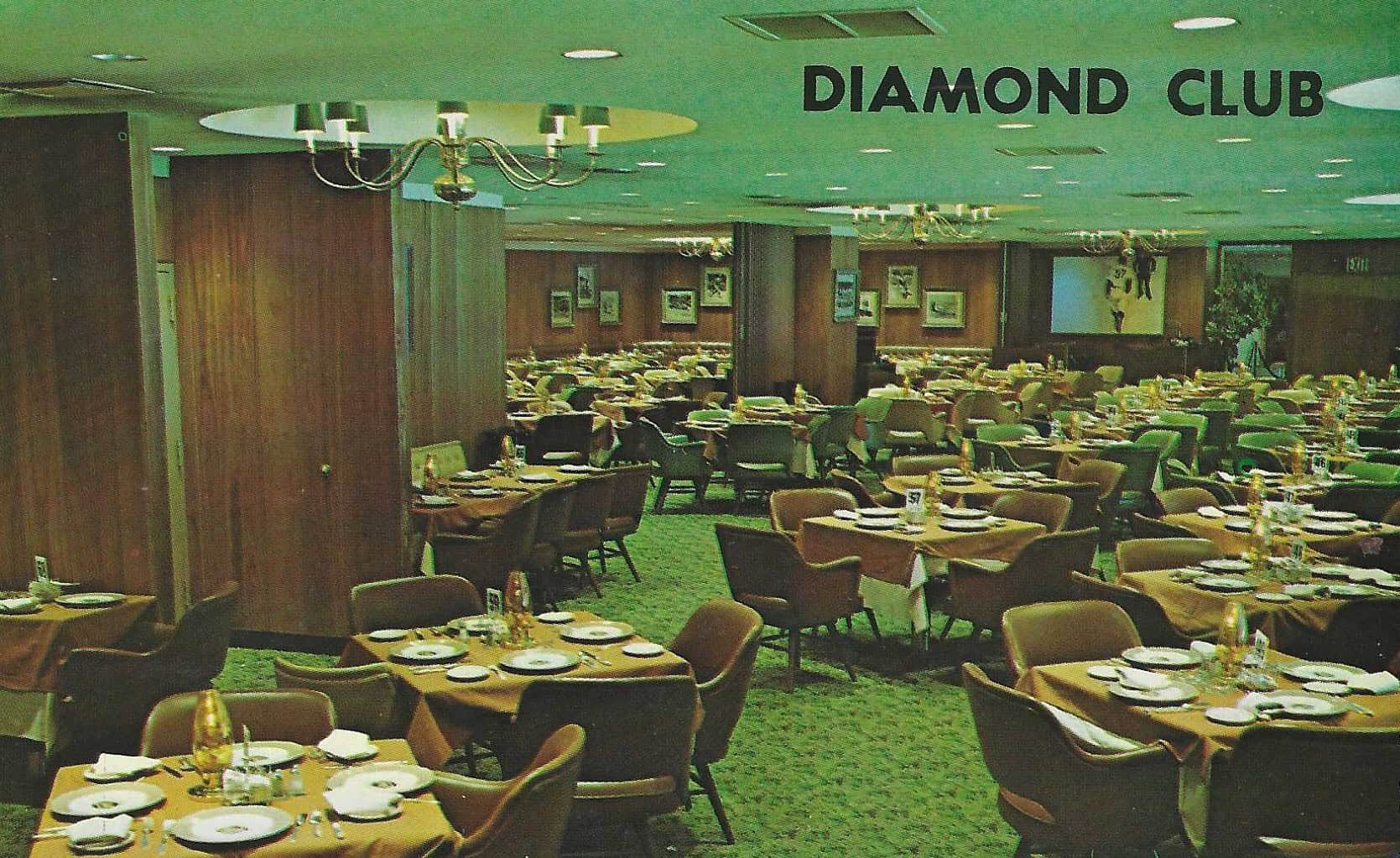
However, the real competition today lies in the excellent variety of cuisine offered at the various ballparks. Shea Stadium’s mid-century modern Diamond Club was a precursor. Food offerings have become more upscale than peanuts, hot dogs and cracker jacks nowadays at the old ballgame.
***
P.S.
The World Series in 2026 will begin on October 23 and
will end if it runs for seven games on October 31.
Excellent article and very educational. Great postcards
I wonder if there are Beatles postcards of their Shea Stadium concert
As you can imagine, I’ve spent the last 30 years looking for a postcard but haven’t found one. On the other hand, posters, handbills and unused tickets are relatively easy to acquire.
Interesting article and found a few interesting facts I didn’t know.
Another great article by Dr. Mariampolski. My favorite memory is taking the subway to a Friday night game at Yankee Stadium in July 1980. The subway train was packed with excited Yankees fans. When we arrived at the stadium, the train engineer announces in a deadpan voice, 161st Street – Yankee Stadium. Let’s go Mets! Everyone starts laughing. I have many fond memories of Shea Stadium.