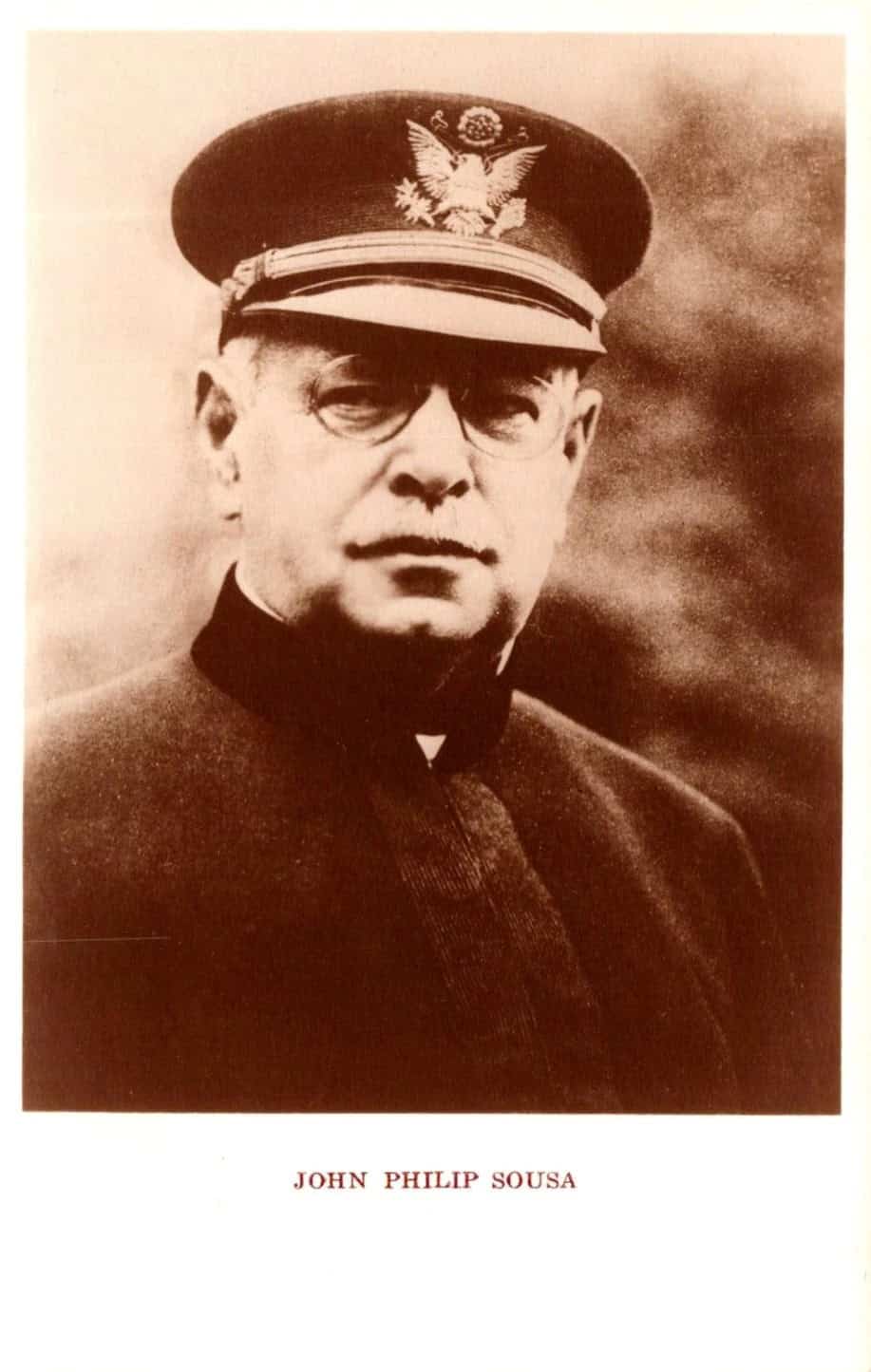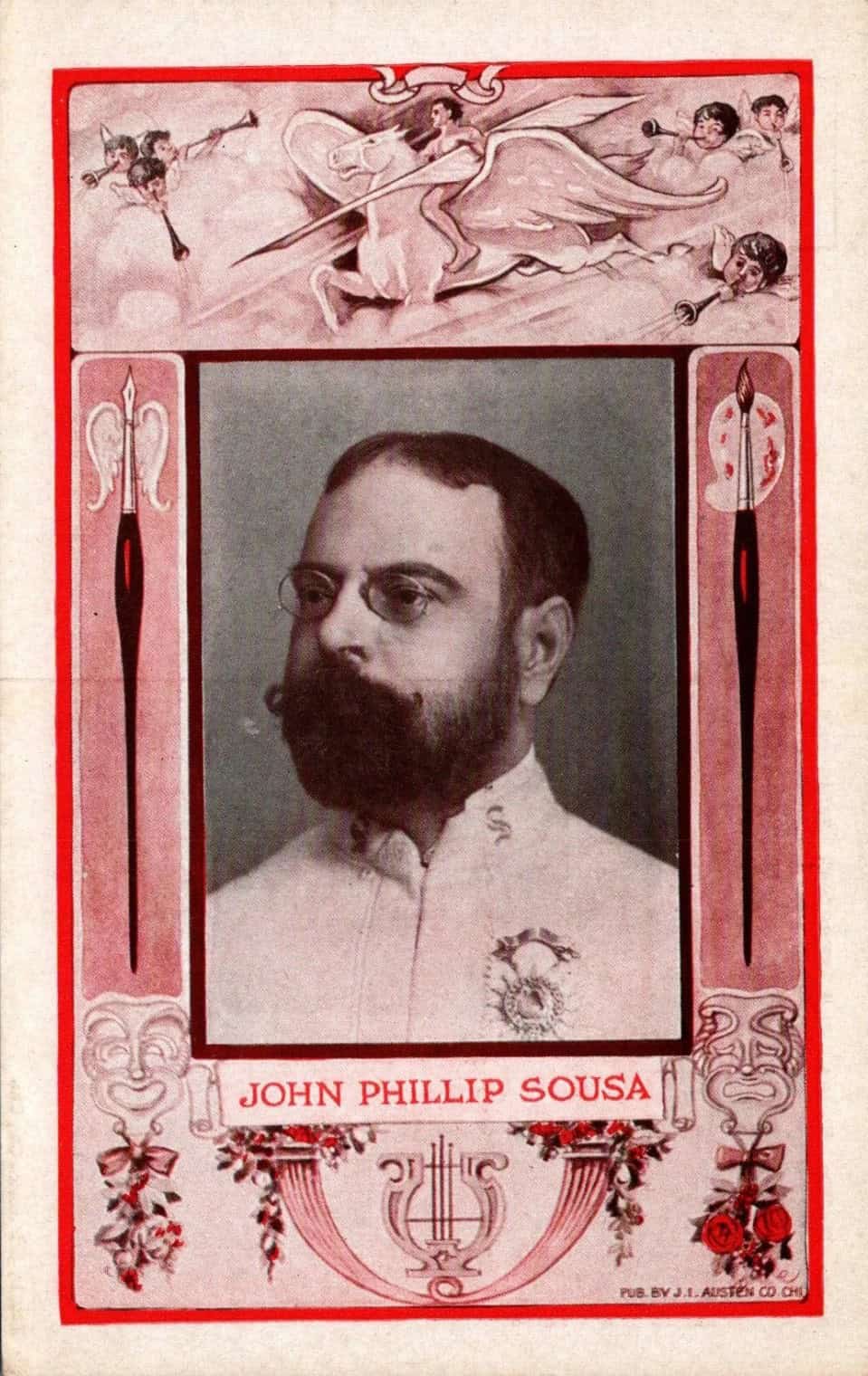
John Philip Sousa’s “newspaper marches” are what comes to mind. There are several: The Boston Globe, The Providence Journal, The Philadelphia Record, The Newark Sunday Call, The Courier-Journal of Louisville, and others.
In the late 19th and early 20th centuries, many newspapers commissioned their own marches, much as schools did with fight songs or companies did with jingles. These pieces, performed by town bands, military bands, and amateur musicians served as musical advertisements.
The most famous newspaper march is The Washington Post March, written by Sousa in 1889. Commissioned by The Washington Post newspaper for an awards ceremony connected to an essay contest, the march became an international sensation and helped launch the broader newspaper-march craze.
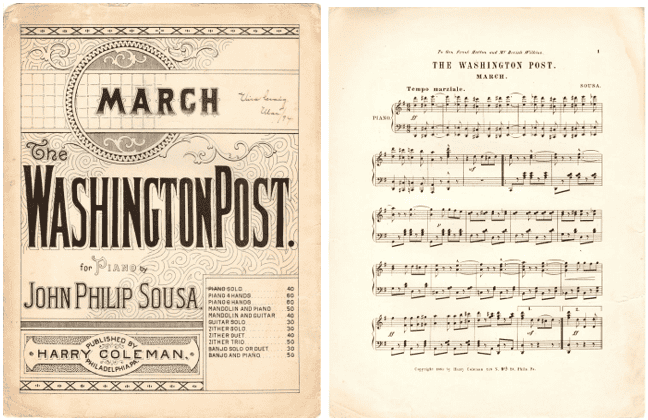
(Sheet music for piano, published in Philadelphia by Harry Coleman)
Ironically, many people who hear the tune today have no idea that Sousa wrote it for a newspaper, and obviously the newspaper in this case was The Washington Post. At the time, newspapers were not just news sources. They were major civic institutions. Many local newspapers sponsored parades, contests, concerts, and even political discussions. Therefore, having its own march gave a newspaper a more public identity, a namesake to promote itself at festivals and civic events, and connections to local bands and music culture.
In an age before radio and television, music helped keep a newspaper’s name in the public eye. The marches were performed by community bands, students, and sometimes even newsboys’ bands.
Sadly, when the wars arrived (1915-1946), the interest in marches and the bands that played them faded as American entertainment changed. Radio, recordings, and later television replaced the town-band culture. Newspapers also shifted away from sponsoring the kinds of public events that had made a signature march useful. By the mid-20th century, most newspaper marches were forgotten.
When Sousa composed The Washington Post March it premiered at a children’s essay contest awards ceremony with President Benjamin Harrison in attendance. It was immediately popular. So popular indeed, that dancers soon discovered that its rhythm was perfectly suited to a new social dance called the two-step.
At the time, America’s dance halls were changing. Older, more formal group dances were giving way to dances performed by couples moving freely around the room. The two-step was simple, energetic, and easy to learn. When musicians began using The Washington Post March as accompaniment, dancers loved it.
The pairing became so successful that the march spread far beyond Washington and far beyond newspaper circles. Dance instructors taught the two-step to the music and bands played it at social events across the country. Millions of Americans who had never seen a copy of The Washington Post newspaper came to know the tune. Before long, the music and the dance were almost inseparable.
One historian has noted that the dance craze helped transform the march from a local commission into an international hit.
***
Imagine this scene: a brightly lit ballroom in the 1890s, ladies in flowing dresses, gentlemen in dark coats, a brass band striking up Sousa’s sparkling introduction. As the melody leaps forward, couples begin gliding around the floor in quick, confident steps. The music seems to propel them. (That sense of motion was an easily recognized compositional trick that was unique to Sousa.) His marches do not merely keep time; they feel as if they are carrying a parade forward.
In a curious twist, the march became more famous than the newspaper that commissioned it. While countless newspaper marches faded into obscurity, The Washington Post March survived because dancers adopted it.
The dance gave the piece a life beyond journalism, and the piece helped make the two-step a national phenomenon. It was one of the rare moments in history when journalism, dance, and a masterwork of American music all came together.
***
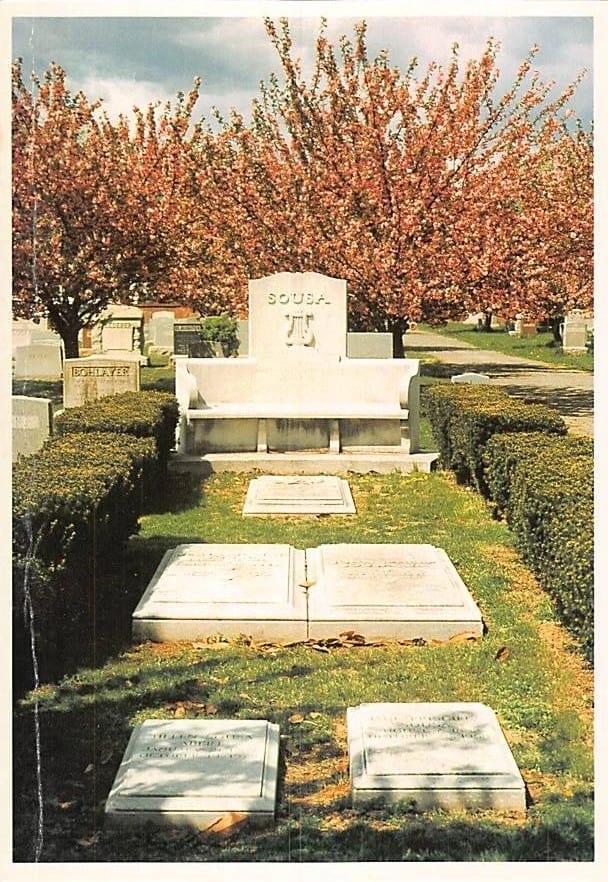
Although John Philip Sousa was born before the Civil War and composed The Washington Post March when he was just 35 years old, he lived to see his march become a dance craze and his music played by bands and orchestras all around the world. He died in 1932 and is buried in Washington, D. C. at the Congressional Cemetery.