Postcard History readers of a certain age should
remember the 1950s TV series Omnibus.
Premiering in 1952, Omnibus was an ambitious and influential television program hosted by Alistair Cooke. The series brought literature, music, science, art, history, and public affairs into American homes at a time when television was still a young medium. Rather than focusing solely on entertainment, Omnibus sought to educate and inspire its audience through thoughtful discussions, dramatic performances, and appearances by many of the twentieth century’s leading thinkers and artists. Through its innovative approach and commitment to intellectual programming, the series proved that TV could impact education.
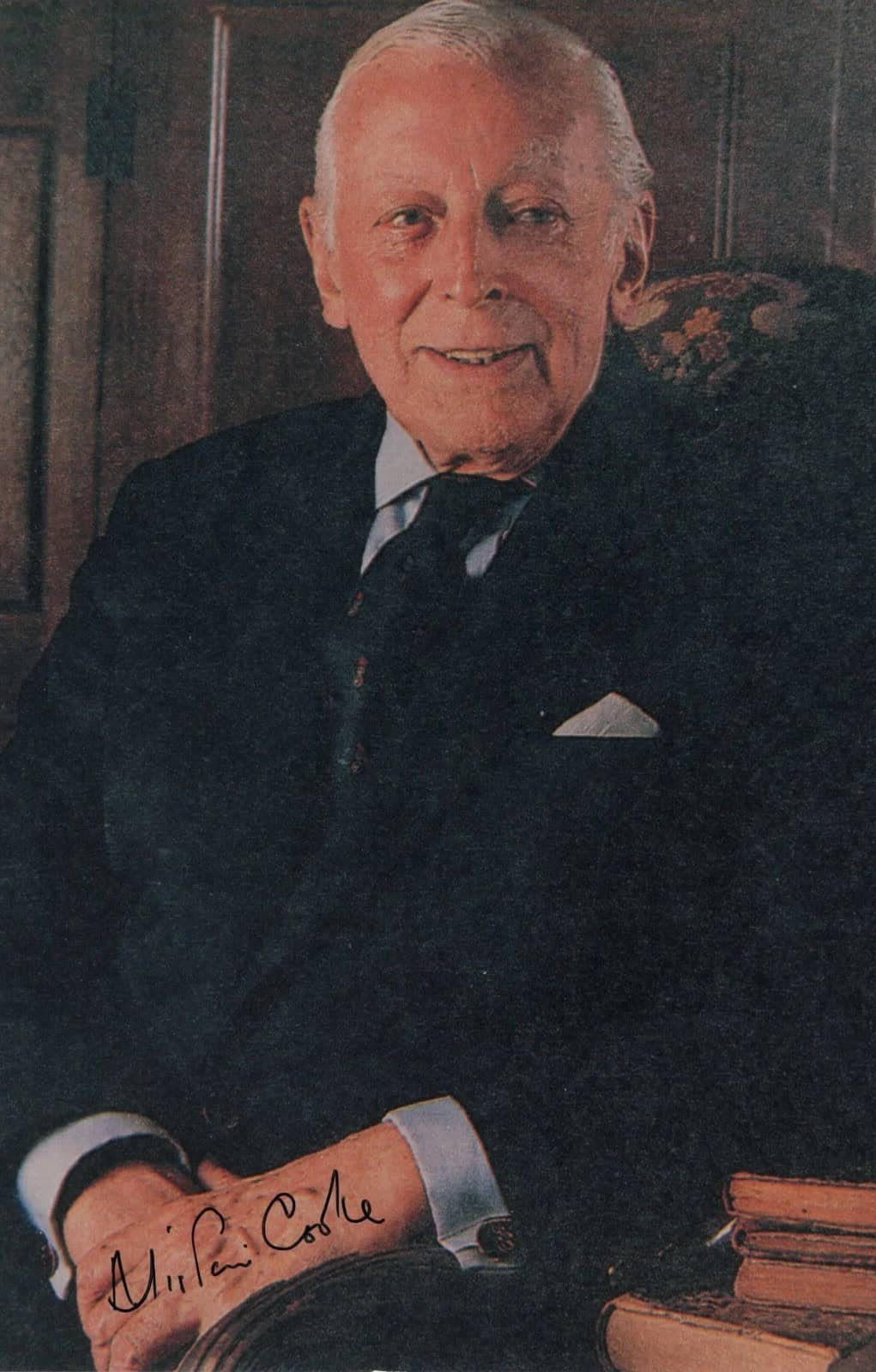
The host, Alister Cook, was born in November 1908 at Manchester, England, he was the son of a Methodist pastor. He came to the United States as a graduate student in 1932, first at Yale University and later at Harvard University on a two-year Commonwealth Fund Fellowship. He had already earned his undergraduate degree in English from Jesus College, Cambridge.
After his return to the UK in 1934 he began a career as a radio broadcaster and newspaper correspondent. In the 1950s he turned to television and became the host of Omnibus.
Cooke’s other career accomplishments are well documented in print and online, but one of his achievements that remains a standout on the collective biography shelves in the world’s libraries is his Six Men, the first edition appeared in 1977 – nearly fifty years ago.
The content is a series of essays, one of which was dubbed “… a note of fame and friendship” but the label easily applies to all six subjects: Charles Chaplin, Edward VIII, H. L. Mencken, Adlai Stevenson, Bertrand Russell, and Humphrey Bogart.
Charles Chaplin
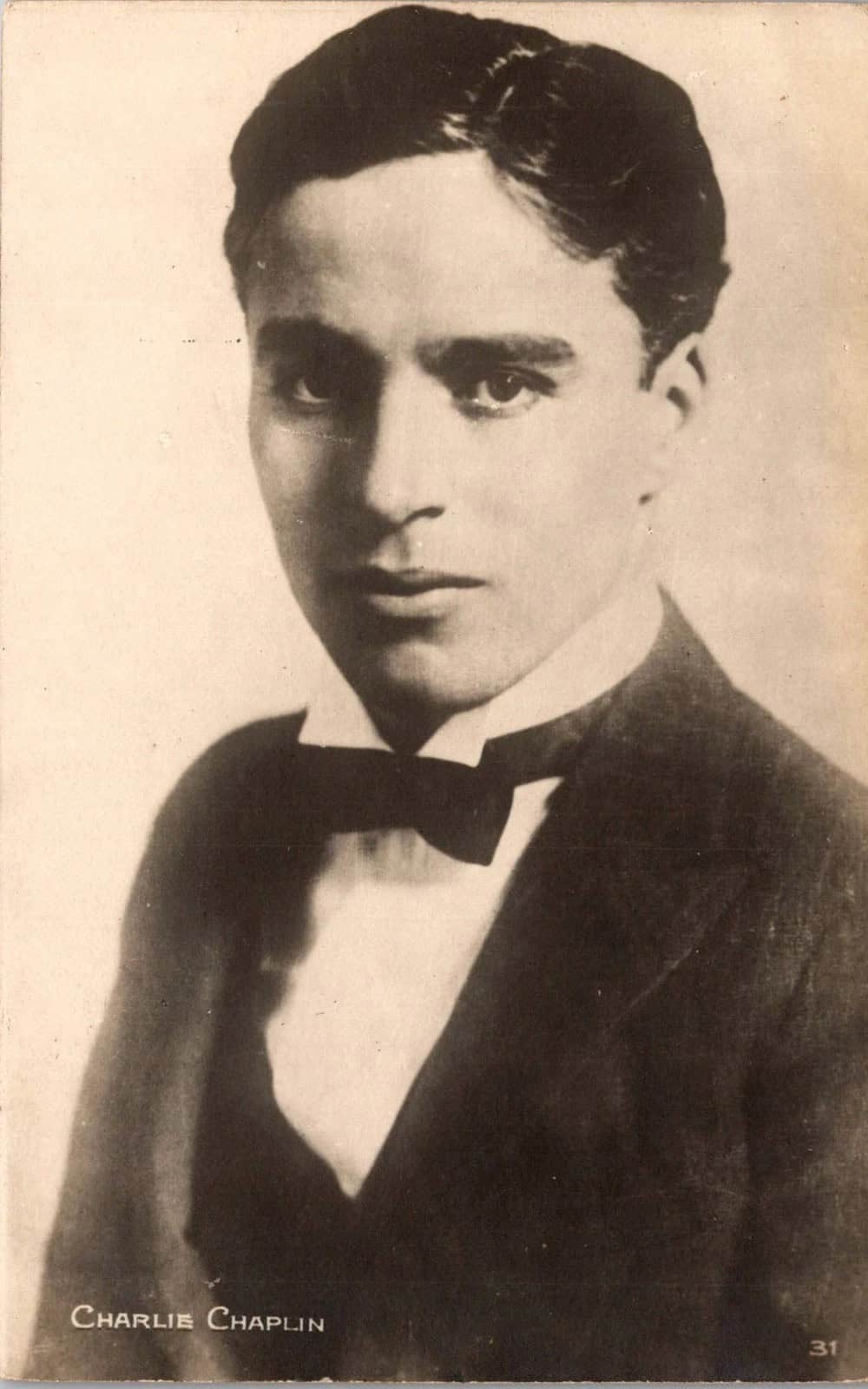
Charles Chaplin (1889-1977) was a central figure in the history of motion pictures and a star of the silent-film era. Born in a poor district of London to music hall performers, he endured a very difficult childhood. His early hardships inspired a blend of humor and anguish that became the hallmark of his films.
After arriving in the United States with a comedy troupe, Chaplin entered films in 1914 and quickly created his famous screen character, the “Little Tramp,” who was recognized by his bowler hat, cane, oversized shoes, and toothbrush mustache. The Tramp became a worldwide symbol. Chaplin wrote, directed, produced, and often composed music for his own films.
Although celebrated as a comic genius, Chaplin’s later years were marked by political controversy and public scrutiny. He eventually settled in Switzerland, where he lived until his death in 1977.
In his book Alister Cooke reminds us of an event at which Chaplin was awarded a special Oscar. It was a bitter-sweet occasion, but Cooke remembered him as a “… very old man, trembly, and groping for words to form a few simple sentences. A senile, harmless doll like the song says, “easy to love and absolutely safe to adore.”
Edward VIII
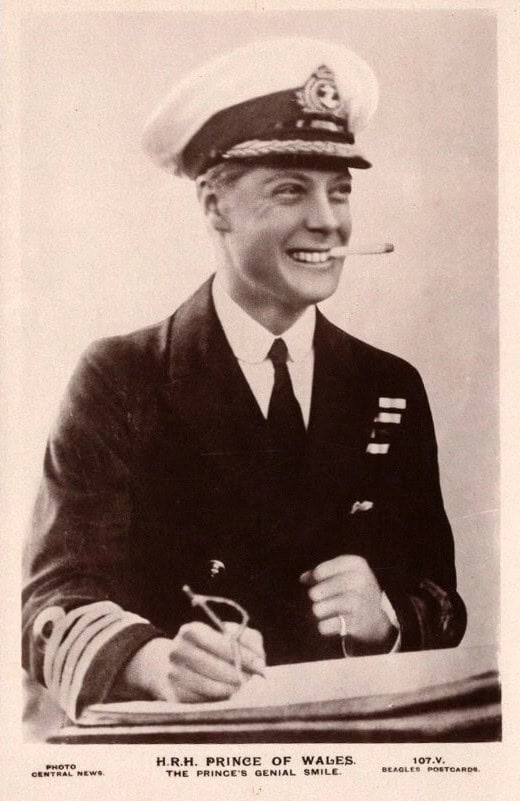
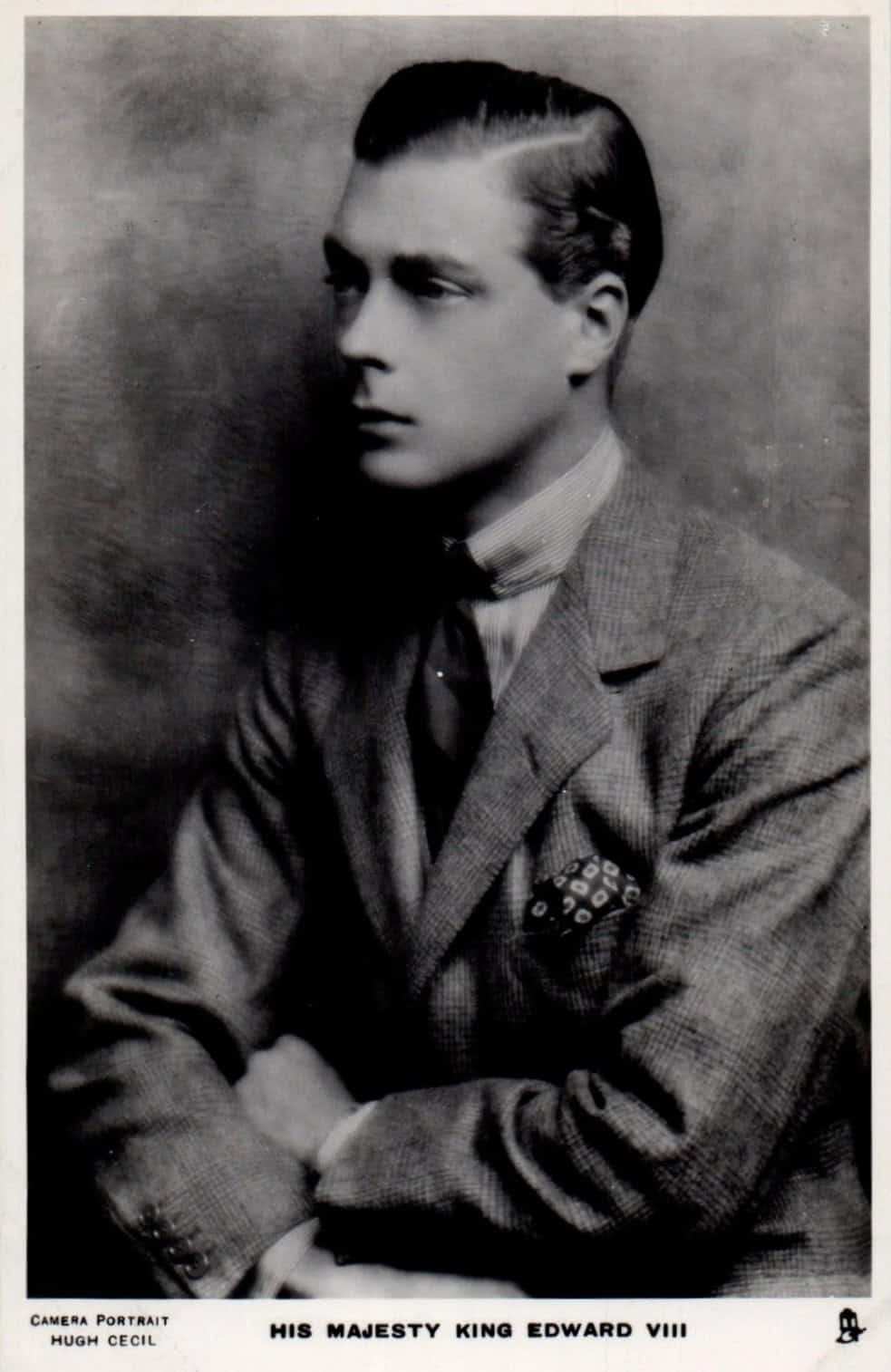
Edward VIII (1894-1972) is remembered as the British king who gave up a throne for love. Born the eldest son of the future George V and Queen Mary, he grew up as the heir to the British Empire and became Prince of Wales in 1911. Handsome, charismatic, and modern in outlook, he enjoyed enormous popularity throughout Britain and the Commonwealth during the 1920s.
Edward succeeded his father as king on January 20, 1936. He reigned less than a year. A constitutional crisis arose when he insisted on marrying Wallis Simpson, an American woman who had been divorced; the government, the Church of England, and leaders throughout the Empire opposed the marriage. Faced with choosing between the crown and the woman he loved, Edward abdicated on December 10, 1936, becoming the only British sovereign to voluntarily relinquish the throne.
His younger brother became George VI, father of Queen Elizabeth II. Edward received the title Duke of Windsor and married Wallis Simpson in 1937. The couple spent much of their remaining lives in France.
Mr. Cook concludes his essay with the epitaph: he was at his best only when the going was good.
H. L. Mencken
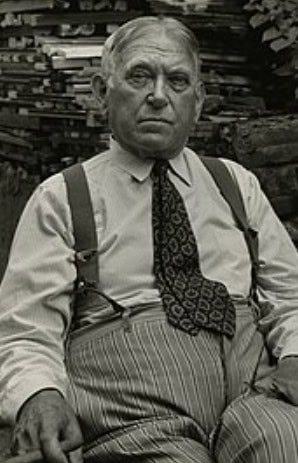
Henry Lewis Mencken (1880-1956), often called the “Sage of Baltimore,” was an American journalist, critic, and satirist. Born and raised in Baltimore, Maryland, he spent much of his career writing for The Baltimore Sun, where his sharp wit and fearless opinions made him a nationally known public figure.
Mencken gained fame for his irreverent attacks on hypocrisy and what he called the shortcomings of America. His writing style was vigorous but humorous.
He is best remembered by the public for his coverage of the 1925 Scopes Trial, which he famously labeled the “Monkey Trial.” He was also a distinguished scholar of language. His monumental work, The American Language, examined the unique development of American English.
Admired by some and criticized by others, Mencken left a lasting mark on American journalism and literature. Alister Cook reminds us of an event he attended to honor Mencken, when Mencken brought up the name Edgar Lee Masters, a lifelong friend. Cook asked Mencken how long Masters had been dead, since he had talked of him in the past tense. Mencken thought for a minute and replied, “I think he died the same year I did.”
Adlai Stevenson II
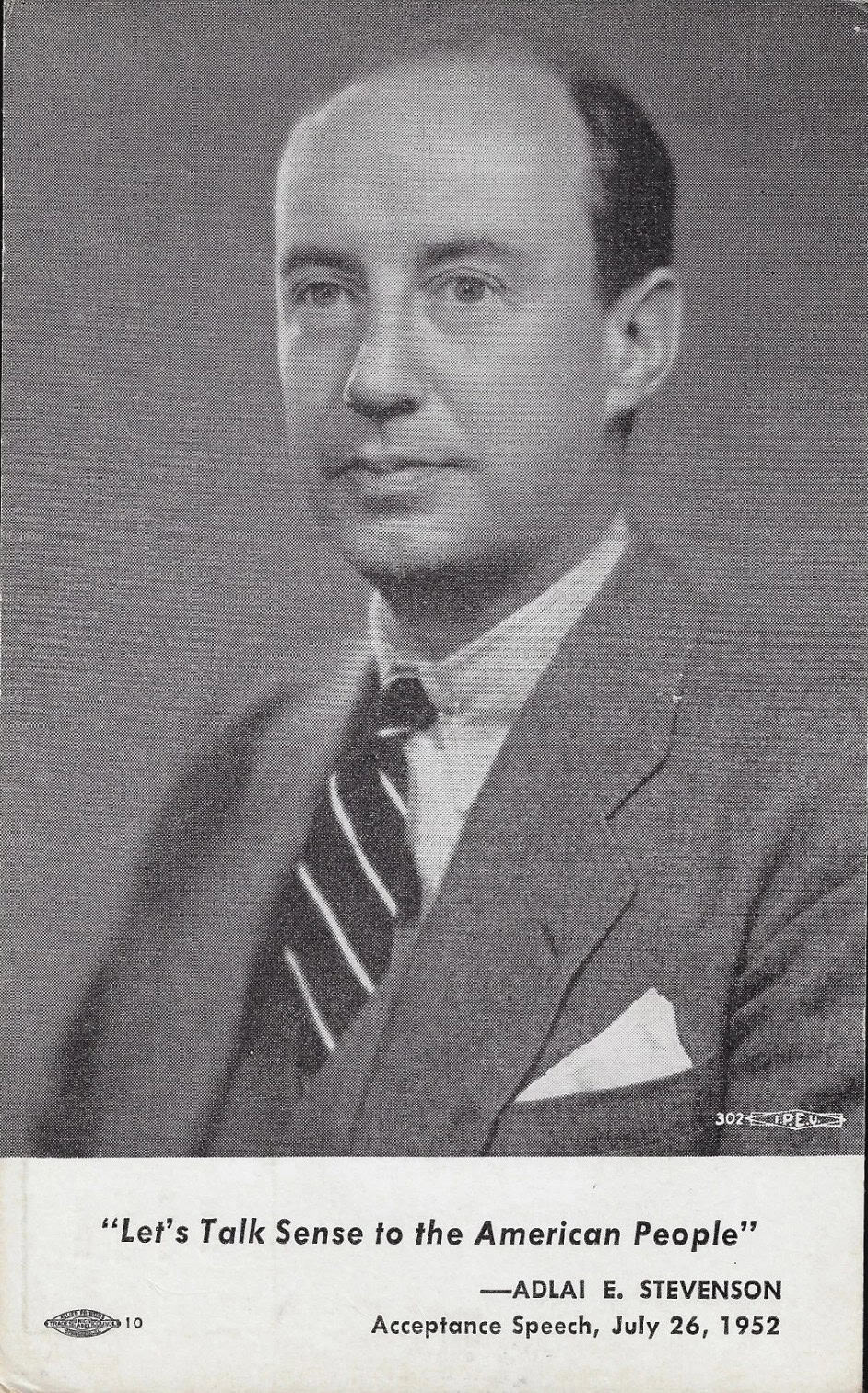
Adlai Stevenson II (1900-1965) was a highly respected American political figure. Best known for his intelligence, eloquence, and commitment to liberal democratic ideals. Born in Los Angeles on February 5, 1900, he came from a distinguished Illinois political family that included his grandfather, a former vice president of the United States.
After studying at Princeton University and Northwestern University Law School, Stevenson practiced law and served in several government positions before entering elective politics. He became Governor of Illinois in 1949.
Stevenson achieved national prominence as the Democratic Party’s presidential nominee in 1952 and again in 1956. In both elections he faced the enormously popular Republican candidate Dwight D. Eisenhower.
John F. Kennedy appointed Stevenson United States Ambassador to the United Nations in 1961.
Stevenson died in London on July 14, 1965. Although never elected president, he remains a symbol of principled, thoughtful public service.
Mr. Cooke called Stevenson “The Failed Saint.” What was his failure?” you ask. Simply stated he failed to turn goodness and mercy into law and policy.
Bertrand Russell
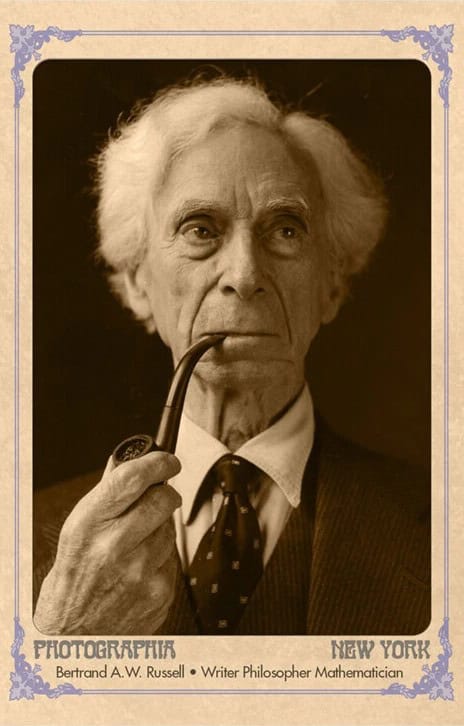
Bertrand Russell (1872-1970) called himself a philosopher and a public intellectual. Born in Wales on May 18, 1872, into an aristocratic British family, Russell was orphaned at an early age and raised by his grandparents. He was a brilliant student, he attended Trinity College, Cambridge, where he developed interests in mathematics, logic, and philosophy.
Russell’s snow-white hair was the only hint that he was a serious scholar. He made his mark by being the innovative figurehead of analytic philosophy and he made groundbreaking contributions to logic, the philosophy of mathematics, and the philosophy of language. Beyond academia, Russell wrote extensively for general readers, producing works on education, religion, ethics, and social issues.
A passionate advocate for peace and individual freedom, Russell opposed World War I and was imprisoned for his antiwar activities. Later he became a prominent critic of nuclear weapons and an outspoken campaigner for international peace. In 1950 he received the Nobel Prize in Literature. Russell died in 1970 at the age of ninety-seven, leaving a profound intellectual legacy.
Humphrey Bogart
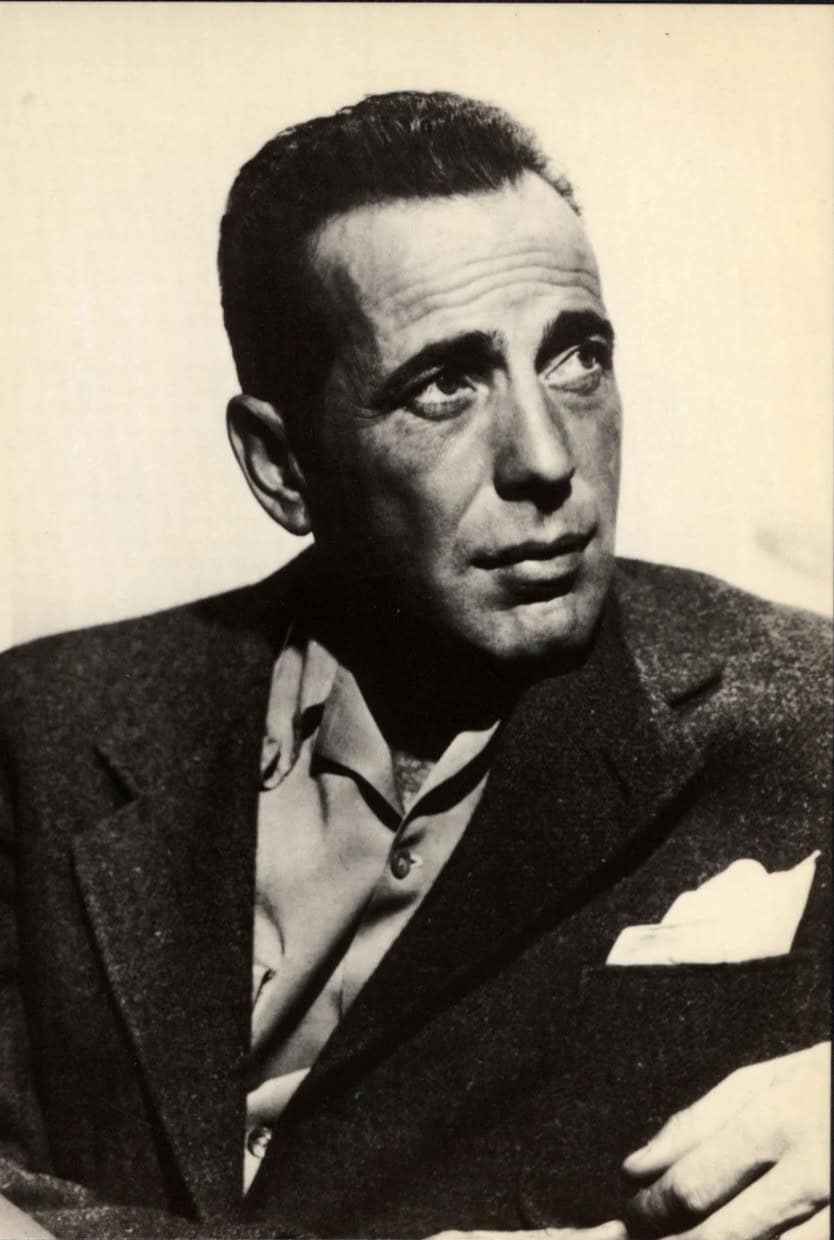
Humphrey Bogart (1899-1957), affectionately known as “Bogie,” was an actor. To call him that is certainly an understatement, for he ranks among the most notable Hollywood personalities of all time. Born in New York City on December 25, 1899, he came from a well-to-do family. His father was an acclaimed physician, and his mother Maud Humphrey was a celebrated portrait painter.
Bogie found little success in school, but served briefly in the U.S. Navy during World War I. After the war he entered the theater as a stage manager and actor.
His breakthrough came in 1936 with the stage and film versions of The Petrified Forest, which established him as a convincing tough-guy actor. Then in 1941 came The Maltese Falcon, followed by the classic Casablanca in 1942.
Among his most celebrated films was The African Queen, for which he won the Academy Award for Best Actor. Married to actress Lauren Bacall from 1945 until his death, Bogart became a lasting cultural symbol of wit, toughness, and understated heroism. He died of esophageal cancer in 1957.