Dedicated to the Memory of
Peter James Caston, Ph.D. (1945-1993)
If Peter James Caston were alive and telling this story, he would likely start with, “Hello Postcard History, my name is Peter, but only my mother calls me by my Christian name. My friends at school called me Rocky, and so did my fraternity brothers at university, and many of my work colleagues did too. My brother called me Pete, but my students called me Dr. Caston. That was nice but I never demanded the honorific title. I was born in 1945 and from that day to this very afternoon, I have loved big rocks.”
***
In 1987 Dr. Caston organized and guided a tour of young college students to North America for a rock-climbing trip and stone outcrop study. The purpose of the trip was to visit solid rock outcroppings across the continent to determine if the study of natural outcroppings could give science a better understanding of how “Dust & Erosion Control Barriers,” if created artificially, could reduce dust emissions, improve local air quality, and stabilize soils in arid regions. Five stops were planned.
The event was by invitation only and I was Member number 6 in the group of nine. I was 21 that summer and had just completed my Junior year at the University of Leicester in the English midlands – 105 miles north of London’s Heathrow airport.
The itinerary for what came to be known as the Five Destinations Tour were: Devil’s Tower, Wyoming, El Capitan and Half Dome in Yosemite National Park, California, Big Rock Candy Mountain, Utah; Shiprock, New Mexico, and Stone Mountain, Georgia.
The preliminary thesis documents, the records and logs of analytical tests, the actual soil samples, and diary entries came to me in 1994 because no other member of the team wanted them, but they have been lost (somewhere in the moves I have made in the last forty years) and are still not analyzed because of Rocky’s tragic and untimely passing.
Nevertheless, I still remember the basics, and it is my pleasure to tell you, using postcards (some collected “along-the-way”) the story of our long-ago adventure.
Sincerely,
Ian K. Weatherton, Ph. D.
Royal Holloway (’95) U. of London
Devil’s Tower
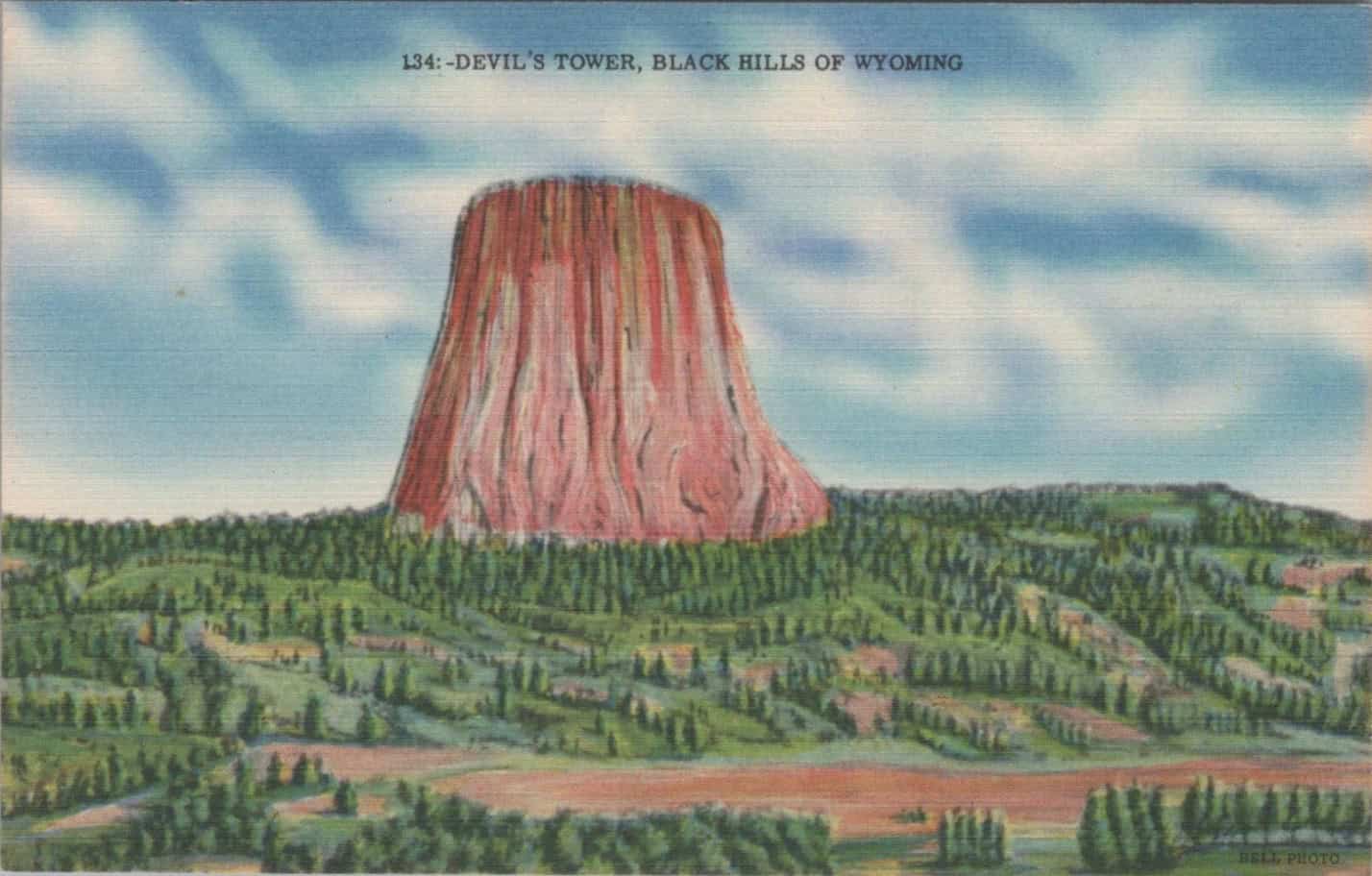
Devil’s Tower rises 867 feet above the Belle Fourche River in Wyoming, USA. It is a natural formation with sheer, fluted walls and a nearly flat summit that has inspired scientific curiosity for centuries. Geologists generally agree that the Tower originated as an igneous intrusion of magma that forced its way upward into sedimentary rock layers roughly 50 million years ago. Unlike a volcano, this magma cooled underground, forming hexagonal columns of phonolite porphyry. Over millions of years, erosion stripped away the softer surrounding rock, leaving the harder igneous core exposed. The result is the monolith we see today, a geological remnant shaped by heat and weather.
Long before geologists studied it, Indigenous nations such as the Lakota, Kiowa, and Arapaho believed the Tower to be the home of sacred spirits. Their histories describe its creation in ways that emphasize spiritual meaning over geological process. One well‑known Lakota story tells of children being pursued by a giant bear; the Great Spirit raised the rock beneath them, and the bear’s claws carved the vertical grooves as it tried to climb after the children. Such narratives remain central in tribal identity and continue to shape how the site is understood.
In the late nineteenth century, Devil’s Tower became the setting for a remarkable real event: the first documented ascent of the tower in 1893. Two locals, William Rogers and Willard Ripley constructed a wooden ladder up the Tower’s northeast face. They drilled holes into the rock, inserted wooden stakes, and attached a series of planks to create a precarious but functional ladder to the summit. On July 4th before an Independence Day crowd Rogers made the climb, becoming the first known person to reach the top. Ripley followed soon after.
In 1906, Devil’s Tower became the first United States national monument. Its origin story blends geology and scientific analysis making it a place where natural history and cultural history meet, but what the members of the Five Destinations Tour learned after a week of study did nothing to advance or disprove our hypothesis.
El Capitan and Half Dome
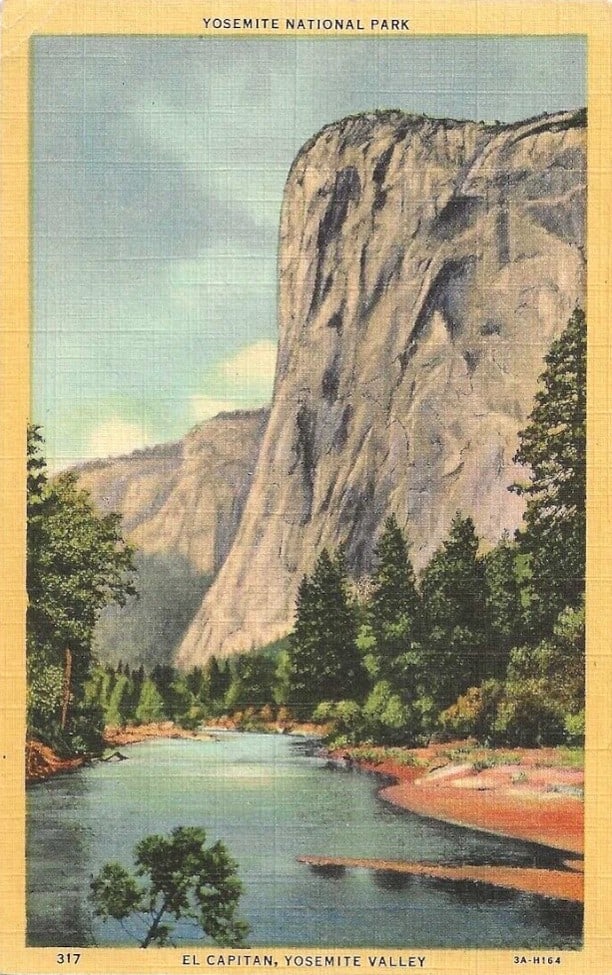
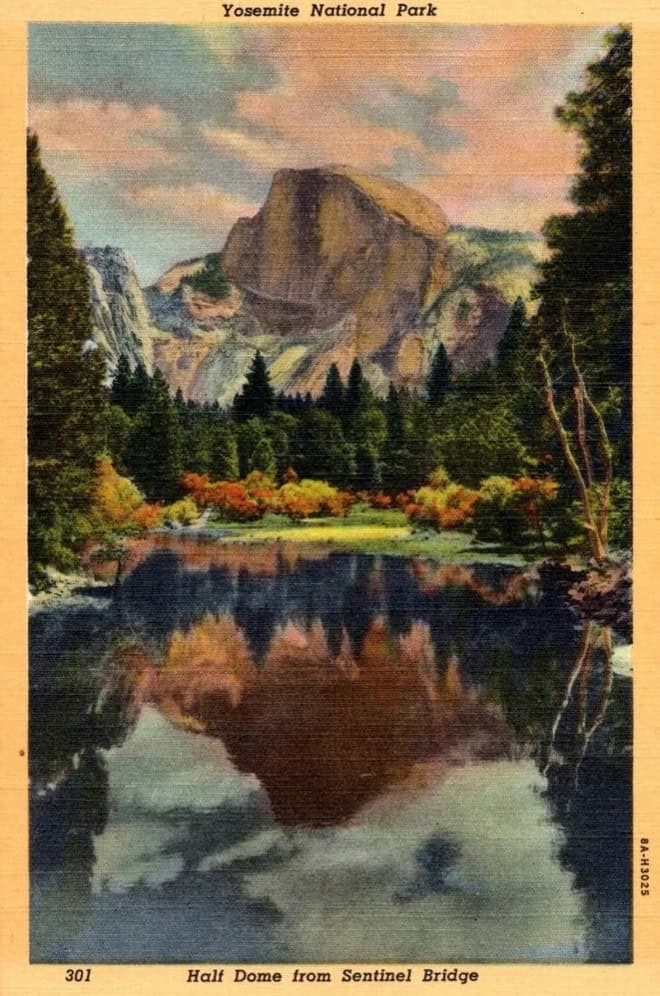
In California the lessons we learned were the same. El Capitan and Half Dome do not directly generate pollution, but they significantly influence how air moves in the Yosemite Valley, and that does affect air quality across some parts of Northern California. Their massive granite walls create a deep, narrow valley that traps smoke and ozone, especially in summer and wildfire season. Park observers note that ozone and wildfire smoke can accumulate and reduce visibility and degrade air quality.
Because these formations shape local wind patterns, they can slow the dispersion of the fine particulate matter produced by wildfires, vehicles, and other sources. Since some particle matter is small enough to enter the bloodstream, it is a critical factor in the regional air‑quality alerts. The Tour team recognized that the geology of El Capitan and Half Dome acts like a basin, concentrating pollutants locally, but their presence helps determine where pollution lingers and how far it spreads.
Big Rock Candy Mountain, Utah
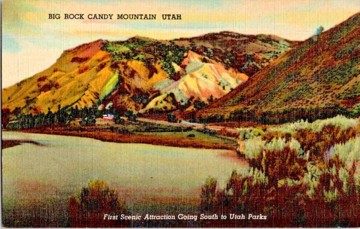
Several months before our arrival in Utah, through preliminary research it was discovered that a song Big Rock Candy Mountain emerged from the oral traditions of early American folk music, however no member of the Five Destinations Tour knew the song.
First popularized by the singer and hobo performer Harry McClintock in 1928, the song painted a picture of a hobo’s paradise, a place where life was easy, food was plentiful, and hardship melted in the sunshine.
Geologically, Big Rock Candy Mountain is part of Utah’s Marysvale volcanic field, a region shaped by intense volcanic activity between 22 and 14 million years ago. The mountain’s colorful bands, ranging from yellows to reds, come from mineral-rich volcanic tuffs and ash flows that were altered over time by hydrothermal processes. Hot, mineral-laden water circulated through the rock, depositing minerals such as alunite, kaolinite, and sulfur, which gave the mountain its distinctive hues. The mountain’s name originated from the song, but its unusual geology made it easy to embrace the idea that this was a place where nature was vivid and real.
Big Rock Candy Mountain stands as a place where local myth was shaped by geography, but again Big Rock Candy Mountain did nothing to advance or disprove our hypothesis.
The conclusions drawn after five days of study were that the mountain was too large to affect a measurable difference in air quality.
Shiprock, New Mexico
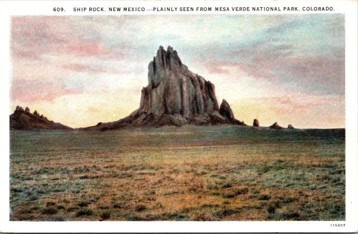
Shiprock in New Mexico was the Five Destinations Tour’s fourth stop, and it proved no more help than the first three stops – a fact every member of the team regretted.
Dr. Caston was particularly annoyed with the late season winds. The implications from the winds were the dust storms. Since we were there to determine the impact of a rock outcropping on air quality, it was nearly impossible to measure the dust content when the wind was already known to be the dominant factor.
On our third day in the field the winds were so strong that our particle collection filters were blown over into the desert sands.
Stone Mountain, Georgia
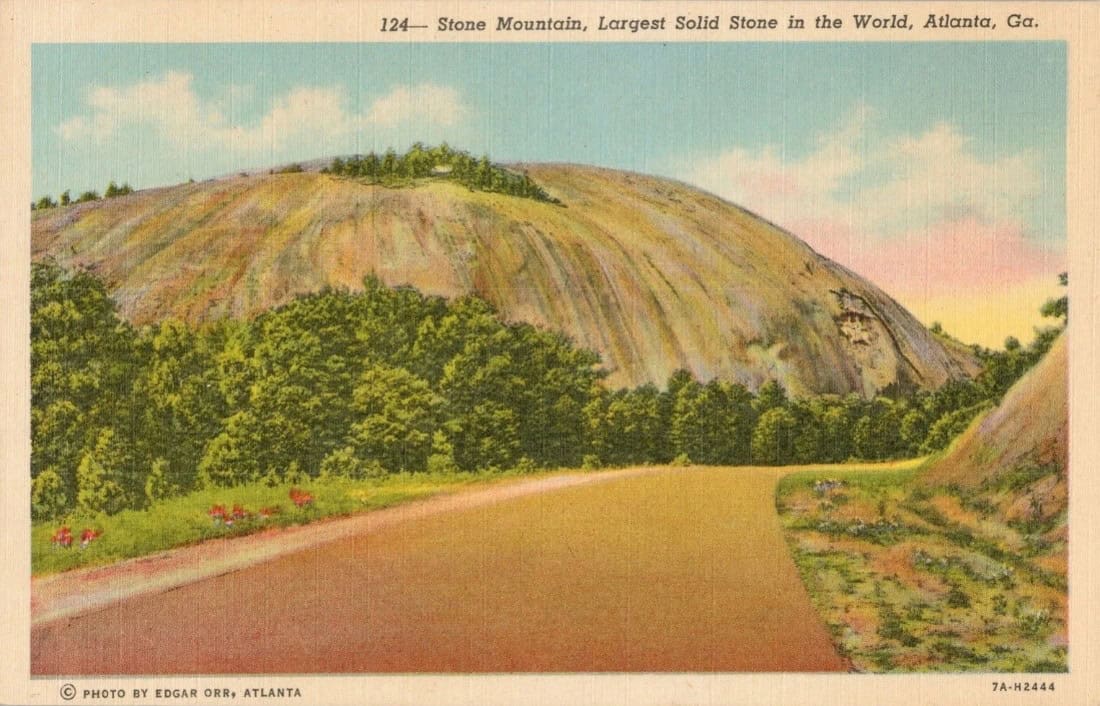
On arrival at Stone Mountain, the “disappointment factor” was near its maximum. We knew before we unpacked our equipment that the rock did not create pollution, but its large granite dome and surrounding topography did influence how air behaves in the area.
The mountain rises sharply above relatively flat terrain, which alters wind flow and slows the dispersion of pollutants. Because Stone Mountain sits near major emission sources—Atlanta traffic, industrial activity, and a large regional airport it does contribute to localized pollutant buildup. When winds are light, air can stagnate along the mountain’s slopes, allowing ozone and particulate matter to linger longer than they would in open terrain.
One unique factor in Georgia was the temperature inversions, common in the Southeast during calm, humid mornings that can further trap pollutants near the surface. When this happens around Stone Mountain, the dome acts as a physical barrier, delaying the vertical mixing that normally disperses pollution.
In the end and at the end of the tour, the tour with five destinations was a bust. Even so, other tours with destinations like Ayers Rock in Australia, Ben Amera in Mauritania and Stawamus in Canada were planned but never experienced. “Bust” is not a geology term, nor is it a scientific research word, but it was a rather “finite” result.
What happened to Dr. Caston?
Great article.