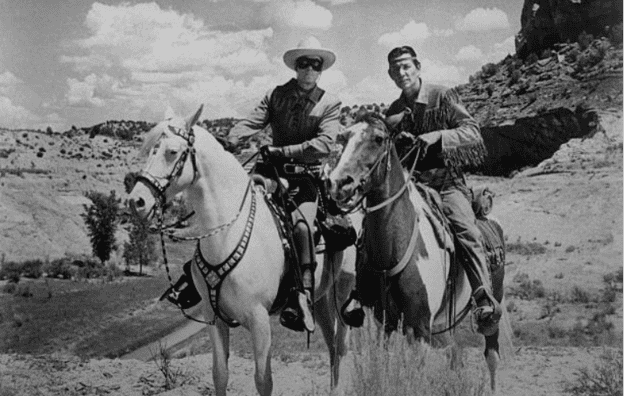
The story of the Lone Ranger is among the enduring pieces of American frontier mythology. It involves a masked survivor of betrayal and a moral code-bound vigilante, as a symbol of idealized justice in the Old West. At its core, the legend blends radio-era storytelling with classic Western characters and produces a persona who has remained a hero for nearly a century.
The Origin Story
The Lone Ranger, originally John Reid, begins as one of six Texas Rangers pursuing the outlaw Butch Cavendish. The group is ambushed—five Rangers are killed, including Reid’s older brother, Dan. John survives only because his childhood friend, the Native American scout Tonto, finds him and nurses him back to health.
To conceal his identity and protect his friends and family, Reid fashions a black mask from his brother’s vest. He and Tonto bury the dead Rangers, leaving one grave empty so the Cavendish gang believes all six men died. From that moment, Reid becomes the Lone Ranger, dedicating his life to justice.
Silver, Silver Bullets, and the Creed
Silver, his famous white stallion, comes from the Reid family’s silver mine, which also funds his crusade and provides the material for his symbolic silver bullets.
The bullets serve as a reminder that life is precious—he avoids killing whenever possible, “winging” outlaws rather than shooting to kill.
The Lone Ranger follows a strict moral creed, emphasizing equality, friendship, preparedness, and doing what is right.
How the Legend Was Created
The Lone Ranger was not fireside folklore—he was invented for radio in 1933 by George W. Trendle and Fran Striker at Detroit’s WXYZ radio station. The show mixed elements of Zorro, Robin Hood, and frontier adventure, quickly becoming a national sensation.
By the late 1930s, the character expanded into books and graphic novels (comic books). Then in 1949 on television. The famous ABC TV series (1949–1957), starred Clayton Moore as the Lone Ranger and Jay Silverheels as Tonto.
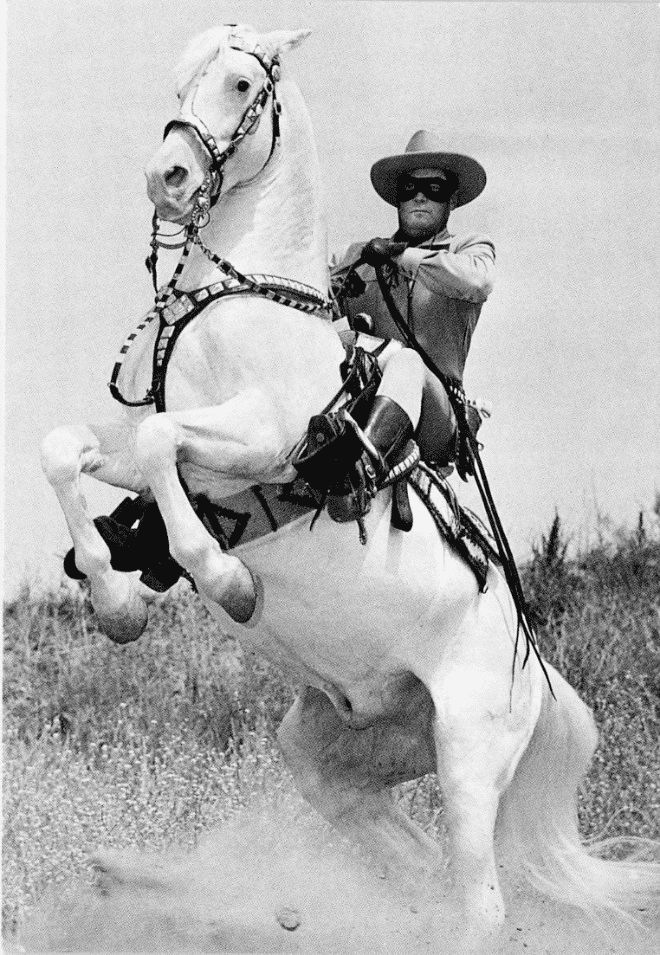
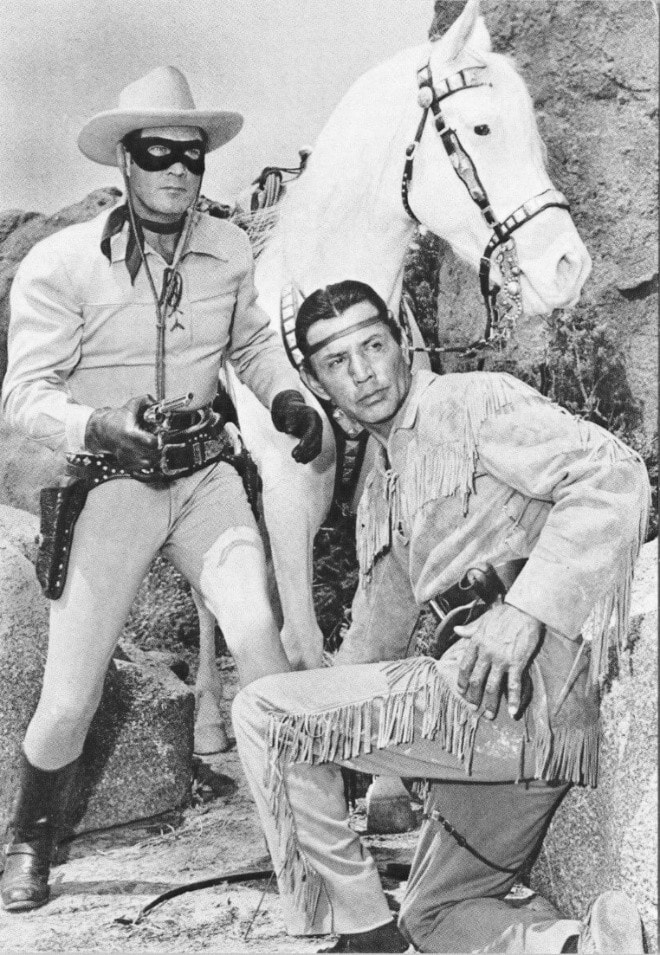
The series still has a competitive statistical record for a show that aired nearly eighty years ago. A breakdown of its most important factors includes ratings, audience size, and episode counts.
- The show ran for 5 seasons, totaling 221 episodes (182 episodes in black & white, 39 in color), and became ABC’s first true ratings hit. It consistently ranked among the top programs in the early 1950s.
- The average viewer counts in the early years exceeded 16 million watchers, accounting for approximately 46% of the televisions in use during that particular timeslot (usually Thursdays from 7:30 PM to 8:00 PM, which was before TV executives re-defined prime time as from 8 to 11 PM).
These numbers show that this Wrather Productions’ show routinely captured over a third of all TV households. Other programs from the same production company included Lassie and Sergeant Preston of the Yukon.
The Cast
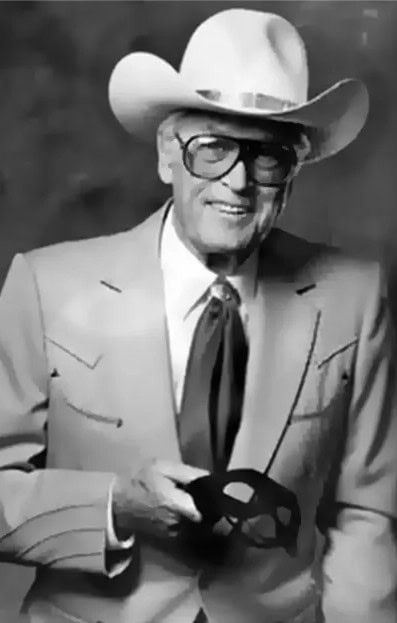
Clayton Moore (1914–1999) as the Lone Ranger. Clayton Moore was the best-known actor to portray the Lone Ranger. Originally a circus acrobat and model, he moved into film serials before landing the masked role that made him a cultural phenomenon of mid‑twentieth century America.
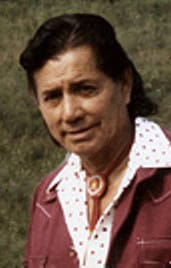
Jay Silverheels (1912–1980) as Tonto. Silverheels was a Native American Mohawk. He was known as a competent actor and athlete. Born Harold J. Smith on the Six Nations Reserve, he first excelled in lacrosse and boxing before entering Hollywood as a stuntman and later becoming a pioneering performer.
The Revival Movie
The 2013 revival film The Lone Ranger starred Armie Hammer as the Ranger and Johnny Depp as Tonto, reimagined as the story’s narrator. Produced by Disney and Jerry Bruckheimer, it aimed for a big, pulpy Western spectacle with supernatural touches, elaborate train sequences, and a darker origin story.
Despite its massive budget—over $225 million—and striking visuals, it struggled critically and commercially, becoming one of the decade’s most famous box‑office misfires. So sad, I thought it was great.
Today the Lone Ranger endures, but his character traits are in rare supply. His appeal lies in his blend of mythic heroism and moral clarity. He simply appeared from nowhere, righted wrongs, and vanished. In doing what he did, the feat was achieved to some of the most memorable music in history.
The William Tell Overture belongs to the opera William Tell, composed by Gioachino Rossini and premiered in 1829. It was the last of Rossini’s 39 operas.
The Lone Ranger made the William Tell Overture a shortcut to adventure.
An interesting article,as aboy I used to watch the Lone Ranger on TV so this brought back many happy memories of my childhood. Good postcards as well,unfortunately I do not have any
The Lone Ranger, The Cisco Kid, and Superman were my favorite TV programs during my misspent childhood. I watched them on my family’s B&W Dumont television. It had a beautiful wooden cabinet.
I loved the Lone Ranger when I was a child. Both actors were great. Thanks for telling the origin story. I didn’t know about the mask being made from his brother’s vest or where tge silver came fron for the bullets!