A Look Back at a Classic: Out Our Way
James Robert Williams was and remains one of the most prominent voices in early American cartooning. His long‑running single‑panel comic, Out Our Way captured the humor in ordinary life with a realism unmatched by his contemporaries. His work resonated with the American newspaper reader because it came from life experience.
Before becoming a syndicated cartoonist, J. R. was born on March 30, 1888, in Halifax, Nova Scotia. In his youth he worked as a ranch hand, a machinist, and a catalog illustrator. It was never a job, but J. R. often joked about how “hard” he worked at being a wanderer across the American West. During those years he spent his days in machine shops and his nights in bunkhouses. Living such a life in small towns gave him an intimate understanding of the people he later depicted.
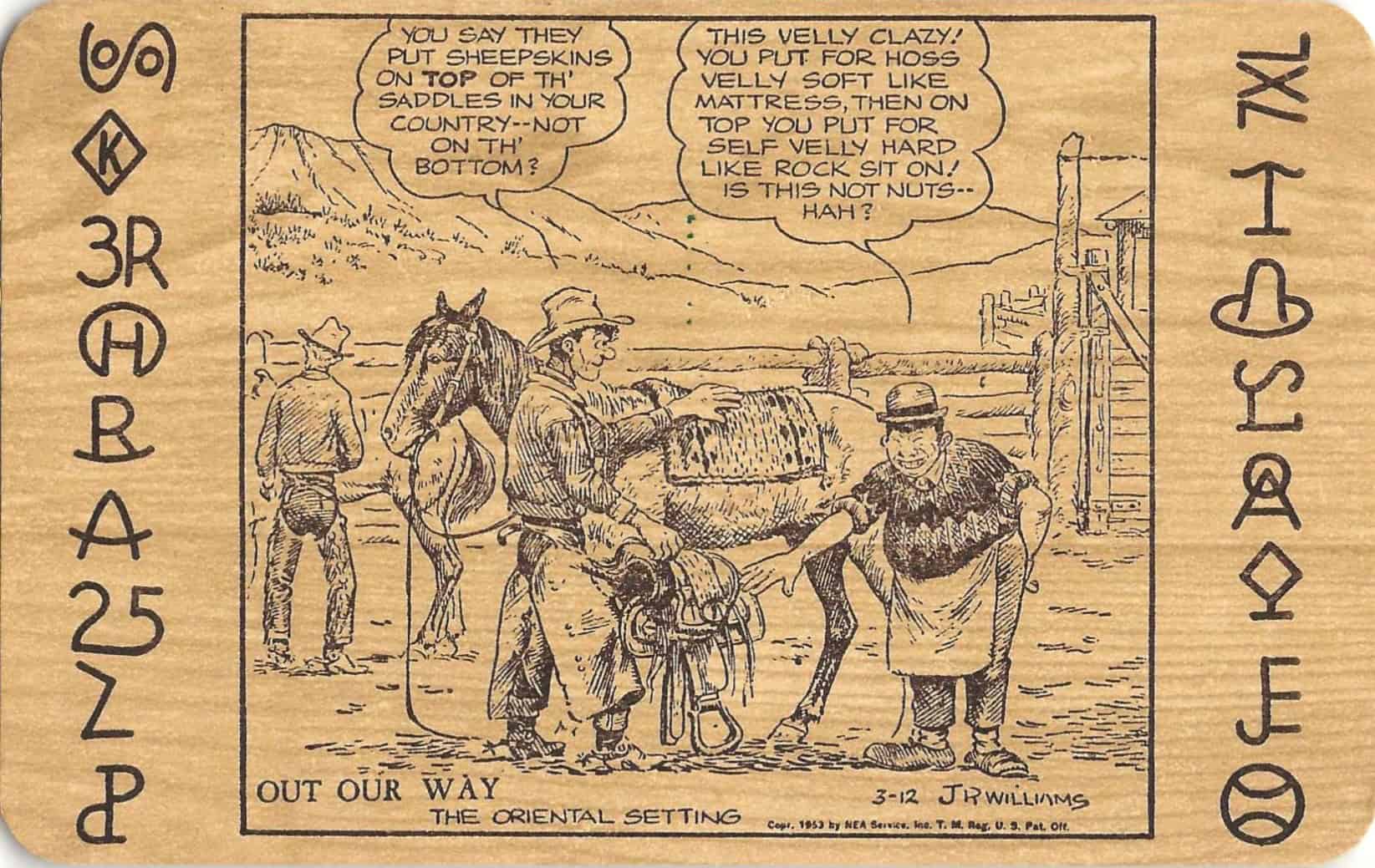
Williams’ comic strip, first published in 1922, quickly became a staple of American newspapers. Rather than relying on gags, he focused on moments of recognition or what he called, scenes readers felt they had once lived. His rotating sub‑series, including Bull of the Woods, Why Mothers Get Gray, Born Thirty Years Too Soon, and Oriental Setting (like the example above) allowed him to explore multiple facets of American life. He chose topics from industrial labor and domestic chaos, and quite often, nostalgic reflections on childhood. Each panel suggested a larger story, capturing a fleeting moment, humor, and authenticity without mockery or insult.
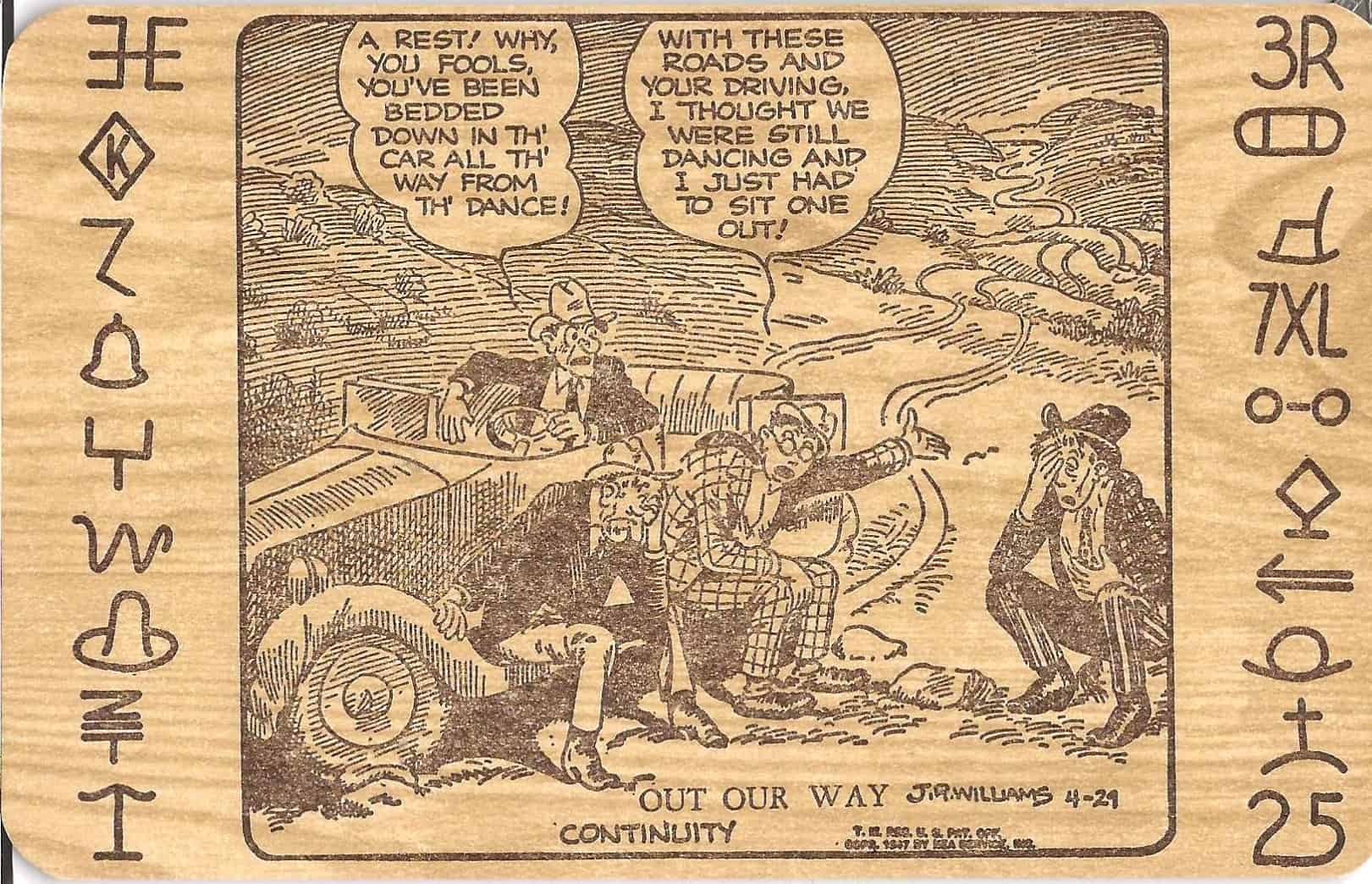
At the height of its popularity, Out Our Way appeared in more than 700 newspapers. Coulton Waugh, a notable comic historian, has written that Williams’ cartoons were clipped and saved more than any other of the era. This devotion speaks to the strip’s emotional accuracy. Williams better understood the rhythms of work, the quirks of family life, and the quiet dignity of everyday people.
Even after achieving national fame, Williams maintained ties to the world that inspired him. He started by buying a 52,000-acre ranch in Arizona and continued to draw from firsthand experience. Actually. Williams’s Arizona ranch was more than a home—it was a source for Out Our Way. When Williams bought the property in Skull Valley he wasn’t acquiring a retreat; he was returning to the world that shaped him.
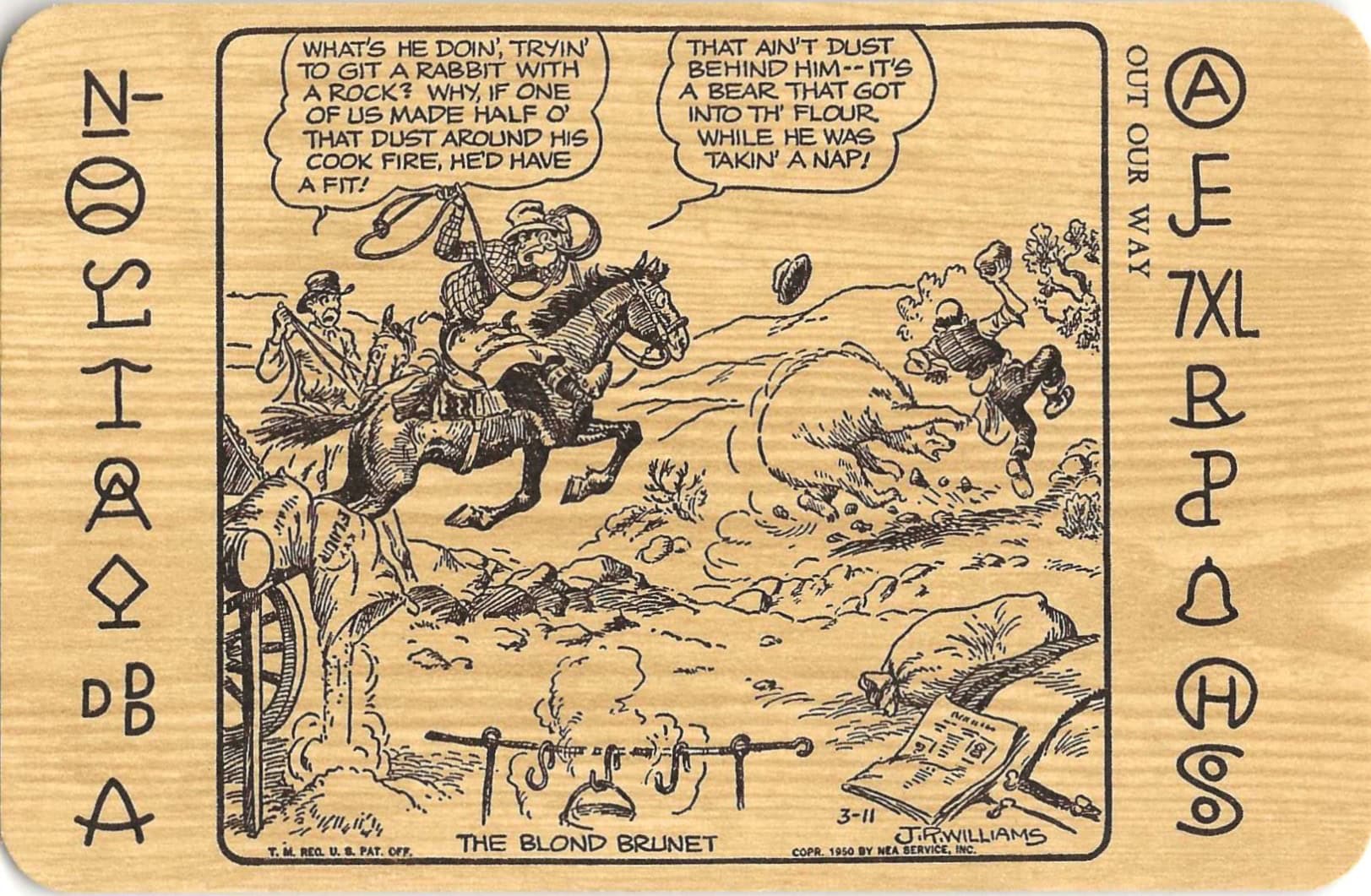
The ranch was enormous. Accounts describe it as a working spread large enough to employ cowboys, run cattle, and maintain the rhythms of Western life that Williams had known since youth.
Skull Valley is in Yavapai County, west of Prescott, a landscape of high desert and open grassland. It’s the kind of country where ranch work is still done on horseback. Williams loved this environment. It gave him the authenticity that readers sensed in every cowboy panel he drew.
He lived there for years, balancing the demands of a nationally syndicated cartoon with the equally demanding life of a rancher. Many of his cowboy strips, especially the Born Thirty Years Too Soon and ranch‑hand panels, were drawn directly from moments he witnessed on his property.
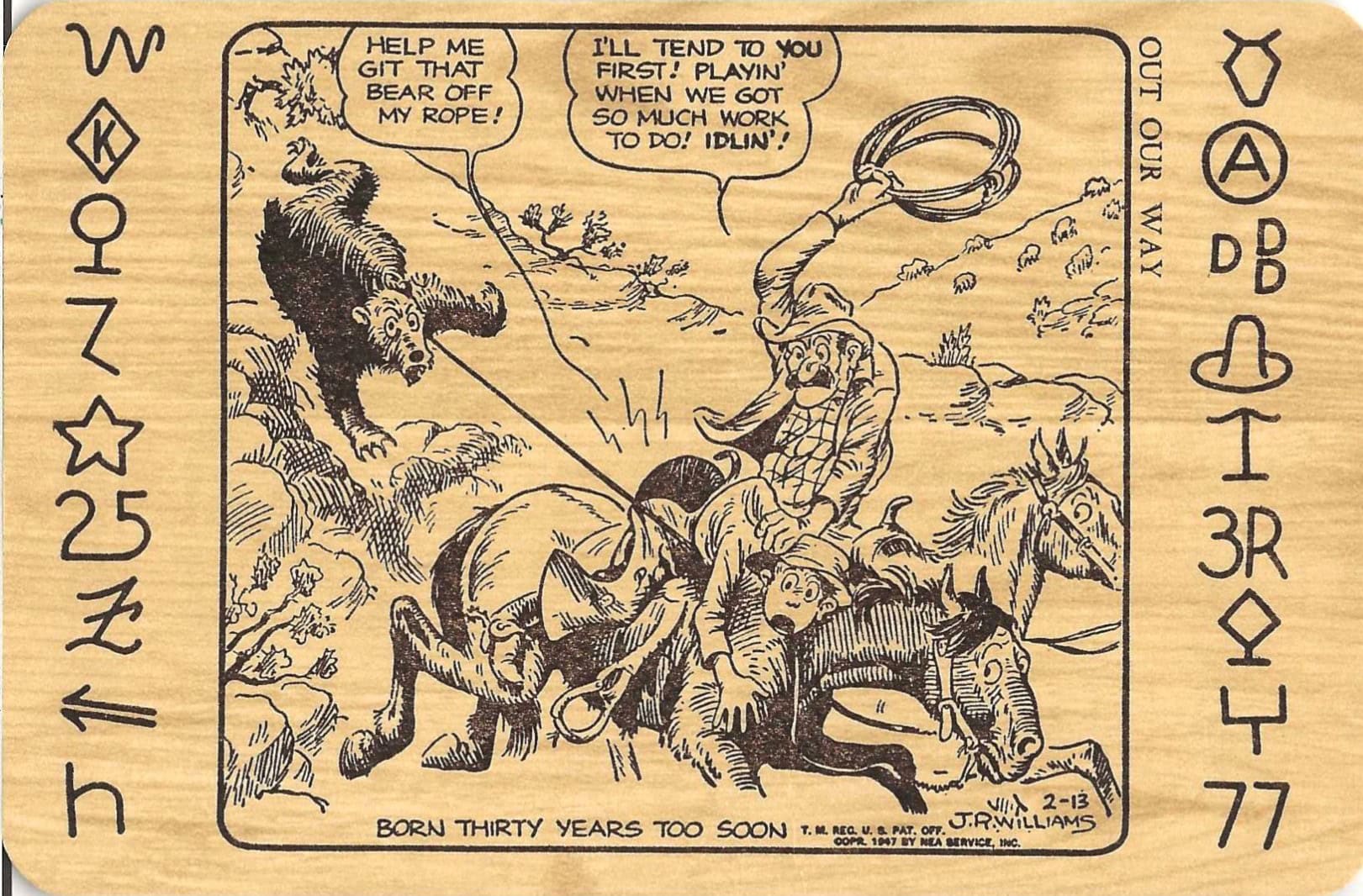
Williams didn’t romanticize ranch life; he depicted its work, its mishaps, and its quiet humor. The Arizona ranch gave him, real cowboys to observe, real horses to sketch, real bunkhouse conversations to capture and repeat, and real chores, dust, and weather to fold into his panels.
This is why his Western scenes feel lived‑in rather than theatrical. They’re not imagined; they’re remembered.
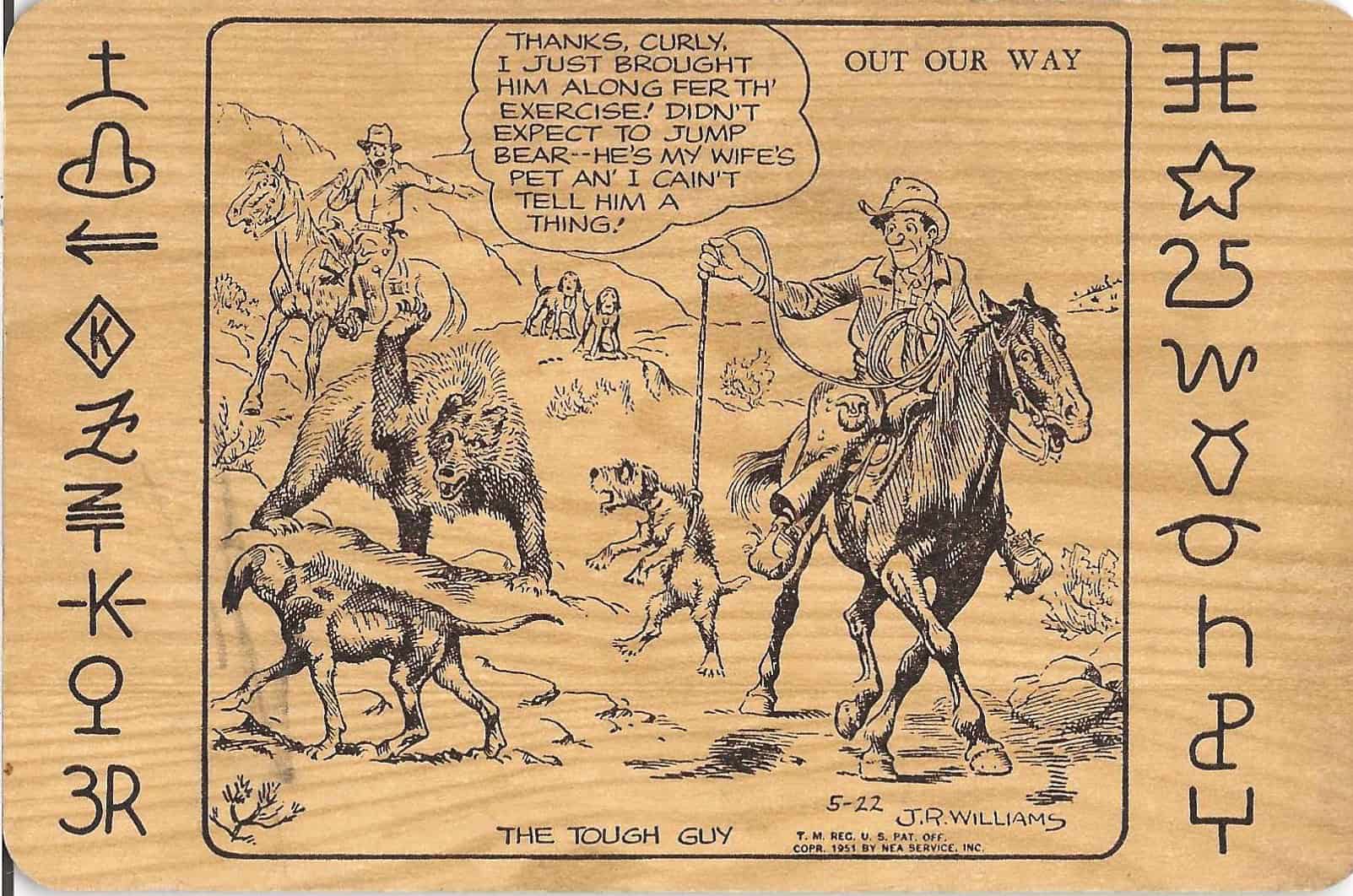
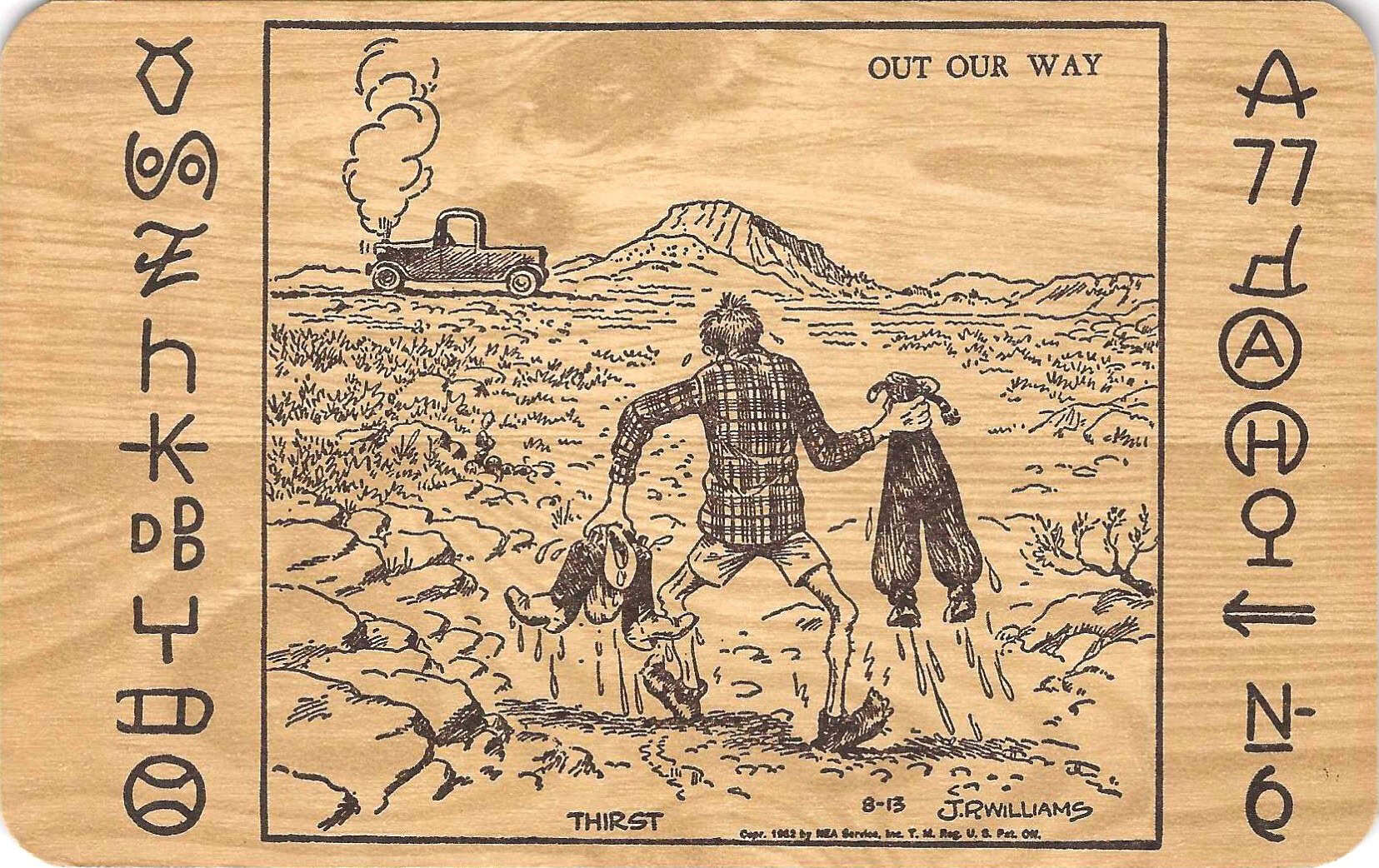
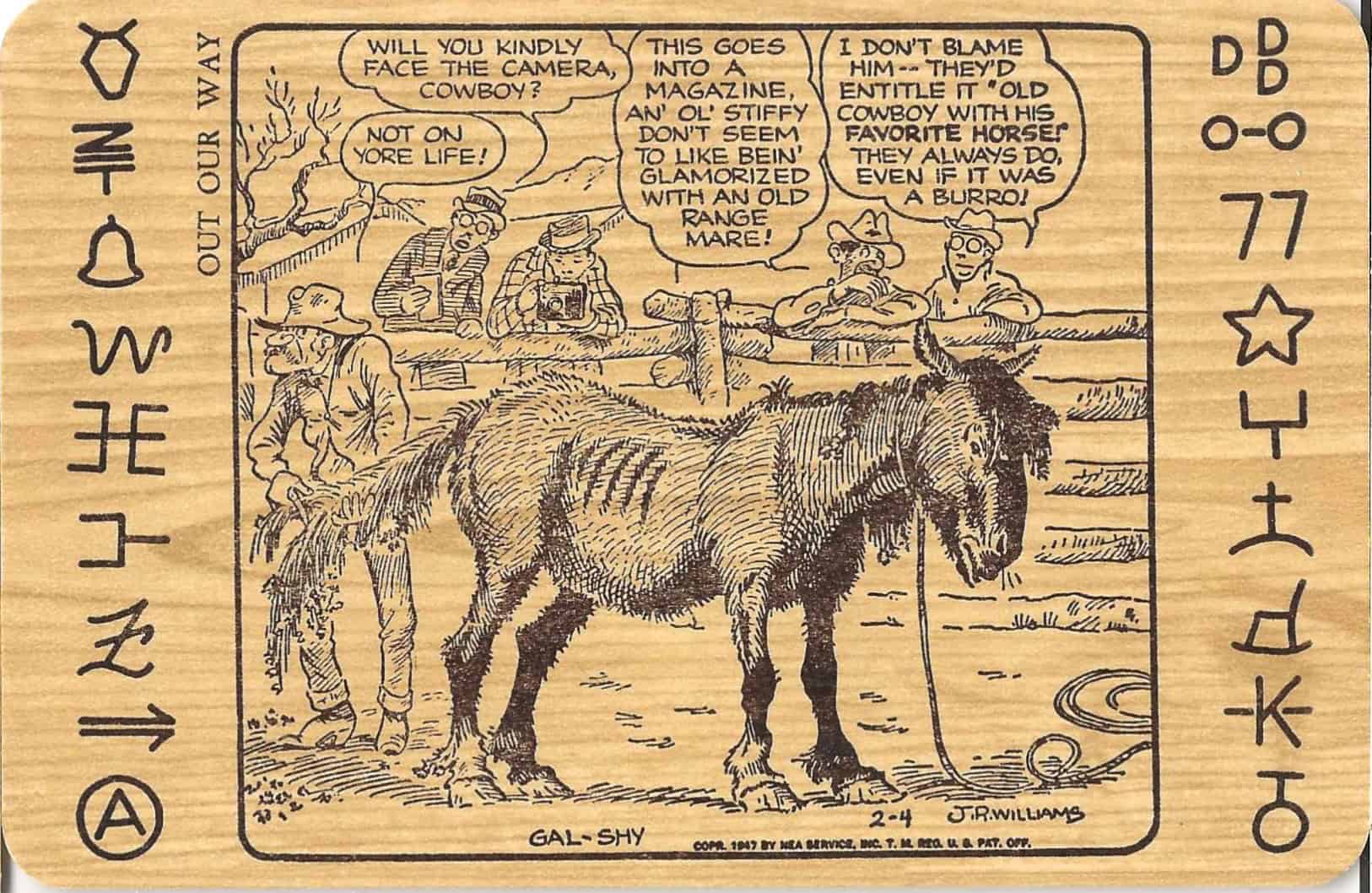
Even after Out Our Way became one of the most widely syndicated cartoons in America, Williams kept the ranch running. He hired hands, oversaw cattle operations, and stayed involved in day‑to‑day work. Cartooning was his profession; ranching was his life.
J. R. Williams died on June 17, 1957, at age 69, in Pasadena, California. His legacy endures as a vivid portrait of American life.
Attractive and inexpensive, my early collecting years had a secondary focus on this talented cowboy craftsman. The New Mexico publisher used a thin non-standard card stock and rounded the corners. This wasn’t an attraction for many who sought artist signed postcards.
I’ve run across many of the “Out Our Way” postcards over the years. I always admired the cartoons, but didn’t know anything about the cartoonist. Thank you for providing his bio. info. I enjoyed reading it.
I love this article. It’s great to know more about Williams. I’ve collected quite a few of his cartoons and postcards over the years. I got started by buying a scrapbook that was full of his cartoon clippings. Thanks for this article.