These days, when we think of historic Greenwich Village, we’re inclined to recall hot jazz clubs, experimental, even radical points of view in the arts, theater and culture, expressionistic and exploratory lifestyles and politics. Nightclubs like the Village Barn are not always top-of-mind.
Located at 52 West 8th Street, near 6th Avenue, one of Greenwich Village’s busiest intersections, the Village Barn was an outpost of homespun, hometown America right there in the belly of the beast. Opened in 1930 by Meyer Horowitz in a cavernous basement, decorated to resemble a New Yorkers’ idea of a country-western bar west of the Hudson and south of the Battery, it ran strong for 37 years offering the latest in home cooking, cornball fun and games, music and dancing – all measured to have the widest possible appeal.
The Village Barn’s story is best told with the help of the countless postcards they published throughout their tenure as the arbiters of uncool. My collection has 62 cards and I’m not sure what proportion of the full opus that represents. The Barn’s success was rooted in the formula they followed – a mix of out-of-your-seat roust-abouting, western swing, comedy routines and a bit of the latest in song and dance.
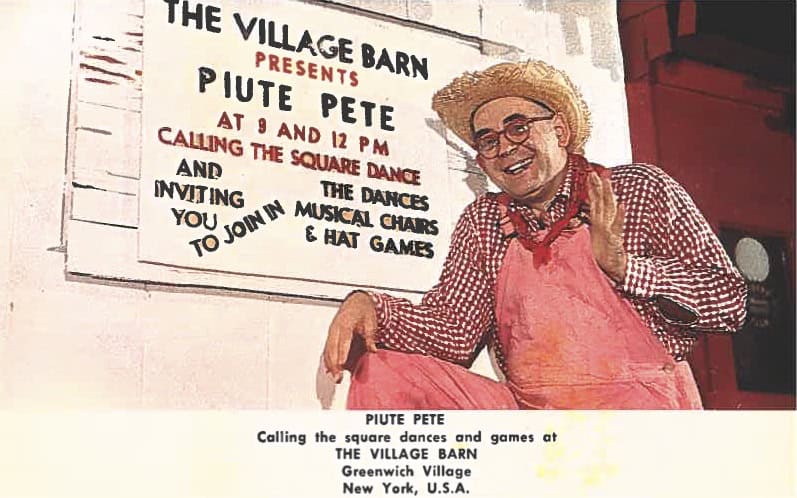
One of their chief square dance callers was Piute Pete, an NBC radio star of the 1940s. Pete was not from somewhere in the Texas Panhandle. Rather, he started life just a few blocks from the Village on the Lower East Side as Morris Kaufman. As recounted by Mel Heimer in a 1955 Titusville Herald:
“…many men and women enjoy this abortive pastime [of square dancing], possibly the way others like to eat opium or collect postage stamps. There are a handful like this in Manhattan and, together with great hordes of visiting firemen…find their way to the Village Barn and square dance to their dark heart’s content.”
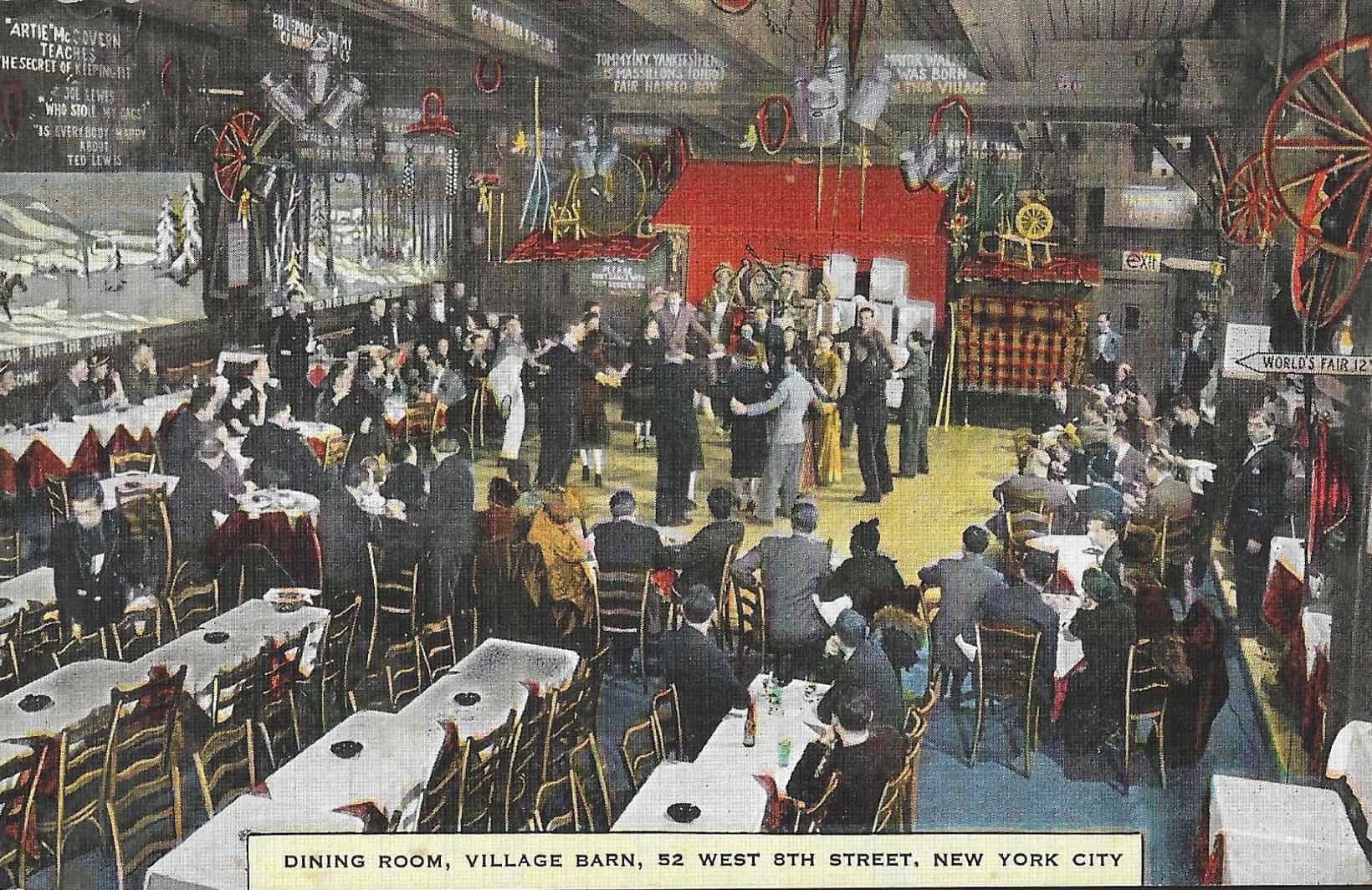
An early postcard by Kropp illuminates patrons cavorting in the roomy cellar surrounded by a yard sale’s worth of artifacts like old Milk tins, wooden wagon wheels, horse-collars and harnesses, pitchforks, spinning Jennys and signs proclaiming somebody’s efforts at hokey philosophy like, “Please don’t dance with your rubbers on.”
The Village Barn’s menu emphasized cheap and plentiful comfort food. Dinner, advertised as $1.00 – $1.50, during the Depression and War years, was raised modestly after the War, according to a 1960s menu. Dinner, based on Yankee Pot Roast, Chopped Tenderloin, Spring Chicken or Ham Steak could be had for a family-friendly $2.75 – $3.25.
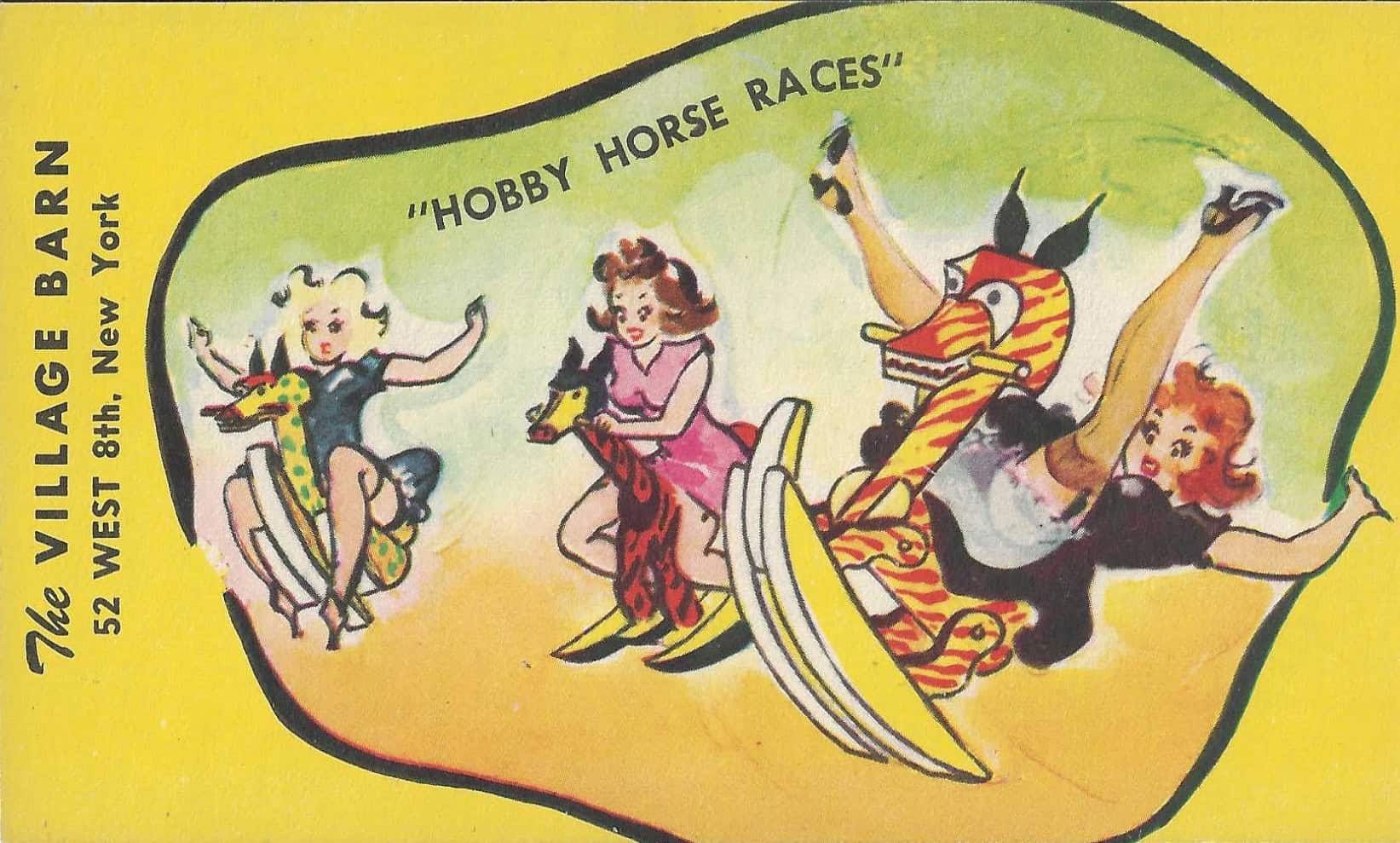
Cartoon images of the games played during the evening would suggest that their main purpose was to make the girls lose control of their hemlines.
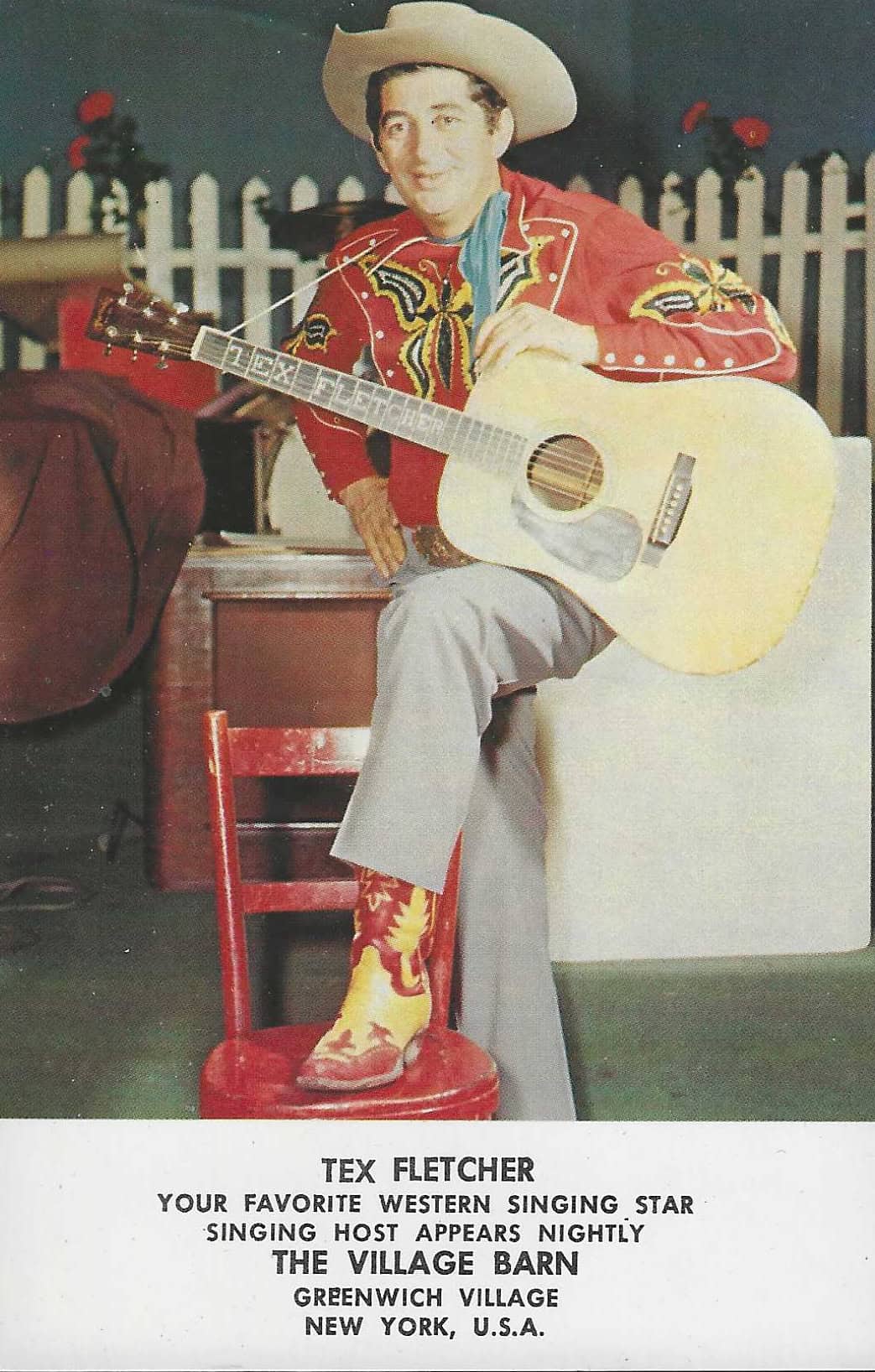
Performers for the Village Barn’s western routines were properly named Tex or Zeke.
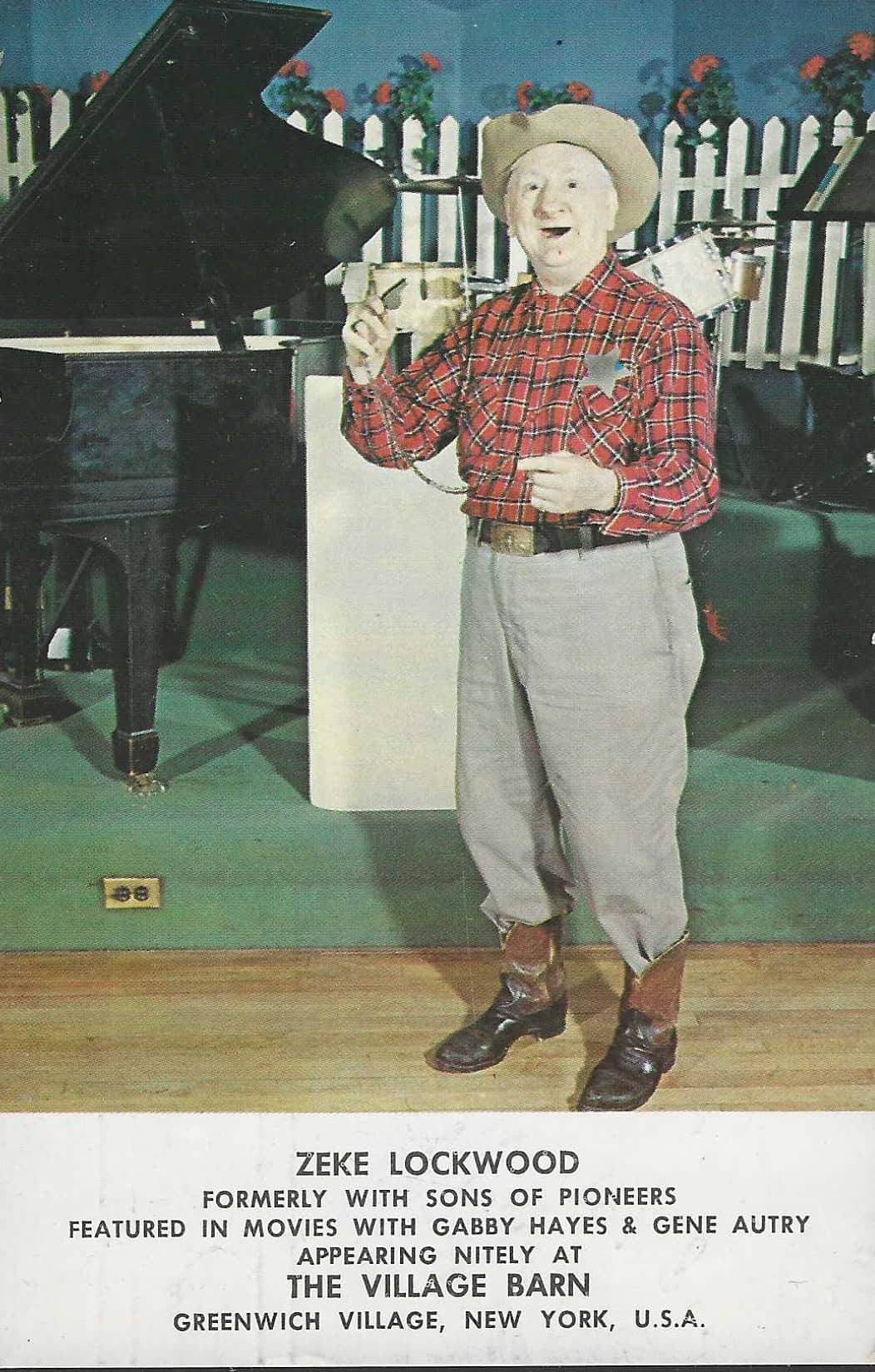
The Barn’s comedic acts were notable. Some of them, like Lou Moscone, made it into the mainstream with appearances on late-night TV. Often, their musical acts had strong comedic content as well.
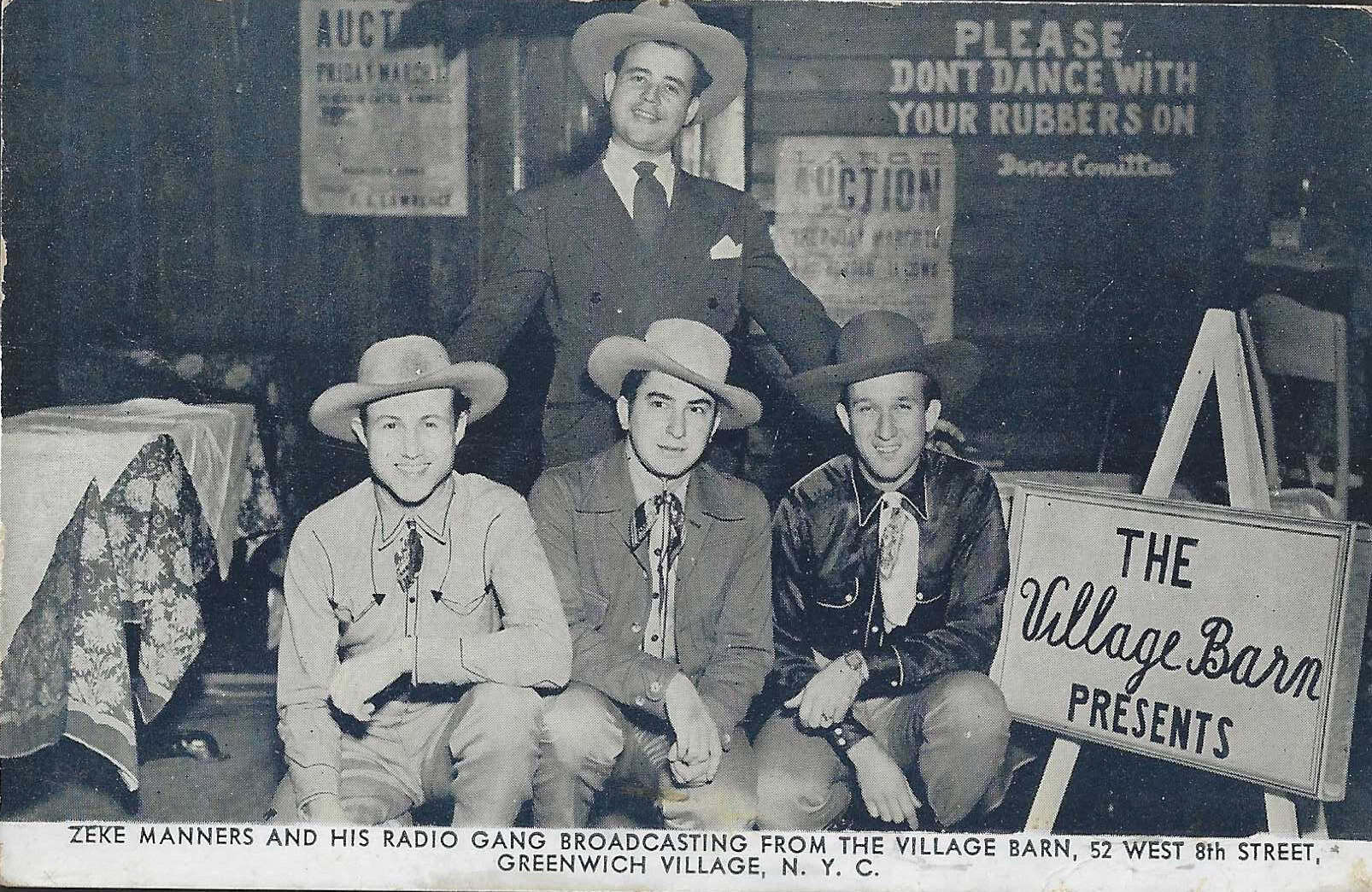
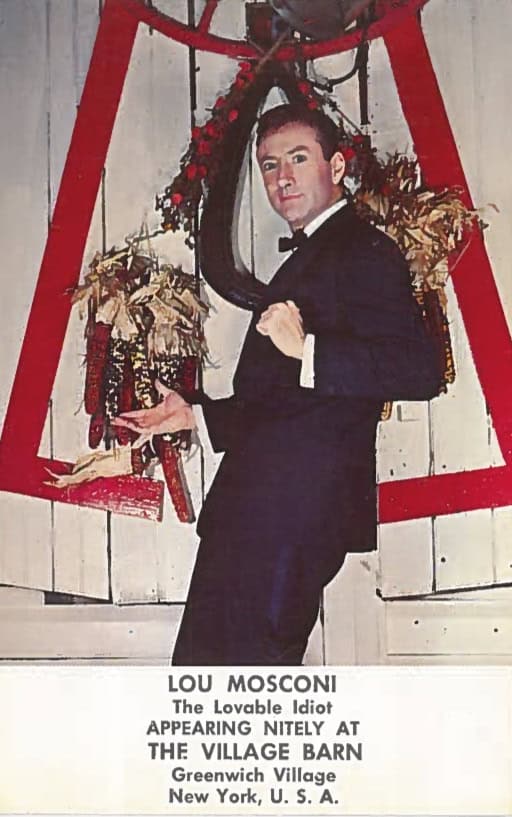
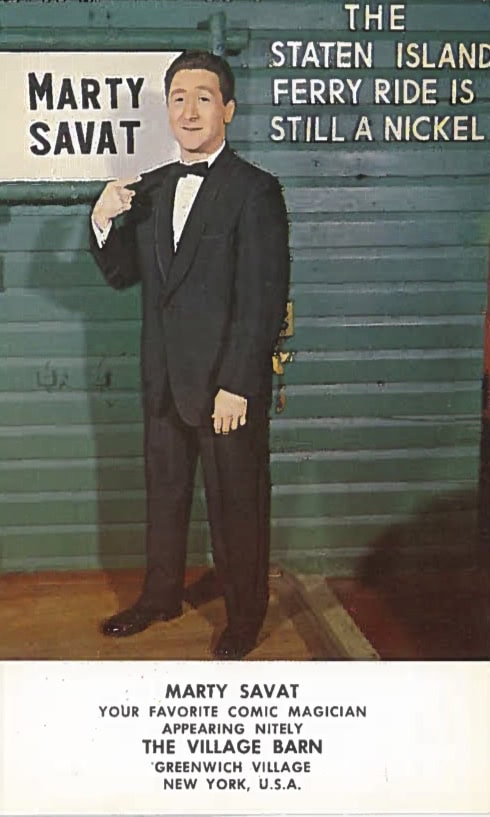
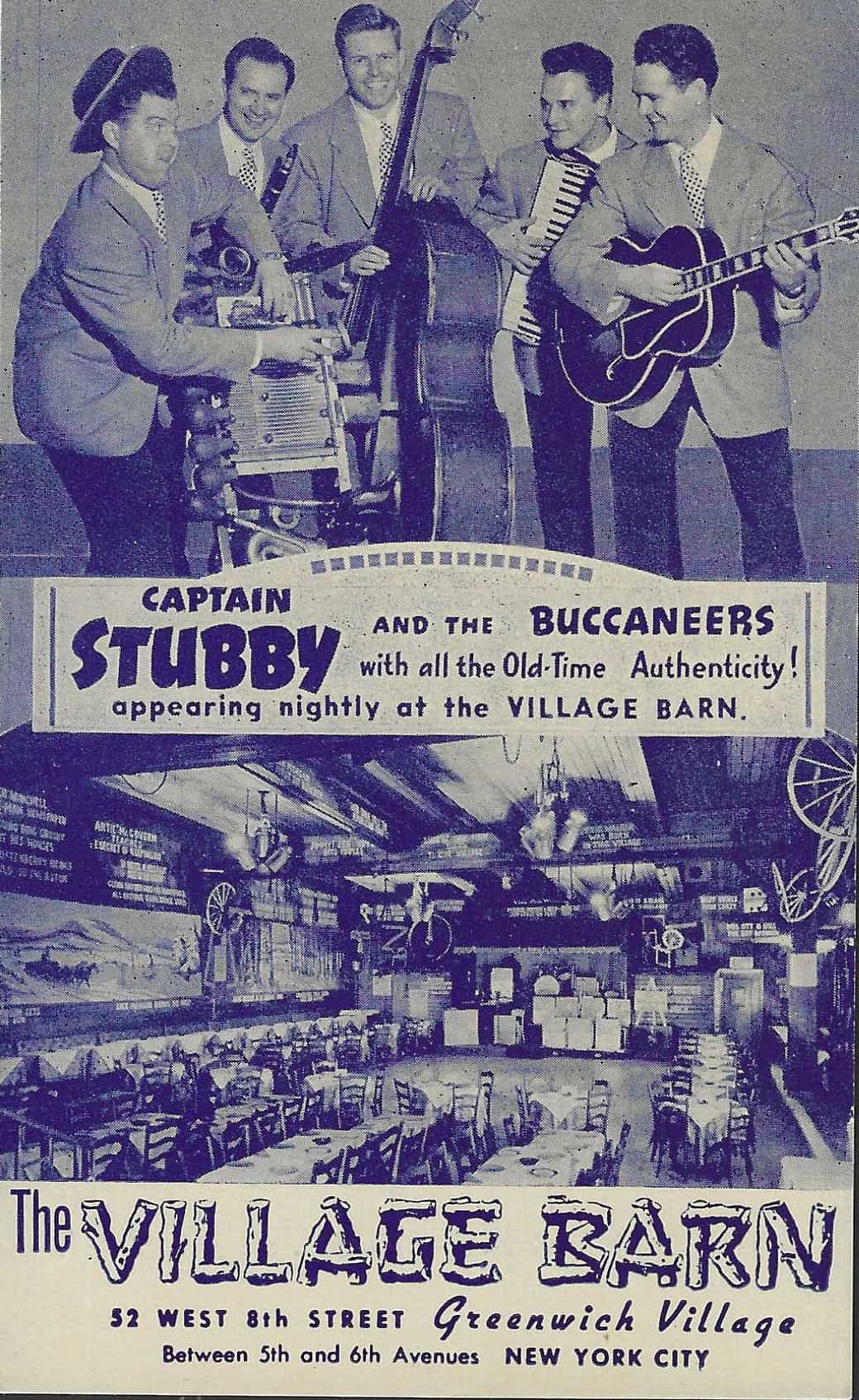
The Village Barn did their best to offer contemporary musical styling and dances. They did not want to seem lost in some nostalgic past or off Main Street. This made them favorites for graduation events. Tour buses visiting Manhattan from the heartland could not resist a stop here.
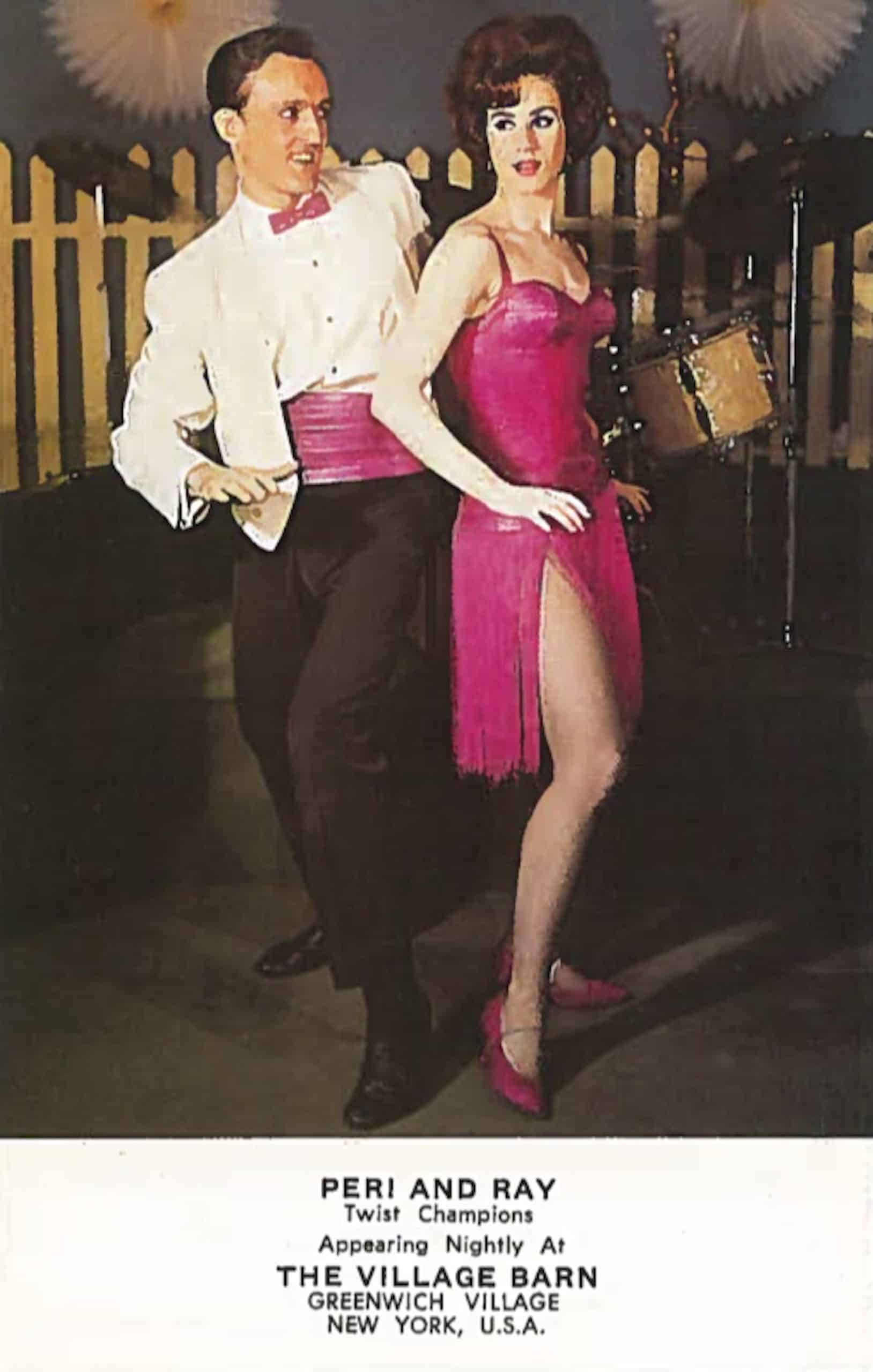
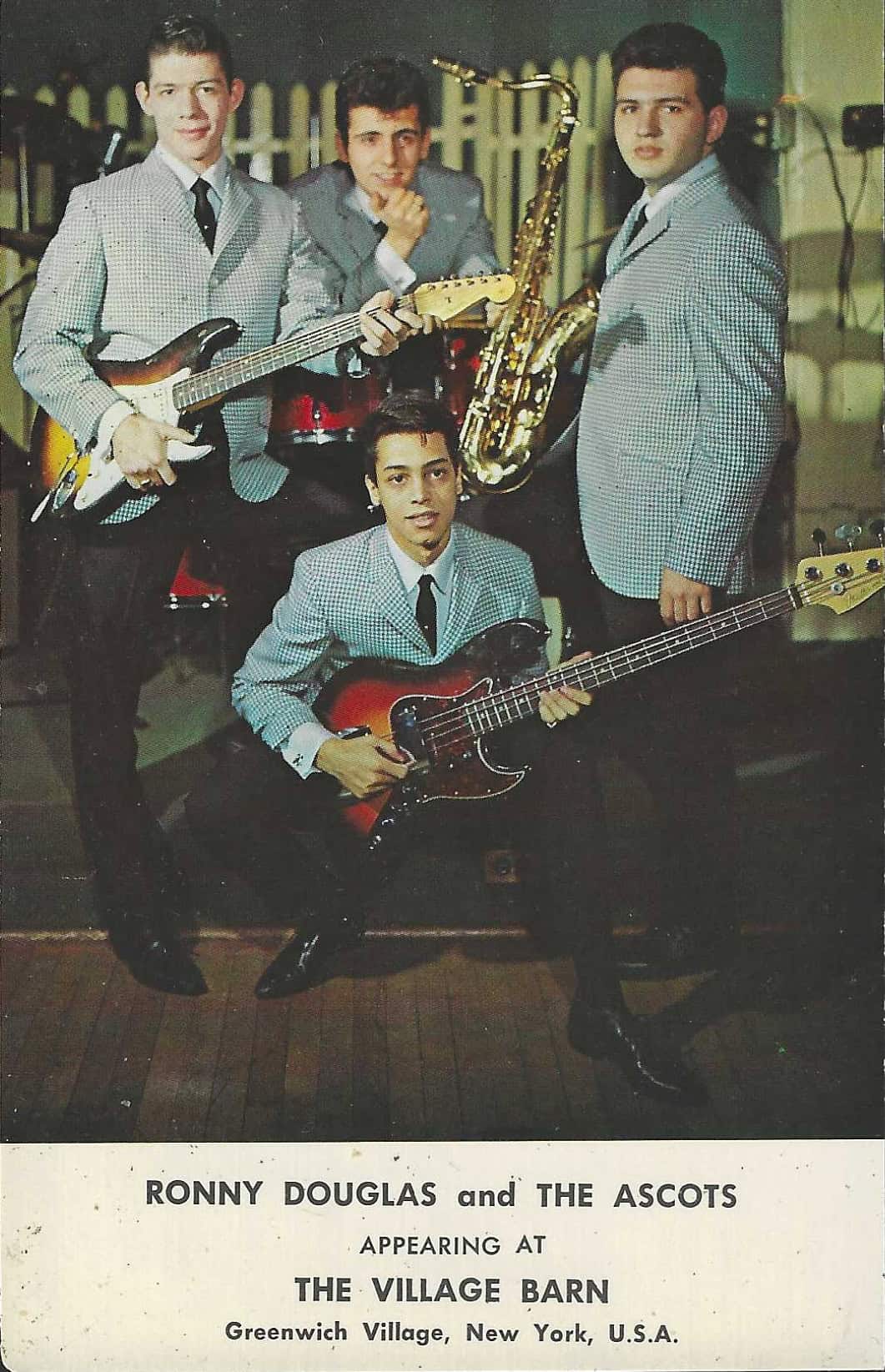
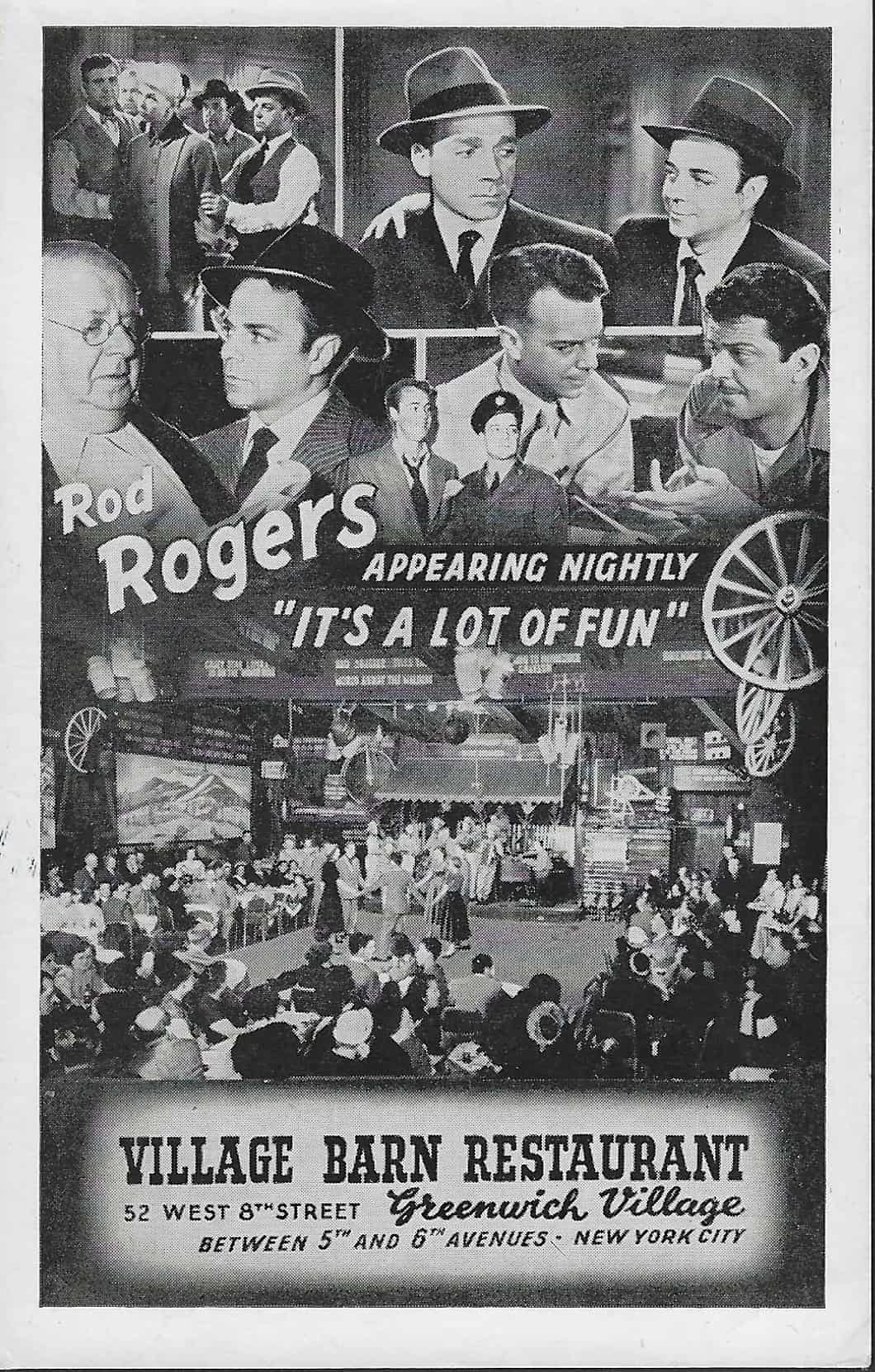
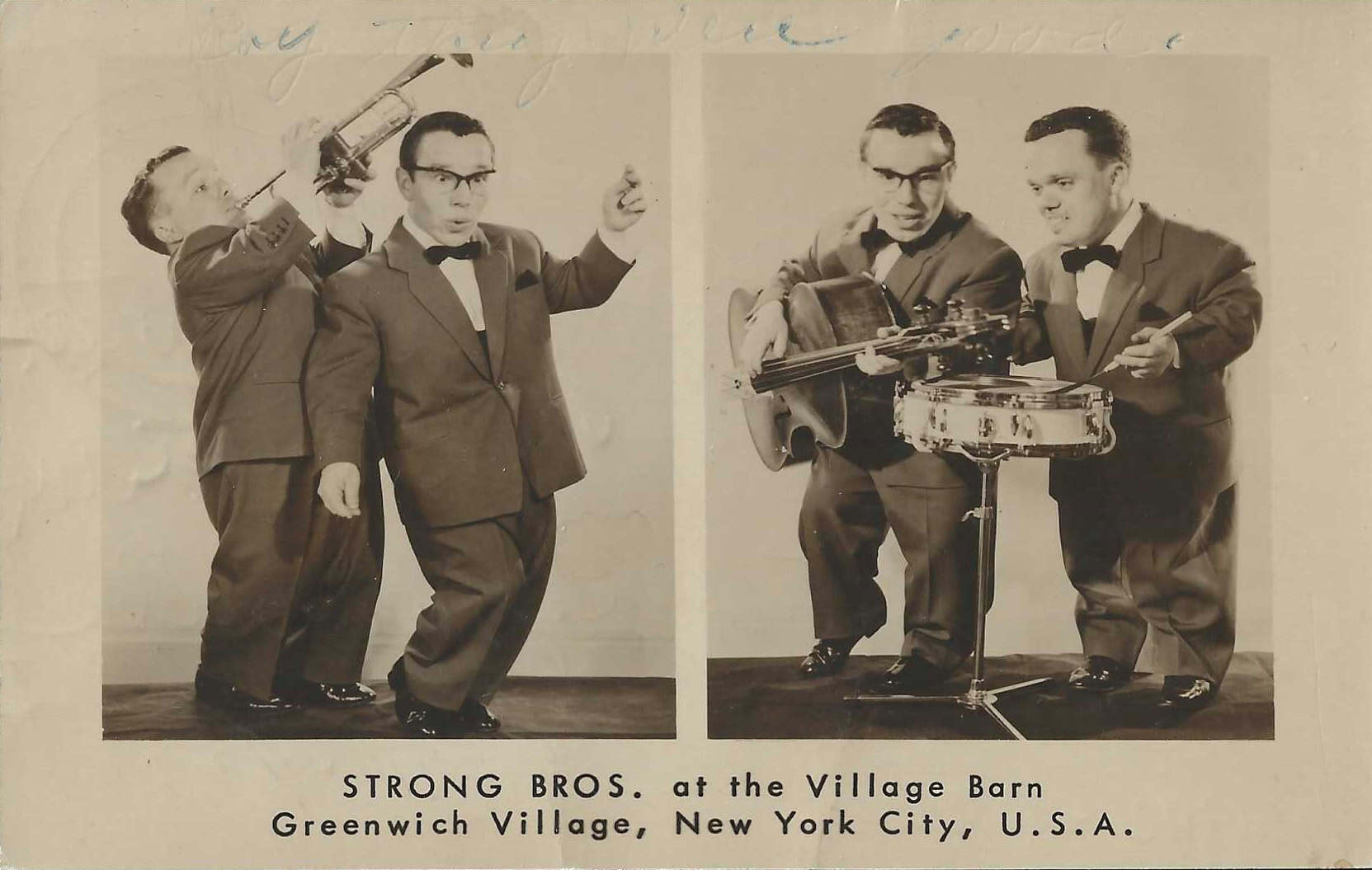
To top it off, the Barn would bring in established Hollywood stars or try a novelty act like the Strong Bros. – “little people” as shown in this real photo RPPC.
When the Village Barn closed in the late 1960s, the space was sold to Electric Lady Studios, where Jimi Hendrix, The Clash, and pretty much every other rock group recorded. Above ground was the 8th Street Playhouse, which ran cult classics and revivals until it shut its doors in 1992.
The late show on weekends was perennially the Rocky Horror Picture Show. Fans would show up in costume, ready to actively participate in a performance where what went on outside was equal to what happened on screen in the theater.