From the end of the Second World War and until the 1980s, the Times Square area was classified as New York City’s indisputable showcase for erotic entertainment. This was a mixed blessing because it was also accompanied by a growing crime rate and declines in the legitimate theater district.
Times Square as an erotic showplace goes back to the years before World War Two. The following is a report, to reassure folks that the Depression was manageable, from a 1933 New Yorker article that depicts the events at theParadise Cabaret Restaurant located on the second floor of the Brill Building at Broadway and 49th Street:
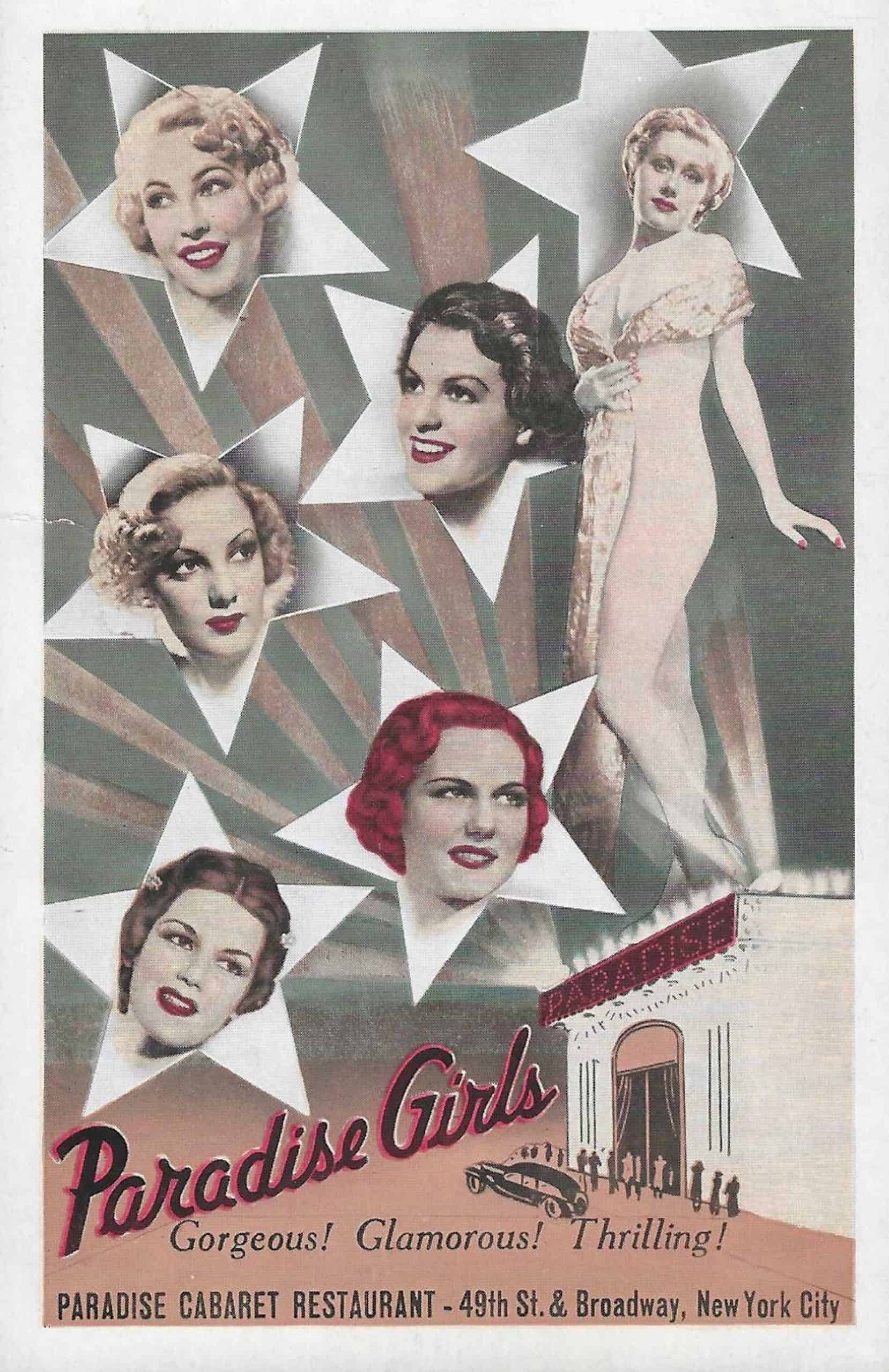
“It is a great, roaring place, costing practically nothing at any time, and elaborate floor shows are produced at dinner and supper. These consist of girls parading about as the Spirit of Nekkidness, acrobatic dancers going into such contortions, blondes singing songs about Why Did He Go, and German acrobats who do feats that seem impossible”.
There were competitors right next door. George White and Earl Carroll were working tirelessly to craft their own brands. White, who had started with the Ziegfeld Follies, tried to emulate and surpass his mentor, Flo Ziegfeld. Carroll was known as “The Troubadour of the Nude” and was famous for elaborate productions featuring the most scantily clad chorines on Broadway – with as many as 108 women onstage at once. Carroll is credited with starting the careers of numerous Broadway A-listers, including Sophie Tucker, W. C. Fields and Jack Benny.
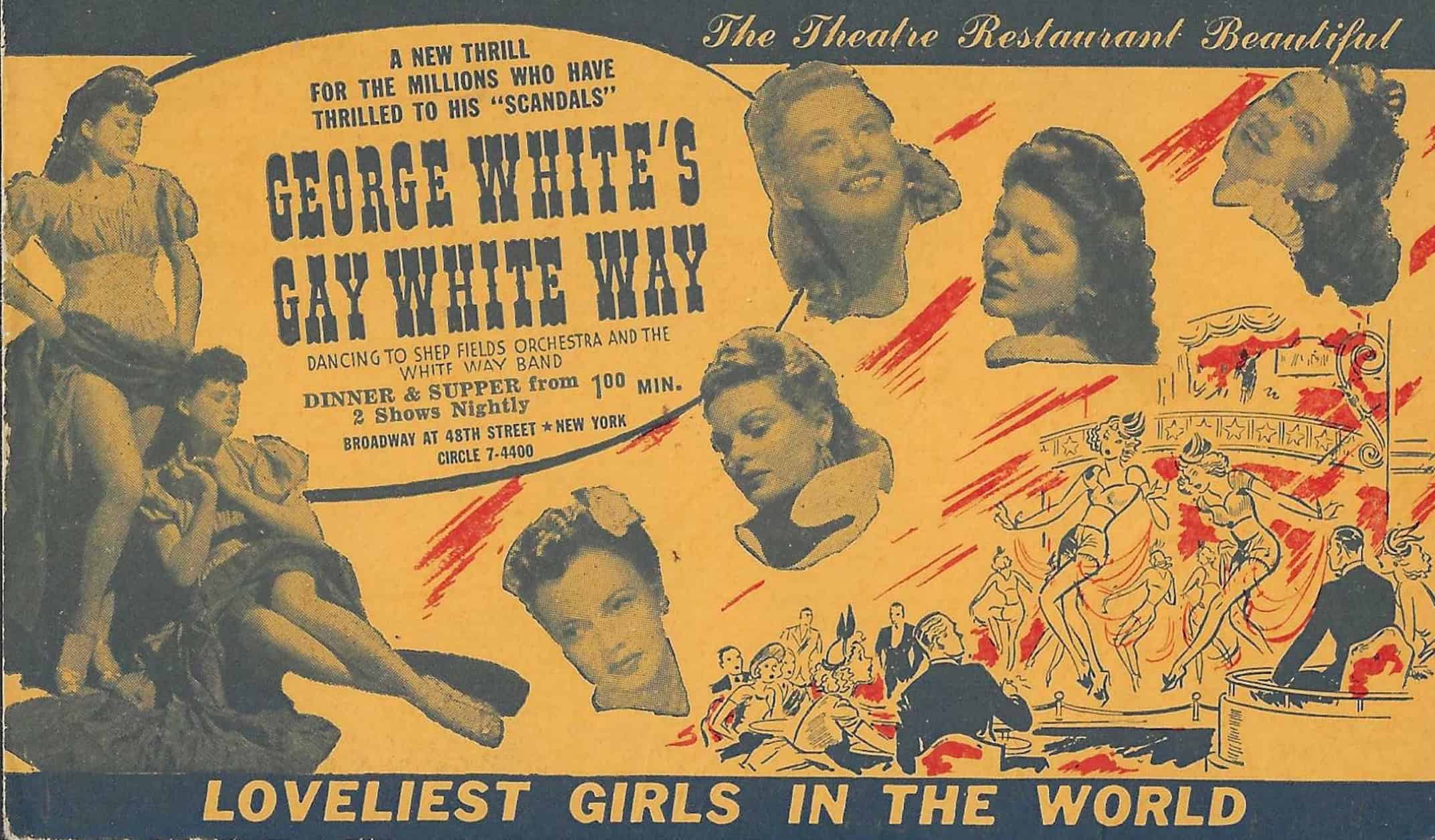
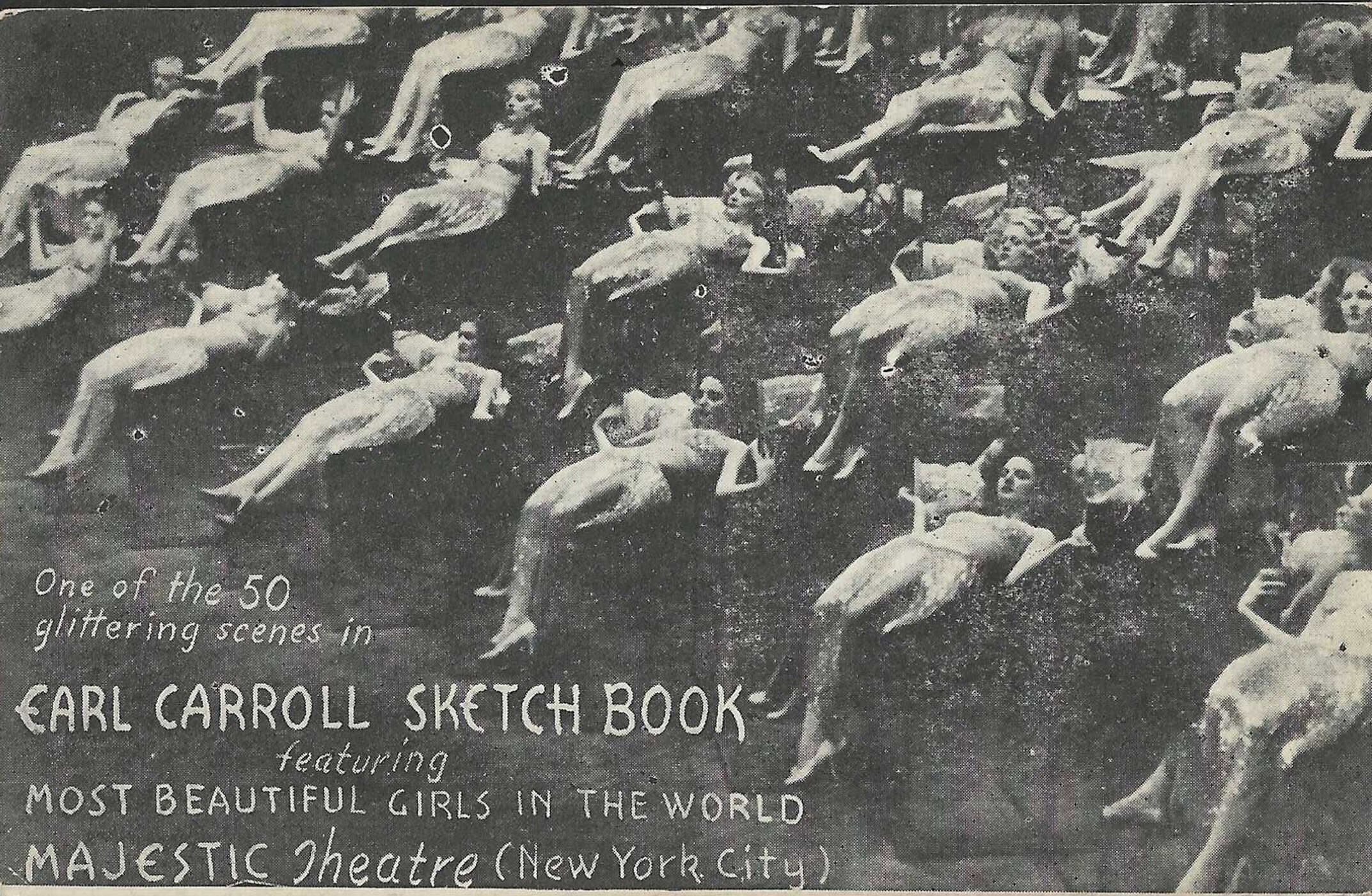
Both men ended up jailed in various scandals and eventually moved to California.
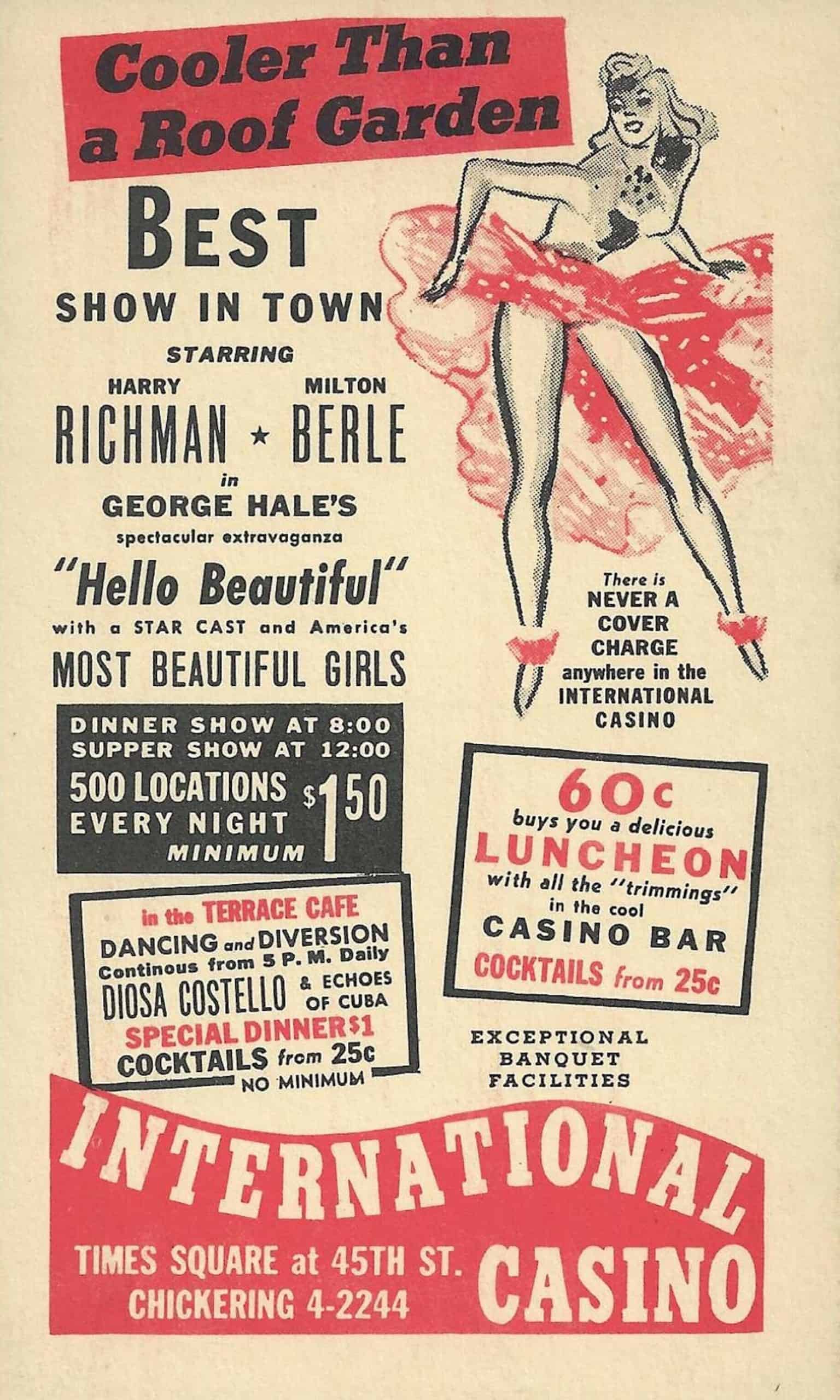
Other contemporary clubs which traded on female nudity and promoted themselves with advertising postcards included the International Casino and the Hollywood Restaurant.
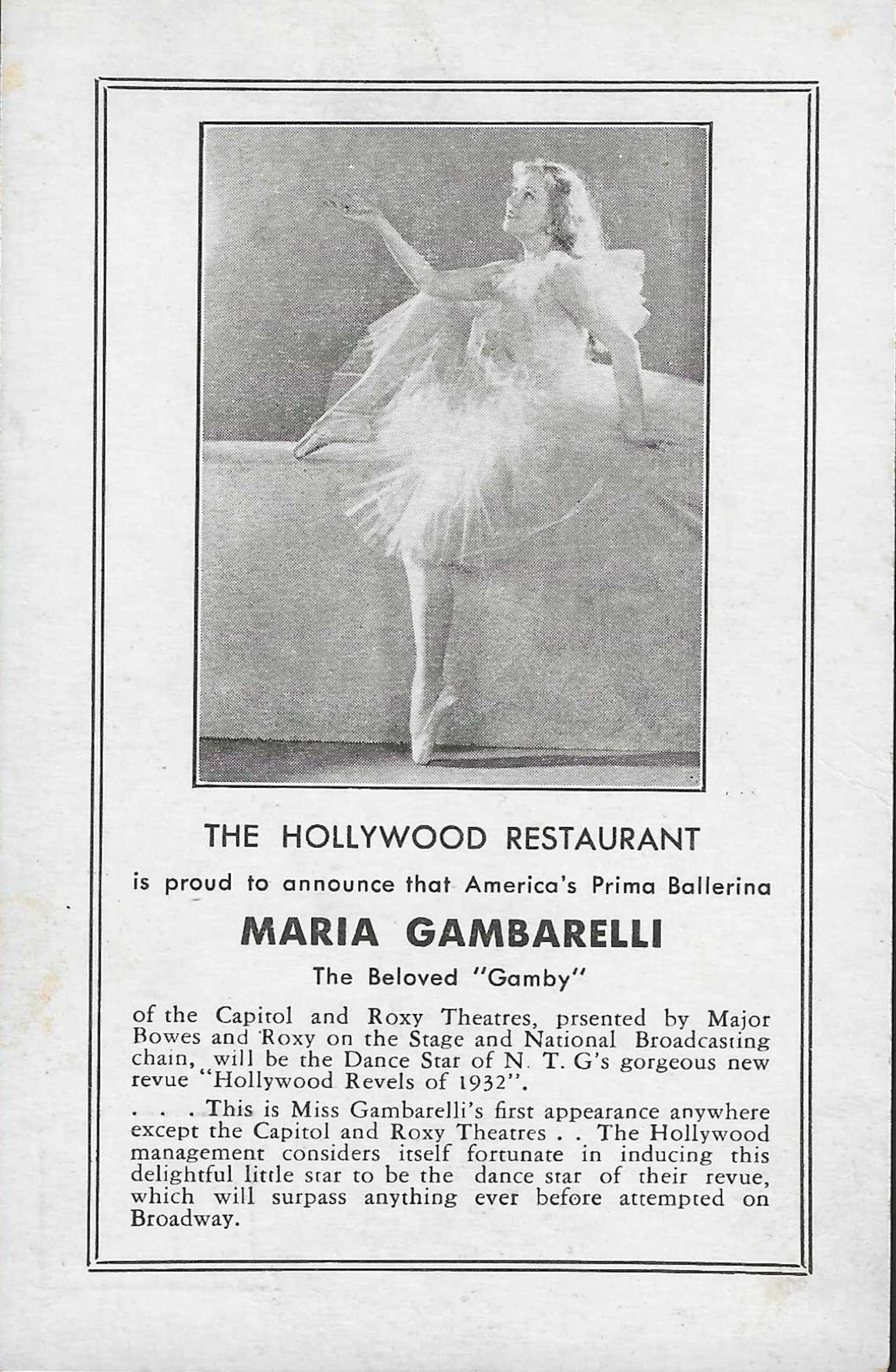
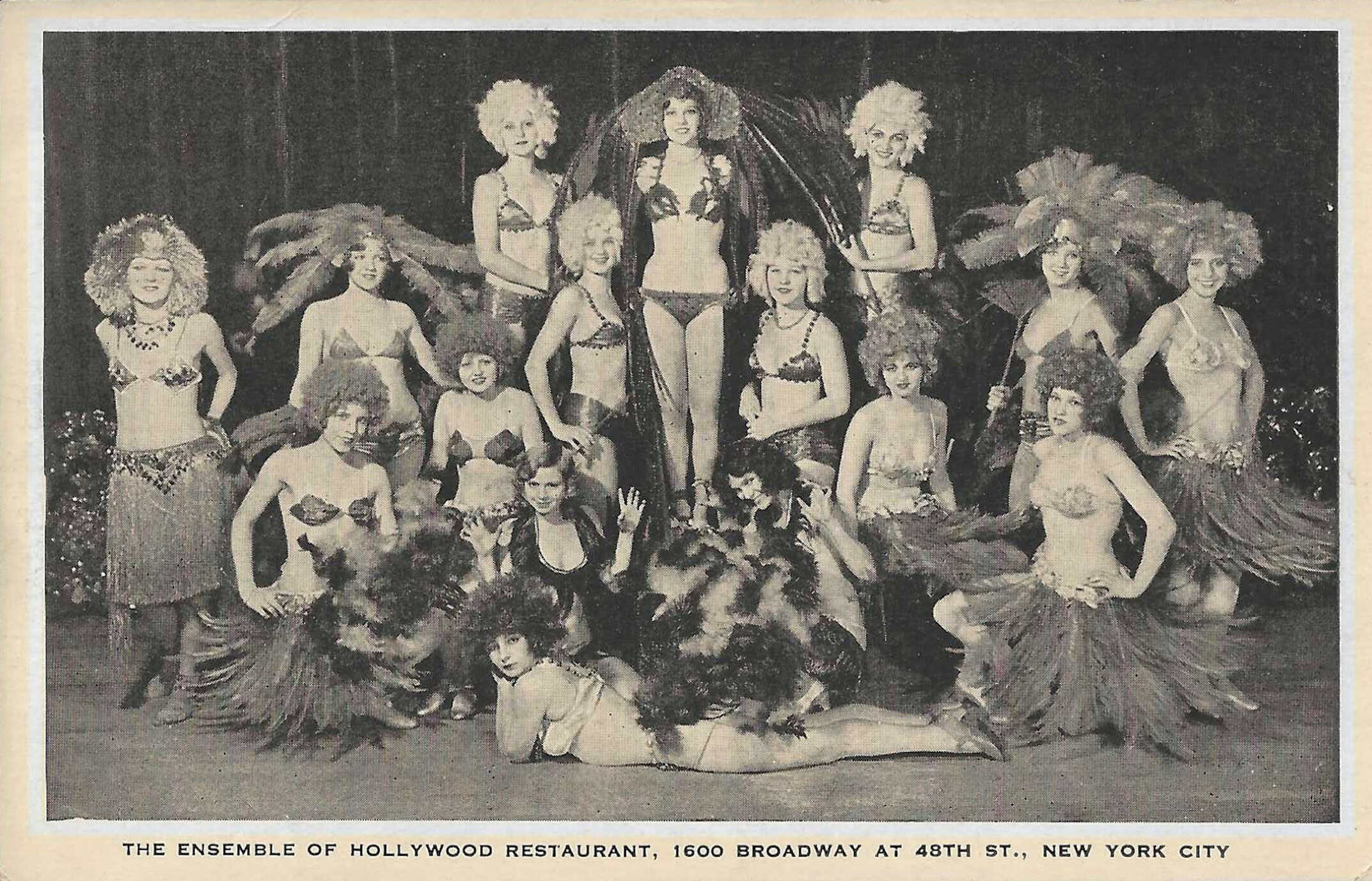
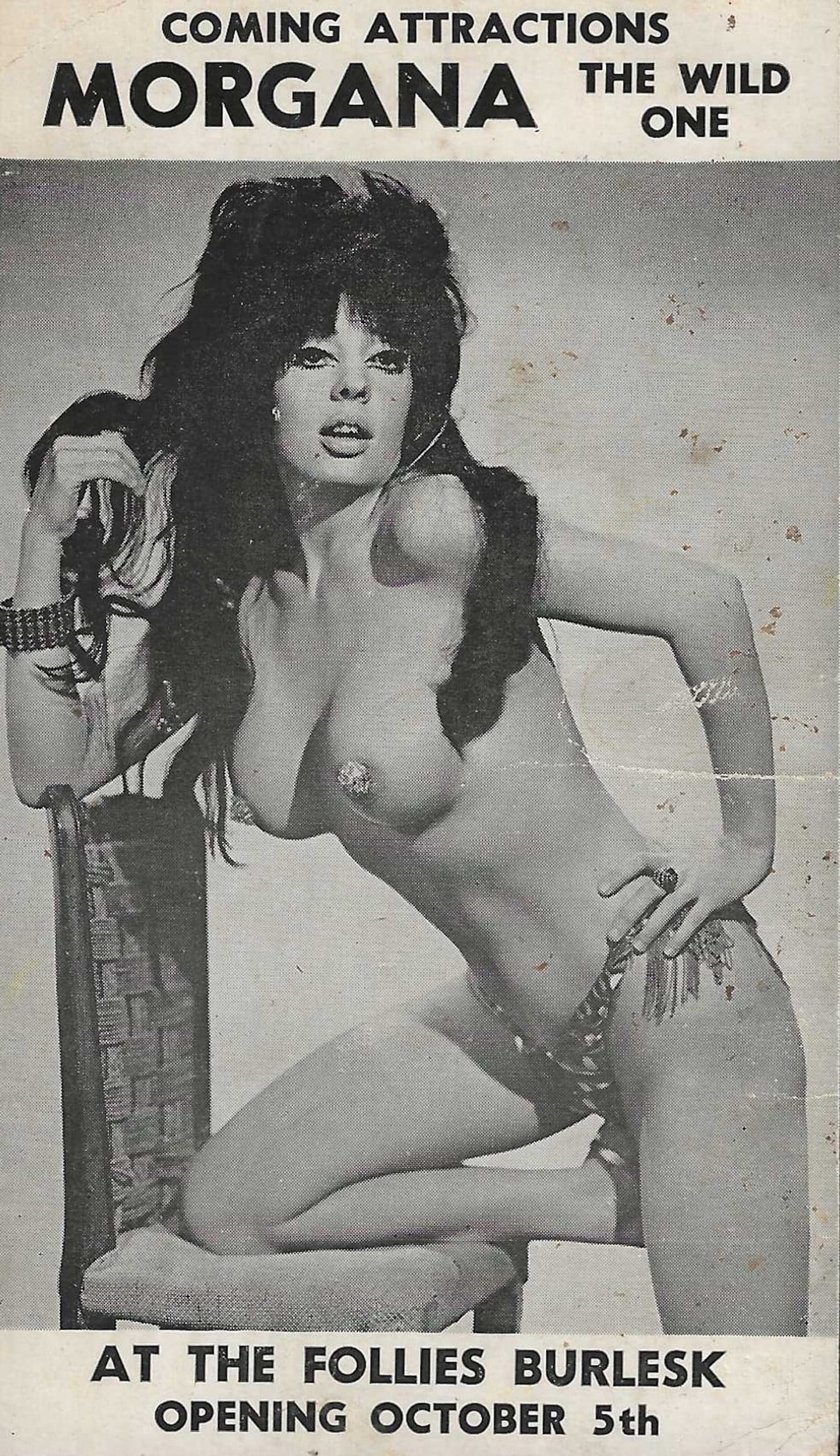
Times Square’s reputation as “adults-only territory” grew after the Second World War, leading to a coarsening of some of its offerings, such as the Follies Burlesk.
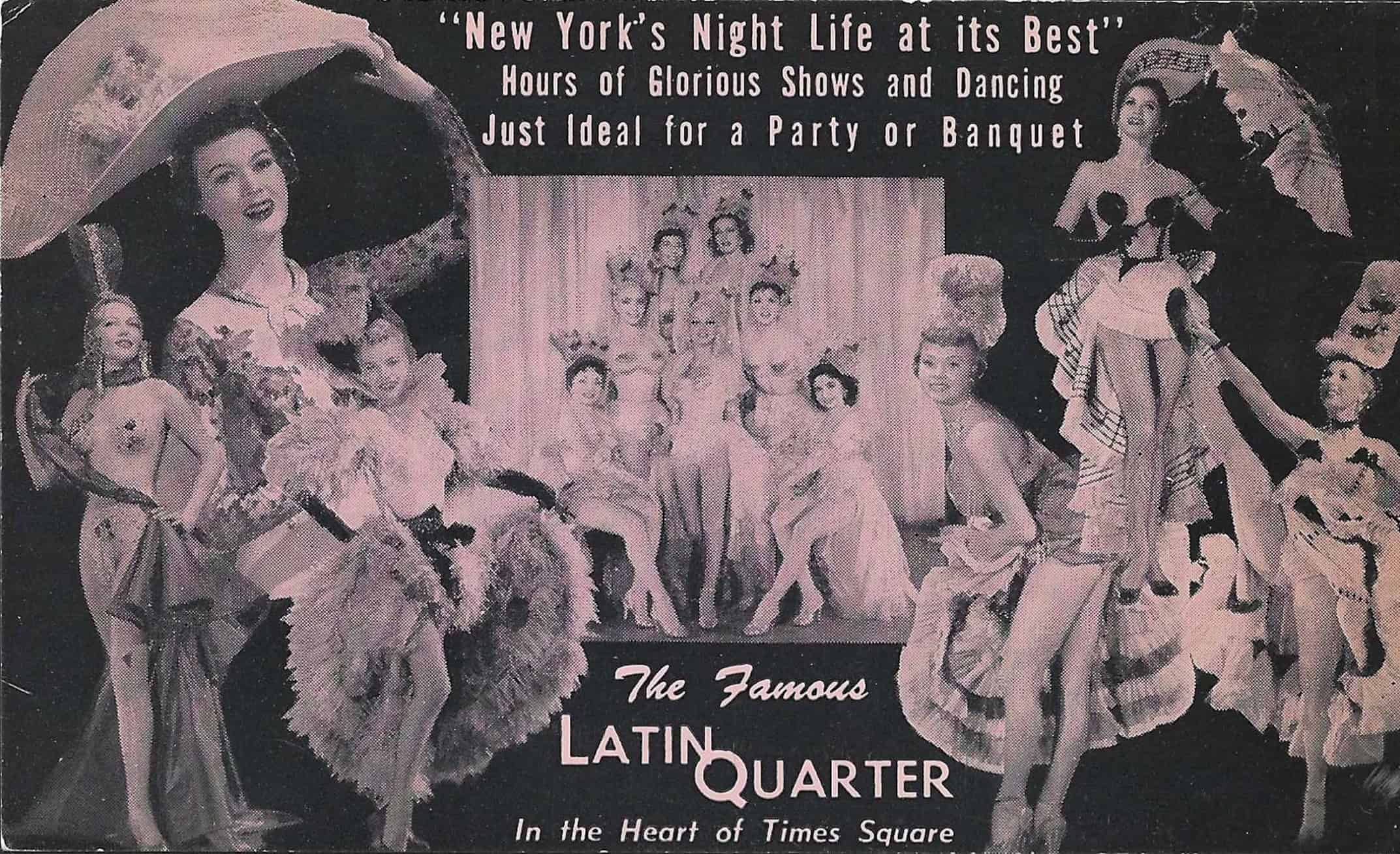
The expectation was that veterans’ military service in Europe might have stimulated a taste for erotic showstoppers, also encouraged the growth of the Latin Quarter. At the Latin Quarter, management tried to encourage the belief that Americans were ready for French-style fabric-free chorus lines as a normal feature of New York nightlife. (The Quarter was managed by empresario Lou Walters, father of broadcasting superstar Barbara Walters, who was responsible for NBC programs like the Today Show and The View).
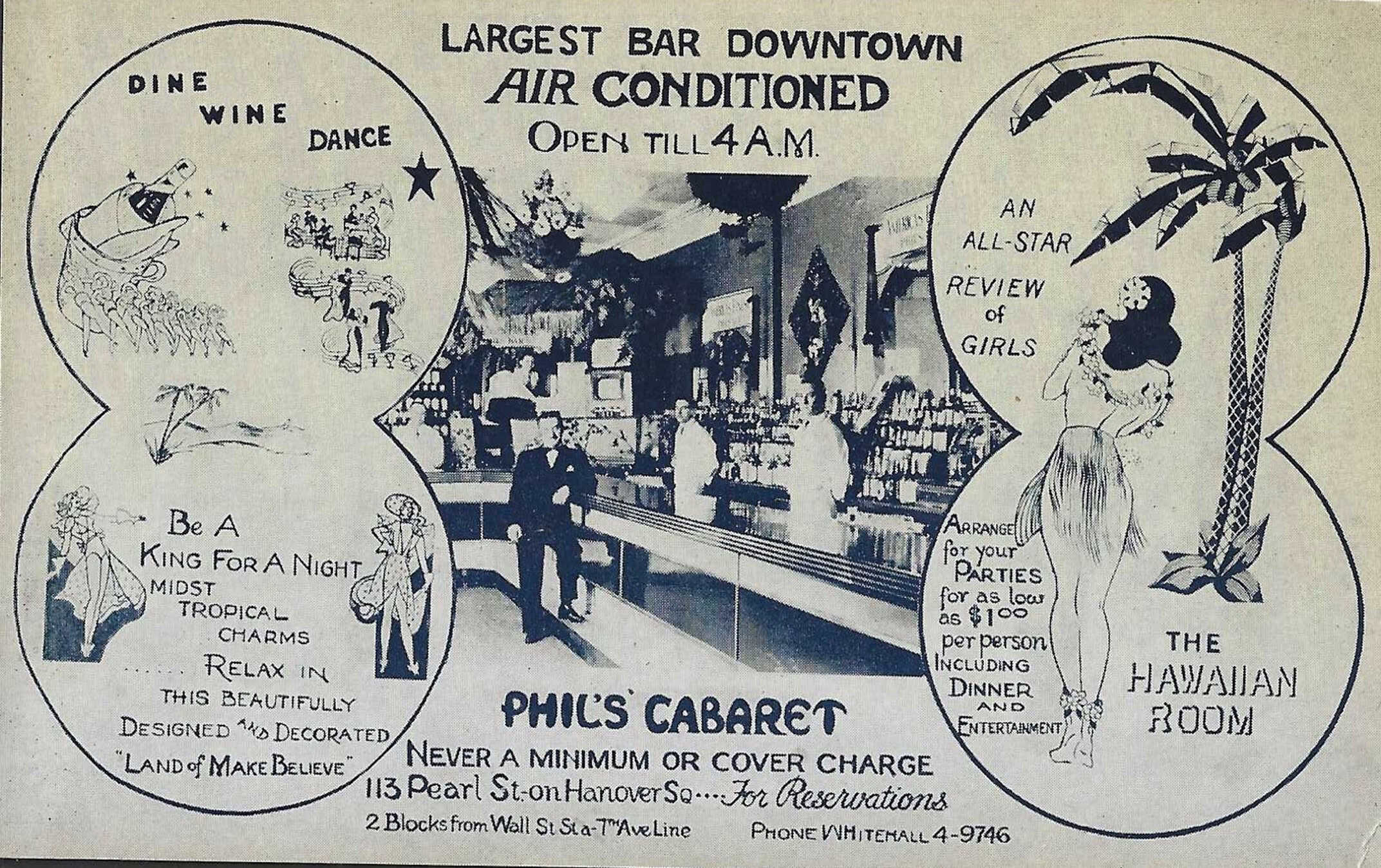
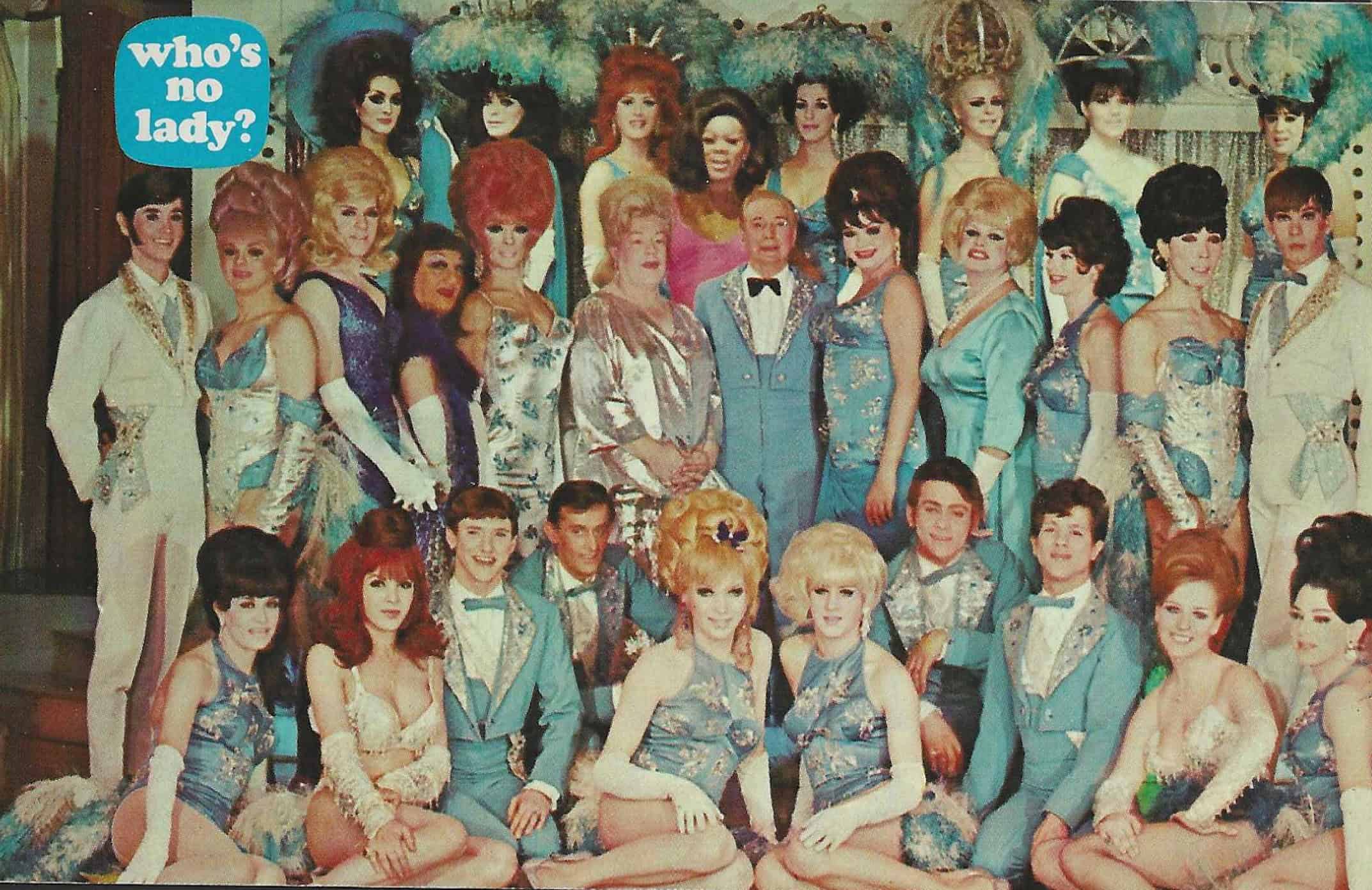
The concept spread to more neighborhoods and diverse sexual tastes. Phil’s Cabaret suggested that New York’s Financial District might be ready for a fantasy night in Hawaii. Ahead of its time, Club 82 on the Lower East Side brought cross-dressing into the world of erotic entertainment. “Who’s No Lady?” asks this 1960s chrome and answers by exhibiting the club’s cast, bio-men appearing as flamboyant divas and bio-women strutting as handsome gents.
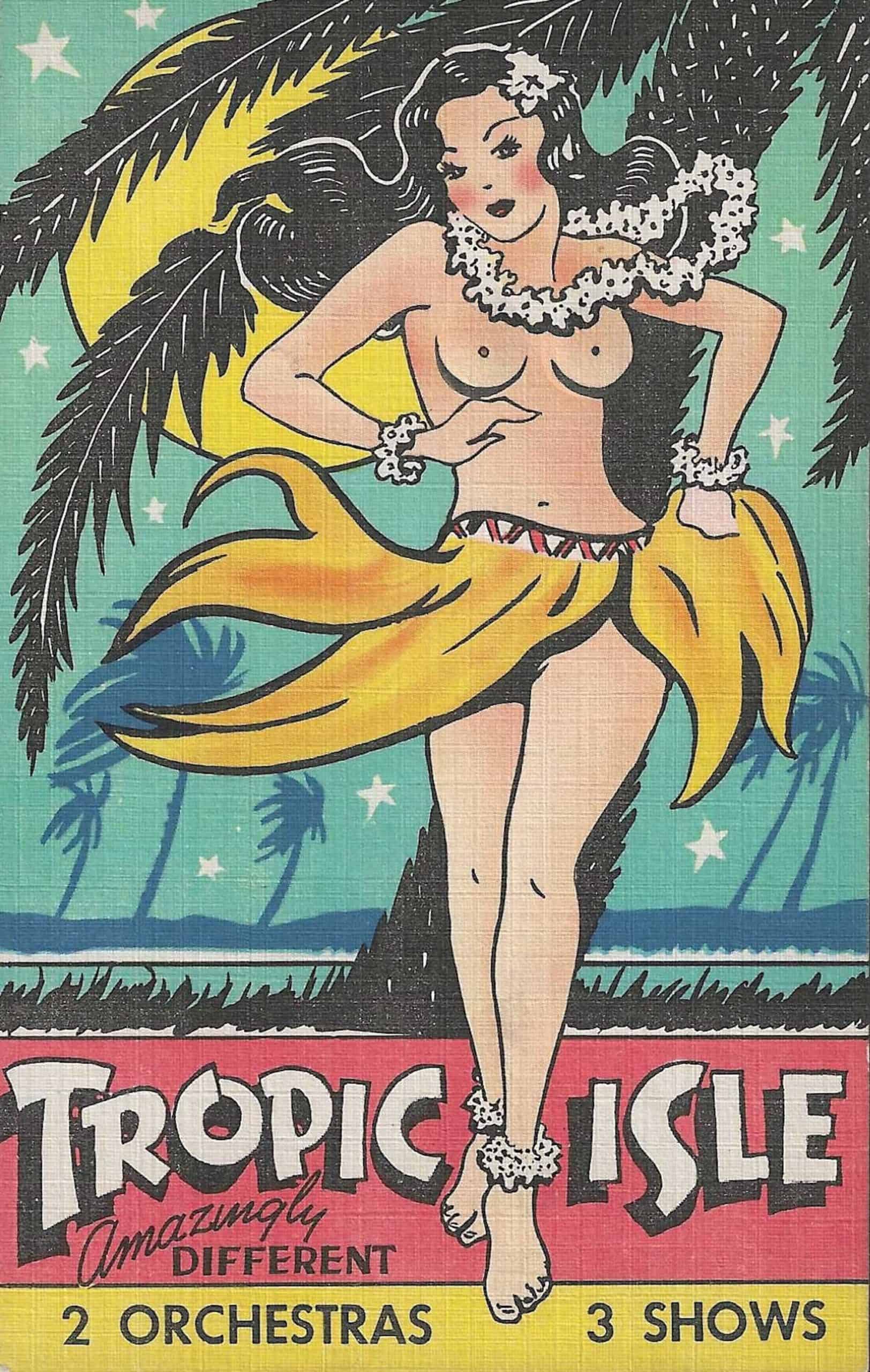
However, the winner of the award for erotic postcards must go to this linen from Brooklyn’s Tropic Isle, whose designer thoughtfully embossed the breasts of the topless dancer, giving you the “feel” of actual breasts as your fingers passed along the card’s surface.
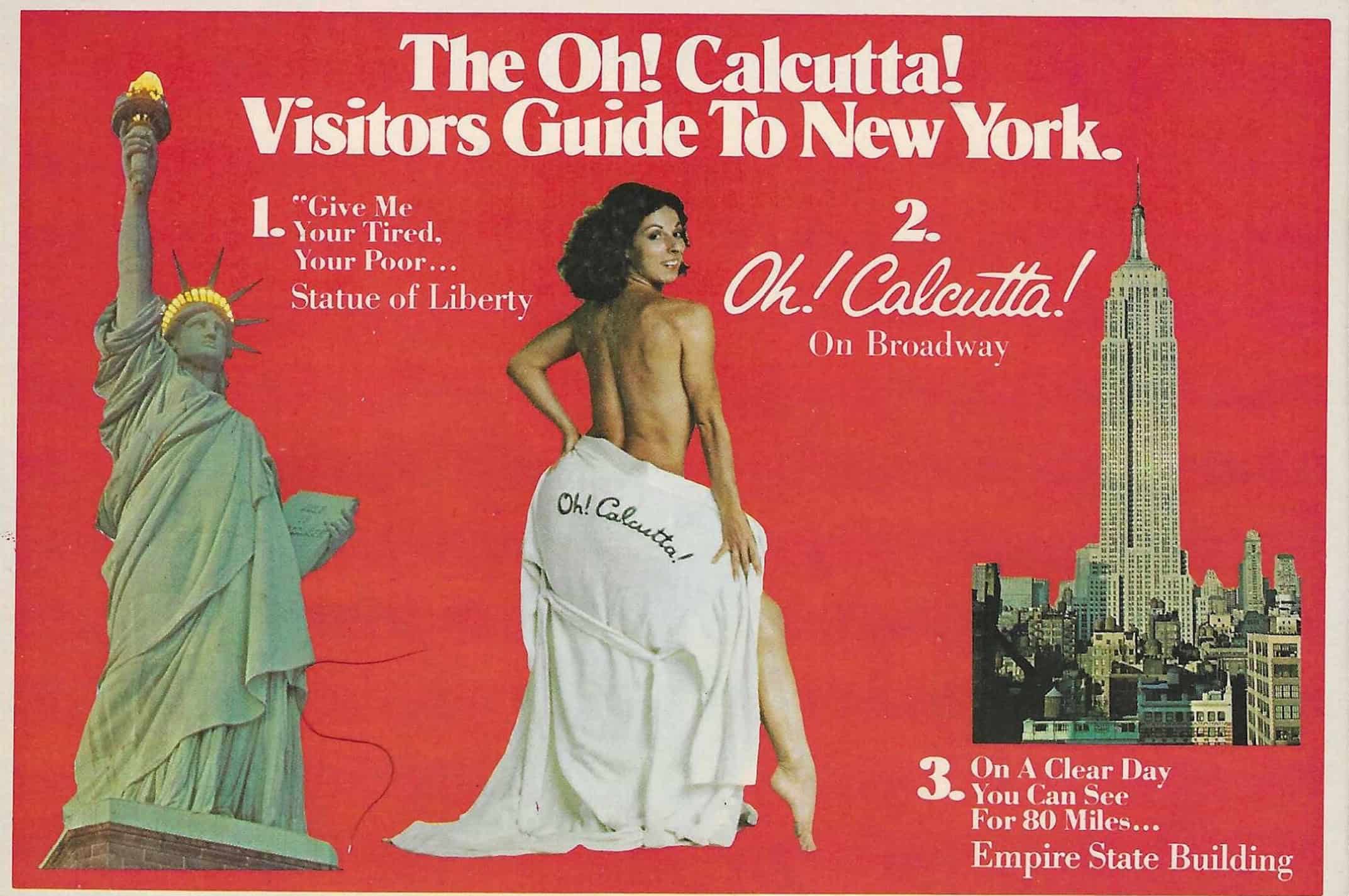
Times Square probably reached its peak of erotic showmanship when Oh! Calcutta! moved to Broadway in 1971. A revue in which the performers were fully nude in many of its scenes, tried to be crudely sexy and provide both serious comedic and dramatic entertainment. Critics found this confusion around direction to be uninviting, and the show was not missed when it closed.
Times Square in the 1980s renewed its struggle to clean up and once again become a family-friendly destination. When 42nd Street’s New Victory Theater initiated children’s programming and the New Amsterdam Theater across the street began performing staged translations of Walt Disney classics such as Lion King, it was clear that a new era had begun and that Times Square’s reign as capital of an erotic kingdom had ended.
Outstanding article Hy….. My new friend Dorothy Chansky was in the Broadway cast and later the Road cast of Oh Calcutta when it opened in 1976… She invited me to a performance. It was the first time I got to “see”Dorothy in the flesh.