As Americans hit the road from the 1930s through the ‘60s in search of adventure, motel chains began springing up across the country. Some like Holiday Inn, Howard Johnson’s, Marriott, Best Western, and Quality Courts were extremely successful. Others chains failed and all that remains are their postcards they left behind.
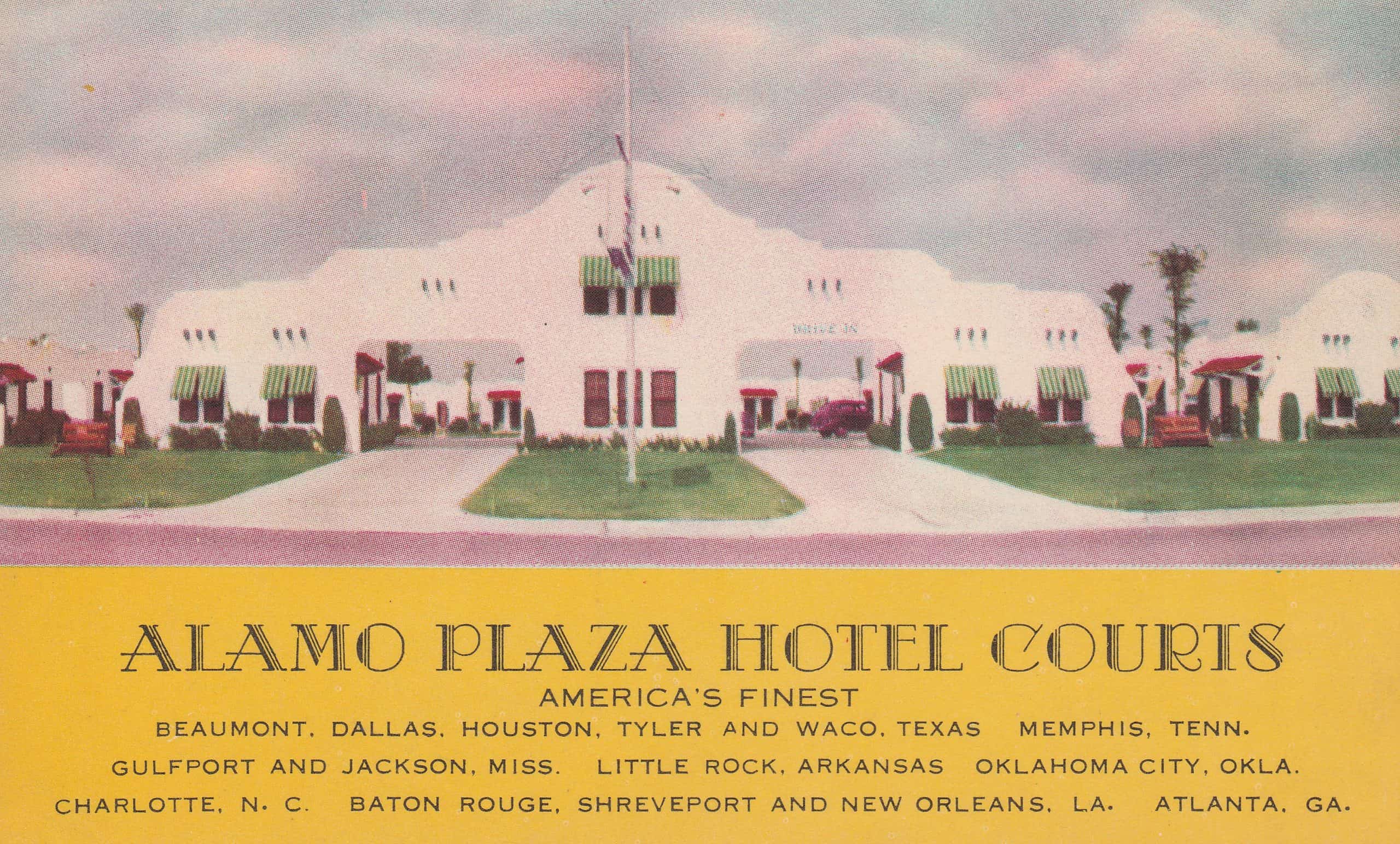
Alamo Plaza Courts was the first U.S. motel chain. The chain was founded in Waco, Texas, by Edgar Lee Torrance in 1929. By 1940 there were ten motels in the chain and by 1955 there were 22. Most Alamo Courts were in southern or southwestern states, except for one in Indianapolis, Indiana. Each motel was individually operated, with several individuals owning multiple motels. An attempt to create franchises in the late 1950s failed. The last Alamo Plaza Court opened in 1965. Their slogan was “Catering To Those Who Care.”
Alamo Plaza was known for its southwestern revival architecture. Units were arranged with a C-shaped court in the center of the units. They were one of the first motel chains to offer swimming pools. In 1936, Alamo Courts placed telephones in every room and offered guests Simmons Beautyrest® mattresses. Free in-room televisions in the 1950s were novel, in that era some motels had a television lounge or if they did have room televisions guests had to pay to operate it using quarters.
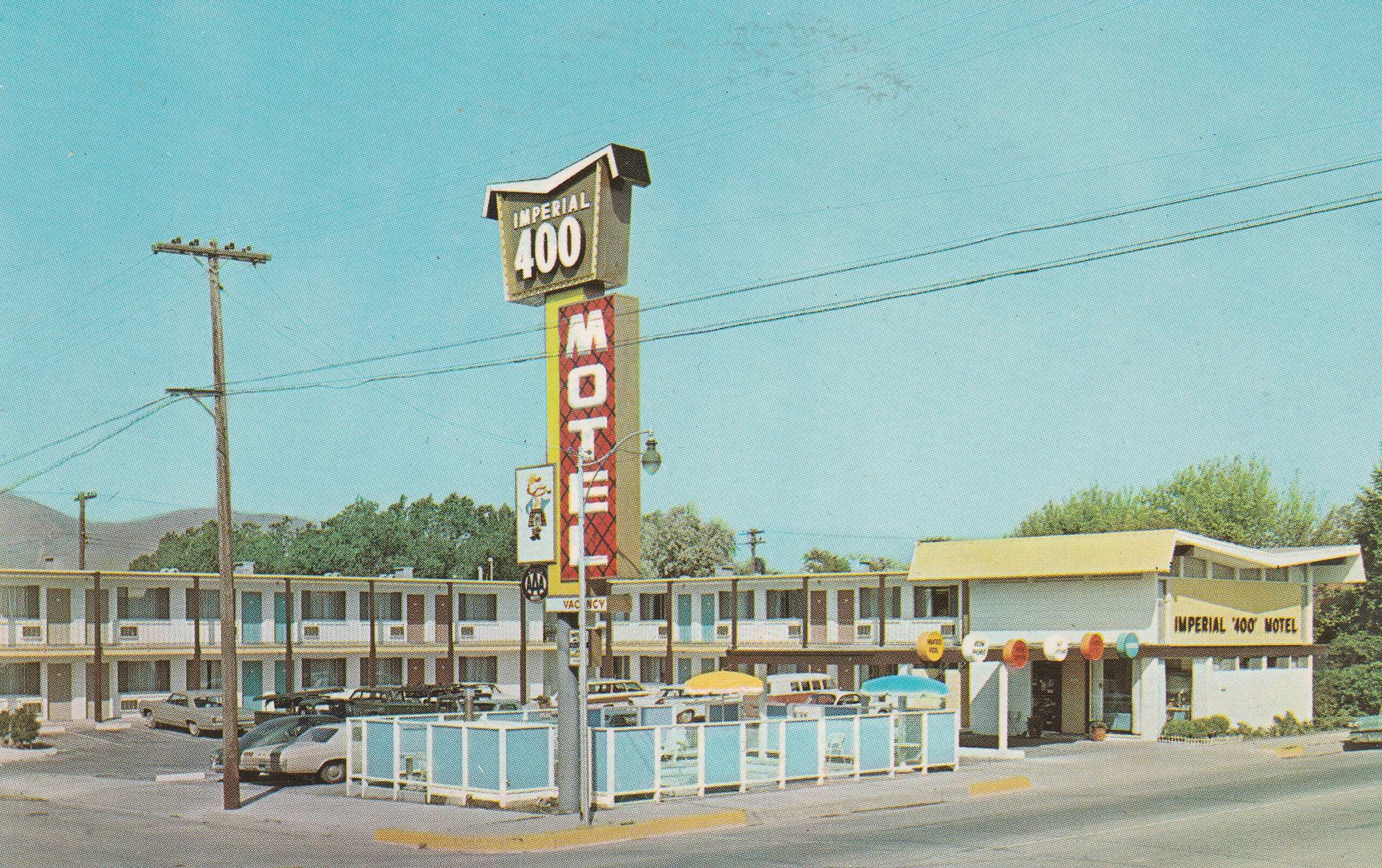
The Imperial 400 Motel partnership chain was founded in 1959 by California entrepreneur Bernard Whitney. Imperial 400 Motels were not designed to compete with Holiday Inn or Howard Johnson’s; they were designed to be at the lower end of the lodging market. Motels in the chain did not have restaurants or meeting rooms. A Scottish bagpiper in a kilt served as the chain’s mascot. His slogan was “Aye, Royal Accommodations at Thr-riffty Rates.”
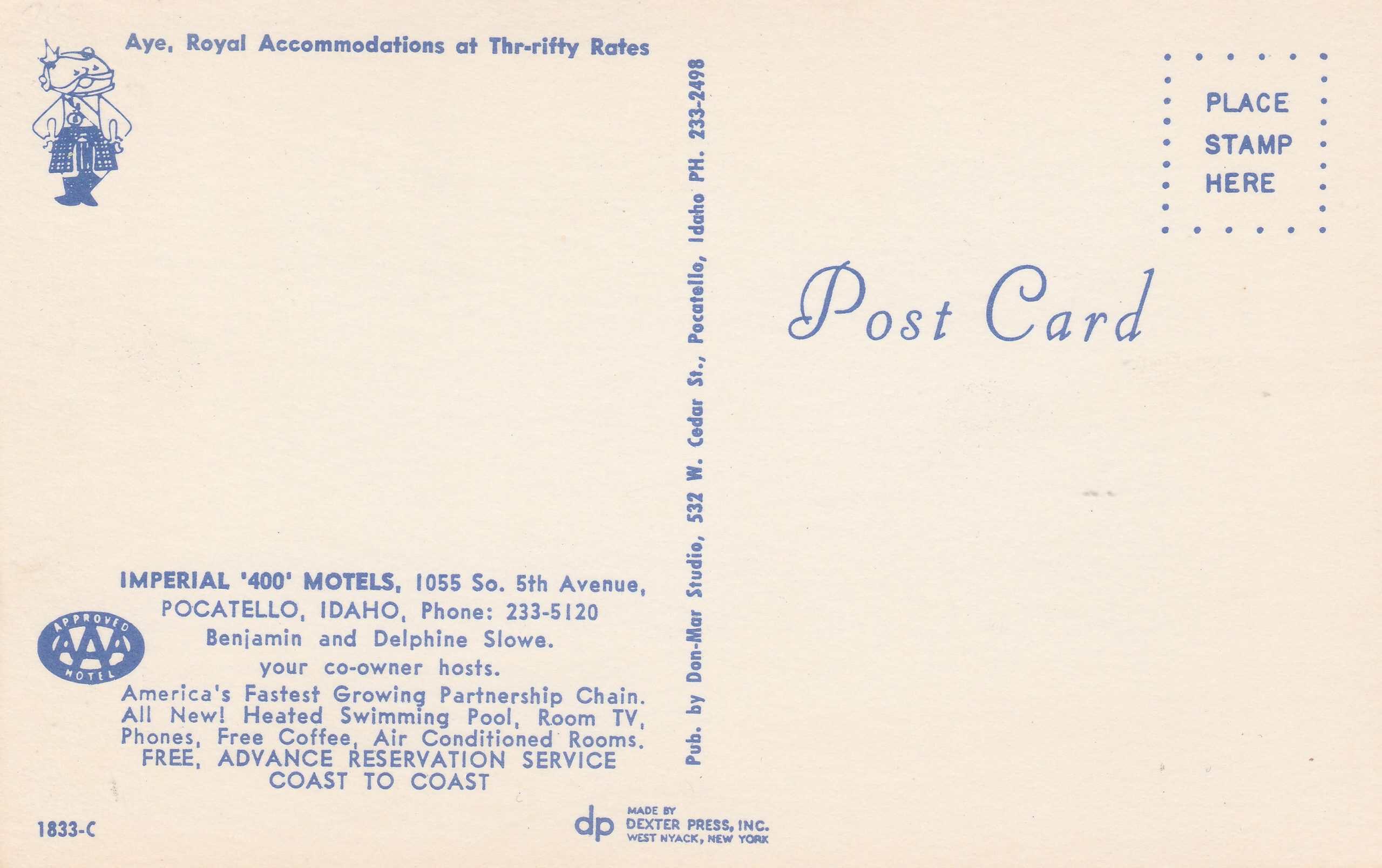
The chain served both business travelers and families on vacation. It located its hotels in urban areas close to businesses. An average Imperial 400 Motel had just thirty to forty rooms.
Imperial 400 Motels had a distinctive two-story building with a mid-century modern butterfly wing roof that served as the office. The second floor contained an apartment for the motel’s owner or manager. Imperial 400 motels also had a distinctive sign that featured the gull-wing on top. A full-size replica of the building was built inside the Transportation & Travel Pavillion at the 1964 – 1965 New York World’s Fair to promote the chain.
By 1964, it was the country’s fourth-largest motel chain. Imperial 400 had an ambitious expansion plan and had about 116 motels in 38 states with 5,000 rooms in mid-1965. It’s greatest concentration of motels was in southern California and the western U.S. although it planted its flag in Regina, Saskatchewan, and on the east coast. The chain provided advertising, a reservation service, a chain directory, and operating standards. Motels were located near city centers and were usually on leased land. After several ownership changes, they were defunct by the late 1980s.
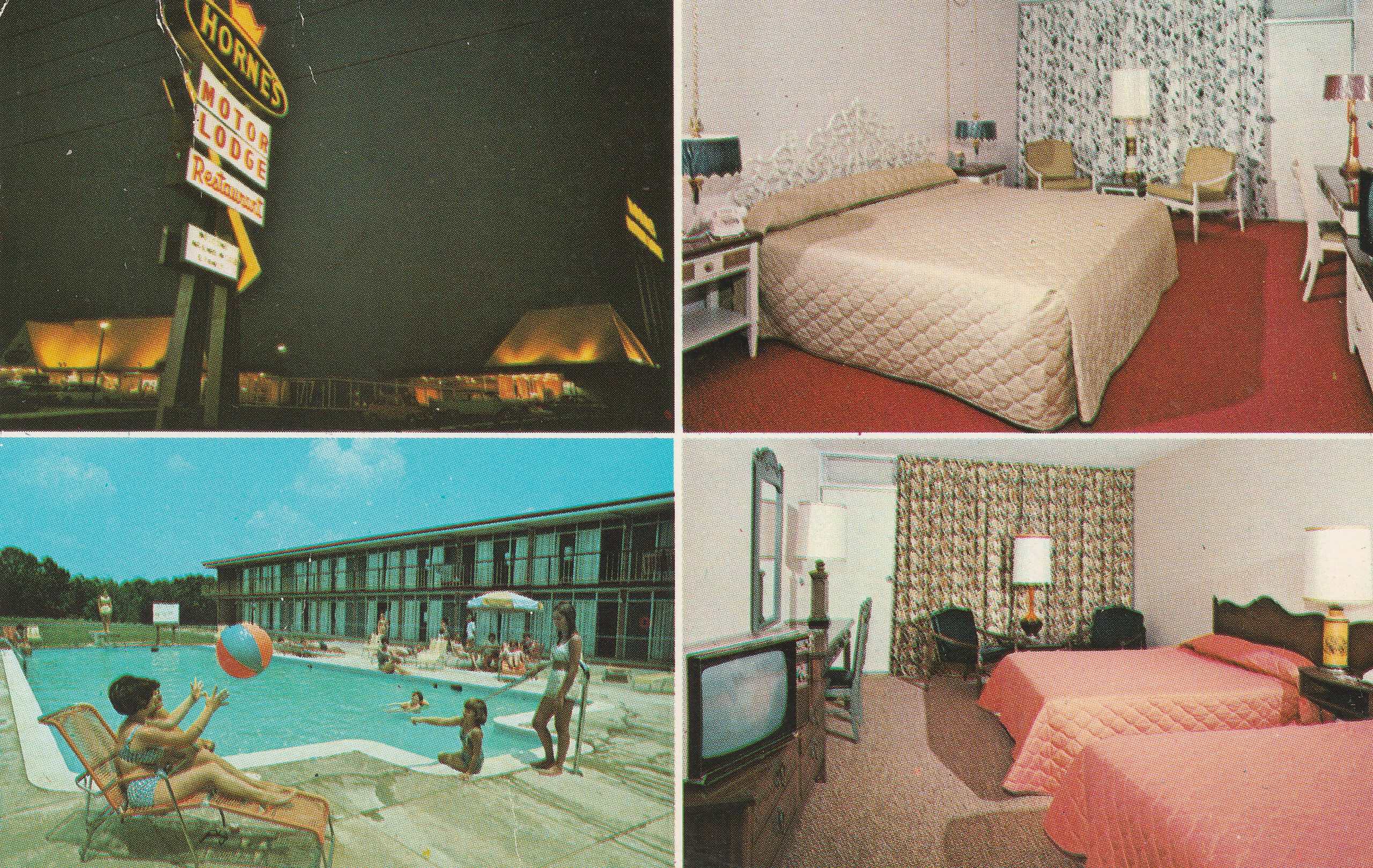
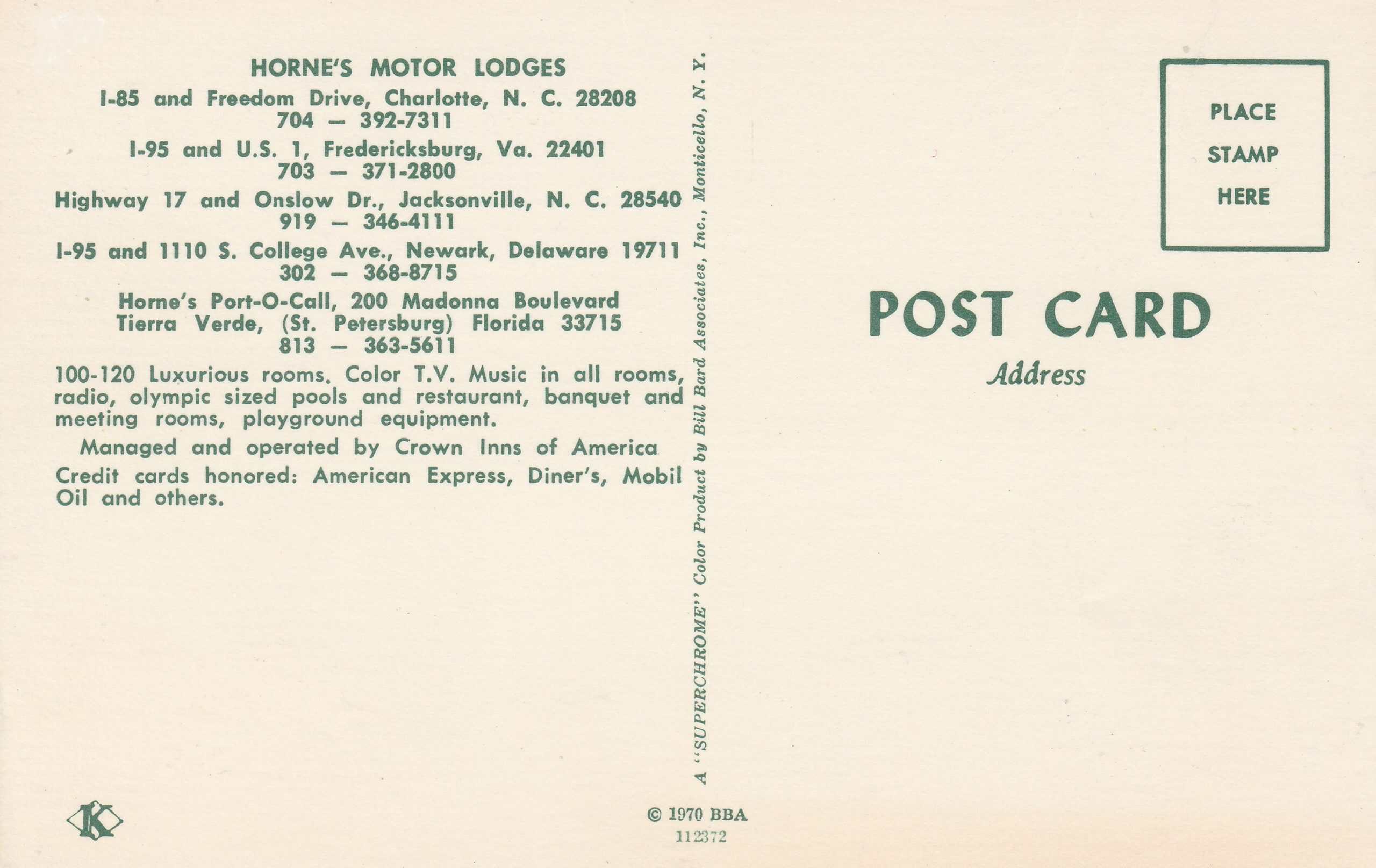
Horne’s was a chain of restaurants along major highways in the southern U.S. founded after World War II to serve travelers on America’s highways. Horne’s restaurants were easily spotted by motorists due to the chain’s large, bright yellow roofs. (Howard Johnson’s had orange roofs and Horne’s competitor Stuckey’s had blue roofs.) If you didn’t spot the yellow roof, Horne’s had 1,200 signs along the highways directing travelers to its locations. Horne’s offered Texaco gasoline, clean restrooms, souvenirs, ice cream, candy, and southern cooking. Favorites at Horne’s included fried chicken, pecan pie, and its signature Circus Burger topped with coleslaw.
Horne’s later entered the lodging business. It operated motor lodges in Charlotte, Jacksonville, and Asheville, North Carolina; Newark, Delaware; Fredericksburg, Virginia; and St. Petersburg, Florida. Their lodges had 100 to 120 rooms equipped with color televisions and radios. On the premises were olympic sized swimming pool, playground equipment, restaurant, banquet and meeting rooms.
In 1964, Horne’s founder, Bob Horne, sold the chain to the Greyhound Corporation which operated Post House restaurants at its bus stations across the country. Greyhound hoped to create synergy between the two travel-related businesses. At the time of the sale, Horne’s had 55 restaurants and six motor lodges. Greyhound sold its interest in 1969. The Horne’s chain ceased operations in the 1980s after several years of decline. Today one Horne’s Restaurant is still in operation in Port Royal, Virginia, at the intersection of Route 301 and Route 17.
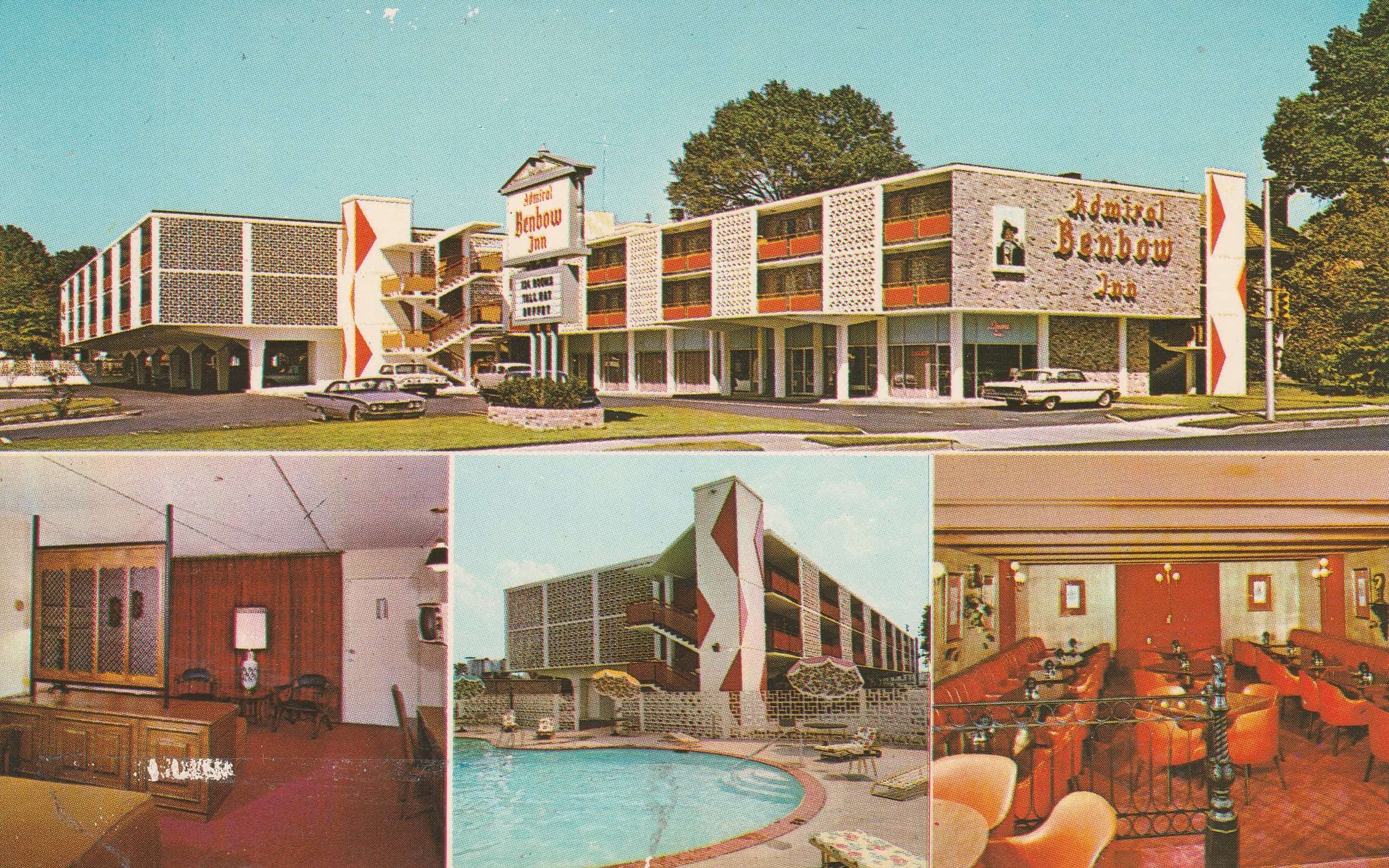
Young Memphis entrepreneurs Allen Gary and George Early opened a restaurant in 1941 in a former 19th century stable, aptly named The Stable, it was an immediate success. In 1950, Gary and Early opened a nautical themed restaurant, The Admiral Benbow Inn. Early left the partnership later in the 1950s, but by 1960, Gary was operating eighteen restaurants.
Gary was a high school classmate of Kemmons Wilson who founded Holiday Inn. He worked out an arrangement with Wilson to open Admiral Benbow restaurants at Holiday Inns and served on the Holiday Inn’s Board of Directors before creating his own motel chain.
Gary opened the first Admiral Benbow Inn in Memphis, Tennessee, in 1961. He opened two more inns in Memphis and eventually there were eighteen Admiral Benbow Inns scattered across the South, usually at prime, high-traffic locations. Gary’s plan was to open one hundred Admiral Benbow Inns that were considered upscale lodging by 1970. The modern exteriors of the Admiral Benbow Inns stood out from the mundane motels being constructed at the time.
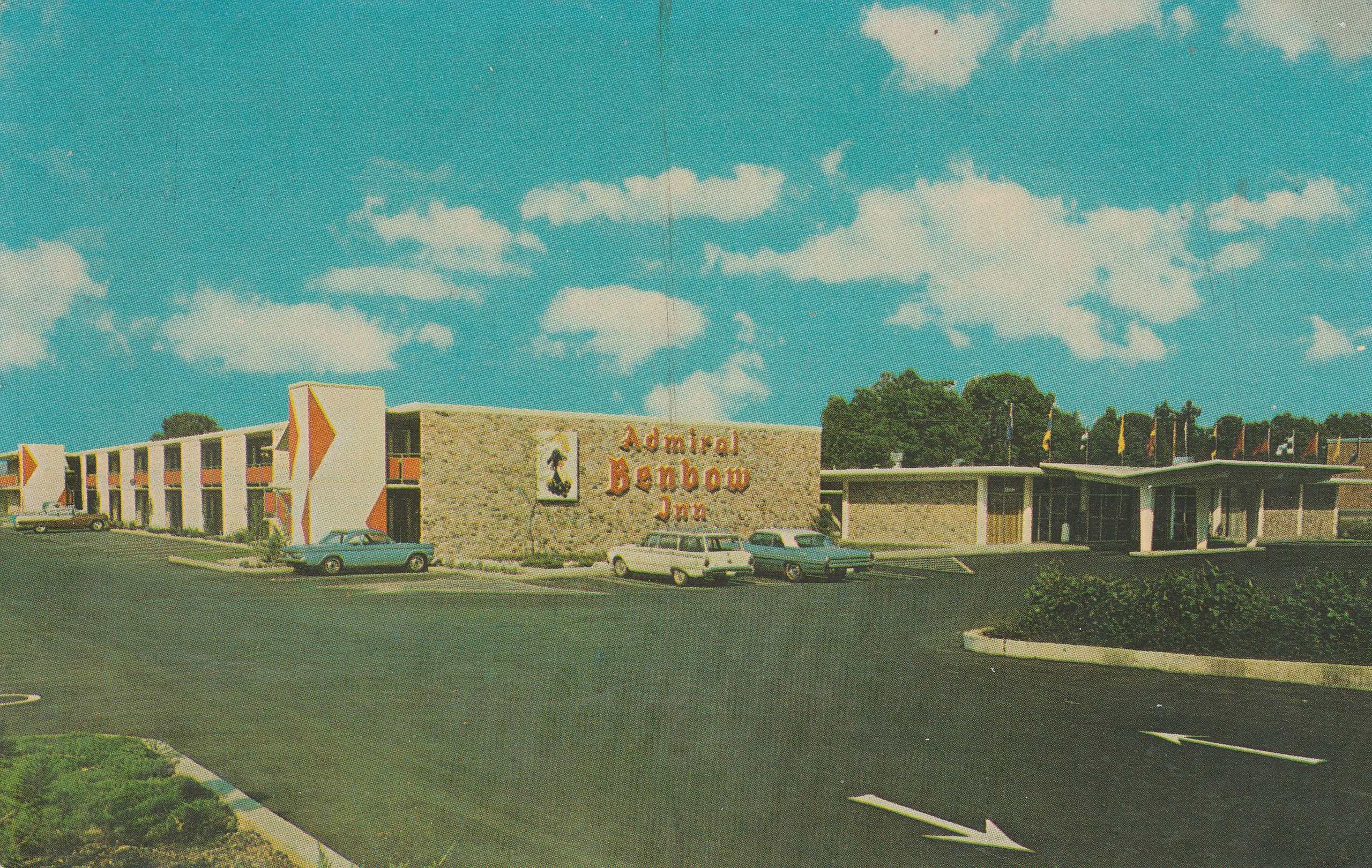
The Admiral Benbow Inn (above) in Monroe, Louisiana, had 109 “deluxe” rooms with individual thermostats for air-conditioning and heating. Each room had a direct dial phone, a color TV and AM/FM radio. It offered a swimming pool, conference rooms, two dining rooms, and a cocktail lounge.
Allen Gary died in 1965 at the age of fifty-two. Without his leadership, most of the properties were sold to Morrison’s Cafeterias, an iconic southern restaurant chain. Morrison’s sold off the motels piece meal to new owners; none are in operation.
Admiral John Benbow (1653-1702) served as an admiral in the British Royal Navy and had a long illustrious career fighting the Barbary pirates and the French. A number of inns and pubs in the United Kingdom bears his name. It is unknown whether Allen Gary named his chain of motels after Admiral Benbow or the fictional Admiral Benbow Inn in Robert Louis Stevenson’s adventure novel Treasure Island.
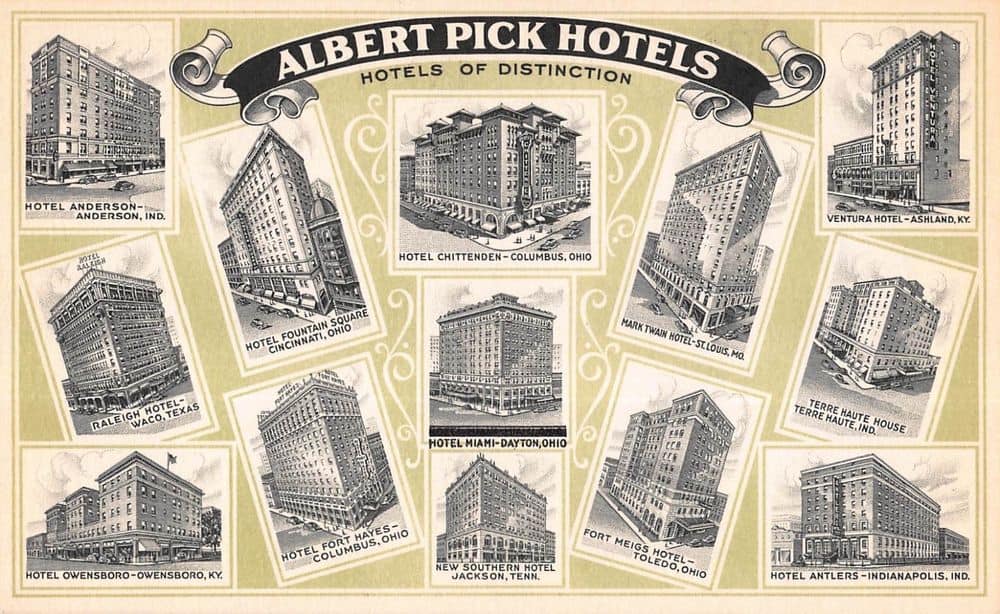
A young Austrian immigrant, Albert Pick, opened a china and glassware business in Chicago in 1857 selling to hotels, saloons, and restaurants. His younger brother Charles later took over the firm. In 1896, Charles Pick’s son Albert Pick II took the reins. After World War I, Pick bought out its biggest Chicago competitor, the Burley & Tyrrell Co., and in the mid-1920s, Pick merged with New York’s L. Barth & Company, forming the “World’s Largest Hotel Restaurant, and Institution Supply Business.”
Albert Pick realized when Prohibition was enacted that hotels nationwide would be forced to close their bars and lose a major source of revenue and profits. He was widely credited for encouraging his company’s clients to convert their former bars into cafeterias and soda fountains. His company had the plans, equipment, and supplies available to save the hotel’s profitability.
During the 1940s, Pick Hotels Corporation. gradually acquired a roster of high-end hotels under its own banner (mostly in the Midwest), including the Congress Hotel in Chicago. Later in the 1950s, the company moved into the motel business, recognizing the popularity of more affordable accommodation options along America’ expanding highway system.
The Pick Hotel Corporation turned to the management and development of motor hotels in the 1960s. In the 1950s Pick operated several Holiday Inns under franchise agreements. At the Holiday Inn franchises operated by Pick Hotel Corporation, guests were encouraged to stay at other Pick hotels during their journey. Holiday Inn’s corporate headquarters ruled that those who owned and operated other hotel brands could not franchise a Holiday Inn. Pick later operated eight motels in seven states under the Albert Pick Motel banner.
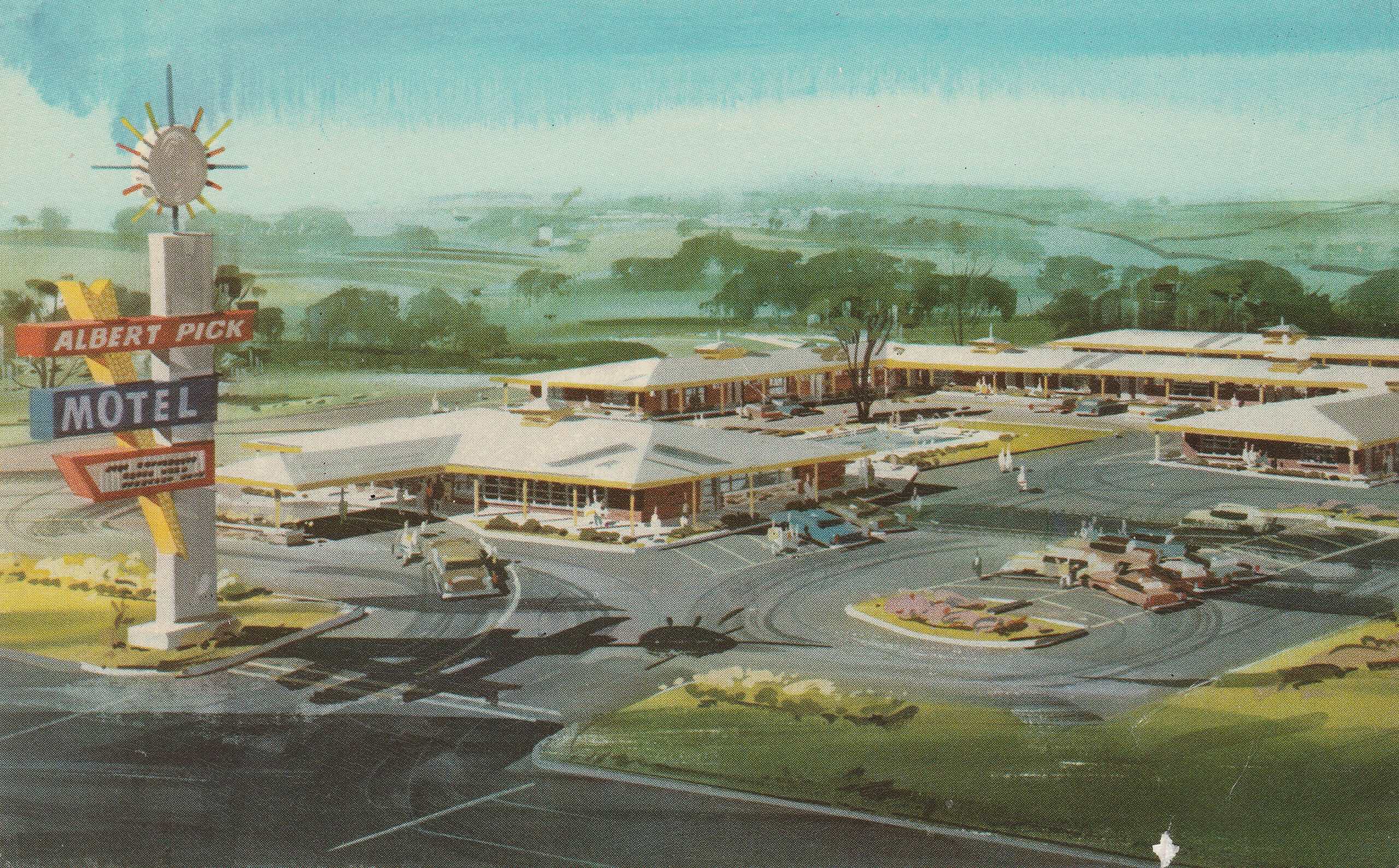
Like Holiday Inn, Pick Motels had a distinctive sign out front. Children under twelve stayed free. Rooms were equipped with televisions and telephones. Pick Motels also featured swimming pools. There were meeting rooms for business functions and cocktail lounges in “wet” states.
By the 1960s, many of Pick’s downtown hotels were victims of urban decay and closed – including their flagship hotel, The Congress in Chicago.
In ill health, Albert Pick, Jr. sold the chain to the Bass Brothers Enterprises of Fort Worth in 1976.
Very interesting! Thanks.
Dan does it again…dazzling us with such interesting articles and cards. His articles are so well researched and always interesting and a pleasure to read. Eagerly waiting for the next article.
This is a great article. I have several of the post cards illustrated. In the previous century, it was a relatively common practice to pick up free hotel-motel post cards at the various locations, chiefly as a marketing device. Unfortunately, it is very rare to find a hotel or motel that gives out free post cards today….people just use their cell phones to take a picture and send it to their friends. Hotel-motel cards are usually very reasonably priced at shows, and I try to purchase them when I can.
I wrote about a similar phenomenon in the following: https://djtrela.wordpress.com/wp-admin/post.php?post=9675&action=edit
Mr Trela, WordPress doesn’t seem to want us to read what you wrote (it thinks I want to edit it). Please contact me at pu*******@************or.net with some sort of workaround or just send me the text.
You missed Jack Tar.
Jack Tar Hotels – Wikipedia
There were a number of lodging chains that were not included in the article due to space constraints. My family lived in Galveston, Texas from 1962 until 1966, We ate several times at the Jack Tar’s cafeteria. If I do a sequel, i will include Jack Tar. Attached is a postcard of the pool at the Jack Tar in Galveston.
Enjoyed the article. The history of Motels during the expansion of the interstate highway system were quite interesting.